Identifying equivalent fractions Grade 2 Math Worksheets
7 filtered results
-
From - To
Experience fun and engaging learning with our Grade 2 Math Worksheets focused on Identifying Equivalent Fractions. Designed for young learners, these worksheets help students understand the concept of equivalent fractions through colorful visuals and interactive exercises. Your child will compare and match different fractions, enhancing their numerical skills and boosting confidence in math. Suitable for classroom activities or at-home practice, these worksheets provide a solid foundation for future fraction learning. Download now to make fraction learning enjoyable and effective! Explore more at Kids Academy to support your child's education journey.






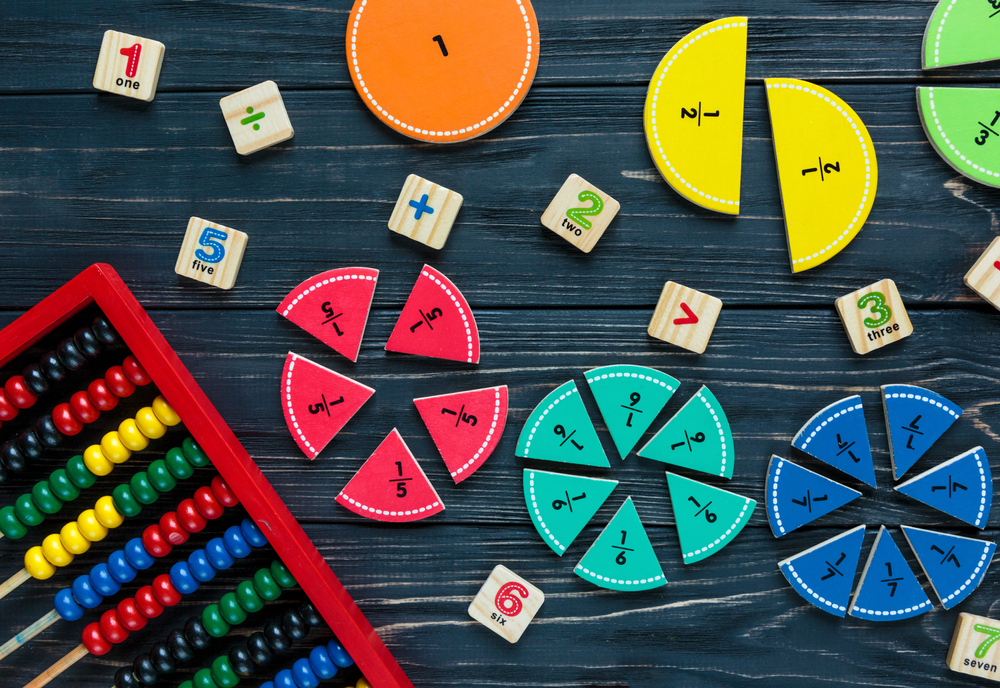
Understanding equivalent fractions is a crucial concept for second-grade students as it lays the groundwork for more advanced mathematical learning and critical thinking. For parents and teachers, fostering this understanding early on can significantly influence a child's success in mathematics. Equivalent fractions represent the same part of a whole, even though they may have different numerators and denominators (e.g., 1/2 is equivalent to 2/4).
Learning this concept helps students develop a deeper comprehension of fractions and the relationships between numbers. It also enhances their ability to simplify fractions and solve problems involving fractions in later grades, such as addition and subtraction of fractions. Without a firm grasp of equivalent fractions, students may struggle with these more challenging tasks, leading to frustration and a possible aversion to math.
By focusing on teaching equivalent fractions, parents and teachers can also cultivate a growth mindset in children. This enables them to see math as a set of learnable skills rather than an inherent talent. Encouraging mastery of foundational concepts like equivalent fractions builds students' confidence and curiosity, setting a positive and resilient attitude towards learning both inside and outside the classroom.