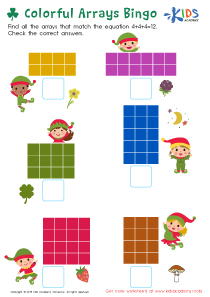
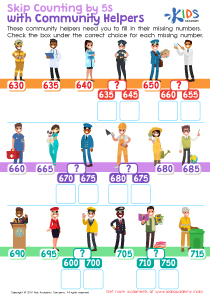
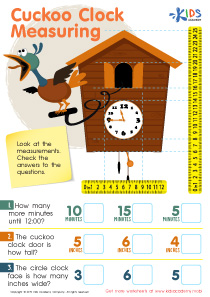
Improving subtraction skills Grade 2 Math Worksheets
3 filtered results
-
From - To
Unlock your child's mathematical potential with our "Improving Subtraction Skills" Grade 2 Math Worksheets! Specifically designed for second-graders, these engaging and interactive worksheets help students grasp essential subtraction concepts, making learning enjoyable and effective. Each worksheet offers a variety of exercises that promote critical thinking and problem-solving, allowing children to practice both basic and advanced subtraction techniques. Our resources cater to diverse learning styles, ensuring every child can master this fundamental skill. Foster confidence in your young learner's abilities and watch them excel in math! Explore our collection today and help your child build a strong arithmetic foundation for future success.
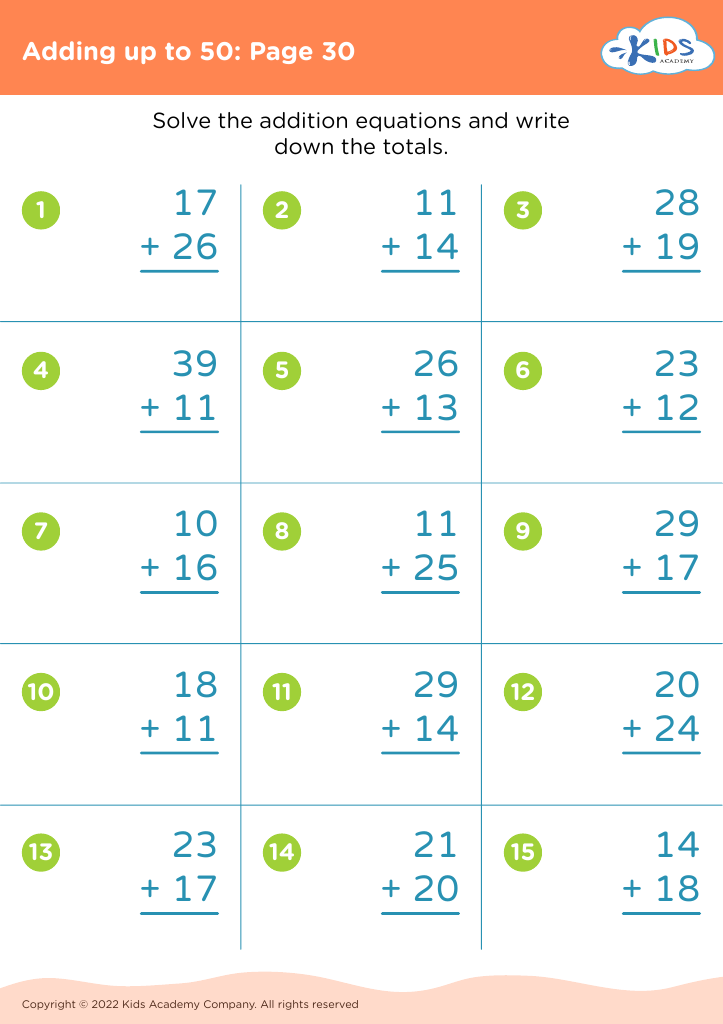







Improving subtraction skills in Grade 2 is crucial for several reasons. First, subtraction forms the foundation for more advanced mathematical concepts. Mastery of basic subtraction operations enables students to confidently approach addition and subtraction of larger numbers, laying the groundwork for future learning in algebra and problem-solving techniques.
Second, proficient subtraction skills are essential for real-life applications. Young learners often encounter situations, whether managing allowances, sharing items, or understanding time, that necessitate strong subtraction abilities. By fostering these skills, parents and teachers equip children with important tools they will use throughout their lives.
Additionally, building a solid framework in subtraction contributes to students' overall cognitive development. Engaging with subtraction challenges enhances critical thinking, encourages a growth mindset, and builds perseverance. As children tackle increasingly complex problems, they learn to approach challenges with resilience.
Finally, positive reinforcement during this stage can boost a child's self-esteem and confidence in their mathematical abilities. Parents and teachers play a vital role by creating nurturing environments where students can practice and celebrate their accomplishments in subtraction, ultimately fostering a love for learning and mathematics that can benefit them for years to come.