Practice writing numbers Grade 2 Math Worksheets
6 filtered results
-
From - To
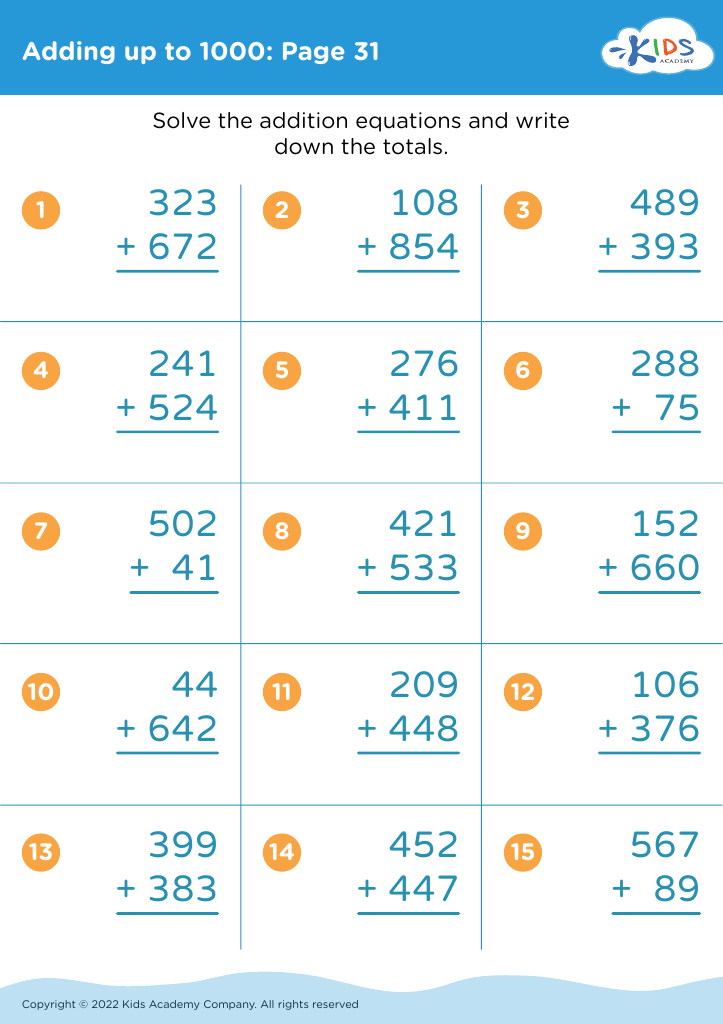
Welcome to our Grade 2 Math Worksheets page focused on practicing writing numbers! Designed specifically for second graders, these engaging worksheets provide a variety of exercises that help students improve their number writing skills. From tracing to freehand writing, our resources encourage confidence and accuracy. Kids will love practicing with colorful, interactive pages that make learning fun and enjoyable. Whether in the classroom or at home, these worksheets are perfect for enhancing math fluency and foundational writing skills. Dive into our collection and watch your child master writing numbers with ease! Printable and easy to use, they’re a perfect addition to any educational toolkit!






Practicing writing numbers is essential for second graders as it lays the foundation for their mathematical and cognitive development. At this age, students are transitioning from learning basic number recognition to understanding place value, addition, subtraction, and other fundamental concepts. Correctly writing numbers aids in reinforcing their understanding of quantity and numerical relationships.
First, writing numbers helps improve fine motor skills, which are crucial for overall handwriting and penmanship. As children practice, they develop hand-eye coordination, dexterity, and control. These skills not only enhance writing abilities but also contribute to efficient execution of various tasks throughout their education.
Second, engaging students in writing numbers cultivates attention to detail and promotes accuracy. When children focus on how to form each digit correctly, they become more mindful of their work, fostering a sense of pride in their achievements and minimizing careless errors in computations.
Lastly, number writing prepares students for future math subjects and real-life applications, such as reading clocks or budgets. By emphasizing the practice of writing numbers early on, parents and teachers equip children with the tools they need for academic success and help instill a positive attitude toward math in their formative years.