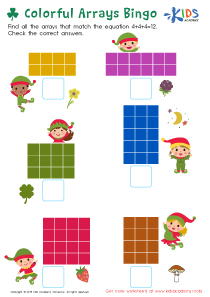
Understanding division Grade 2 Math Worksheets
7 filtered results
-
From - To
Enhance your second grader's math skills with our "Understanding Division" Grade 2 Math Worksheets. These worksheets provide a fun and interactive way for young learners to grasp the concept of division. Through engaging exercises, students will practice dividing objects into equal groups and understand the relation between division and multiplication. With clear instructions and colorful visuals, our worksheets make learning division easy and enjoyable, helping students build a strong foundation in math. Perfect for classroom or at-home use, these resources support children as they develop critical thinking and problem-solving skills essential for future math success.
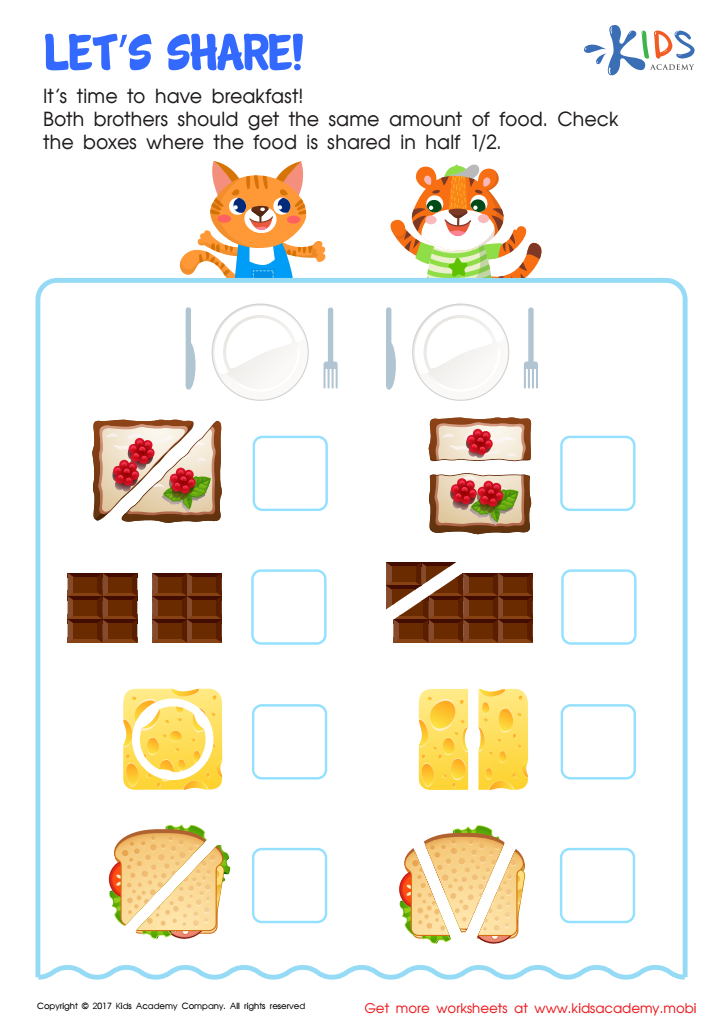
Let's Share Worksheet
 Assign to My Students
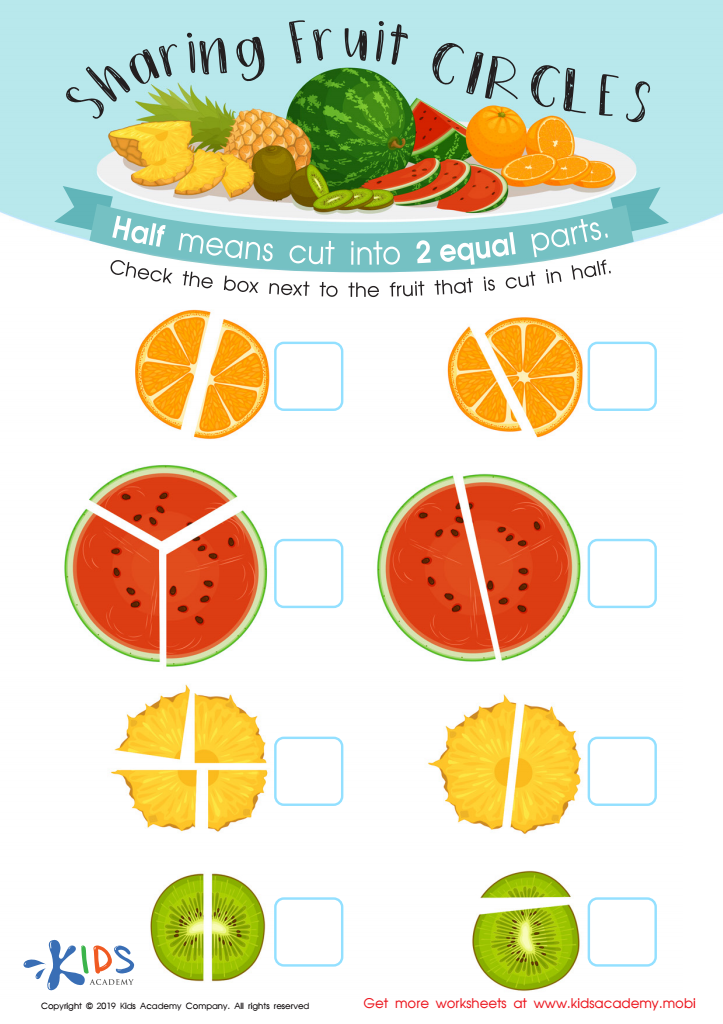
Sharing Fruit Circles Worksheet






Understanding division in Grade 2 is fundamental because it lays the groundwork for more complex mathematical concepts that students will encounter in higher grades. Division introduces children to the idea of equal grouping and sharing, which not only fosters arithmetic comprehension but also equips them with practical problem-solving skills they can apply in everyday life. For instance, a child who understands division can easily determine how to evenly distribute snacks among friends or understand portions while cooking.
Additionally, grasping division concepts at an early age improves cognitive development. It encourages logical thinking, pattern recognition, and numerical fluency. These skills are crucial as they help in understanding mathematical relationships and structures, which are central to topics like fractions, ratios, and algebra that students will encounter later on.
Moreover, early proficiency in division can help boost a child's confidence and positive attitude towards math. Struggles with fundamental concepts can lead to math anxiety that might affect academic performance in future math courses. By supporting a strong foundation in Grade 2, parents and teachers foster an environment where children feel competent and motivated to tackle challenging math problems as they advance academically.
Parents and teachers play a critical role in this learning process by providing the necessary guidance, resources, and encouragement to help young learners succeed in understanding and enjoying math.