Understanding number sequences Grade 2 Math Worksheets
4 filtered results
-
From - To
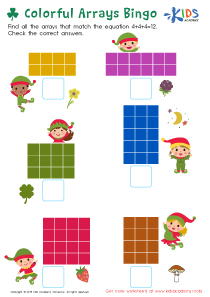
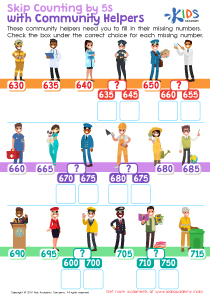
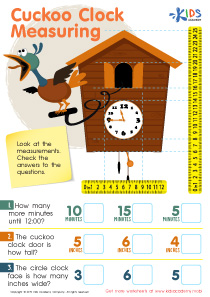
Welcome to our "Understanding Number Sequences Grade 2 Math Worksheets" page! Designed for young learners, these engaging worksheets help children grasp the concept of number sequences and patterns crucial for their math development. As students practice identifying increasing, decreasing, and skip counting sequences, they gain confidence in problem-solving and analytical skills. Our worksheets are tailored to be both educational and fun, ensuring that your child remains motivated while learning. Perfect for classroom reinforcement or home practice, these resources align with second-grade standards, providing a strong foundation for future math concepts. Explore our diverse selection of worksheets today!
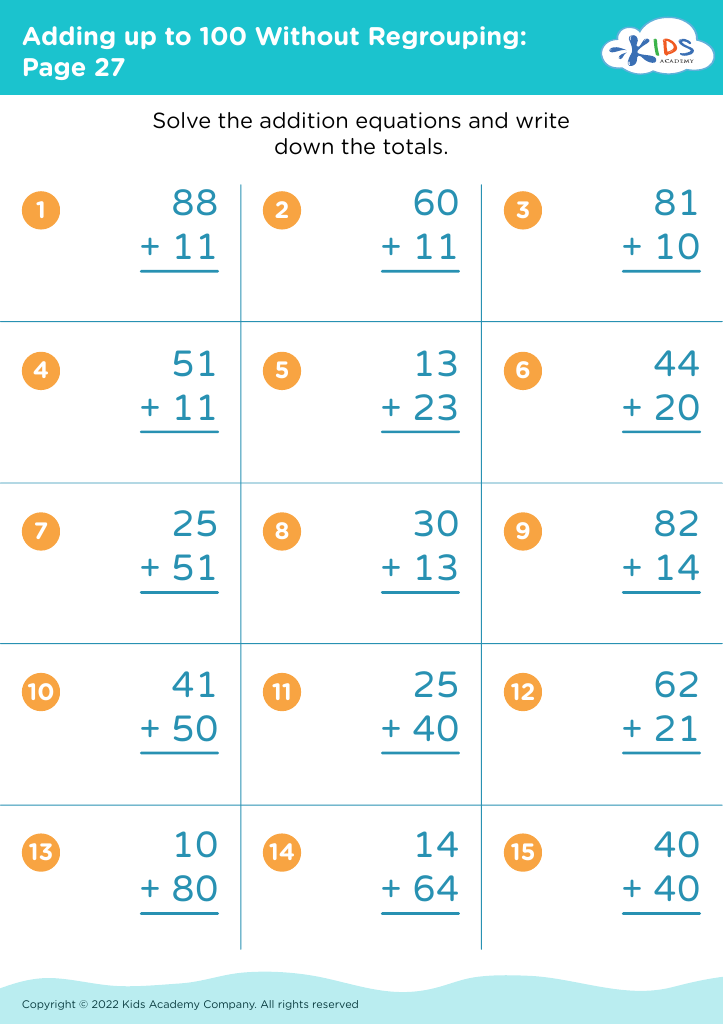
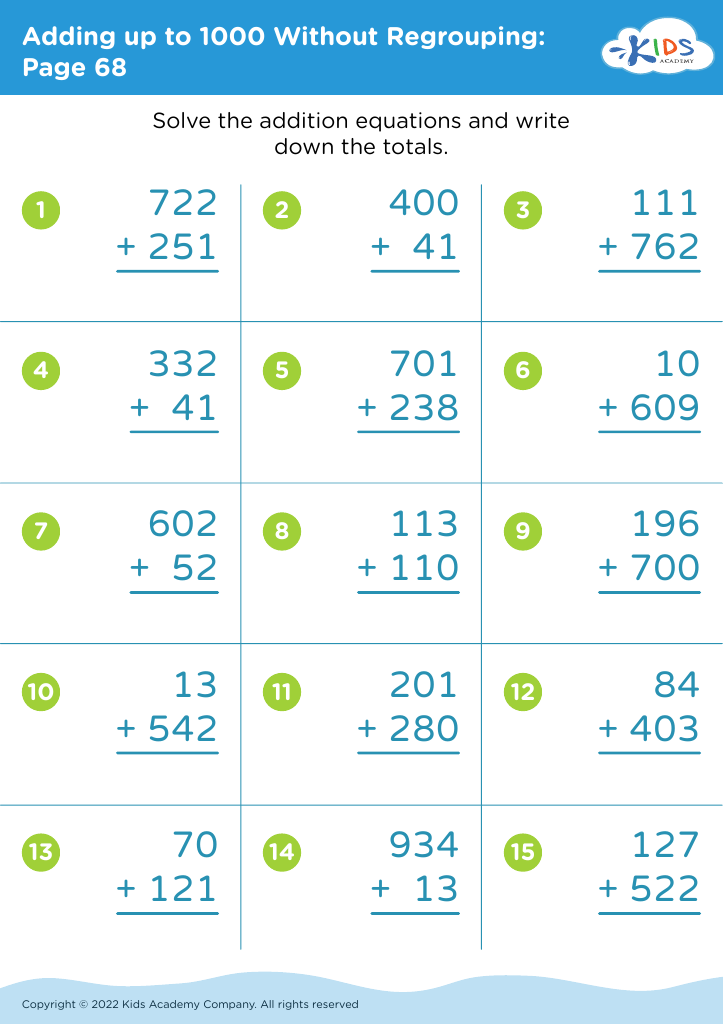
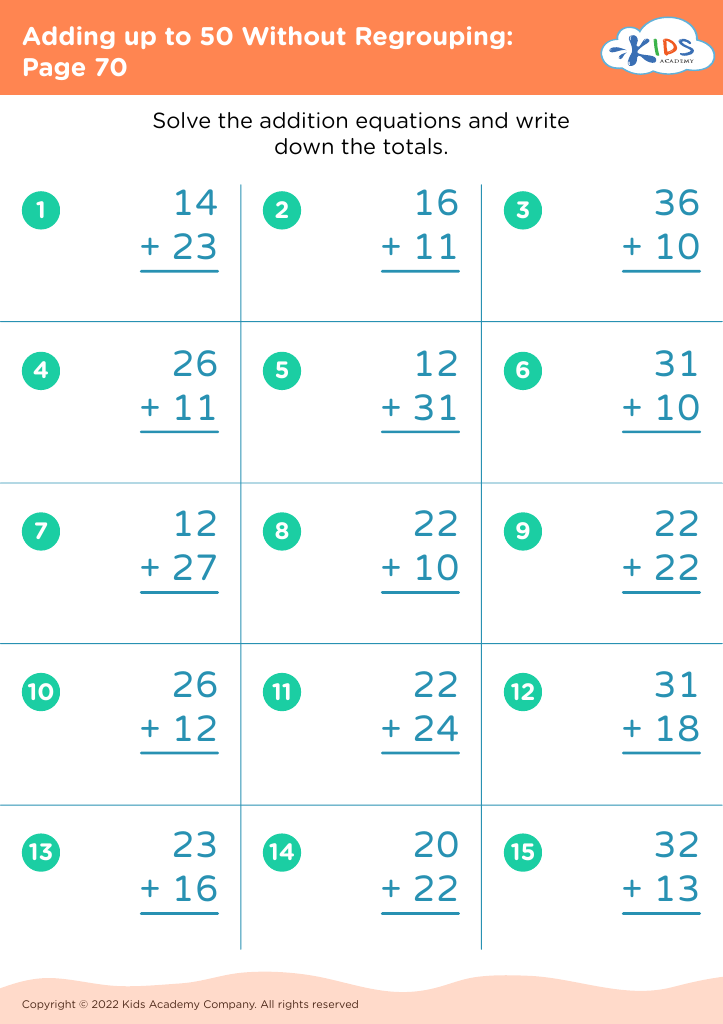
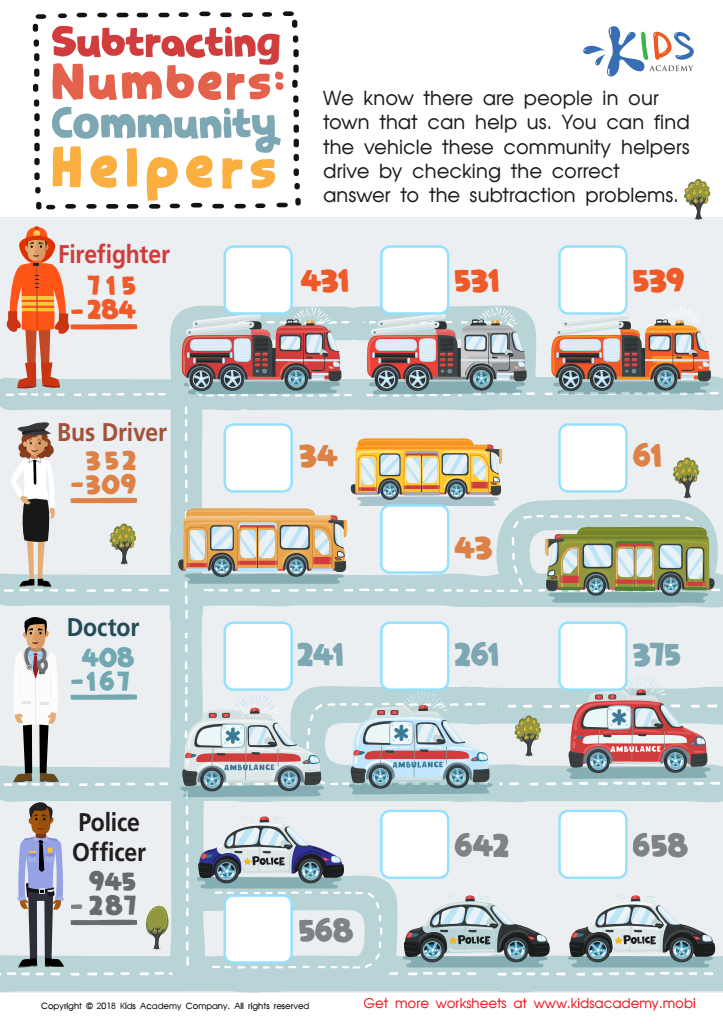
Subtracting Numbers: Community Helpers Worksheet
 Assign to My Students








Understanding number sequences is essential in Grade 2 mathematics as it serves as a foundation for more complex mathematical concepts. Grasping number sequences enables students to recognize patterns, which is critical for effective problem-solving and analytical thinking. As children work with sequences, they learn to identify and predict what comes next, fostering their cognitive development and logical reasoning skills.
For parents and teachers, emphasizing number sequences supports a child’s overall mathematical proficiency. It enhances their ability to perform arithmetic operations like addition and subtraction, which are built around sequence understanding. Moreover, familiarity with sequences helps in grasping more advanced topics such as multiplication and division later on.
Building a robust foundation in number sequences also contributes to a child's confidence in mathematics. When students learn to recognize patterns and relationships among numbers, they are more likely to engage positively with math, reducing anxiety associated with the subject. Ultimately, supporting students in understanding number sequences not only sets them up for success in future math studies but also encourages a lifelong appreciation for math as an everyday tool for problem-solving and critical thinking. Therefore, parents and teachers should prioritize this aspect of early math education to facilitate a comprehensive learning experience.