Animal recognition Grade 2 Word Problems Worksheets
4 filtered results
-
From - To
Boost your second graders' math skills with our engaging Animal Recognition Word Problems Worksheets! Designed specifically for Grade 2, these worksheets combine fun and learning by using familiar animals to present relatable math challenges. Students will solve real-world problems that involve addition, subtraction, and simple reasoning, all while enhancing their critical thinking. Each worksheet features colorful images and scenarios that capture children's interest, making math enjoyable and interactive. With a focus on animal recognition, these activities not only promote mathematical proficiency but also ignite curiosity about wildlife. Download now to help your students develop problem-solving skills in an exciting way!
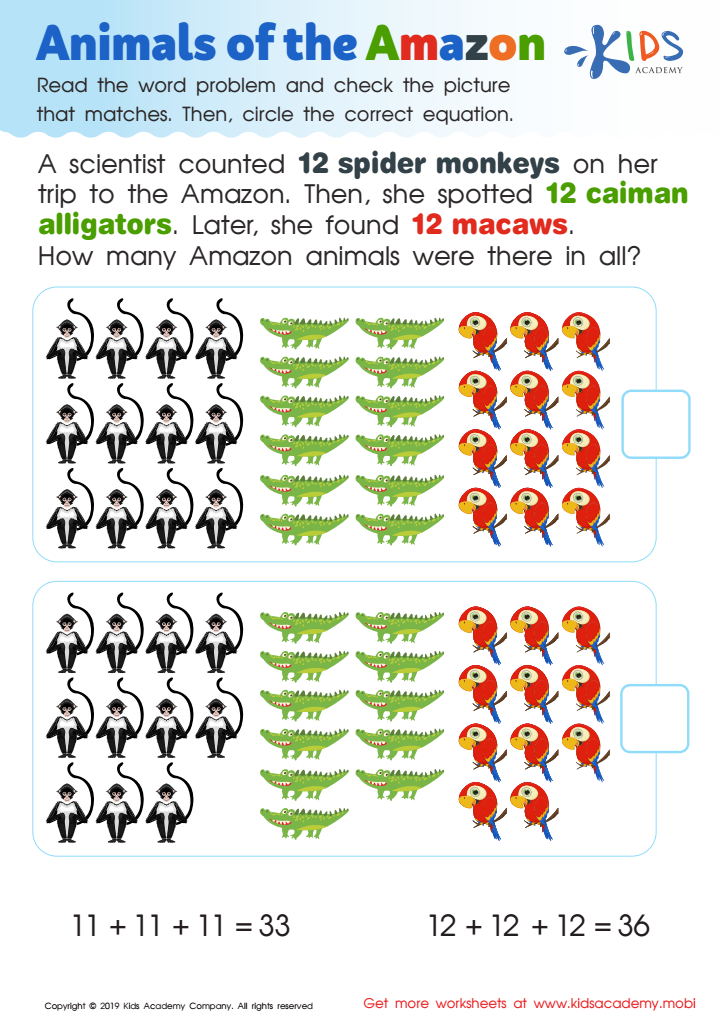
Animals of Amazon Worksheet
 Assign to My Students
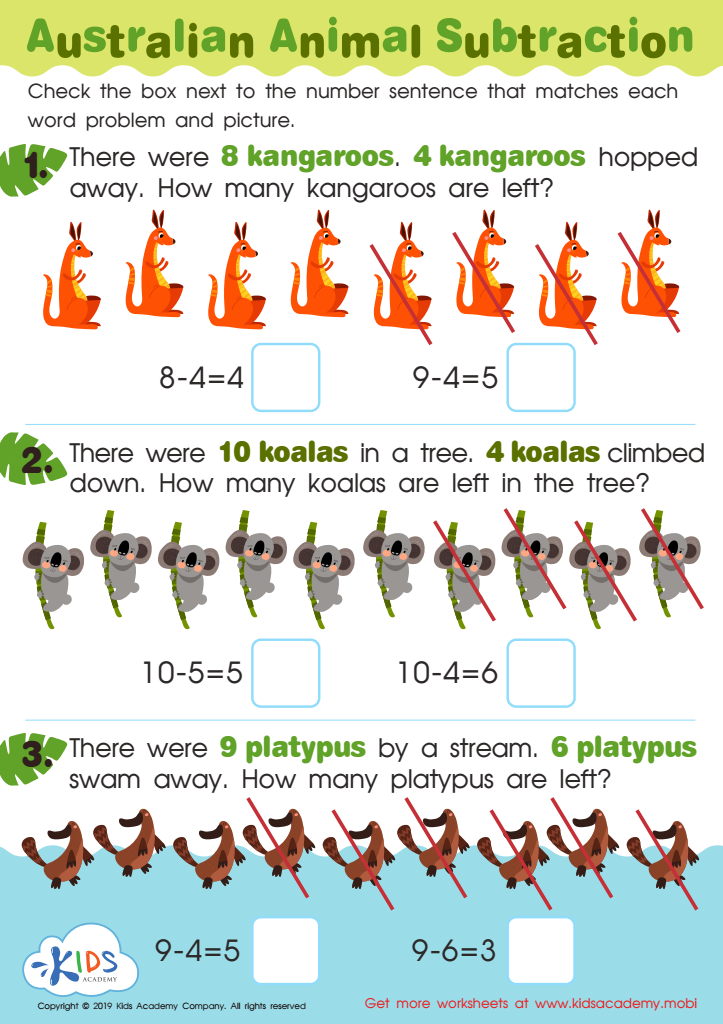
Australian Animal Subtraction Worksheet
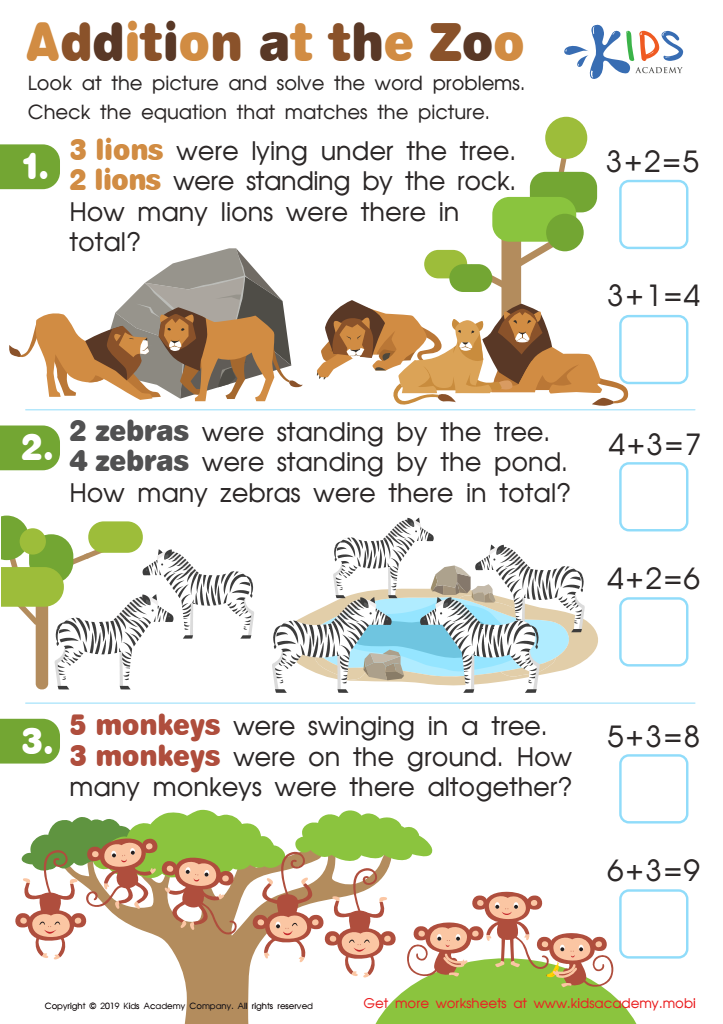
Addition at the Zoo Worksheet
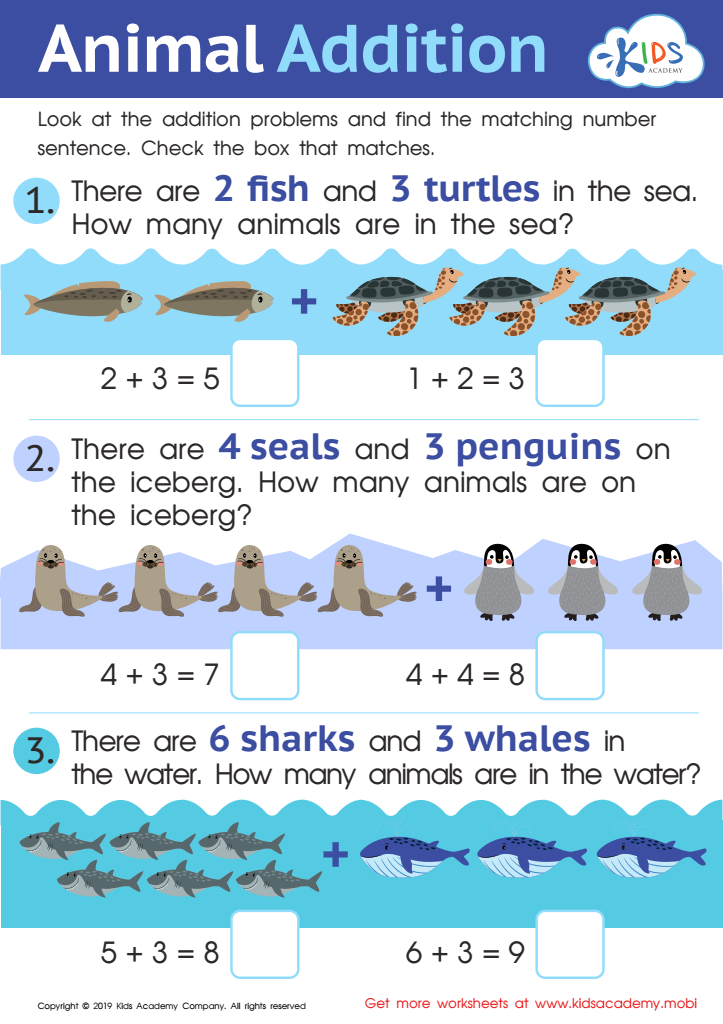
Animal Addition Worksheet








Animal recognition in the context of grade 2 word problems is crucial for several reasons.
Firstly, it enhances a child's observational skills. By identifying and recognizing different animals in word problems, children learn to focus on specific details and extract pertinent information, a skill that extends beyond mathematics into reading comprehension and critical thinking.
Secondly, discussing animals provides a rich context for learning. Animal themes often engage students' interests and imaginations. When problems incorporate relatable subjects like animals, children may find math more enjoyable and less intimidating, encouraging a positive attitude towards learning.
Furthermore, understanding animals can promote empathy and awareness about the environment. Teachers and parents can use these opportunities to discuss conservation and the role of animals in ecosystems, fostering a sense of responsibility and respect for nature.
Finally, integrating animal recognition into problem-solving helps develop emotional intelligence. Children can relate their emotions to their experiences with animals, creating a compassionate learning environment.
In conclusion, focusing on animal recognition in grade 2 word problems nurtures necessary cognitive and social skills, connecting academic objectives with real-world relevance, thus better preparing children for future learning experiences.