Moral understanding Grade 2 Reading Worksheets
3 filtered results
-
From - To
Explore our engaging Grade 2 Reading Worksheets focused on Moral Understanding! Tailored for young learners, these worksheets help cultivate essential skills in identifying and discussing moral lessons within stories. Through a variety of interactive activities, students will enhance their reading comprehension while exploring themes of kindness, honesty, and empathy. Our carefully designed exercises encourage critical thinking, enabling children to connect with characters and relate to real-life scenarios. Perfect for classroom use or at-home learning, these resources support curriculum goals while fostering a strong moral foundation in your child. Inspire your second grader today with our fun and educational moral understanding worksheets!
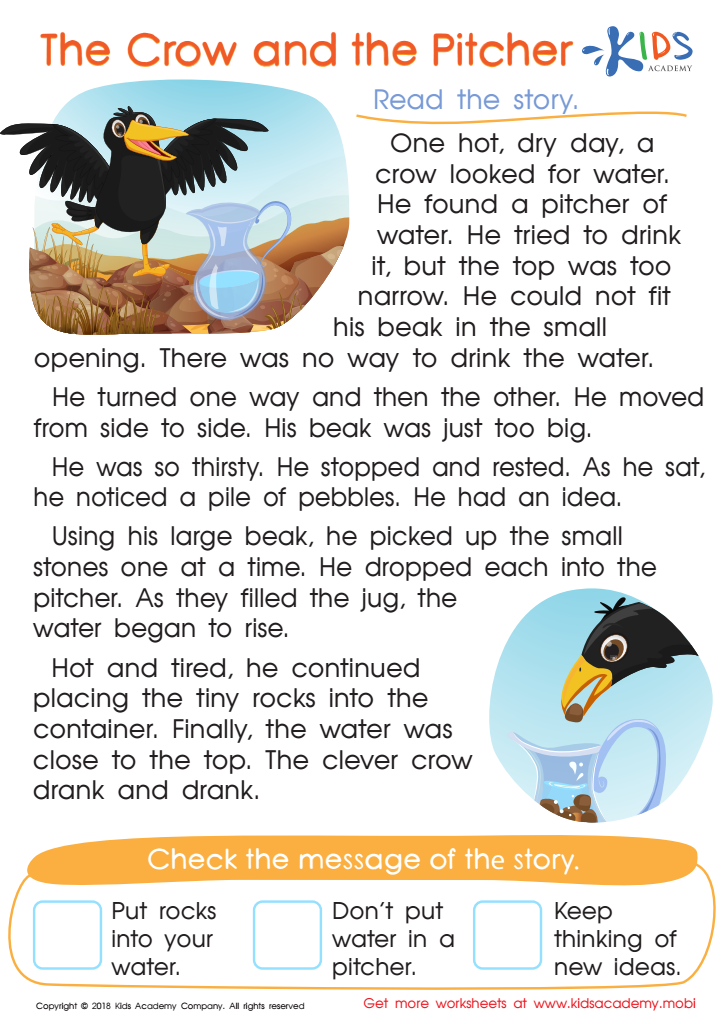
The Crow and the Pitcher Worksheet
 Assign to My Students
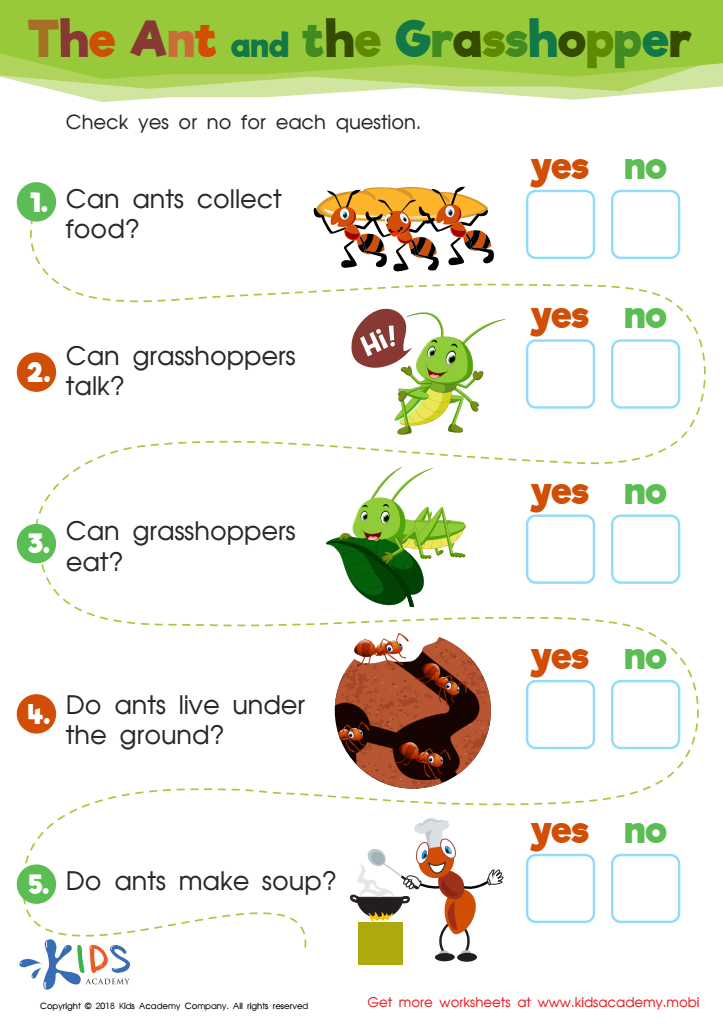
The Ant and The Grasshopper Worksheet
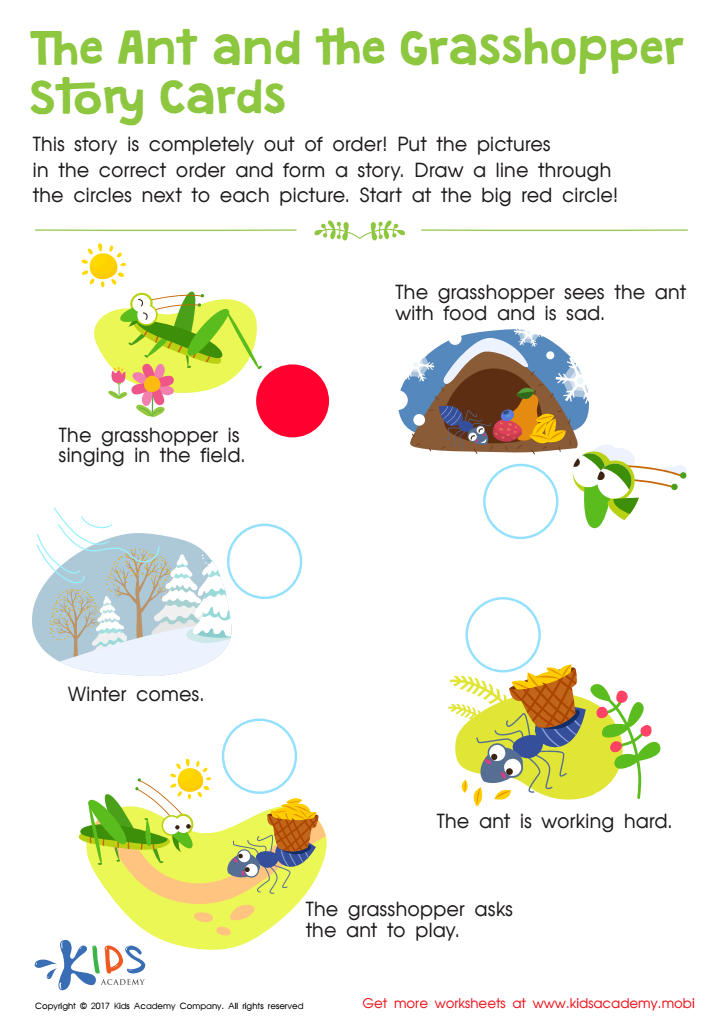
The Ant and The Grasshopper Worksheet







Moral understanding is crucial for second-graders, and both parents and teachers play a pivotal role in nurturing this development through reading. At this age, children are beginning to navigate complex social dynamics and form their identities influenced by moral values. Engaging with stories that illustrate ethical dilemmas, empathy, kindness, and fairness helps children cultivate their moral compass.
Reading allows children to see the consequences of characters' actions, prompting discussions about right and wrong. These conversations not only enhance comprehension skills but also instill critical thinking about society's norms and behaviors. Furthermore, literature often addresses diverse perspectives, promoting understanding and empathy towards others, which is vital in our multicultural society.
Parents and teachers should care because moral understanding impacts students' relationships, decision-making skills, and overall emotional intelligence. An environment that encourages moral reasoning encourages children to become responsible, caring adults who contribute positively to society. By integrating moral lessons into reading, adults can foster a growth mindset that values integrity, respect, and compassion, setting the foundation for a lifetime of ethical behavior and positive social interactions. Thus, great care should be given to selecting age-appropriate literature that promotes moral learning in the classroom and at home.