Shape Recognition Grade 2 Reading Worksheets
6 filtered results
-
From - To
Enhance your child's learning with our Shape Recognition Grade 2 Reading Worksheets. These engaging and educational worksheets help second graders master shape identification, understand attribute comparison and sharpen crucial reading skills. With colorful shapes and fun activities, each worksheet is meticulously designed to combine learning and play. Your child will enjoy tracing, coloring, and sorting shapes while building a strong foundation for geometry. These worksheets are perfect for both home and classroom use, providing a valuable resource to reinforce and expand your child’s knowledge effortlessly. Join Kids Academy to make learning a delightful adventure!
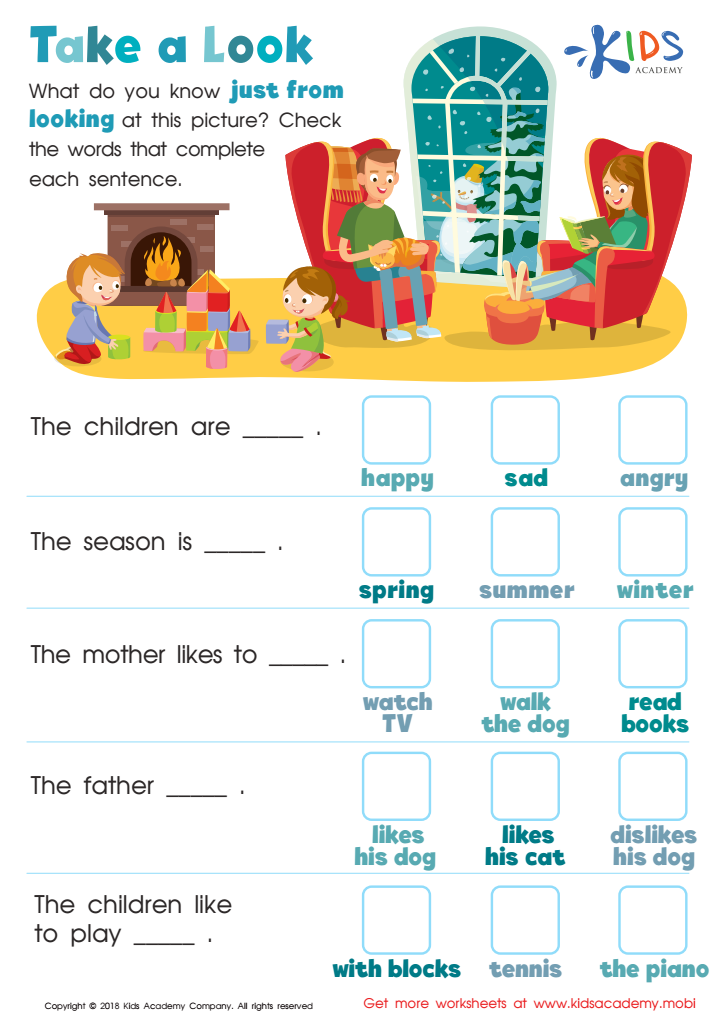
Take a Look - Part 1 Worksheet
 Assign to My Students
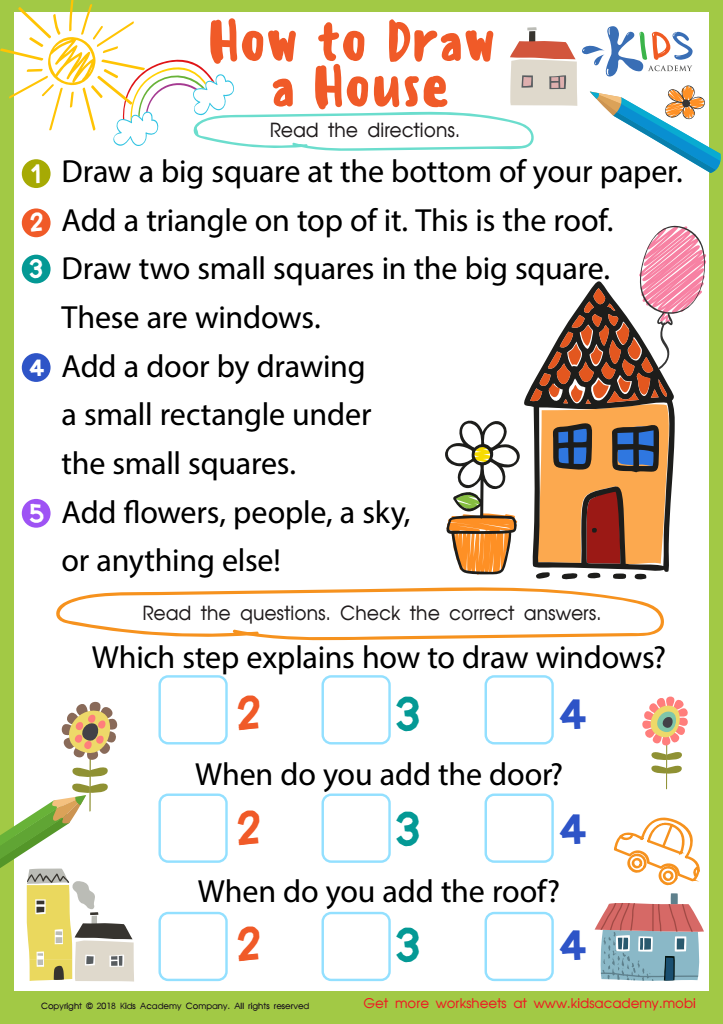
How to Draw House Worksheet







Shape recognition goes beyond mere identification; it is a crucial foundational skill that supports a child's cognitive development and other academic areas, including reading and mathematics. By second grade, recognizing shapes helps in the understanding of geometry, one of the primary concepts in math curricula. When children understand shapes, they enhance their ability to classify and organize visual information, a skill that translates directly to reading comprehension.
Shape recognition also bolsters critical thinking and problem-solving abilities. As children differentiate between shapes based on attributes such as sides, angles, and symmetry, they strengthen their analytical skills. This form of cognitive exercise is similar to the processes involved in decoding words and understanding sentence structures, thereby directly supporting literacy.
Moreover, recognizing and categorizing shapes can be an engaging way for children to develop fine motor skills, especially through hands-on activities like drawing or constructing shapes using physical objects. These activities, in turn, enhance hand-eye coordination and the physical skills necessary for writing.
Parents and teachers should therefore consider emphasizing shape recognition not just as an isolated skill but as an integral component of a well-rounded educational foundation. Encouraging children in this area nurtures a seamless integration of visual and cognitive skills essential for holistic learning and development.