Understanding life cycles Grade 2 Reading Non-Fiction Worksheets
3 filtered results
-
From - To
Explore the bustling world of nature with our "Understanding Life Cycles Grade 2 Reading Non-Fiction Worksheets"! These engaging resources help young learners grasp the stages of life cycles for plants and animals through captivating, grade-appropriate non-fiction passages. Students will enhance their reading comprehension skills as they dive into detailed, fact-based content bursting with vibrant illustrations. Ideal for 2nd graders, these worksheets blend education and fun seamlessly, encouraging curiosity and a love for science. Perfect for classroom or at-home learning, they provide students with valuable knowledge and reading practice in an accessible, exciting format. Unlock the wonders of life cycles today!
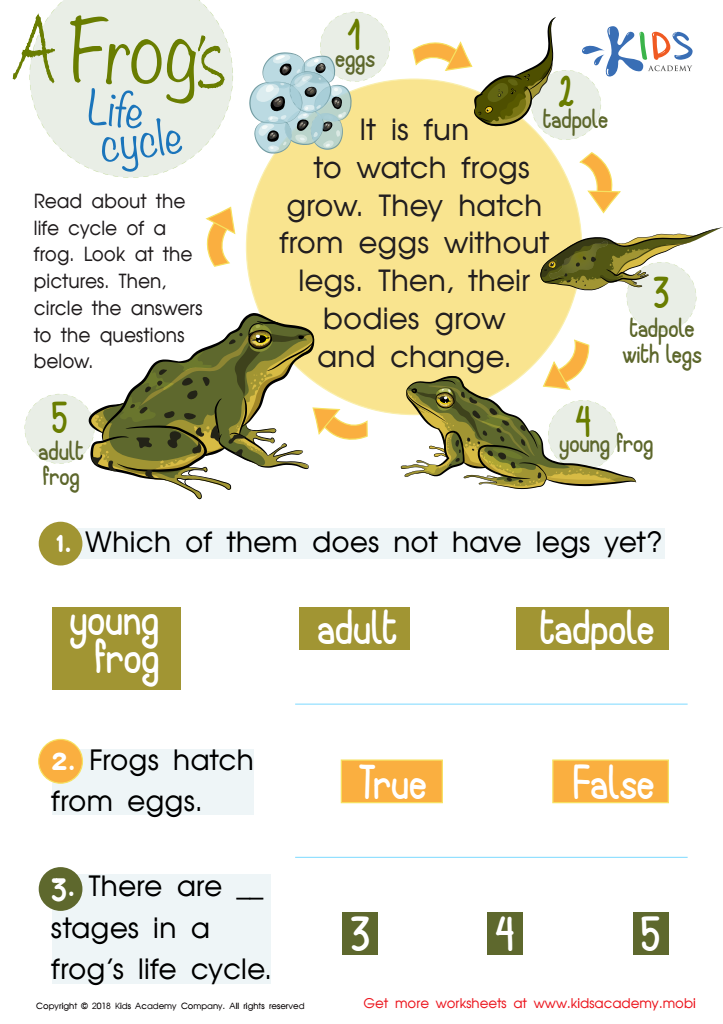
A Frog’s Life Cycle Worksheet
 Assign to My Students
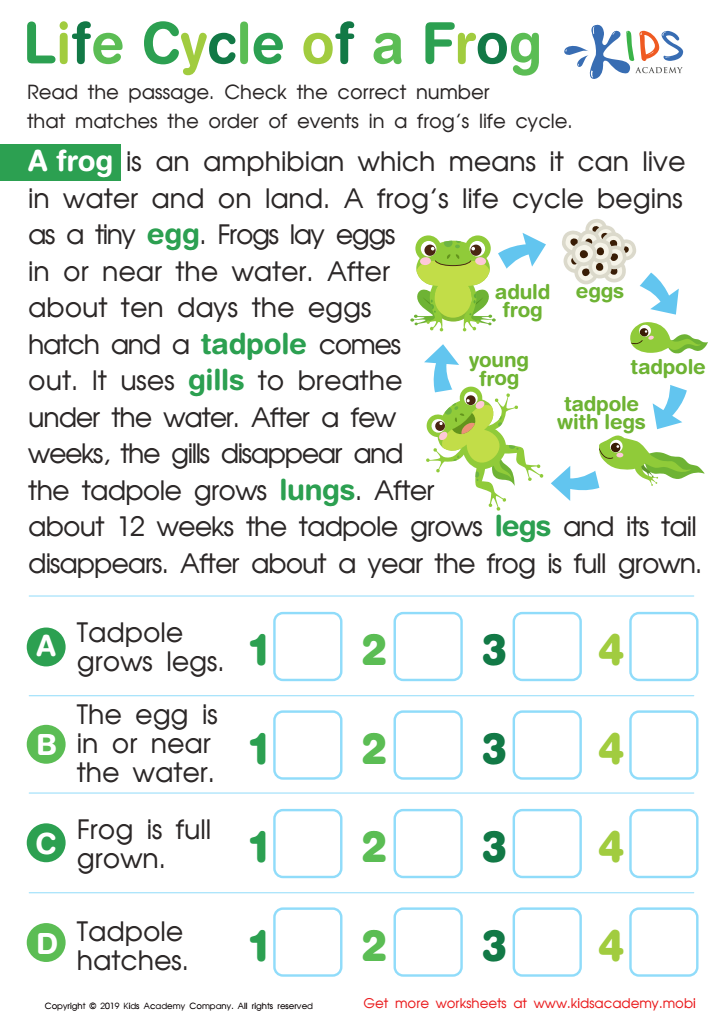
Life Cycle of a Frog Worksheet
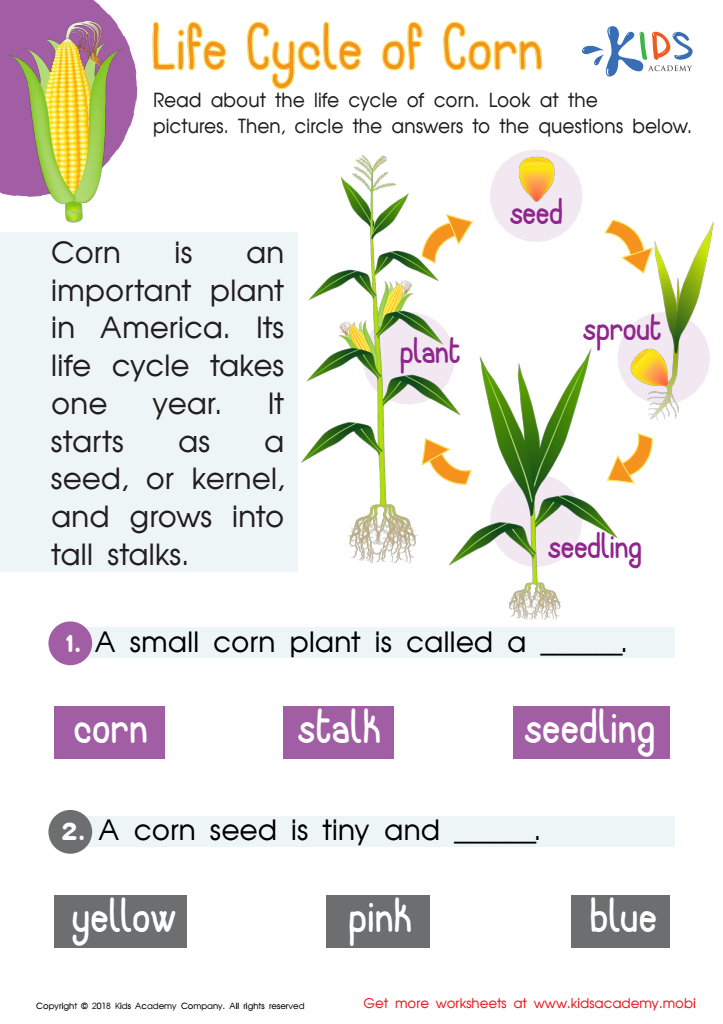
Life Cycle of Corn Worksheet



Understanding life cycles is a fundamental part of early science education, particularly for second graders. By introducing students to the concept of life cycles through grade-appropriate non-fiction texts, parents and teachers can significantly enrich a child's cognitive development.
First, understanding life cycles nurtures a child’s curiosity about the natural world. Children learn about the stages of growth in plants, animals, and even humans, fostering an appreciation for the environment and life forms around them. This early exposure lays a foundation for future scientific inquiry and critical thinking skills.
Second, reading non-fiction texts enhances a child's reading comprehension and factual knowledge. Unlike fiction, non-fiction texts present real-world information and concepts that expand a child's awareness and understanding of their surroundings. This kind of reading helps children recognize patterns, categorize information, and develop a more structured thinking process.
Finally, integrating life cycles into the curriculum supports a child’s emotional and social development. Understanding how life evolves and changes teaches children about growth, aging, and the interdependence of living organisms. This promotes empathy, responsibility, and respect for all life forms.
In essence, focusing on life cycles in grade 2 using non-fiction books not only aligns with educational standards but also equips children with critical knowledge and skills that are essential for their overall development.