Understanding pollination Grade 2 Plants and Animals Worksheets
3 filtered results
-
From - To
Discover the fascinating process of pollination with our Grade 2 Plants and Animals Worksheets! Perfectly designed for young learners, these engaging worksheets help students understand how flowers reproduce through vibrant visuals and hands-on activities. Children will explore the roles of bees, wind, and other pollinators in transferring pollen. These activities not only spark curiosity about nature but also reinforce critical science concepts. Ideal for classroom use or at-home learning, our pollination worksheets make learning fun and effective. Unlock your child's potential and nurture their love for science with our expertly crafted educational resources!
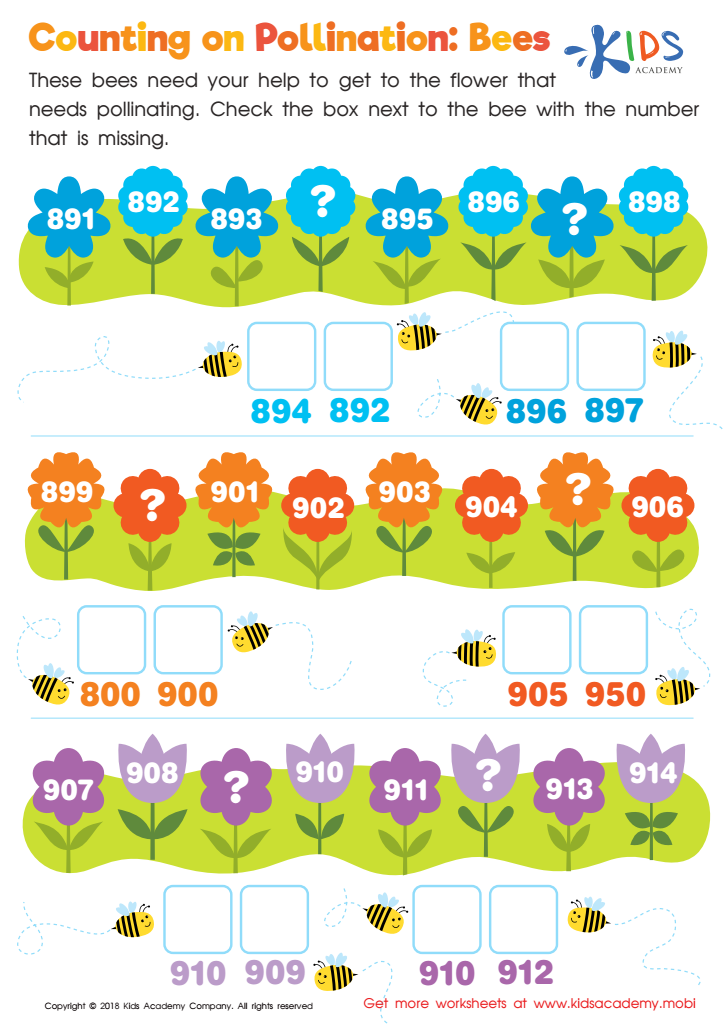
Counting on Pollination: Bees Worksheet
 Assign to My Students
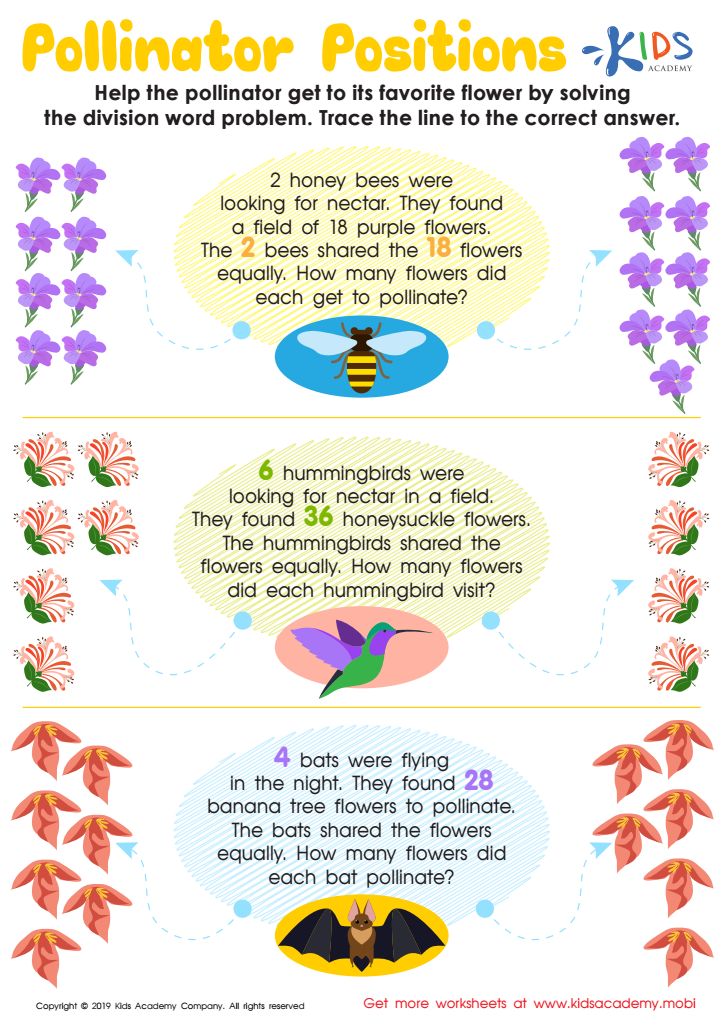
Pollinator Positions Worksheet
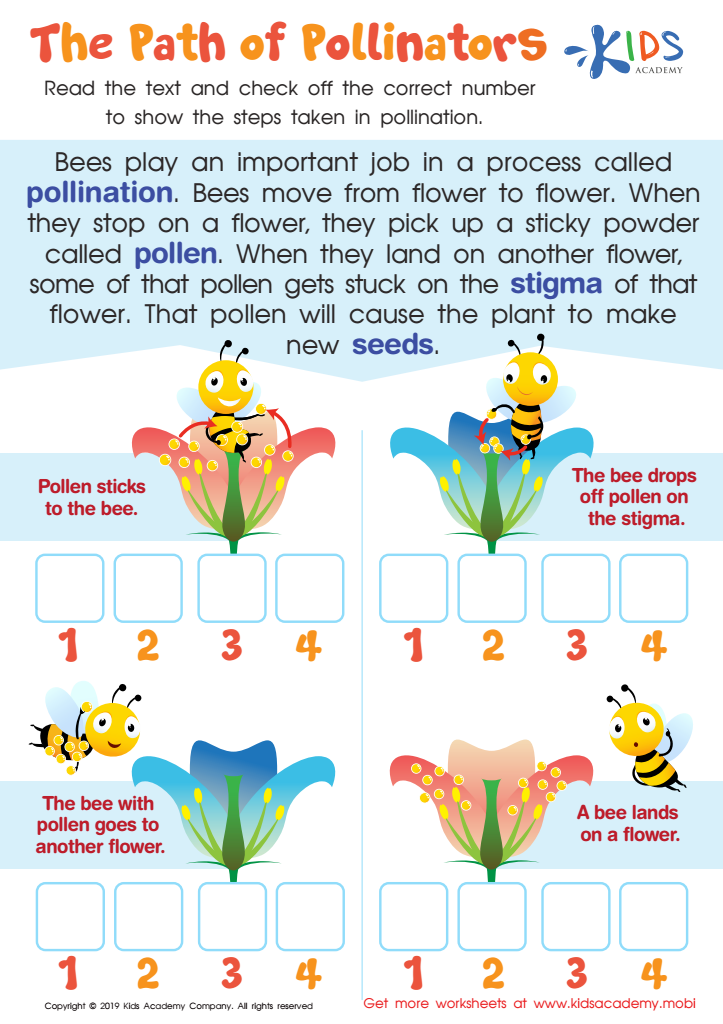
The Path of Pollinators Worksheet



Understanding pollination is vital for both parents and teachers when educating Grade 2 students about plants and animals. Pollination plays a crucial role in the lifecycle of plants, helping them reproduce and produce fruits and seeds. By grasping this concept, children can appreciate the significance of plants in our ecosystem and their interdependence with animals, particularly pollinators like bees, butterflies, and birds.
Teaching about pollination fosters an early appreciation for biodiversity and the intricate relationships within nature, which can instill a sense of environmental stewardship. Children learn that pollinators are essential for growing many foods we eat, like apples, strawberries, and almonds, which concretely connects the concept to their daily lives.
Moreover, this understanding aligns with science education standards, encouraging inquiry and observational skills. Activities like observing flowers, discussing the structure of plants, and even small experiments with pollination can make learning engaging and hands-on.
Parents and teachers who emphasize pollination can nurture curiosity and respect for nature. They help children see that even small creatures have a big impact, fostering empathy and responsibility towards conserving biodiversity. This knowledge lays a foundation for future scientific understanding and environmental conservation efforts.