Filters

7 filtered results

Clear all filters
Favorites
With answer key
Interactive

7 filtered results

Difficulty Level

Grade


Enhance your third grader's handwriting and reading skills with our engaging Cursive Alphabet Worksheets! Specifically designed for Alphabet Recognition, these worksheets help students master each letter's cursive form while improving their penmanship. Featuring interactive activities that make learning enjoyable, children will practice tracing and writing both uppercase and lowercase letters with confidence. Our comprehensive collection supports educational standards and fosters creativity, allowing young learners to explore and express their unique writing style. Perfect for classroom use or at-home practice, these worksheets are an essential tool for any motivated third-grade student aiming to excel in cursive writing and alphabet recognition.

Check out this FREE Grade 3 Trial Lesson on Cursive Alphabet!

Initial Positions on the Board

Favorites
With answer key
Interactive
  • Grade 3
  • Alphabet Recognition
  • Cursive Alphabet
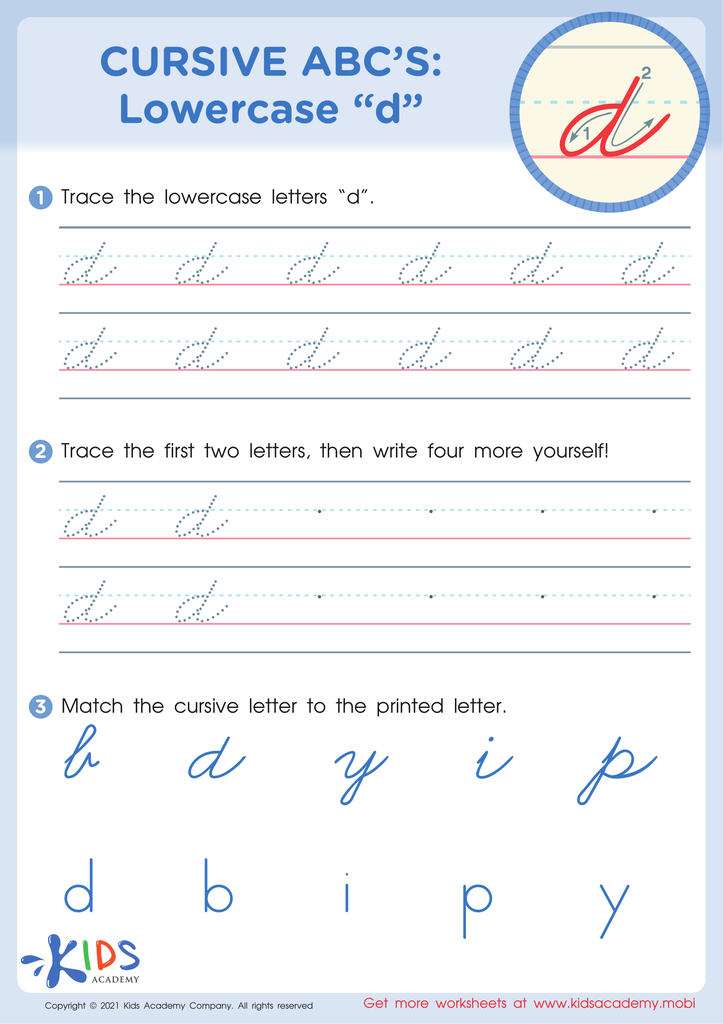
Cursive ABCs: Lowercase d

Cursive ABCs: Lowercase d

To make learning fun, introduce colorful worksheets! These help young learners perfect their cursive lowercase 'd'. By the end, they'll be better at writing and identifying the letter. It's an easy and enjoyable exercise for kids!
Cursive ABCs: Lowercase d
Worksheet
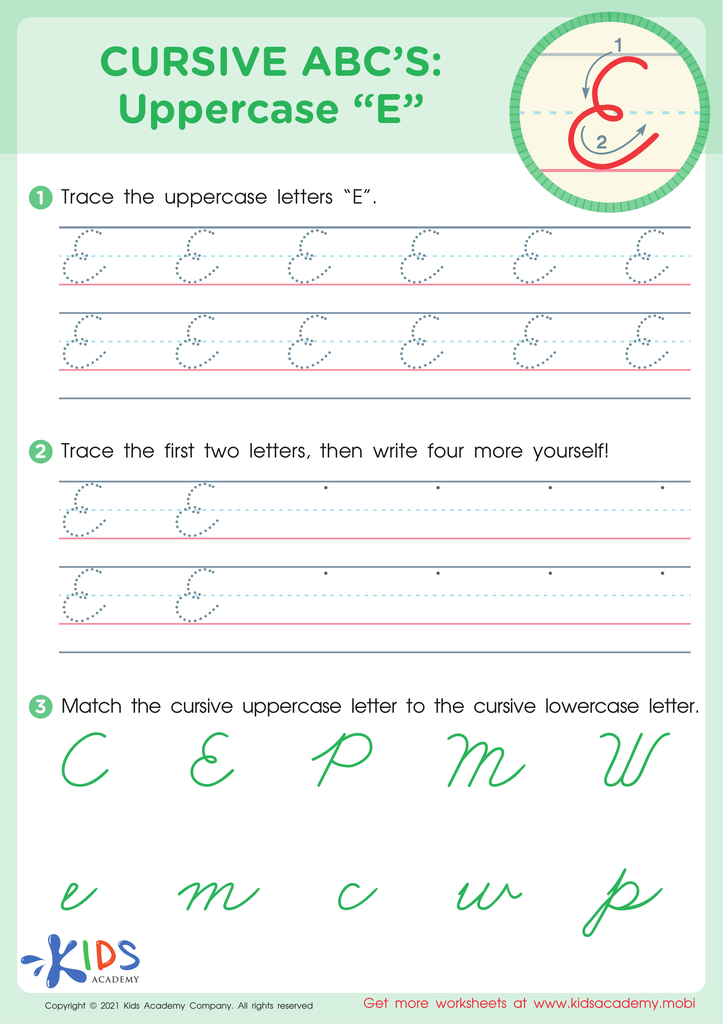
Cursive ABCs: Uppercase E

Cursive ABCs: Uppercase E

Ask your child if they can identify the letter 'E' and give examples. Each letter is unique, so provide coaching. Have them trace cursive 'E' to become familiar and boost confidence. Then, ask them to write it on their own.
Cursive ABCs: Uppercase E
Worksheet
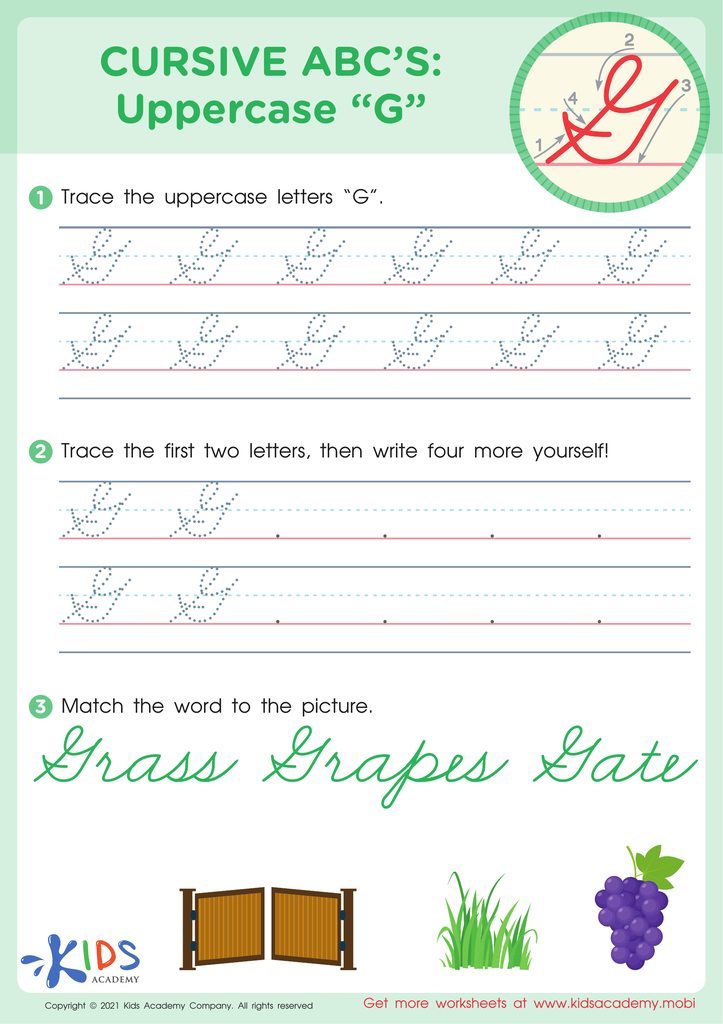
Cursive ABCs: Uppercase G

Cursive ABCs: Uppercase G

Remind your kids of words beginning with 'G' like 'girl' and 'goat'. Ask them to give examples too. Use this tracing worksheet to help your kids practice writing the cursive uppercase 'G'. It'll help them perfect their motor skills and get better at cursive letters.
Cursive ABCs: Uppercase G
Worksheet
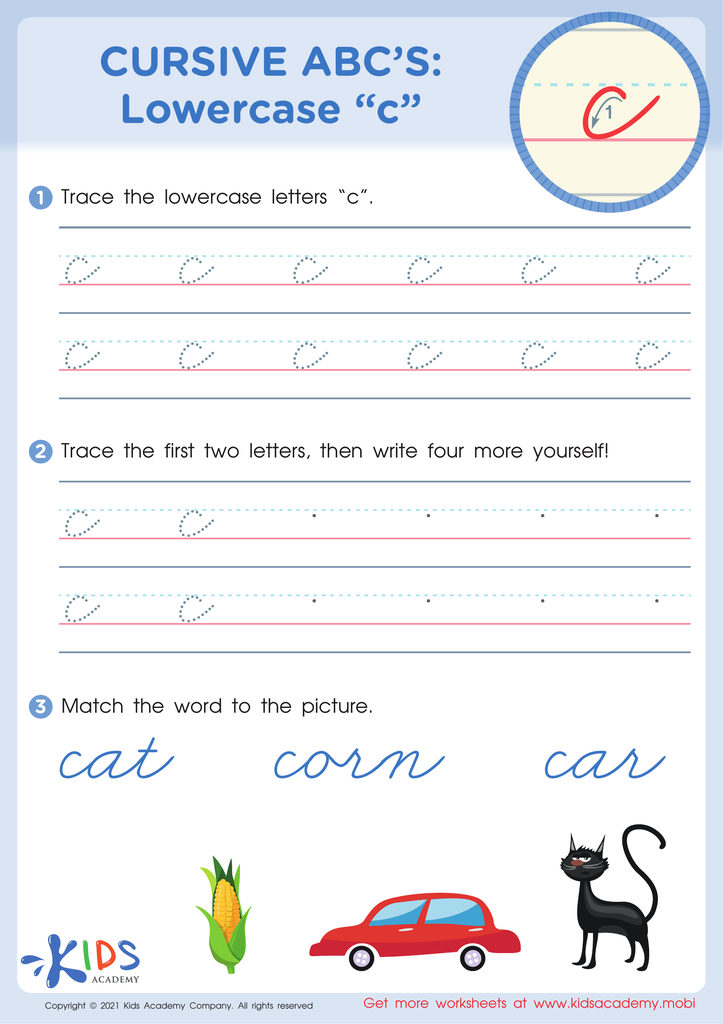
Cursive ABCs: Lowercase c

Cursive ABCs: Lowercase c

Once your child has successfully printed their letters, help them learn to recognize and write the alphabet in cursive. Struggling? This worksheet is perfect to assist them. Writing is an essential skill for kids to learn, so do all you can to help them. Use these tracing worksheets and guide them as they write the lowercase letter 'c' in cursive.
Cursive ABCs: Lowercase c
Worksheet
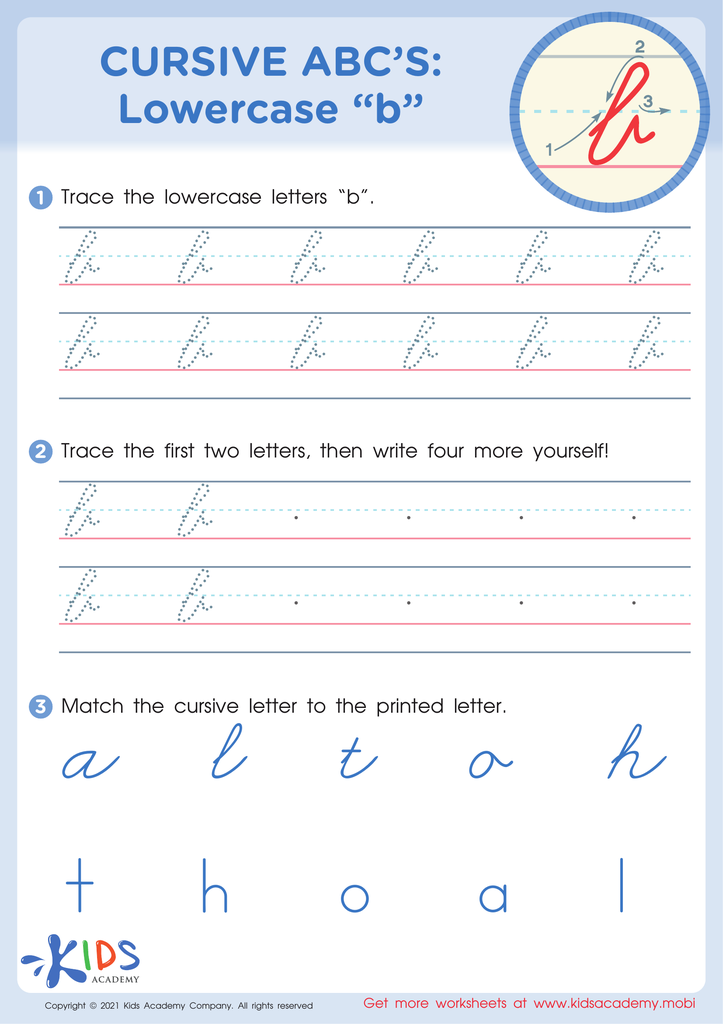
Cursive ABCs: Lowercase b

Cursive ABCs: Lowercase b

Trace two lines of lowercase b's with your kids. Guide them through the loops and swirls to help them learn cursive handwriting. Then let them practice writing the letter b themselves in the last two lines. With this exercise, your kids should become better at writing and recognizing the lowercase cursive b.
Cursive ABCs: Lowercase b
Worksheet
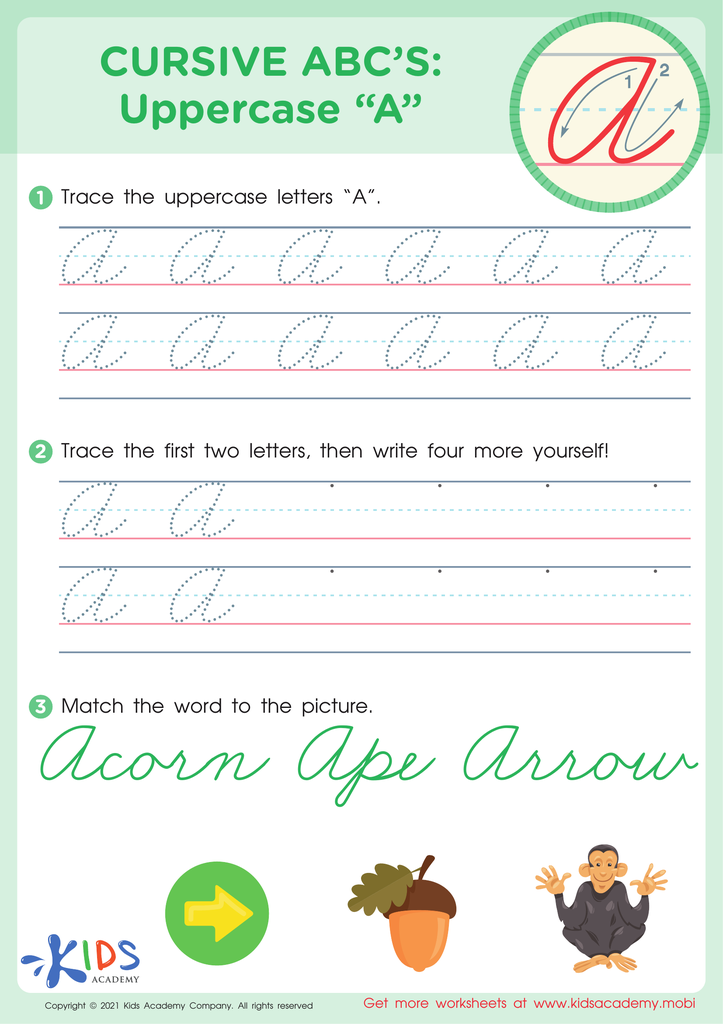
Cursive ABCs: Uppercase A

Cursive ABCs: Uppercase A

Help your kids develop their writing skills with our great tracing sheets. Improve their motor skills, as well as their vocabulary, by guiding them through tracing the dotted lines for the uppercase letters of the alphabet. When they are ready, let them practice writing the letters on their own for improved confidence.
Cursive ABCs: Uppercase A
Worksheet
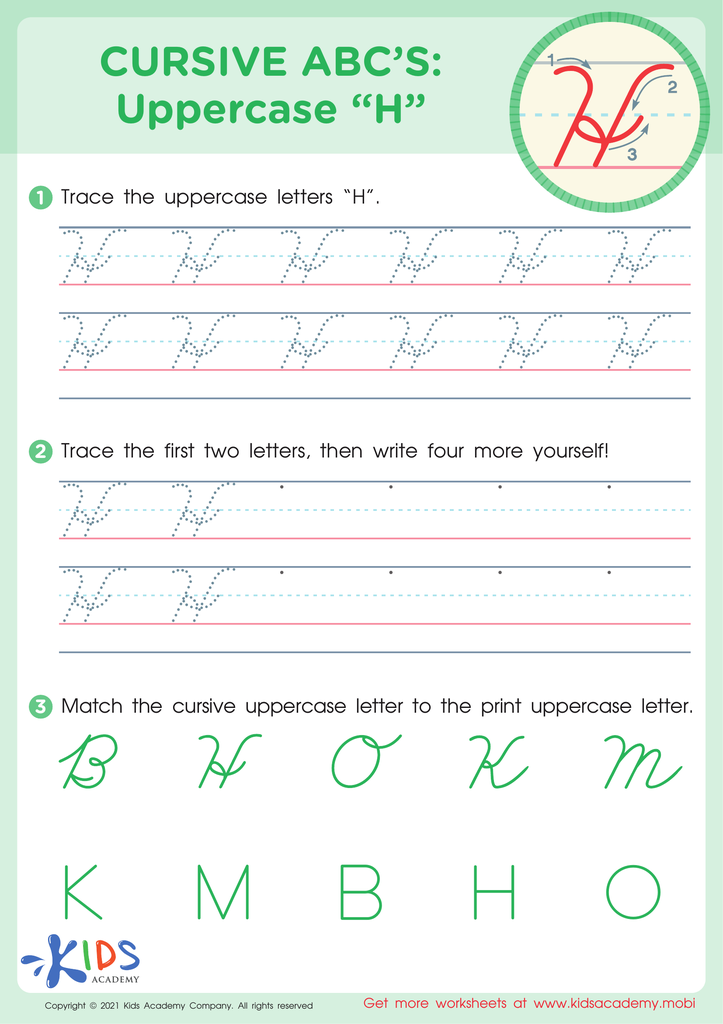
Cursive ABCs: Uppercase H

Cursive ABCs: Uppercase H

Have your child recite the alphabet and give you words beginning with H. This tracing sheet is perfect to help them improve their handwriting. Guide their hands as they trace the uppercase H, then have them practise writing it alone. At the bottom is an exercise to check their letter recognition.
Cursive ABCs: Uppercase H
Worksheet


Alphabet recognition, particularly in cursive, is a crucial skill for third graders, and both parents and teachers should prioritize it for several reasons. First, cursive writing helps in the development of fine motor skills and hand-eye coordination, as it requires fluid hand movements. Mastering cursive also supports cognitive development, as learning cursive involves mental processes that strengthen brain connections related to memory and literacy.

Securing a strong foundation in alphabet recognition aids in improving overall literacy. Cursive writing encourages students to think beyond simple handwriting; it promotes a deeper understanding of word formation and sentence structure. Moreover, cursive writing fosters a sense of personal expression and style, enhancing students' confidence in their writing capabilities.

In a digital age where typing often takes precedence, learning cursive teaches students the importance of traditional writing skills, such as signing their names and writing letters. Furthermore, many historical documents are written in cursive, making this skill valuable for understanding our past. Lastly, proficient cursive writing abilities can enhance classroom involvement, helping students express their ideas clearly and creatively. Thus, prioritizing cursive alphabet recognition is essential for nurturing well-rounded, literate, and confident young learners.