Fine Motor Skills Grade 3 Letter G Worksheets
3 filtered results
Difficulty Level
Grade
Age
-
From - To
Subject
Activity
Standards
Our "Fine Motor Skills Grade 3 Letter G Worksheets" are designed to bolster your child's handwriting precision and dexterity, crucial for their academic development. These engaging activities foster fine motor skills through tracing, drawing, and writing exercises. Specifically tailored for third graders, the worksheets enhance their letter formation, ensuring legible and consistent handwriting. Whether your child is practicing cursive or print, these printable resources make learning the letter G fun and effective. Perfect for classroom or home use, these worksheets support comprehensive motor skill development, contributing to improved educational outcomes and confidence in young learners.
Favorites
With answer key
Interactive
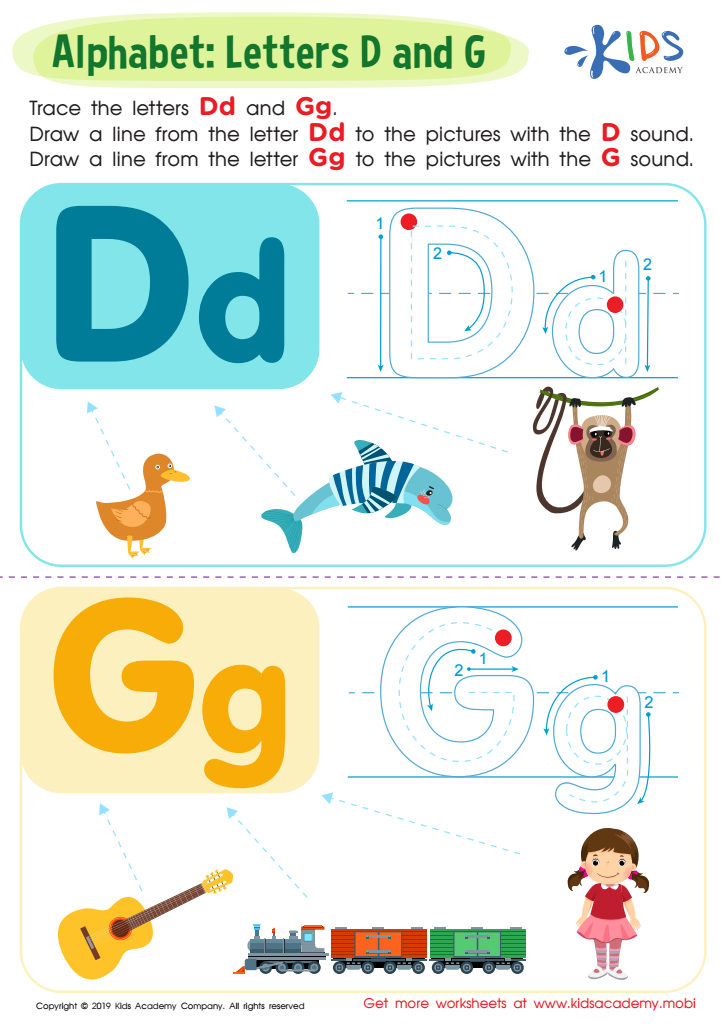
Letter D and G Tracing Worksheet
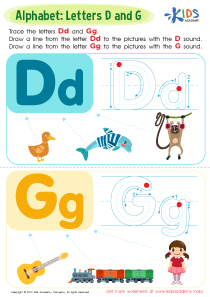
Kids can explore their imagination with the 'Alphabet: Letters D and G' worksheet! They'll trace capital and lowercase "D" and "G" and trace a line from the words. Colorful animals and objects make the task more fun and entertaining!
Letter D and G Tracing Worksheet
Worksheet
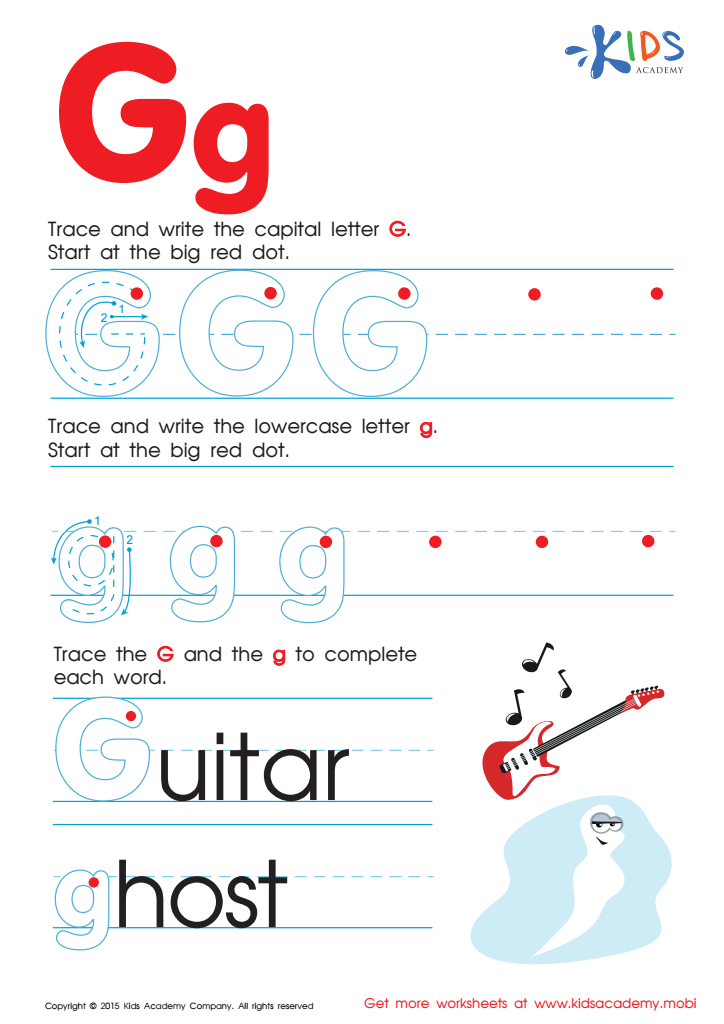
Letter G Tracing Page
Get ready to trace the letter "G" – with a big red spot as the starting point, trace the lines and watch the letter appear. Uppercase and lowercase letters are both easy and fun to write. Give it a go and finish the word "go". Play the guitar and say "hello" to a funny ghost!
Letter G Tracing Page
Worksheet
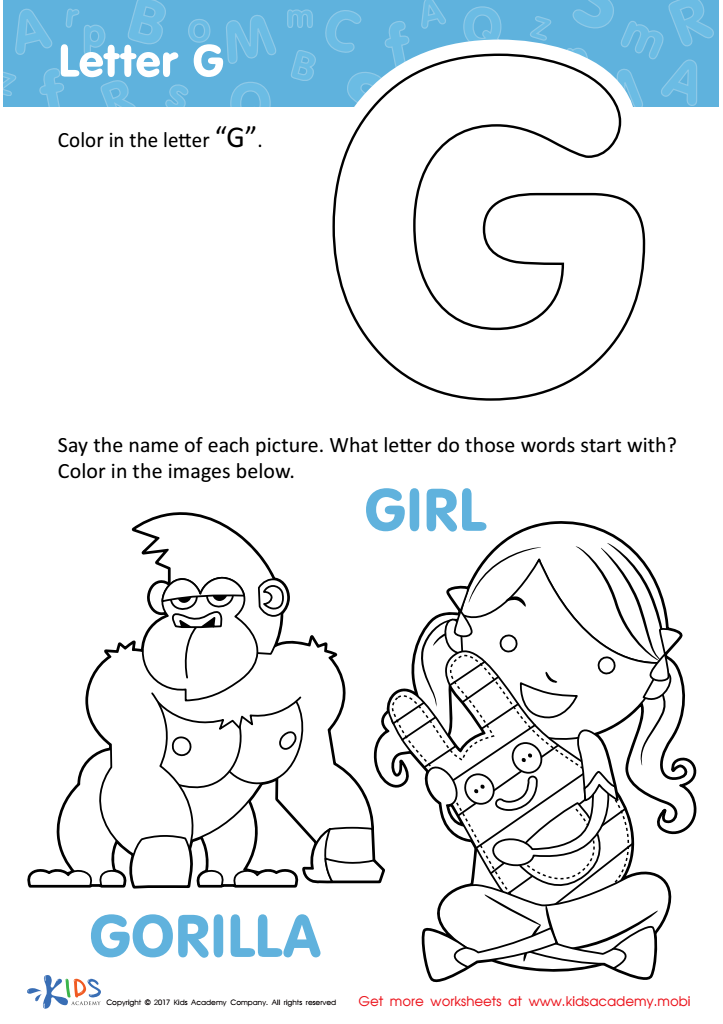
Letter G Coloring Sheet
This "G" coloring page encourages creativity and teaches kids the letter "G" sound. With its fun visuals and familiar words, it's sure to excite your child. Plus, you can talk about the letter’s sound with the pictures given.
Download (PDF)
 Assign to My Students
Assign to My Students
Letter G Coloring Sheet
Worksheet
Join Kids Academy for Free
Who is primarily going to use this learning content?



Understanding and emphasizing fine motor skills in the third grade, particularly in forming the letter G, is crucial for parents and teachers for several reasons. Fine motor skills involve the coordination of small muscles in the hands and fingers, essential for tasks like writing, buttoning clothes, and even playing musical instruments. Mastery of these skills boosts a child's handwriting, which directly impacts their academic performance. Properly forming the letter G enhances legibility in their writing, ensuring their work is clear and comprehensible.
Strengthening fine motor skills also fosters independence. As children improve these skills, they perform daily tasks more efficiently, fostering a sense of confidence and self-reliance. Furthermore, engaging in activities that develop fine motor skills can be therapeutic, improving a child's concentration and patience. These improvements aren't just beneficial for schoolwork but overall cognitive development.
By caring about and focusing on teaching children the proper way to form the letter G, parents and teachers support the child's holistic development. Enhanced fine motor skills prepare children for future academic challenges, reduce frustration in daily tasks, and build a foundation for lifelong skills beyond the classroom, such as creative and technical pursuits. Therefore, involving oneself in this aspect of a child’s development is invaluable.