Letter recognition Grade 3 Letter U Worksheets
3 filtered results
Difficulty Level
Grade
Age
-
From - To
Subject
Activity
Standards
Our "Letter U Worksheets" for Grade 3 are designed to enhance letter recognition skills in a fun and engaging way. Packed with interactive activities and colorful illustrations, these worksheets make learning the alphabet enjoyable. Children will practice identifying, tracing, and writing the letter U through diverse exercises geared to reinforce their understanding. Perfect for both classroom and home use, these worksheets also support vocabulary building and phonics awareness. Ideal for educators and parents aiming to solidify foundational literacy skills, these resources will ensure your third grader masters the letter U confidently. Discover our enriching "Letter U Worksheets" today!
Favorites
With answer key
Interactive
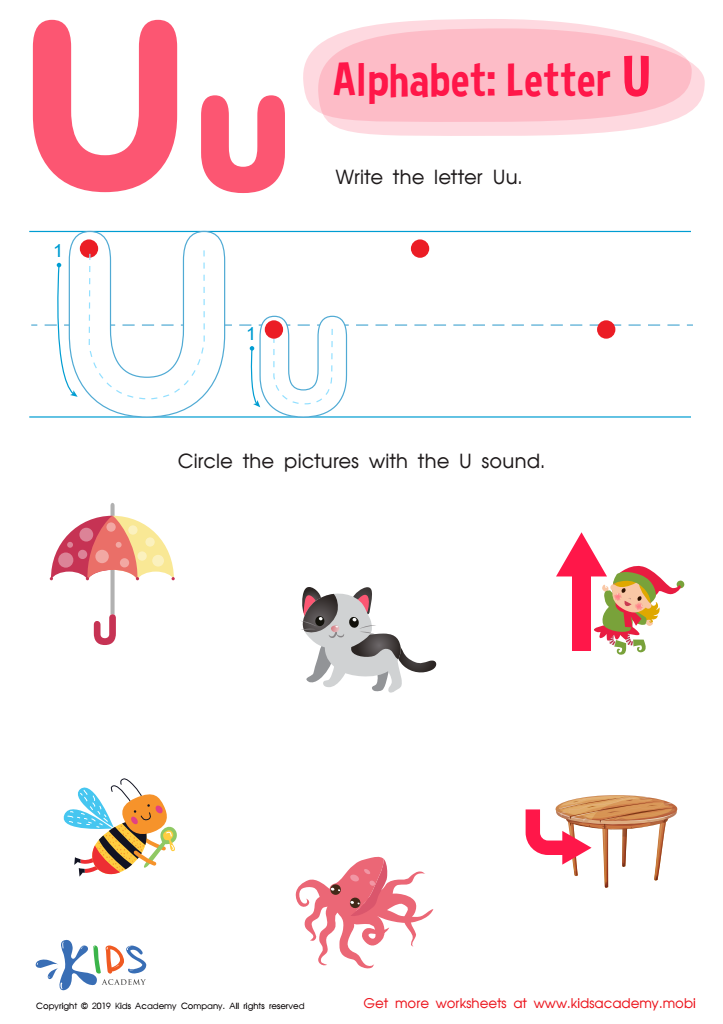
Letter U Tracing Worksheet
Your students can have fun and learn about the alphabet with this letter «U» worksheet. Pre-schoolers will trace the letter «U», circle words with the letter sound, and learn phonics while boosting their confidence. Doing these tasks will help them understand the letter more.
Letter U Tracing Worksheet
Worksheet
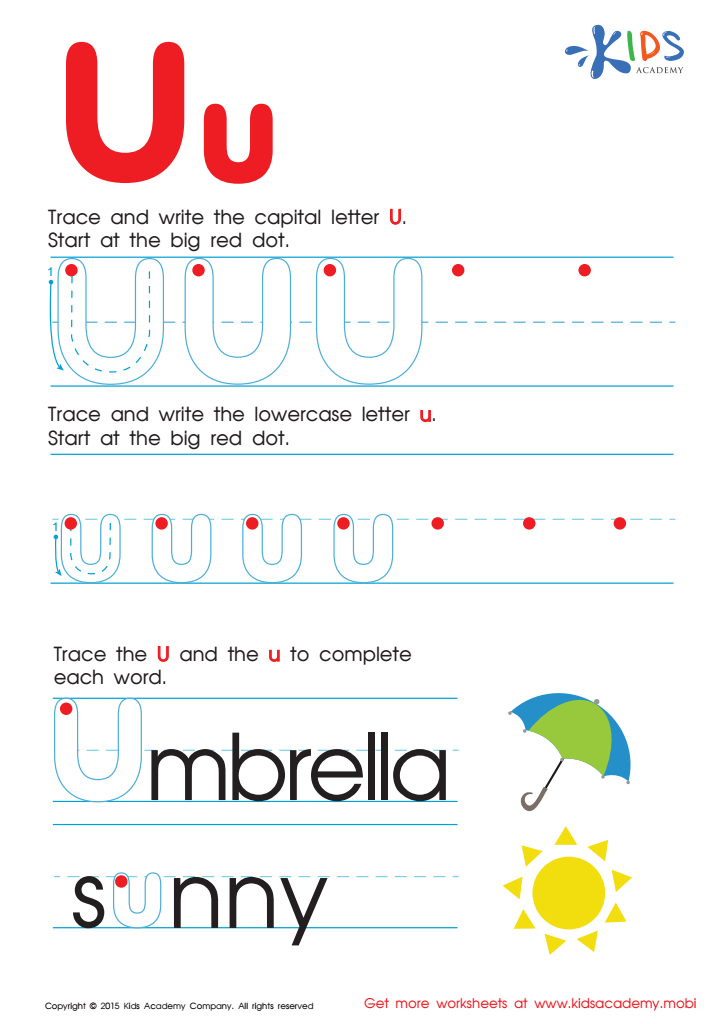
Letter U Tracing Page
Ready to trace and write the letter "U"? Use our worksheet and practice tracing both uppercase and lowercase letters. Complete the words "umbrella" and "sunny" with a capital "U". Check our full collection of alphabet printables for more activities.
Letter U Tracing Page
Worksheet
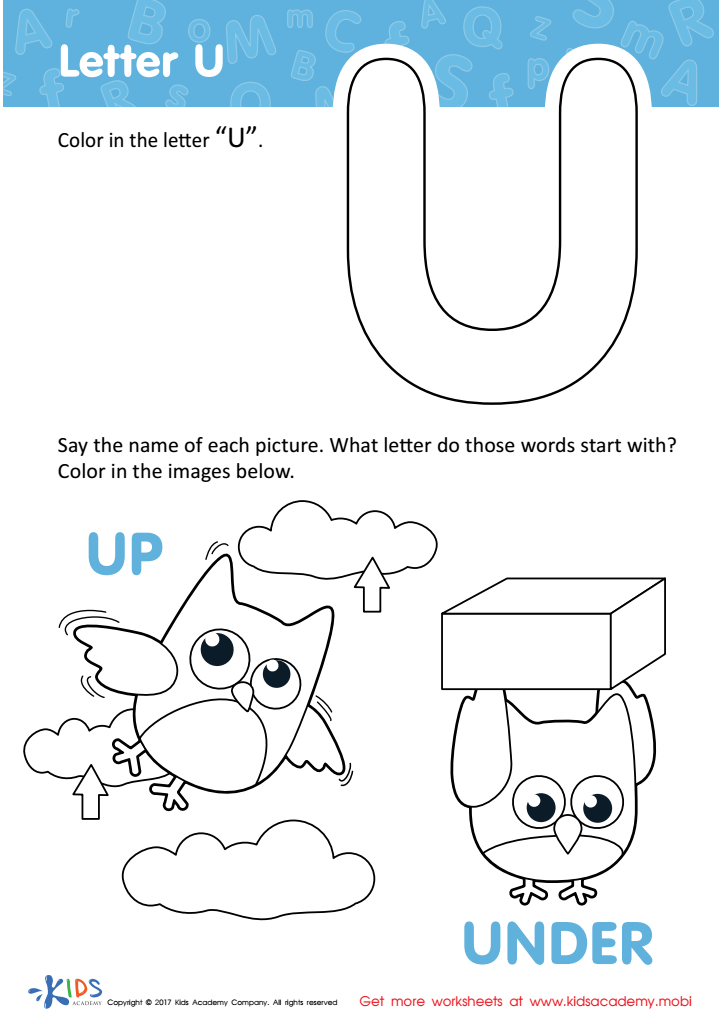
Letter U Coloring Sheet
This letter "U" coloring page helps your child learn two things at once - the letter "U" and positional words! An adorable owl character aids in understanding up and under. In a few strokes of a crayon, your child can master these concepts.
Download (PDF)
 Assign to My Students
Assign to My Students
Letter U Coloring Sheet
Worksheet
Join Kids Academy for Free
Who is primarily going to use this learning content?


Letter recognition is a foundational skill that forms the core of early literacy development. For third graders, recognizing the letter U, alongside its associated sounds and proper usage, is particularly crucial as it is an integral part of their phonemic awareness and reading proficiency.
One reason parents and teachers should focus on letter U recognition is that it helps children decode words and understand spelling patterns. Many common words include the letter U, and mastering this letter aids in reading fluency, comprehension, and vocabulary development. If a child can promptly identify and sound out the letter U, they are better equipped to tackle complex words and texts.
Equally important is the fact that the letter U can be tricky due to its variable sounds in different contexts (e.g., "umbrella" vs. "put"). This makes specific and focused practice essential. Clear instruction on how the letter U functions within words helps diminish confusion and fosters precise reading and writing skills.
Furthermore, a solid grasp of letter recognition boosts a child's confidence. When they can easily identify all the letters, including less frequently encountered ones like U, they feel more competent and are more likely to engage with reading materials enthusiastically.
In conclusion, focusing on letter U recognition builds a critical part—phonemic understanding—in a child's educational journey, serving as a building block for higher levels of literacy and academic success.