Data interpretation Grade 3 Worksheets
5 filtered results
-
From - To
Enhance your third-grader's analytical skills with our Data Interpretation Grade 3 Worksheets designed by education experts. These printable resources help young learners master the basics of interpreting bar graphs, pie charts, line plots, and tally charts. Through engaging activities, students practice extracting, comparing, and analyzing data to build strong mathematical foundations. The worksheets meet Common Core standards and are perfect for classroom settings or additional practice at home. Boost your child’s confidence in math with exercises that make learning both fun and impactful. Visit Kids Academy to download free worksheets and watch your child's data skills soar!
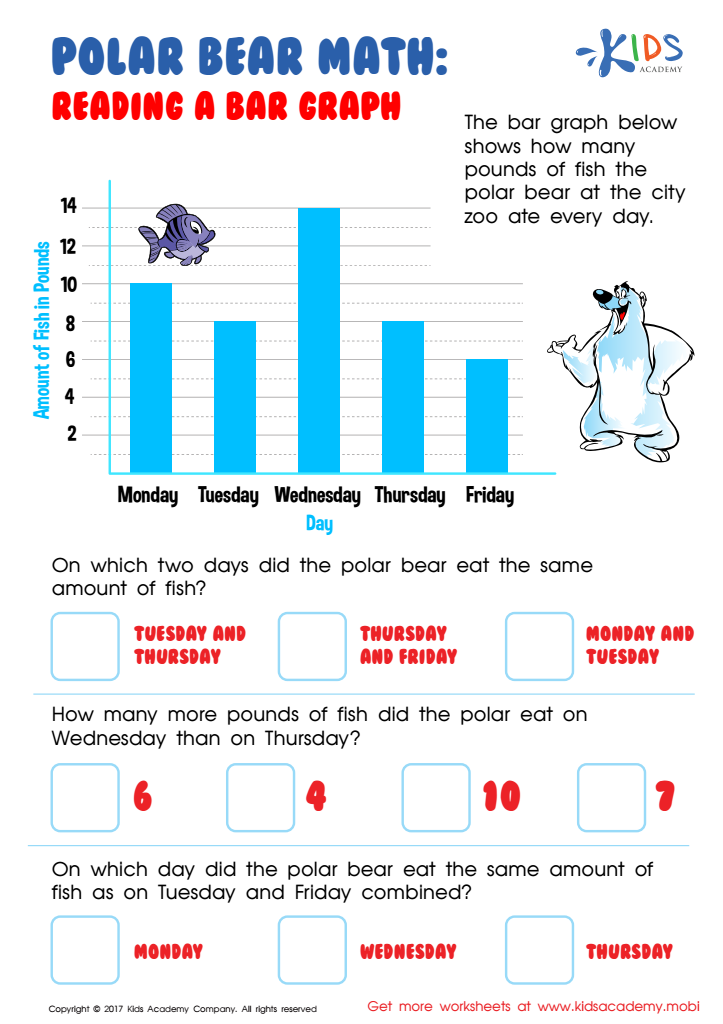
Reading Bar Graph Worksheet
 Assign to My Students
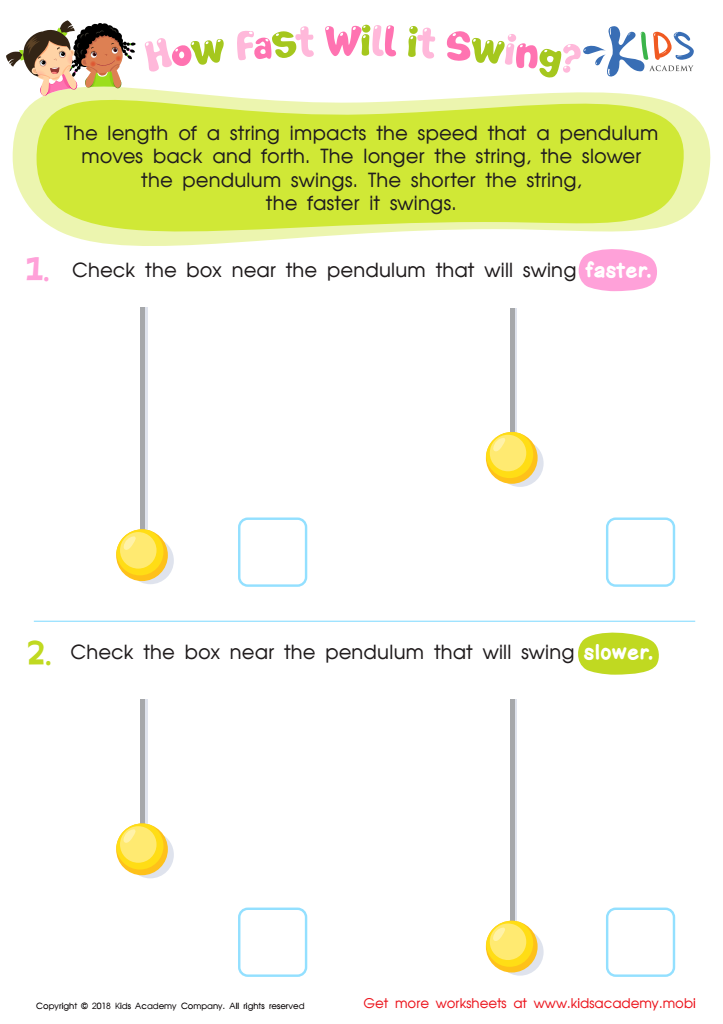
Pendulum Experiment Worksheet For 3rd Grade
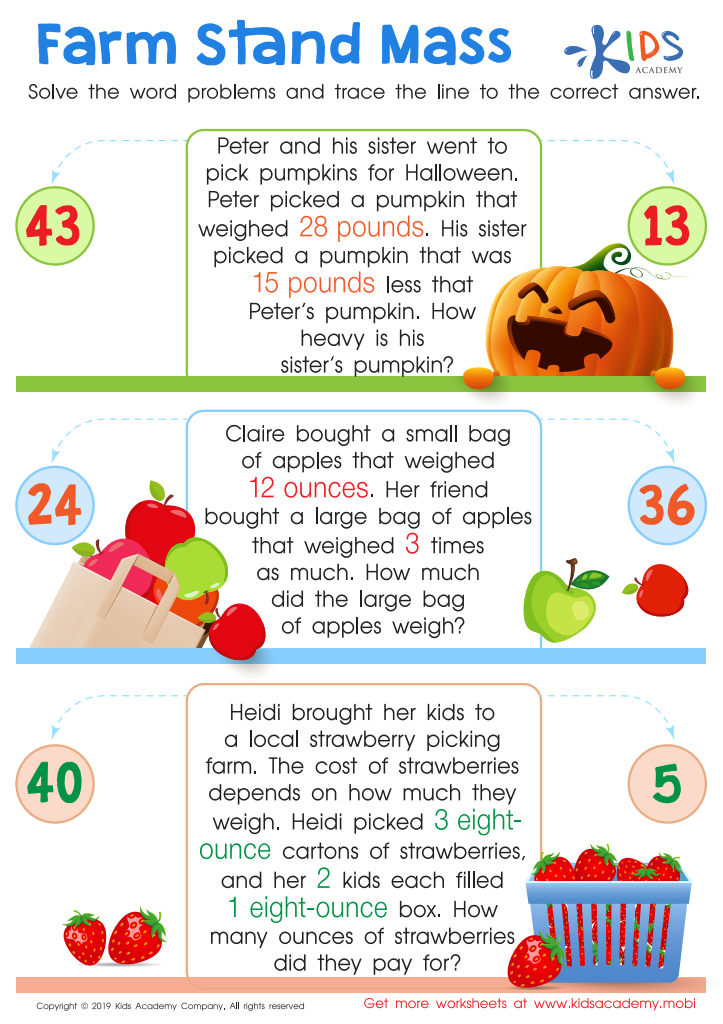
Farm Stand Mass Worksheet

Aircraft Carrier Picture Graphs Worksheet
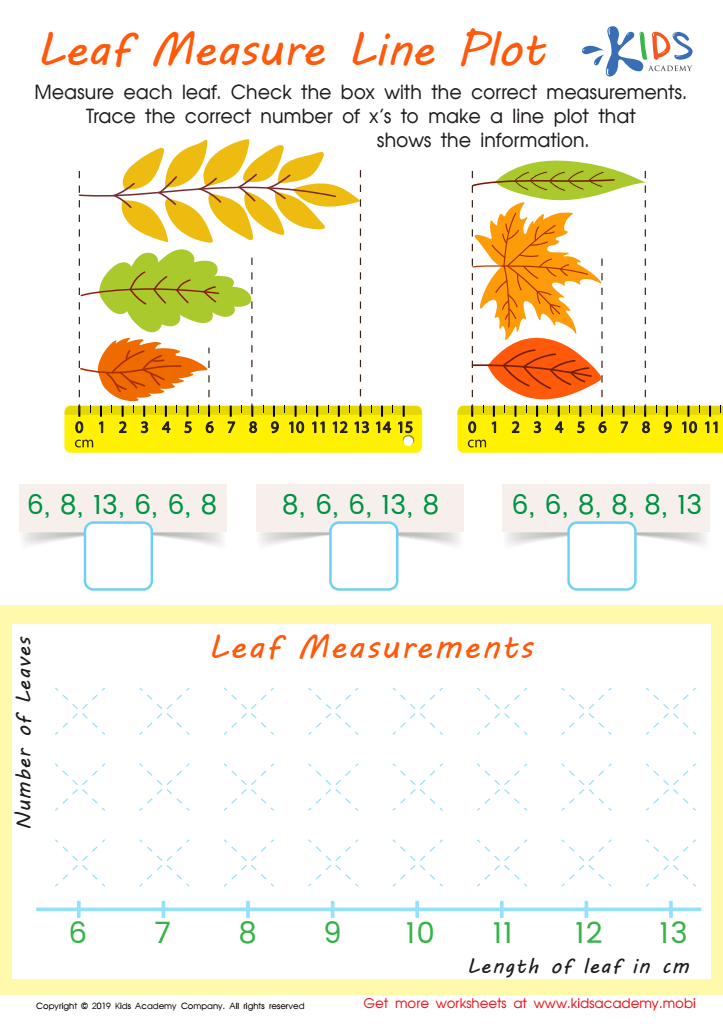
Leaf Measure Line Plot Worksheet








Data interpretation is a critical skill for Grade 3 students, and its importance should not be underestimated by parents or teachers. At this developmental stage, children are beginning to grasp more complex concepts and learn how to make sense of various types of information. Having a strong foundation in data interpretation can significantly enhance their problem-solving abilities, logical thinking, and analytical skills.
Firstly, data interpretation helps students understand the importance of evidence-based reasoning. Kids learn to read graphs, charts, and tables, which are commonly used to present information in the real world. Grasping these concepts early on helps them relate classroom learning to real-life situations, thereby enhancing their comprehension and retention of knowledge.
Secondly, fostering these skills can also support other essential academic areas. For example, the ability to interpret data supports math learning by reinforcing concepts such as measurement, statistics, and probability. It also benefits subjects like science, where students need to analyze experimental results and draw conclusions based on data.
Lastly, in our data-driven world, these skills are indispensable for informed decision-making. By introducing data interpretation in Grade 3, we prepare students for future challenges and empower them to become critical thinkers who can analyze information, question results, and make informed decisions.
Ultimately, fostering data interpretation skills at an early age sets students on a path to academic and real-world success, making it a crucial component of their education.