Develop counting skills Grade 3 Worksheets
4 filtered results
-
From - To
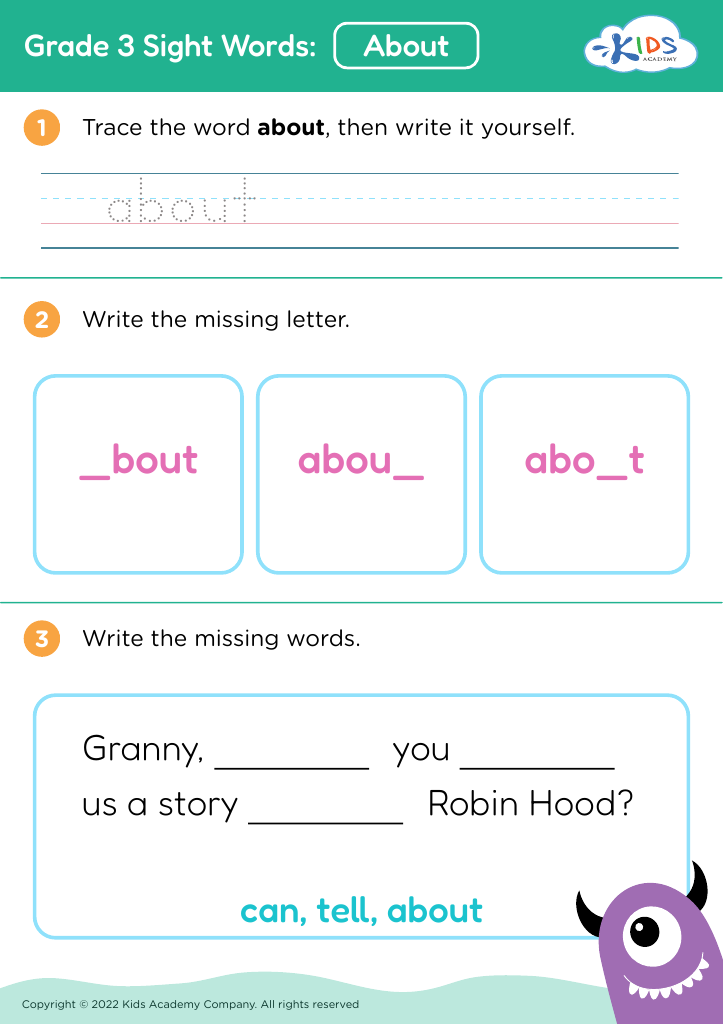
Enhance your third grader's counting skills with our comprehensive Grade 3 Worksheets! Designed to build mathematical confidence, these engaging worksheets focus on essential counting concepts, including skip counting, number patterns, and place values. Our interactive activities encourage students to practice and master their counting abilities, all while enjoying a fun learning experience. Perfect for home or classroom use, these printable resources cater to various learning styles and meet the curriculum requirements. Whether your child needs a challenge or extra practice, our counting skills worksheets are exactly what they need to excel in math! Visit us and start developing counting skills today!
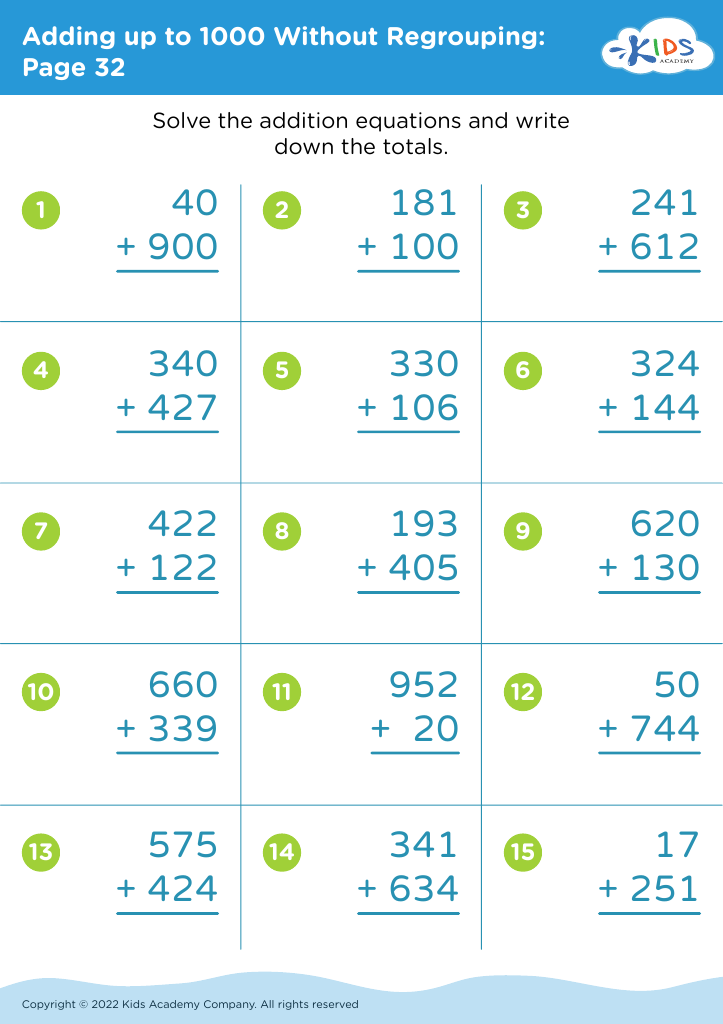
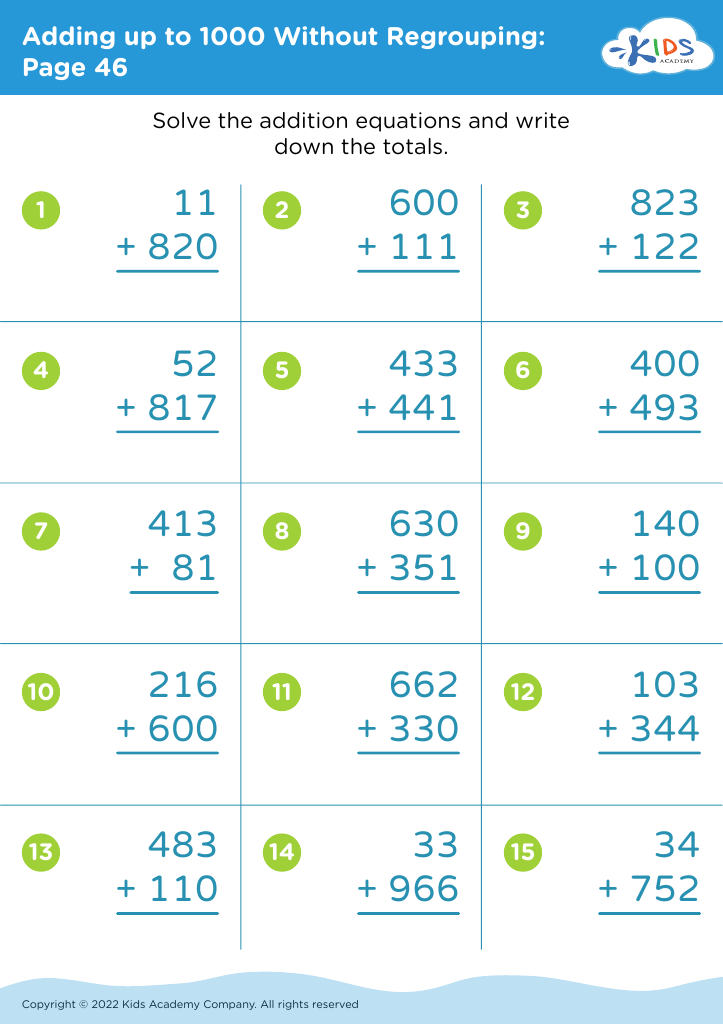
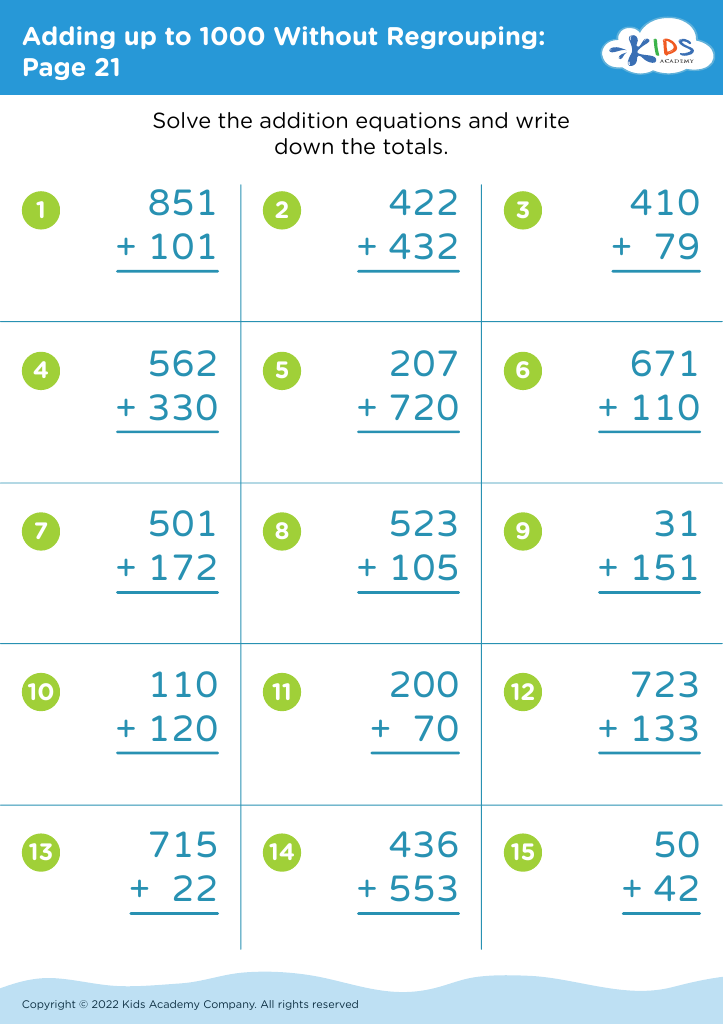






Parents and teachers should prioritize developing counting skills in Grade 3 because these foundational abilities underpin a wide range of mathematical concepts that students will encounter as they progress in their education. Strong counting skills enable children to understand number sequences, recognize patterns, and establish a sense of quantity, which are crucial for more advanced arithmetic operations like addition, subtraction, multiplication, and division.
In Grade 3, children are transitioning from concrete counting to more abstract mathematical thought processes. This development is essential for building confidence in their problem-solving abilities and nurturing a positive attitude toward math. Furthermore, proficiency in counting directly impacts a child’s performance in higher-level mathematics and critical thinking skills later in life.
Moreover, consistent practice and reinforcement of counting skills can foster better concentration and memory—attributes beneficial not just academically but throughout various life experiences. Parents and teachers can work together to create engaging activities that make counting fun and interactive, deepening children’s understanding and retention. By investing in counting skills at this crucial stage, adults can help ensure that students are well-prepared for future learning challenges, thereby setting them up for long-term academic success.