Measurement skills Grade 3 Worksheets
3 filtered results
Difficulty Level
Grade
Age
-
From - To
Subject
Activity
Standards
Unlock your third grader's potential with our engaging Measurement Skills Grade 3 Worksheets. Designed to align with educational standards, these worksheets offer a variety of fun exercises to help students master key measurement concepts, such as length, weight, volume, and time. Through practical problems and interactive activities, kids gain hands-on experience and build confidence in measuring everyday objects. Ideal for classroom use or at-home practice, our expertly crafted worksheets aim to enhance critical thinking and problem-solving skills. Provide your child with the tools they need to excel in math and beyond with Kids Academy's comprehensive resources.
Favorites
With answer key
Interactive
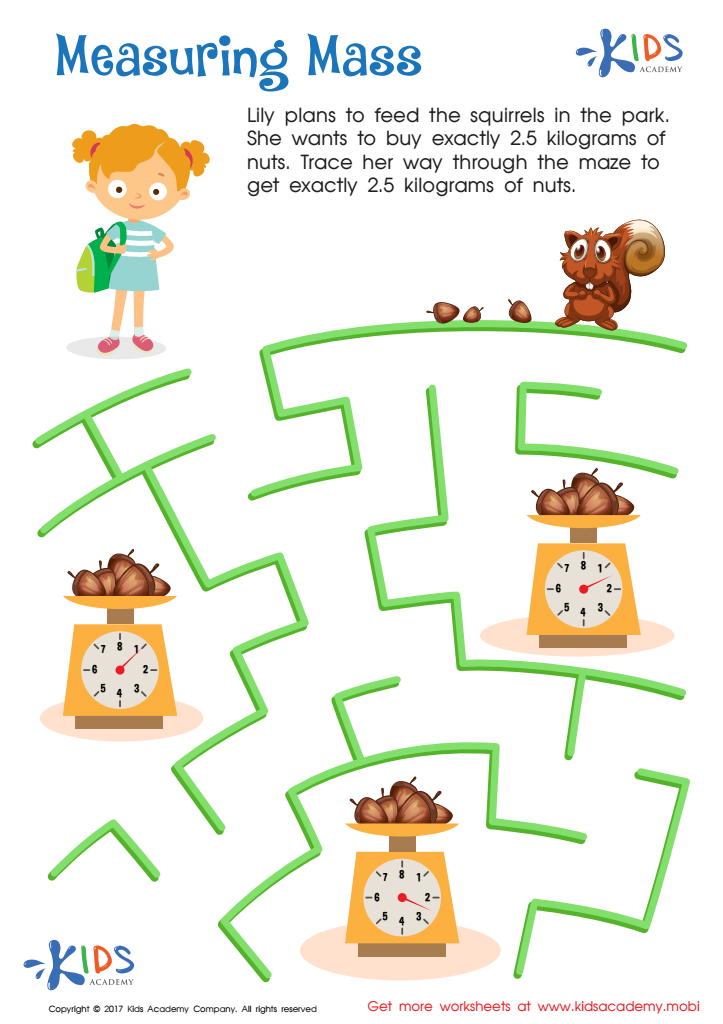
Measuring Mass Worksheet
Lily needs your child's help to find the right number of nuts to feed the squirrels. Ideal for 3rd grade!
 Assign to My Students
Measuring Mass Worksheet
Worksheet
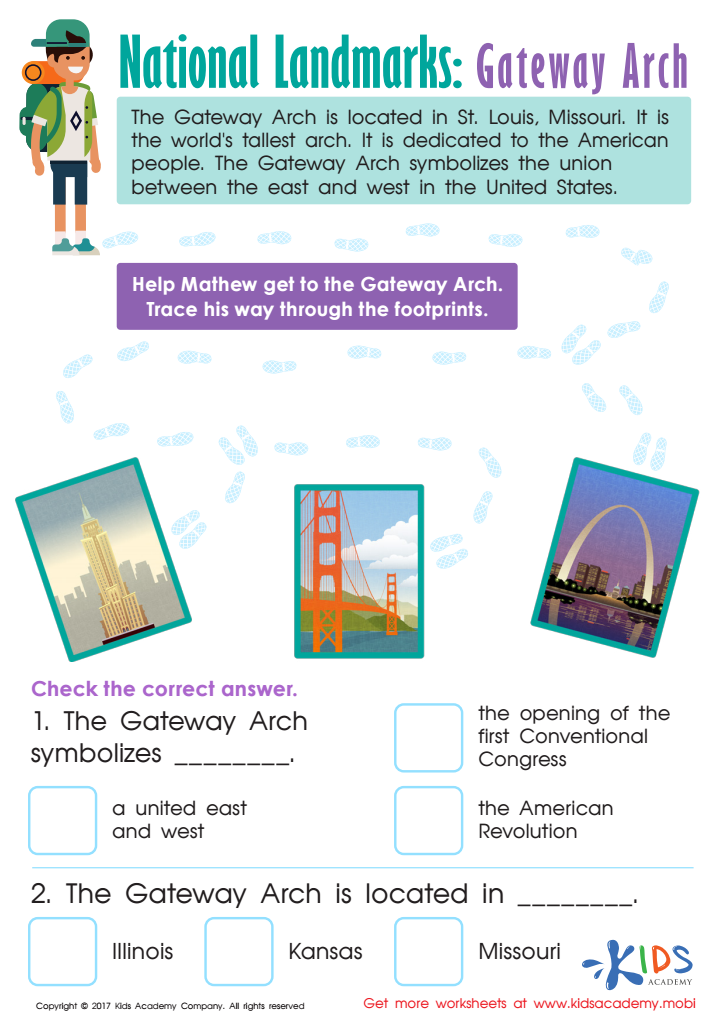
Gateway Arch Printable Worksheet
Explore America with your child! This printable worksheet takes them to St. Louis, Missouri's iconic Gateway Arch. As they learn about its history, they'll be quizzed with fun-filled facts. A great way to discover and appreciate this amazing national landmark! (80 words)
Gateway Arch Printable Worksheet
Worksheet
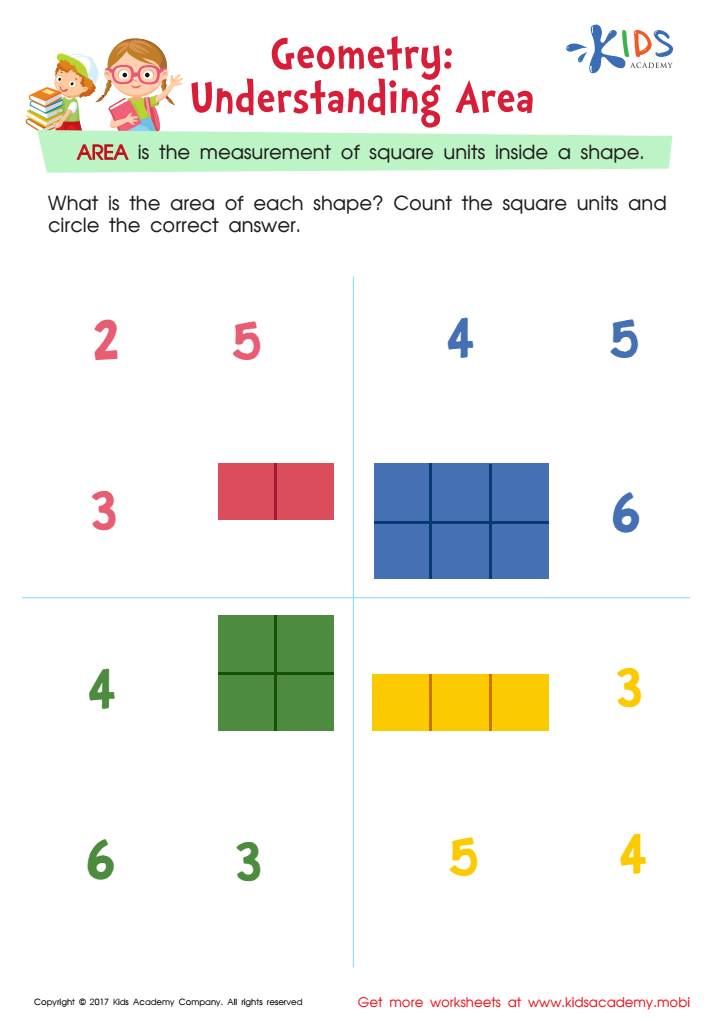
Understanding Area Worksheet
This helps them develop a better understanding and an easier way to learn instead of memorizing a formula.
Understanding Area Worksheet
Worksheet
Join Kids Academy for Free
Who is primarily going to use this learning content?






Measurement skills in Grade 3 are crucial for several interconnected reasons that benefit both the child's academic journey and everyday life skills. Firstly, mastery of measurement concepts—like understanding length, weight, volume, and time—forms the foundation for more advanced math, such as geometry and algebra. Proficiency in these skills enhances problem-solving abilities and logical reasoning. For instance, comprehension of fractions and decimals often ties back to innate concepts learned in measurement.
Moreover, real-life applications are found everywhere: cooking (measuring ingredients), budgeting (understanding money), planning travel (calculating distances and time), and even playing sports (measuring scores and times). This relevance makes learning engaging and immediately useful, motivating students.
From a developmental perspective, learning measurement bolsters cognitive growth and fine motor skills through activities like measuring objects with rulers and scales. It helps children grasp the abstract concepts of quantity, space, and time, solidifying their numerical literacy.
Finally, early competence in measurement sets a framework for lifelong learning. By encouraging children to pay attention to details and fostering curiosity, parents and teachers prime them for success. Through supportive learning environments, they build a strong academic foundation that nurtures confidence and interest in school subjects, particularly STEM fields. Hence, emphasizing measurement education at this formative stage is vital for holistic development.