Mental math skills Grade 3 Worksheets
9 filtered results
Difficulty Level
Grade
Age
-
From - To
Subject
Activity
Standards
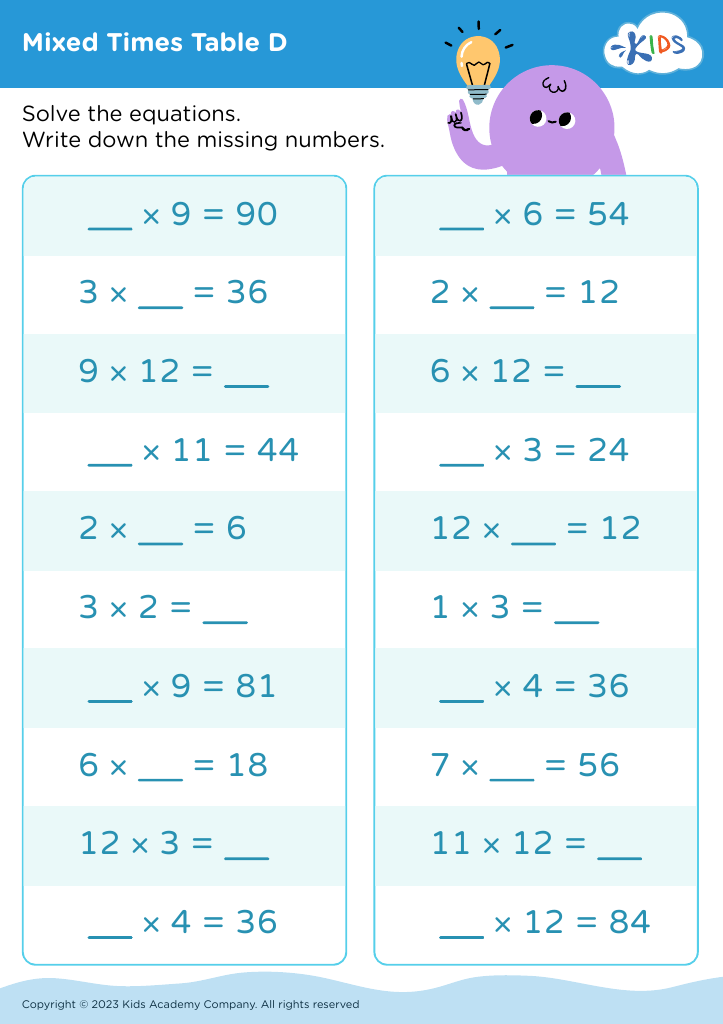
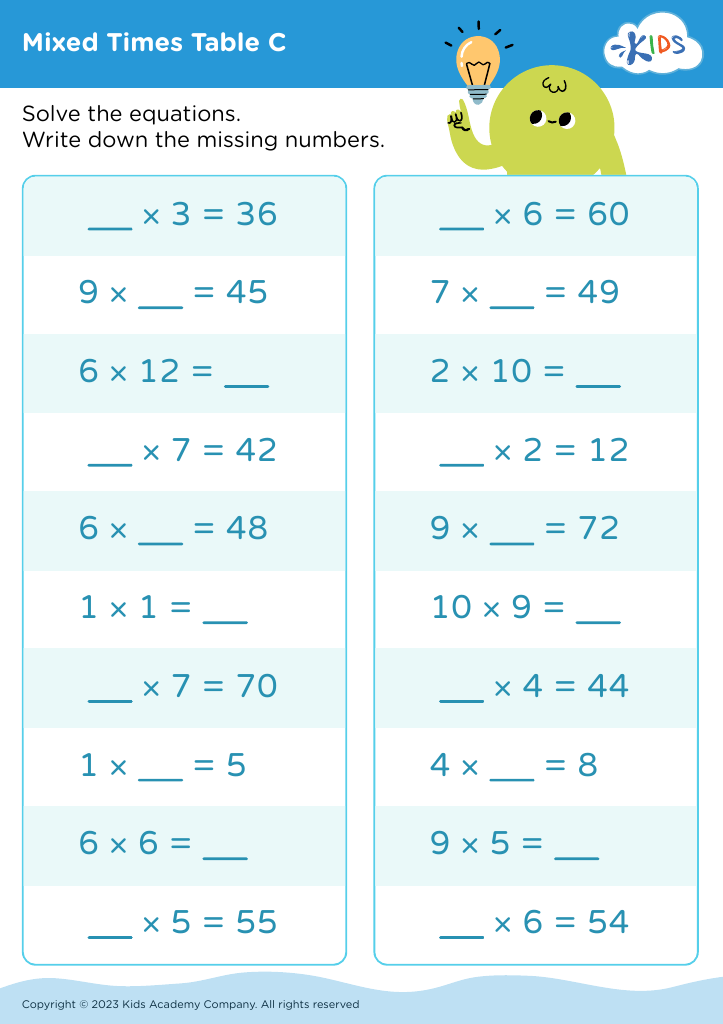
Enhance your child’s math abilities with our engaging Grade 3 Mental Math Skills worksheets. Designed to develop quick thinking and problem-solving techniques, these worksheets include a variety of fun activities that make learning enjoyable. Students will practice addition, subtraction, multiplication, and division without the use of calculators, building confidence in their calculation skills. Our resources are ideal for classroom activities or at-home practice, fostering independence and speed in mathematical operations. Download our printable worksheets today and support your third grader in mastering mental math competencies, paving the way for future academic success in mathematics and beyond!
Favorites
With answer key
Interactive
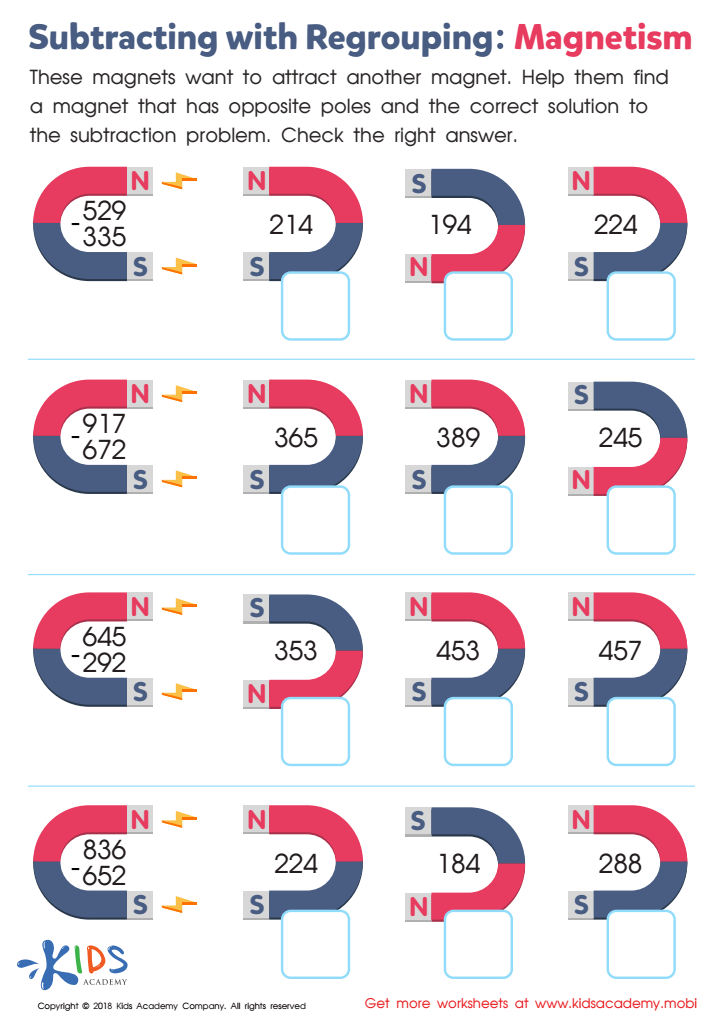
Subtracting with Regrouping: Magnetism Worksheet
Download Kids Academy's worksheet for a fun way to review science and math! Look at the magnet and remember opposites attract. Find another with opposite poles, then solve the problem on the left and check the solution against the magnet. Check the box next to the correct answer to complete this page.
 Assign to My Students
Subtracting with Regrouping: Magnetism Worksheet
Worksheet
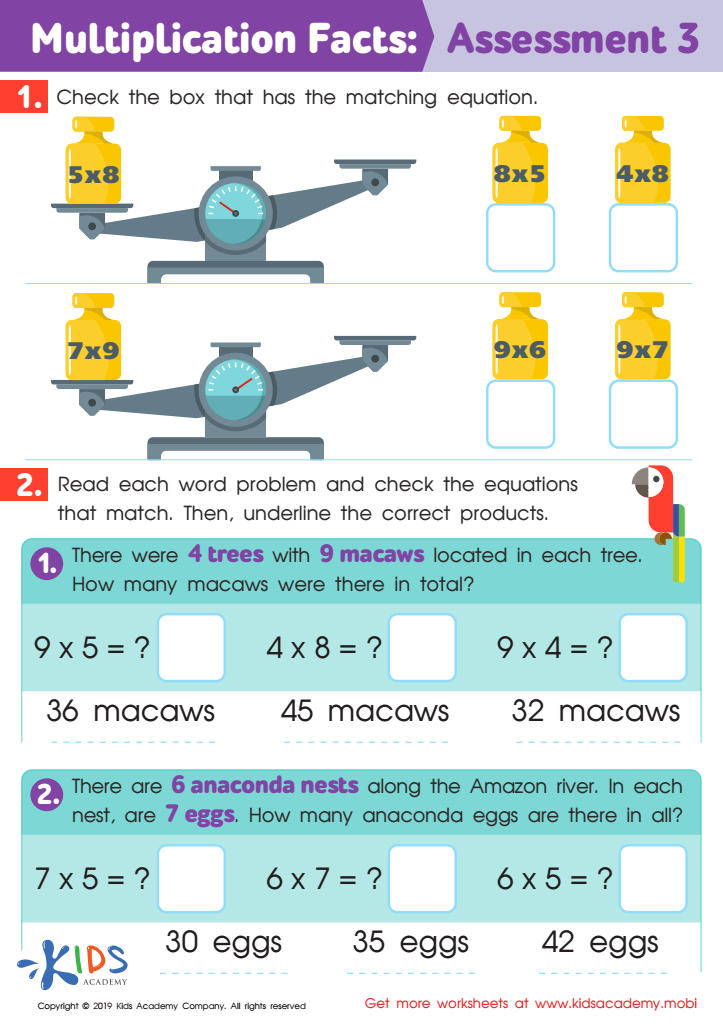
Multiplication Facts: Assessment 3 Worksheet
Test your kid's maths skills with this easy to use worksheet! Help them check the box that matches the equation in the first part, then read each word problem and underline the right answers to the second part. Assess your child's muliplication knowledge and find out where they need extra help.
Multiplication Facts: Assessment 3 Worksheet
Worksheet
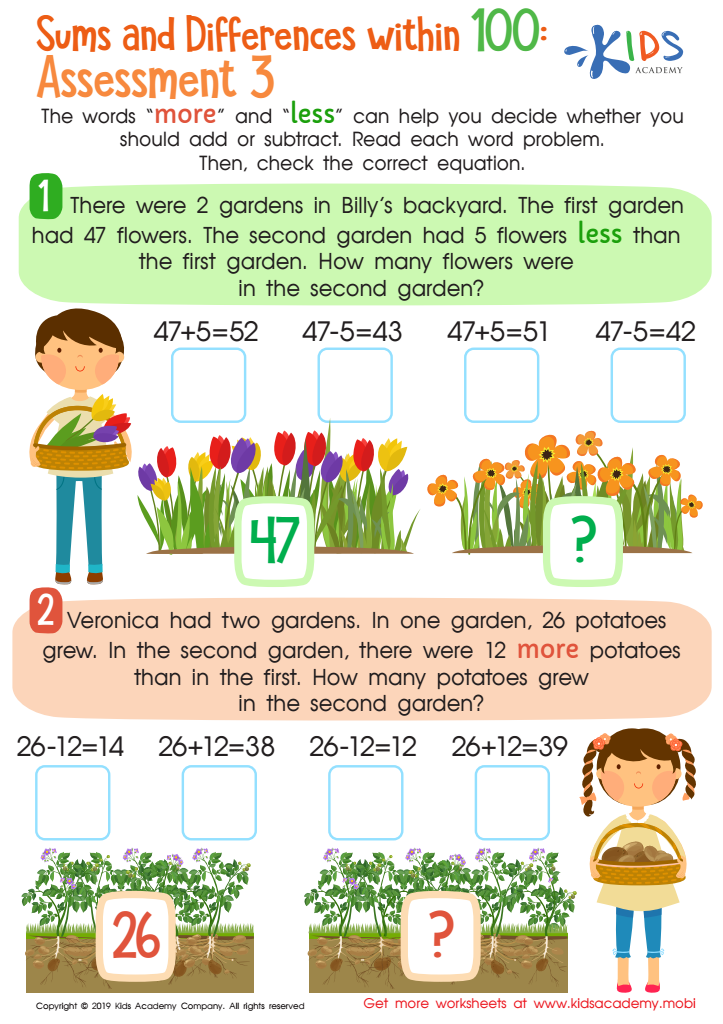
Sums and Differences Within 1 - Assessment 1 Worksheet
Help your child understand school topics better with your assistance. For math, go over their worksheet together and discuss the instructions and text. Solve the questions and check the right equation. This will take their learning to the next level.
Sums and Differences Within 1 - Assessment 1 Worksheet
Worksheet
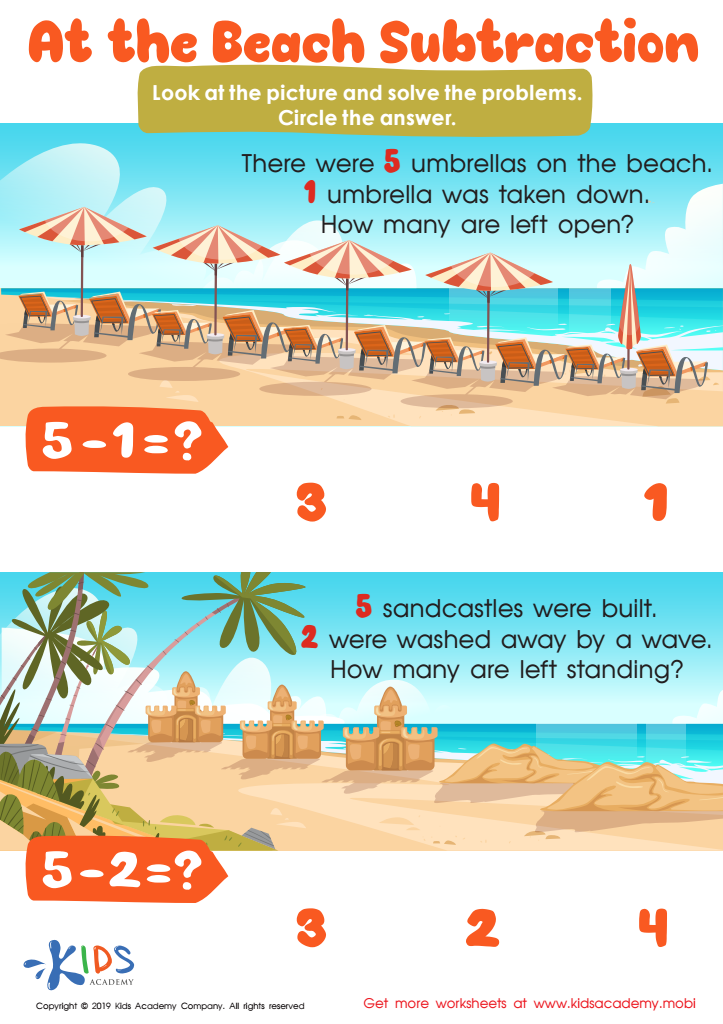
At the Beach Subtraction Worksheet
Take your kids to the beach and show them that math can be fun! Look at the picture on the worksheet, then help them solve the addition and subtraction problems. Check the answers together and enjoy a day of learning and fun!
At the Beach Subtraction Worksheet
Worksheet
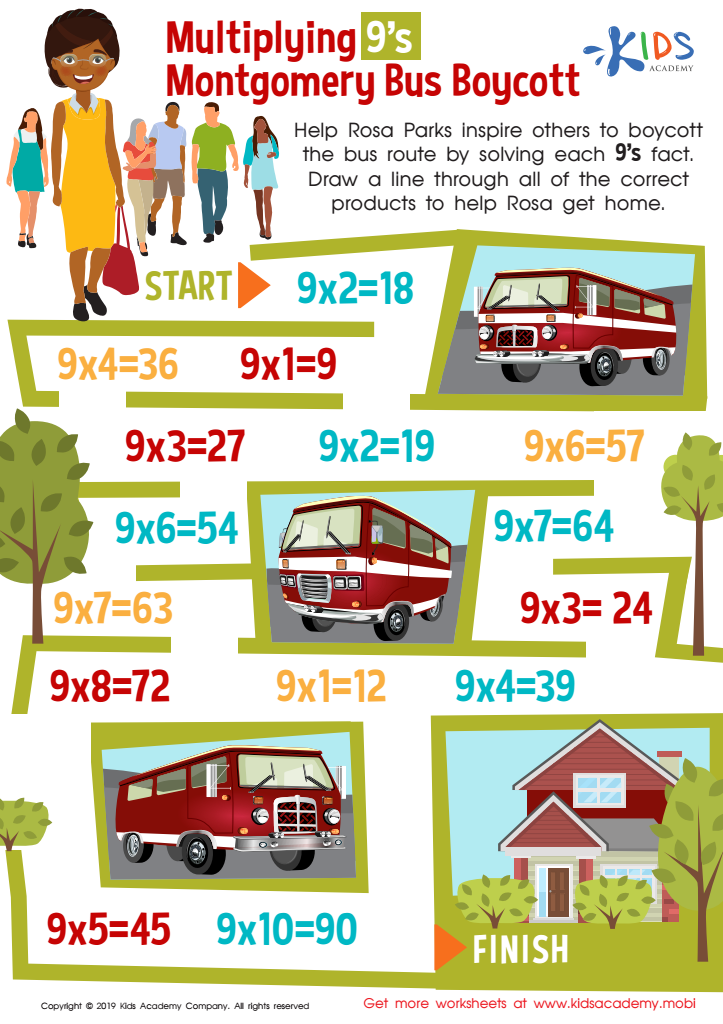
Multiplying 9’s Montgomery Bus Boycott Worksheet
As your students learn math, the numbers get bigger. This worksheet is great for learning the nine times table. Help Rosa Park get home - ask them to solve each multiplication fact, then draw a line through the correct products. Encourage your students to stand up for what's right!
Multiplying 9’s Montgomery Bus Boycott Worksheet
Worksheet
Join Kids Academy for Free
Who is primarily going to use this learning content?






Parents and teachers should care about mental math skills for Grade 3 students because these skills serve as the foundation for a child's overall mathematical development and cognitive abilities. At this age, children are transitioning from learning basic math concepts to applying them in more complex problem-solving situations. Developing mental math skills fosters critical thinking, reasoning, and a deeper understanding of number relationships, which enhances their ability to tackle advanced concepts in the future.
Furthermore, strong mental math skills build confidence in students. When children can quickly and accurately perform calculations in their heads, they are more likely to participate in class and feel less intimidated by math challenges. This self-assurance bolsters their enthusiasm for learning and helps to establish a positive attitude toward the subject.
Additionally, mental math supports everyday decision-making, allowing children to make quick calculations in real-life situations, from budgeting their allowance to understanding measurements during cooking. Parents and teachers can nurture these skills through engaging activities and games, creating a fun learning environment that emphasizes the practicality and enjoyment of math. By prioritizing mental math, caregivers can set their children up for academic success and lifelong math literacy.