Story sequencing Grade 3 Worksheets
4 filtered results
-
From - To
Our "Story Sequencing Grade 3 Worksheets" are designed to help third graders enhance their reading comprehension and organizational skills. These worksheets provide engaging activities that challenge students to arrange events in the proper order, improving their understanding of narrative structure. Through a variety of fun exercises, children will learn to identify key details, recognize the logical progression of events, and craft coherent stories. Ideal for classroom or home use, our worksheets offer a valuable resource for educators and parents seeking to support critical thinking and literacy development in young learners. Explore and watch your child's storytelling abilities soar!
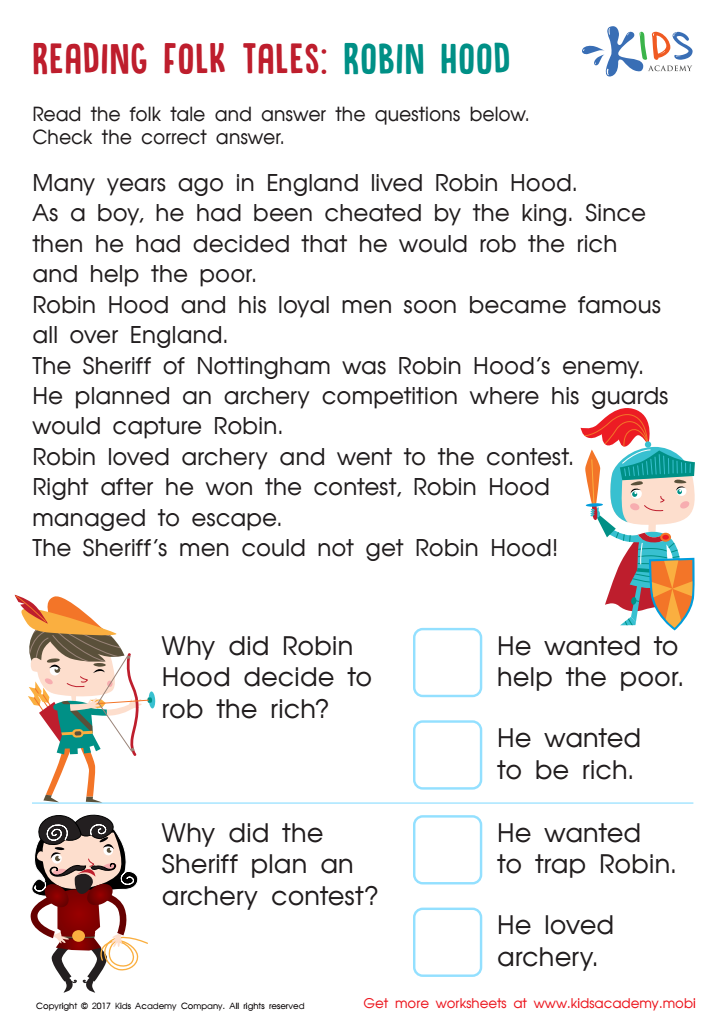
Robin Hood Folktale Worksheet
Folktales Printable PDF Worksheet: The 3 Little Pigs
 Assign to My Students
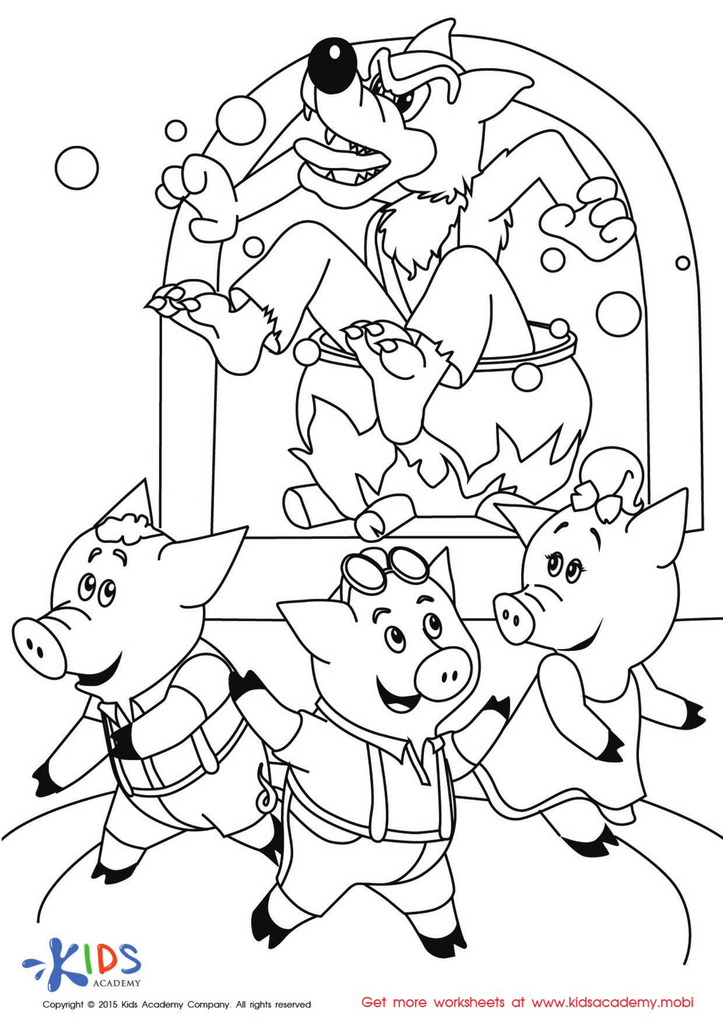
The Three Little Pigs and The Big Bad Wolf Printable
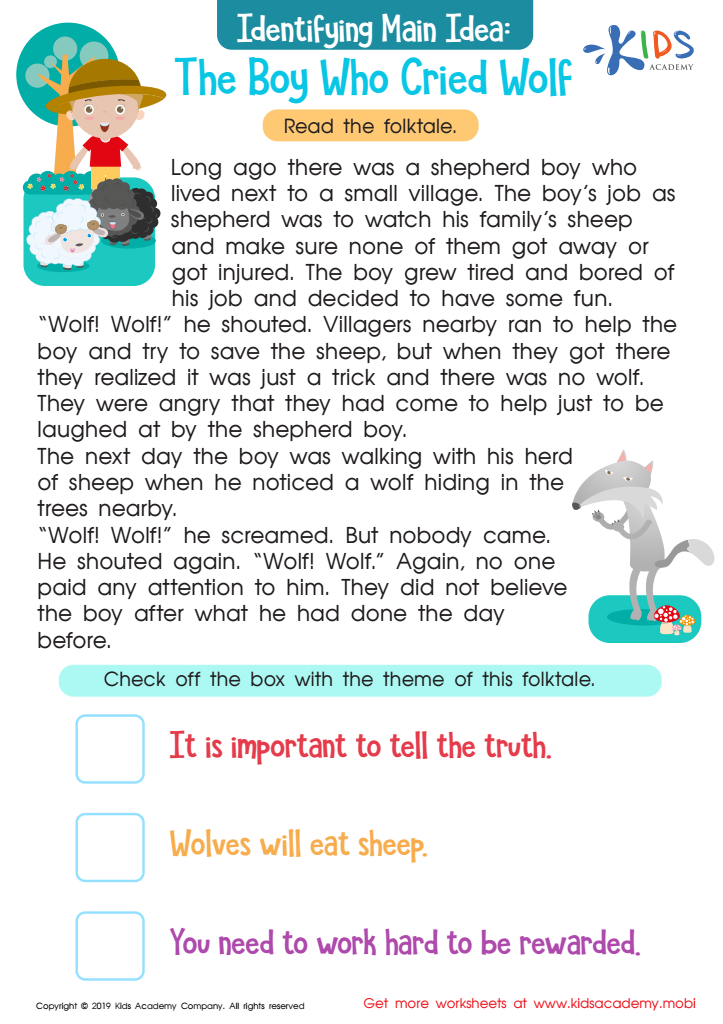
The Boy Who Cried Wolf Part 2 Worksheet







Story sequencing is a fundamental aspect of early literacy that parents and teachers should prioritize for third-graders. This skill involves arranging events in a story in the correct chronological order and is crucial for several reasons. First, it enhances comprehension. By understanding the logical flow of a story, children can better grasp the plot, make predictions, and recall key details. This is pivotal since comprehension is the foundation of all advanced literacy skills.
Second, story sequencing nurtures critical thinking. It requires students to analyze and organize information, fostering their ability to form connections and recognize cause-and-effect relationships. This critical thinking capability is not only essential for reading but also for problem-solving in various academic subjects and real-life situations.
Additionally, excelling in story sequencing can significantly boost a child’s writing skills. When students understand how stories are structured, they can emulate this framework in their own writing. This leads to clearer, more coherent storytelling, enhancing their ability to communicate effectively.
Furthermore, engaging in sequencing activities fosters attention to detail and patience, essential life skills that benefit all learning areas. Therefore, by focusing on story sequencing, parents and teachers can profoundly influence a child’s overall academic growth and lifelong learning capabilities.