Addition Practice Grade 3 Adding up to 1000 Misc Worksheets
5 filtered results
-
From - To
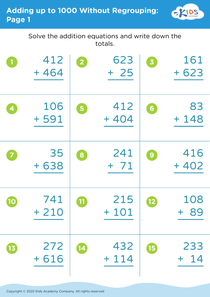
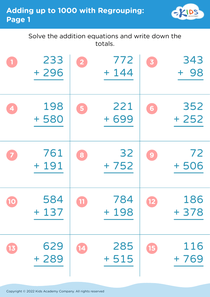
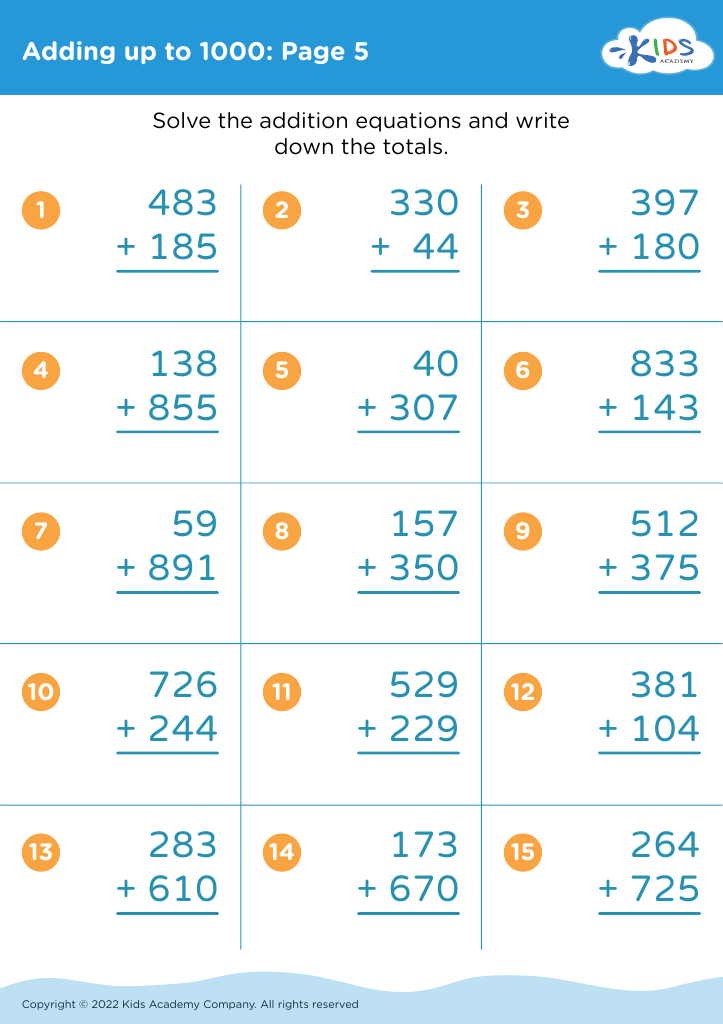
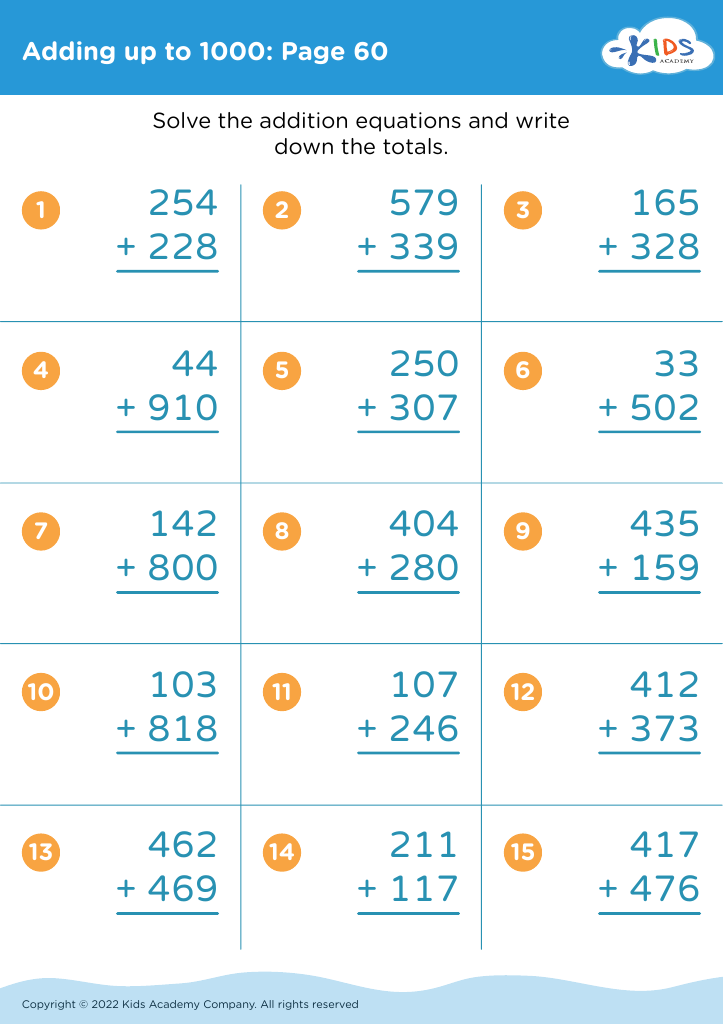
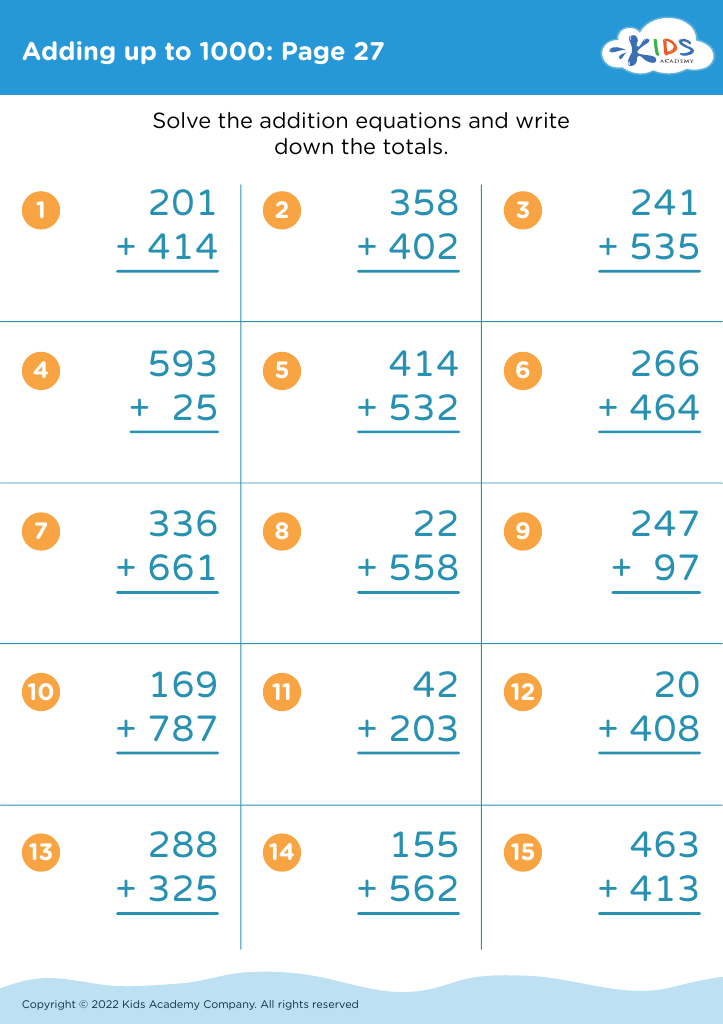
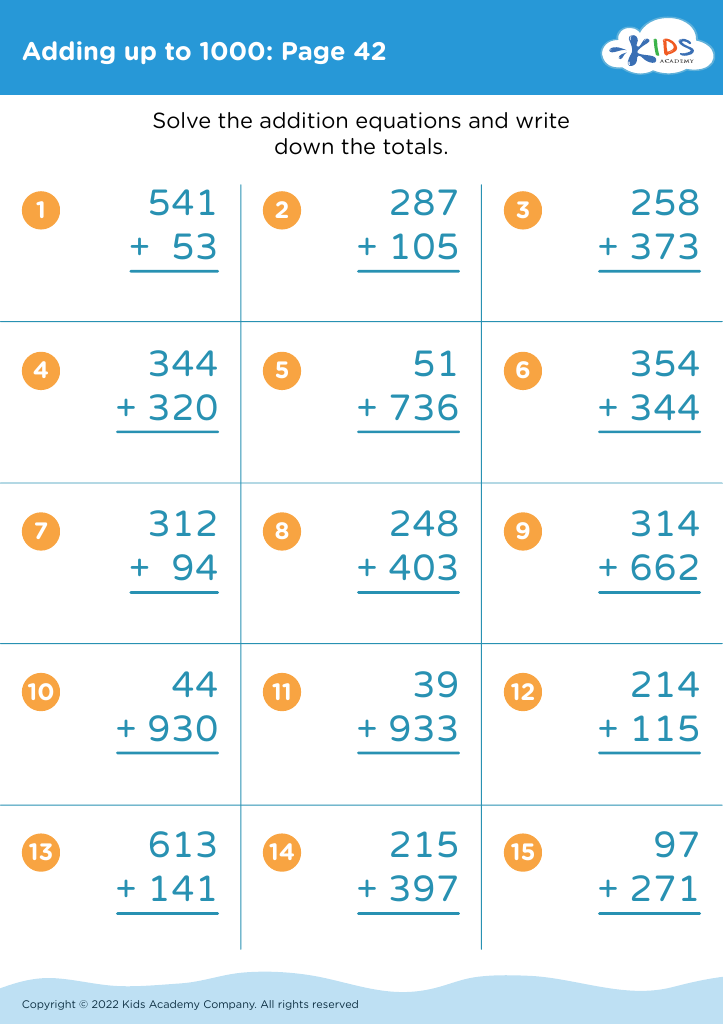
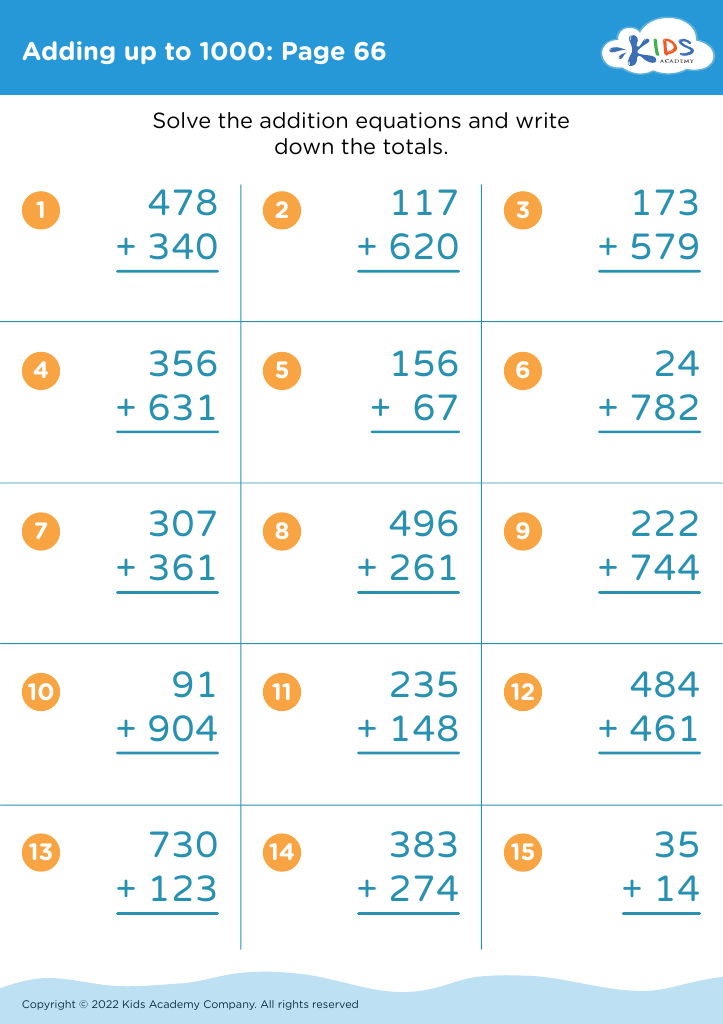
Enhance your third graders' math skills with our "Addition Practice: Grade 3 - Adding Up to 1000 Misc Worksheets". These engaging and colorful worksheets are designed to strengthen addition proficiency through a variety of fun and challenging exercises. Students will practice adding multi-digit numbers with sums ranging up to 1000, fostering their arithmetic skills and building confidence in mathematics. Ideal for classroom use or at-home practice, these worksheets cater to diverse learning styles and encourage critical thinking through real-life math applications. Help your students master addition with our comprehensive resources, ensuring they are well-prepared for future math challenges. Explore the collection today!


Parents and teachers should prioritize addition practice for third graders, particularly when it involves adding numbers up to 1000, for several impactful reasons. First, mastering addition is foundational for all future math skills. As children progress towards more complex mathematical concepts, a solid understanding of addition ensures they can tackle challenges in subtraction, multiplication, and division with confidence.
Practicing addition helps develop number sense, enabling students to discern patterns and relationships between numbers. This practice also encourages mental calculation strategies, fostering an efficient and flexible approach to problem-solving. Engaging in activities that include a variety of addition techniques—such as regrouping or using place value—promotes cognitive development and critical thinking.
Moreover, integration of real-world contexts makes learning more relevant and engaging. When students see how addition applies in everyday situations, they are more likely to cultivate an interest in math.
Additionally, consistent practice leads to increased accuracy and speed, enhancing students' self-esteem and motivation. Teachers and parents can collaborate to create a supportive learning environment that reinforces these skills through games, worksheets, and daily activities. The benefits of robust addition practice clearly contribute to a student’s overall academic success and foster a lifelong appreciation of mathematics.