Enhance comprehension Grade 3 Adding up to 1000 Without Regrouping Worksheets
4 filtered results
-
From - To
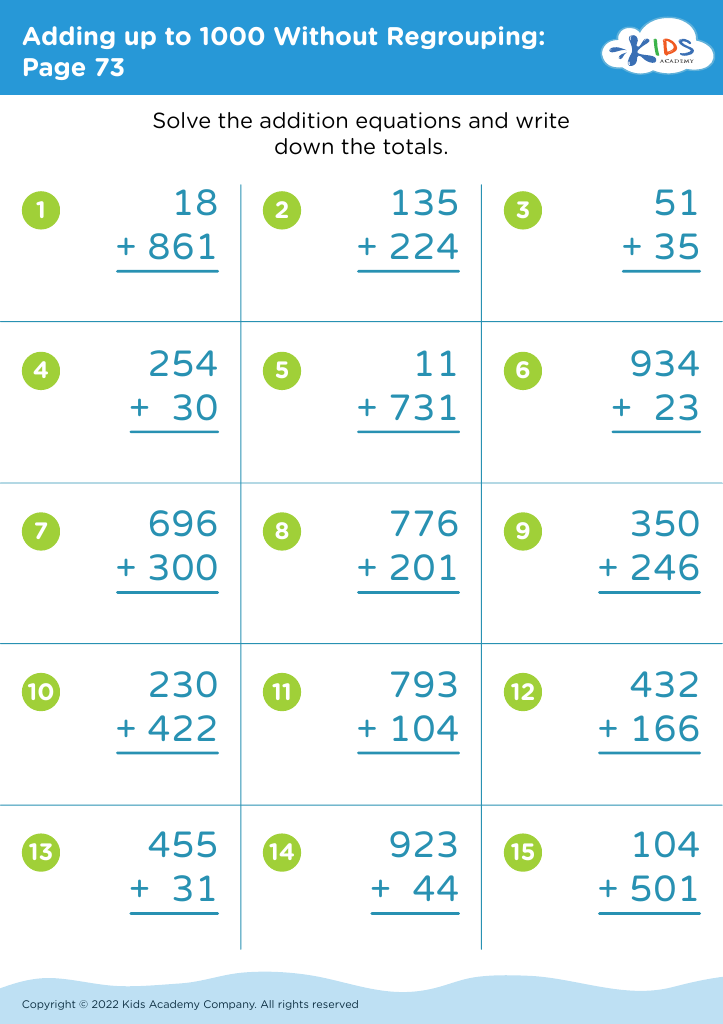
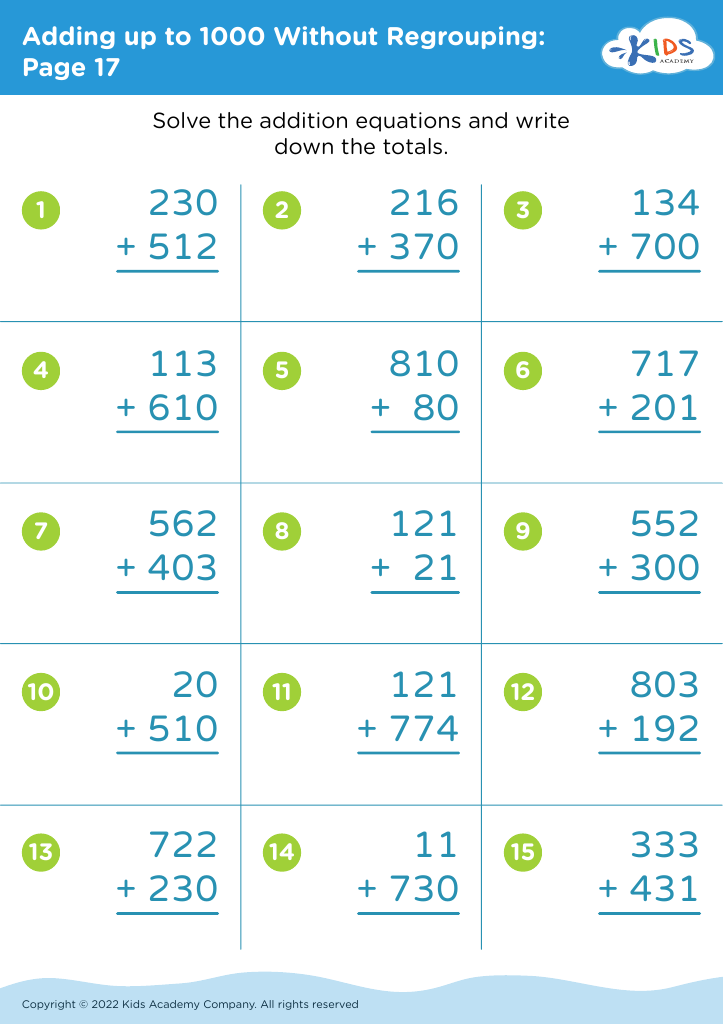
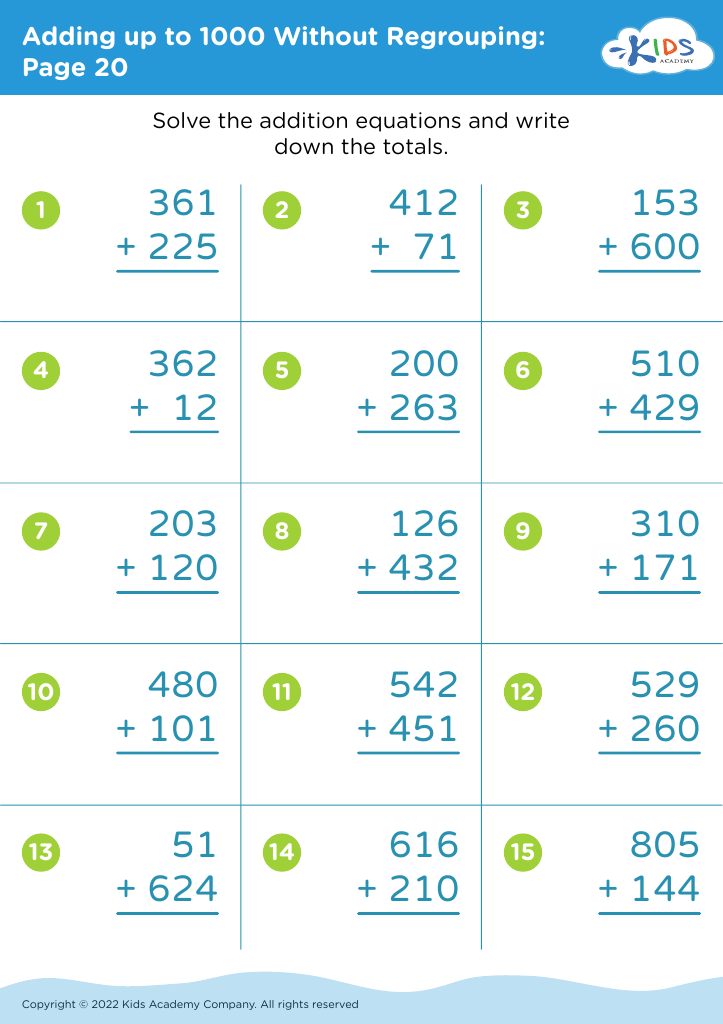
Our "Enhance Comprehension Grade 3 Adding Up to 1000 Without Regrouping Worksheets" are designed to boost your child’s addition skills in a fun and educational way! These printable worksheets focus on teaching third graders how to add numbers up to 1000 without the need for regrouping. Engaging and straightforward problems help develop their calculation accuracy and arithmetic proficiency. By improving their comprehension abilities through structured exercises, these worksheets ensure students gain confidence in their math capabilities and solidify foundational math skills essential for future success. Support your child’s learning journey, enhancing their mathematical confidence and competence!
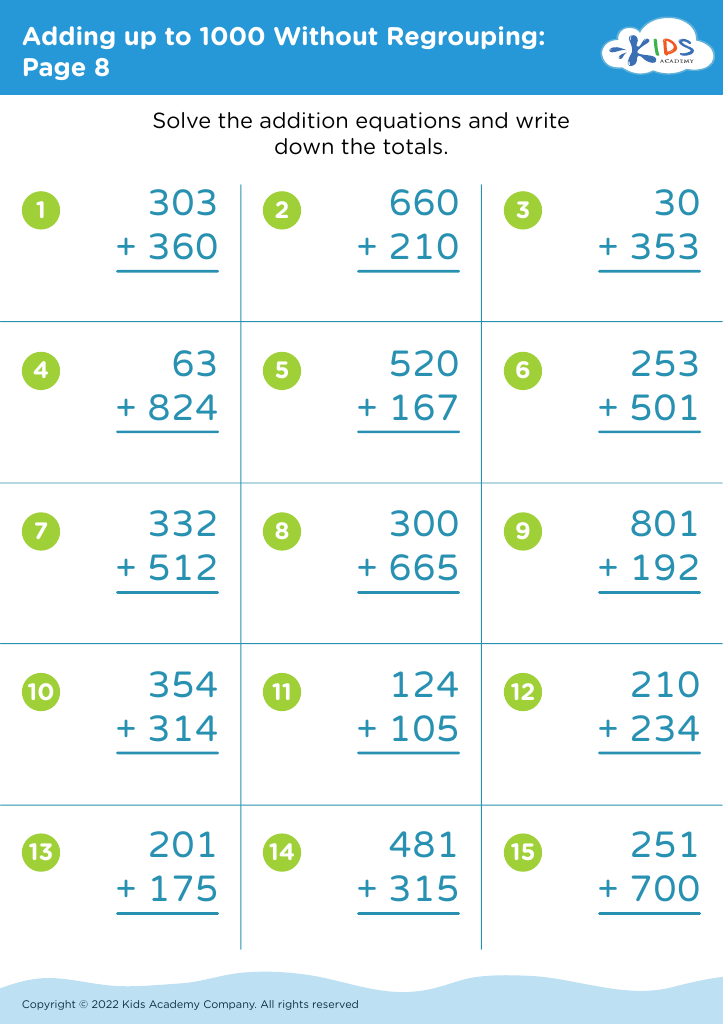


Ensuring students have a strong grasp of adding up to 1000 without regrouping by Grade 3 is crucial for multiple reasons. Early math skills form the foundation for all future math learning, so developing solid number sense in these formative years is paramount. By mastering this concept, children enhance their ability to perform basic arithmetic operations with greater ease and confidence. This mastery helps in building critical thinking and problem-solving skills, quintessential for higher mathematical concepts.
Parents and teachers play a pivotal role in this learning process. When students comprehend and excel in subjects like these, their overall academic confidence grows, fostering a positive attitude toward education. This skill also links closely to everyday life activities, such as counting money, measuring ingredients while cooking, or managing time, thereby showing the practical applications of mathematics. Supporting this aspect of learning cultivates a growth mindset, where a child understands that perseverance and practice lead to improvement and success.
Moreover, creating an engaging and supportive learning environment instilled with patience helps eliminate math anxiety, making students less fearful of math. Teaching strategies that include games, interactive lessons, and real-world examples not only make learning fun but also deepen comprehension. Investing time and interest in these foundational skills ensures students are well-prepared for more complex math concepts in the future.