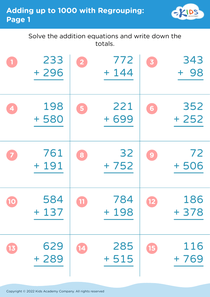
Improve counting skills Grade 3 Adding up to 1000 Without Regrouping Worksheets
4 filtered results
-
From - To
Enhance your third grader's math skills with our "Improve Counting Skills: Adding Up to 1000 Without Regrouping Worksheets." These engaging and interactive worksheets are designed to help young learners practice addition confidently by focusing on numbers up to 1000, without the complexities of regrouping. Kids can strengthen their ability to add, develop a solid foundation in fundamental math concepts, and improve their counting skills through diverse exercises. Perfect for classroom use or at-home learning, these worksheets provide an enjoyable and effective way to foster mathematical understanding and boost confidence. Explore our resources and watch your child excel in math today!
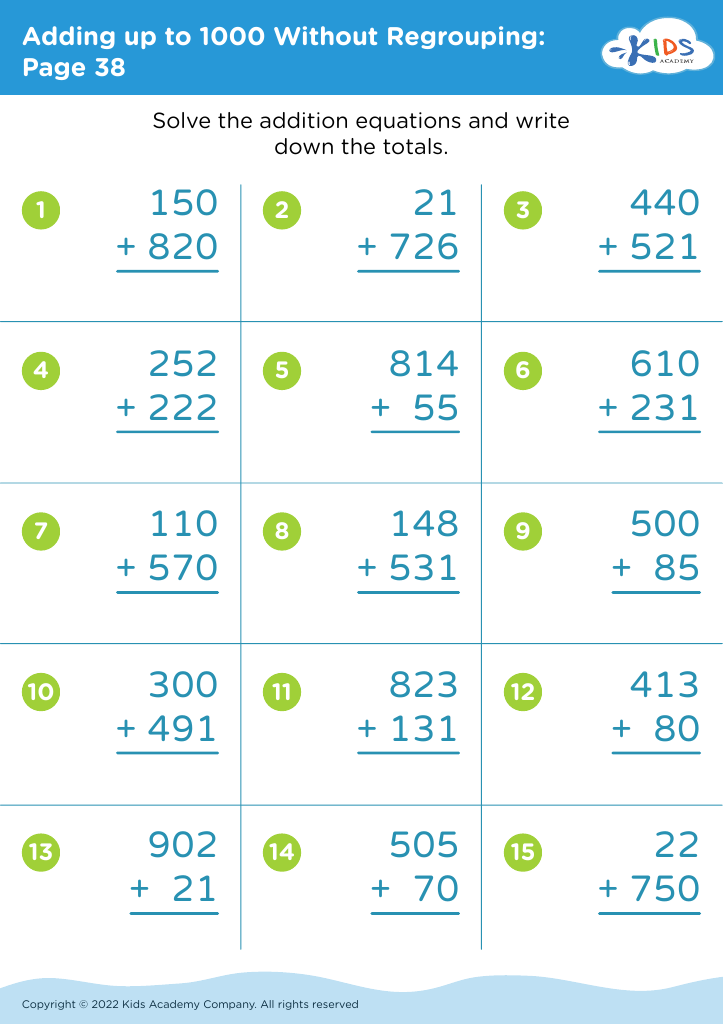
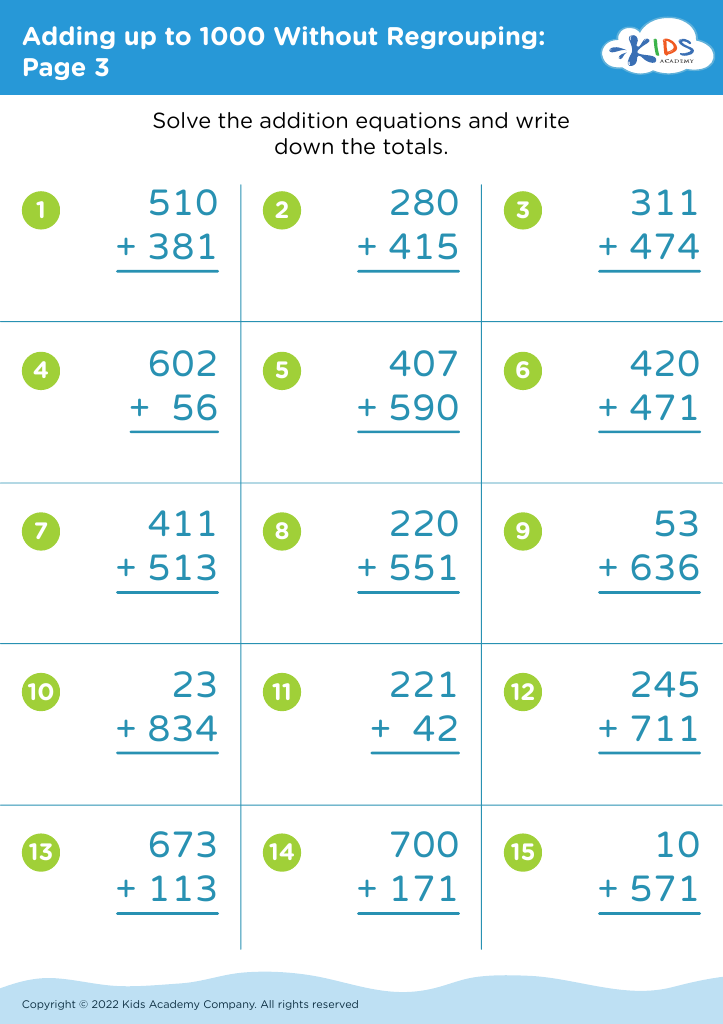
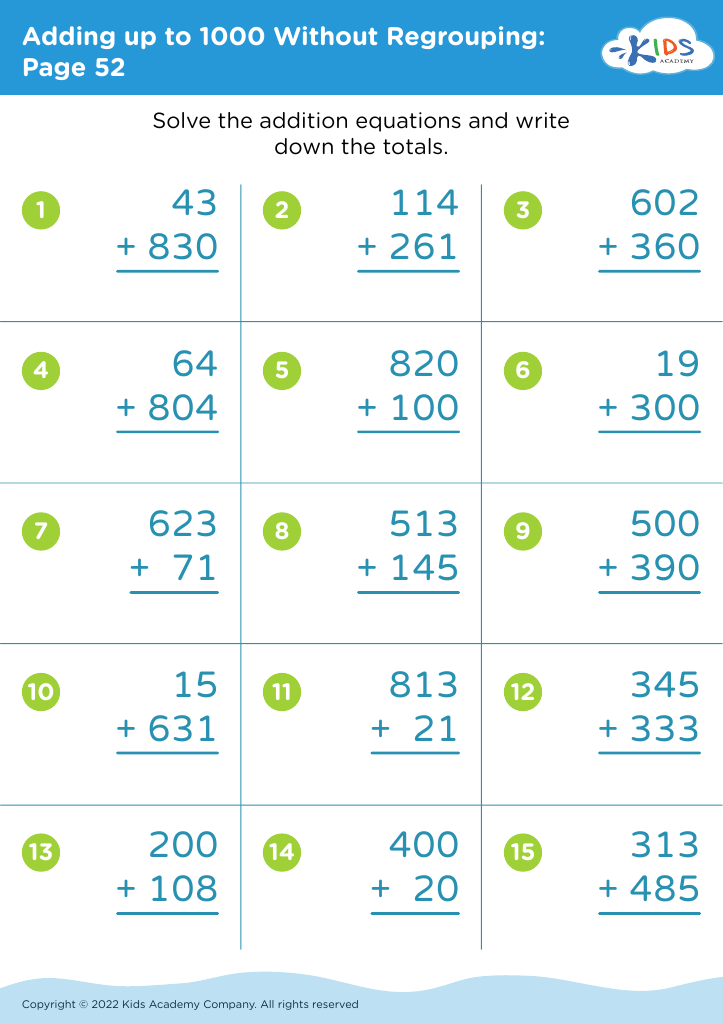
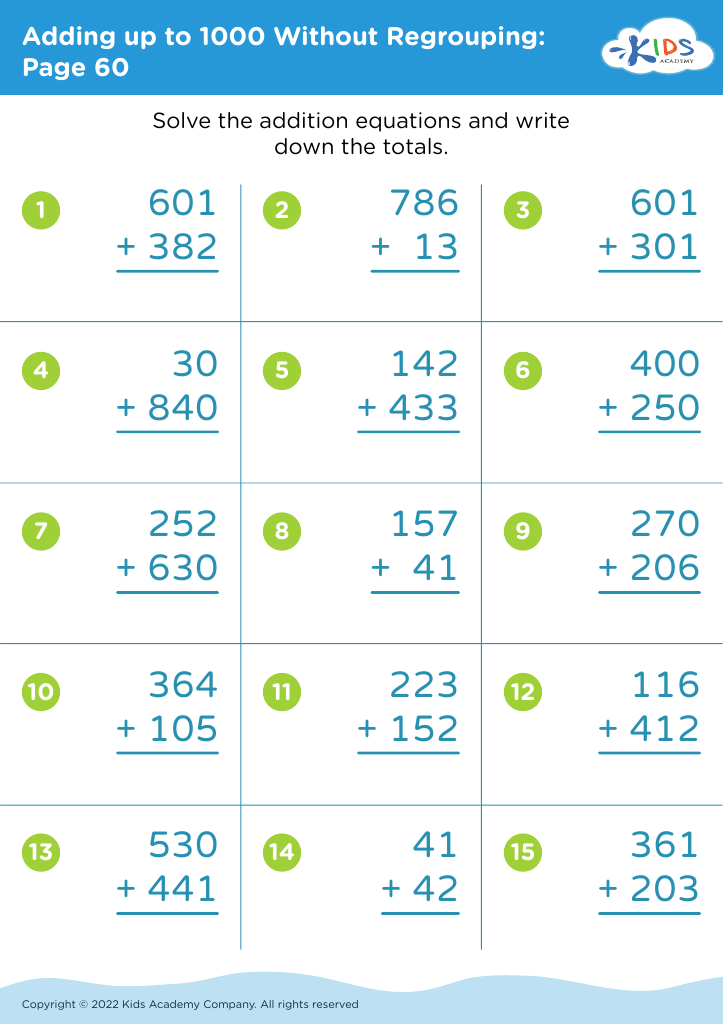


Improving counting skills, particularly in Grade 3 for adding up to 1000 without regrouping, is crucial for several reasons. Firstly, these foundational math skills serve as the bedrock for more complex mathematical concepts in later grades. Proficiency in basic addition ensures that students develop confidence and competence, building a positive attitude toward mathematics.
Secondly, strong counting skills enhance problem-solving abilities. When children can add without regrouping, they learn to process numbers quicker and more accurately, which is essential in daily life situations and future academic challenges. It nurtures logical thinking and promotes a better understanding of number relationships.
Moreover, as students grow, they will encounter mathematics not only in school but in careers and practical everyday activities. Therefore, by mastering these essential skills now, parents and teachers are preparing them for future success while reducing anxieties related to math.
Lastly, supporting children during this learning phase fosters a collaborative environment, encouraging parents and teachers to actively engage in the child's educational journey, ultimately reinforcing the child’s love for learning. Investing in counting skills today paves the way for confident, capable learners tommorow.