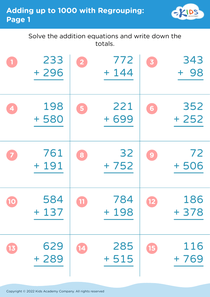
Understanding fractions Grade 3 Adding up to 1000 Without Regrouping Worksheets
13 filtered results
-
From - To
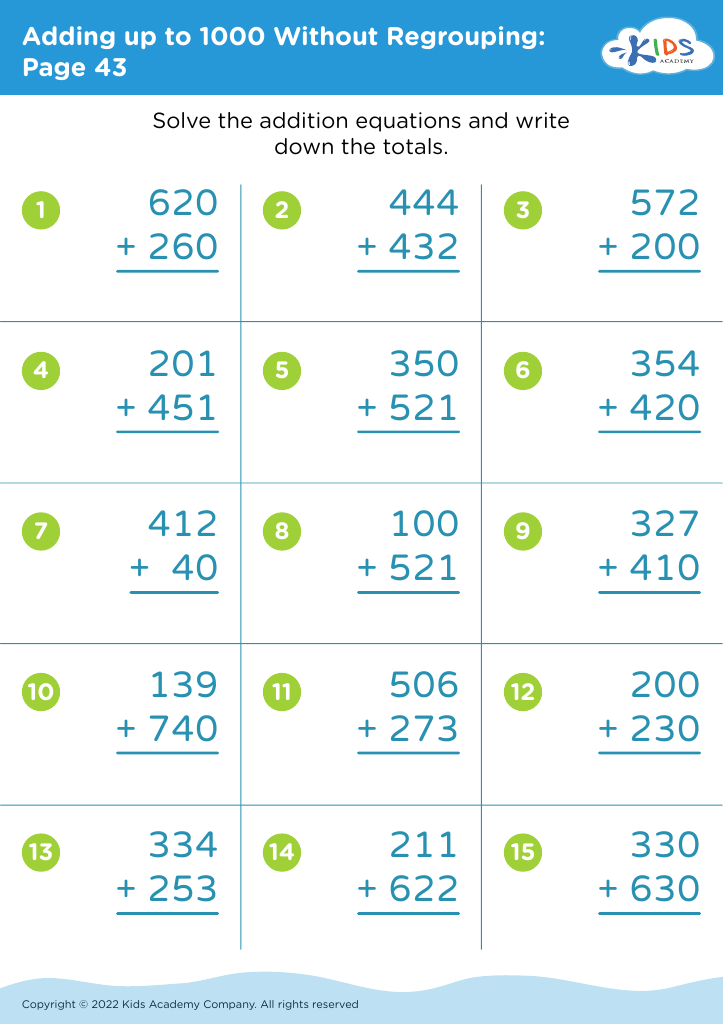
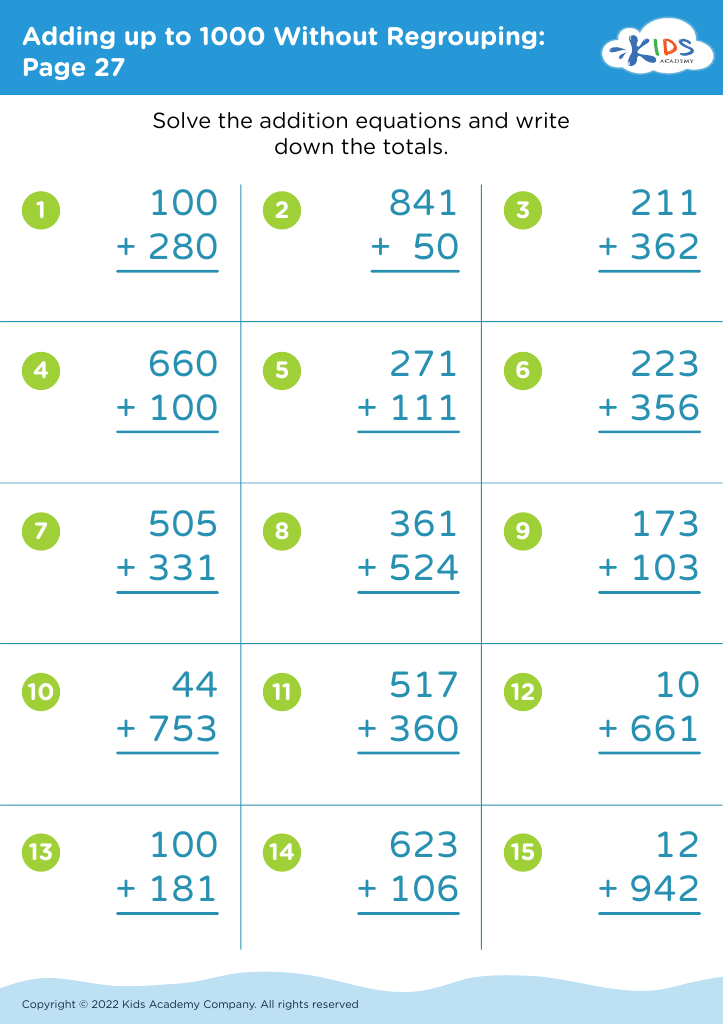
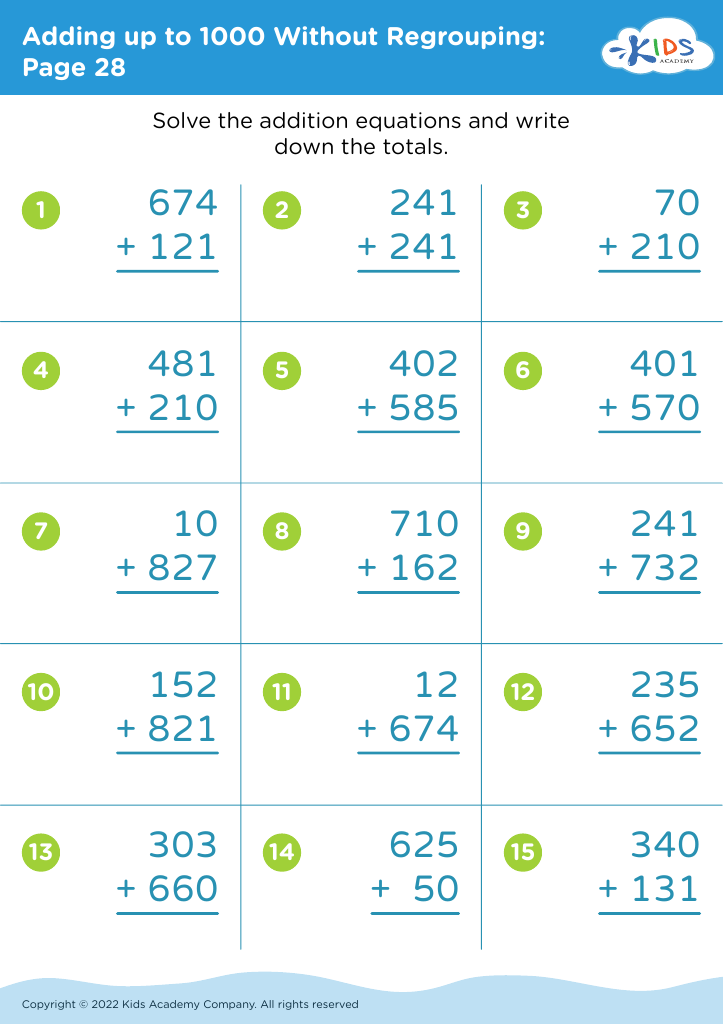
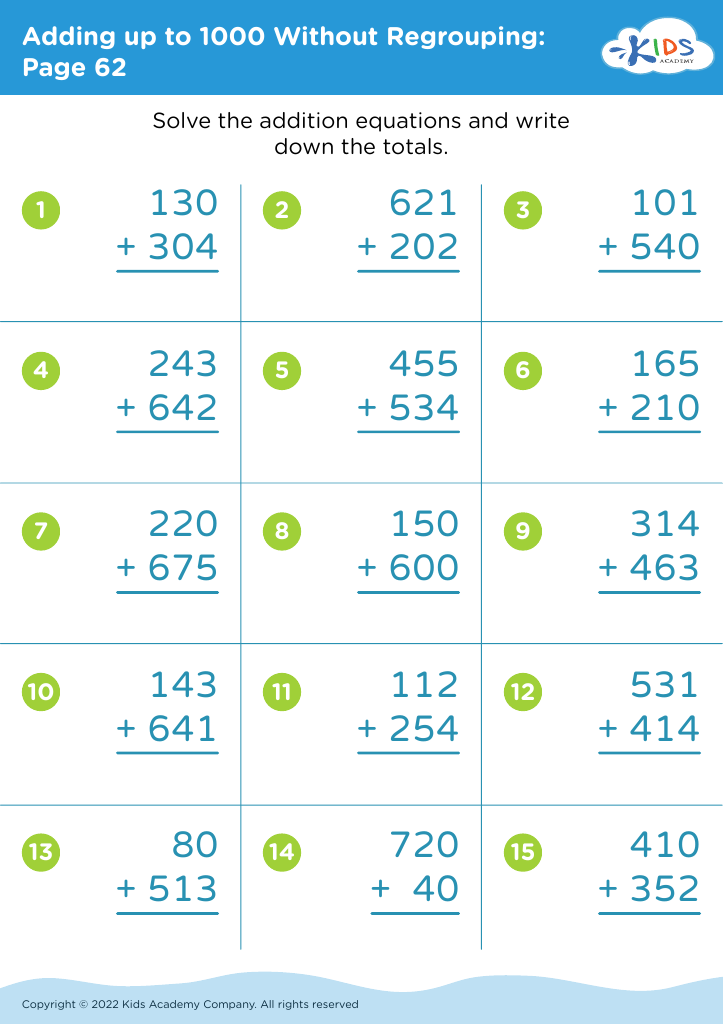
Explore our "Understanding Fractions" worksheets designed for Grade 3 students to enhance their fraction skills while adding up to 1000 without regrouping. These engaging worksheets provide a fun way for young learners to grasp the concept of fractions, recognizing how they relate to whole numbers in addition. Students will practice addition problems that encourage them to compare and combine fractions accurately. Our resources are tailored to promote mathematical confidence and comprehension, aligning with grade-level learning objectives. Perfect for classroom use or at-home practice, these worksheets will help your child master fractions and develop a strong foundation in arithmetic.
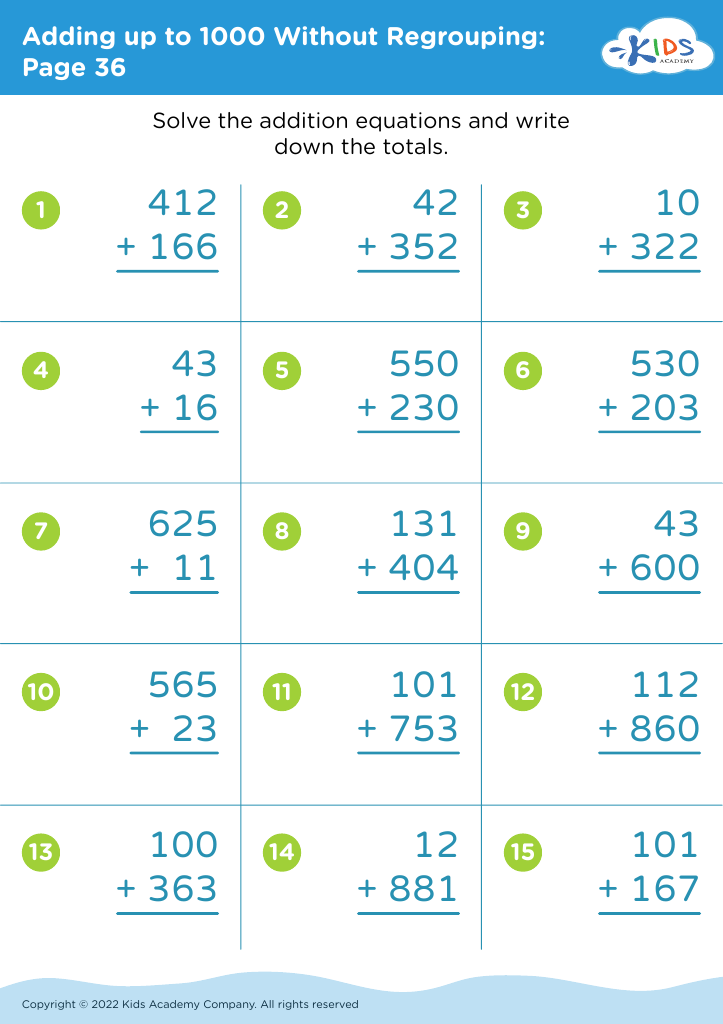
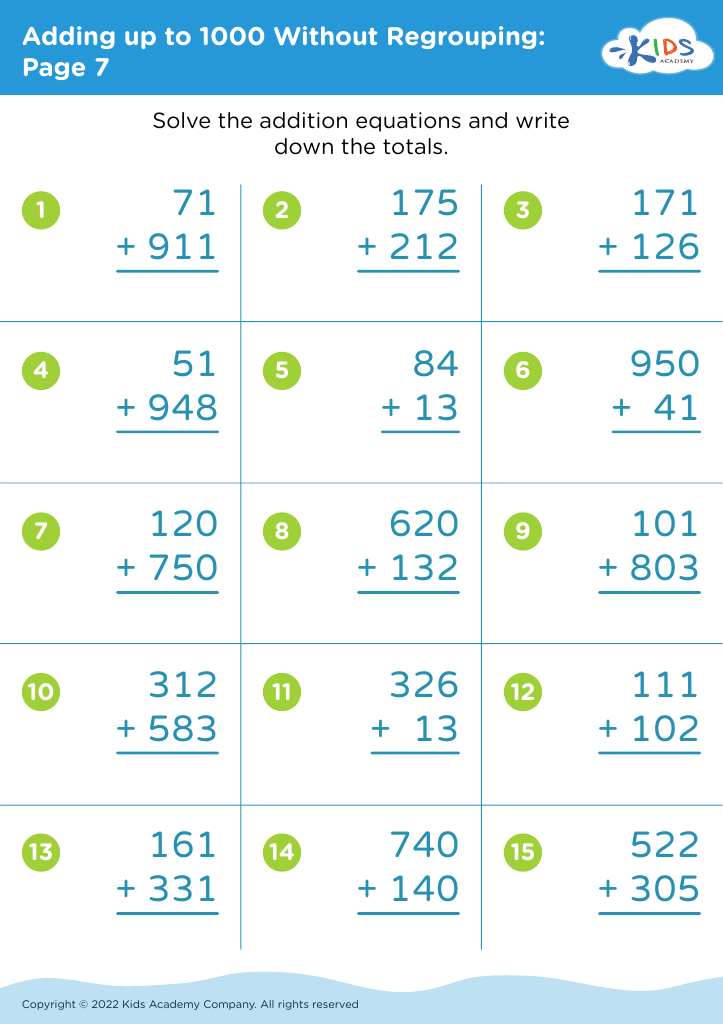
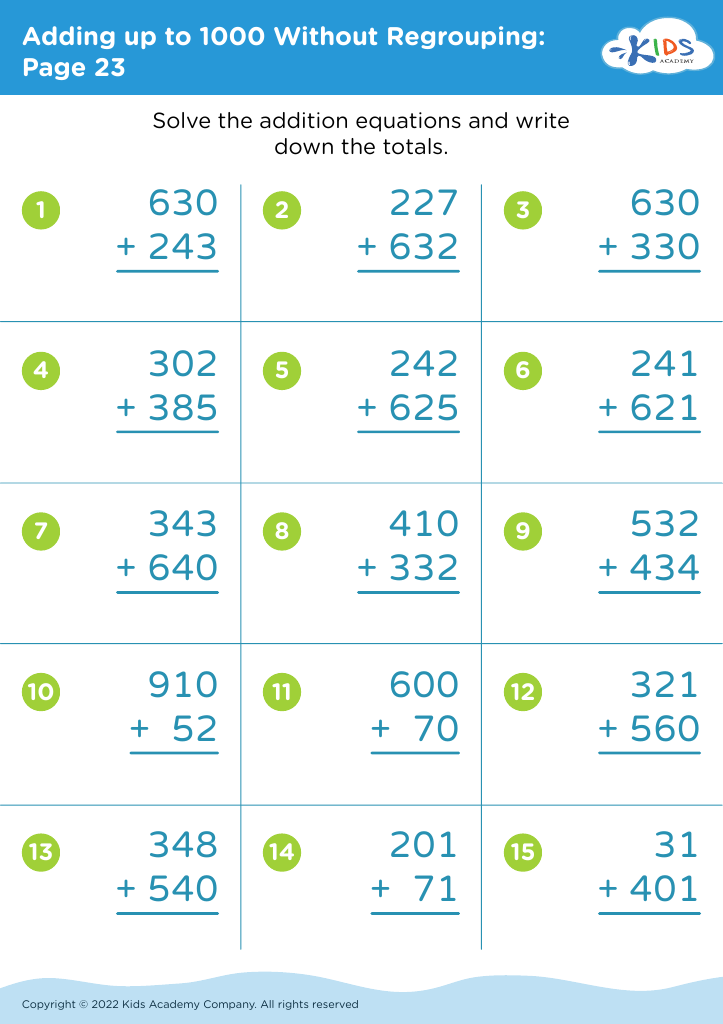
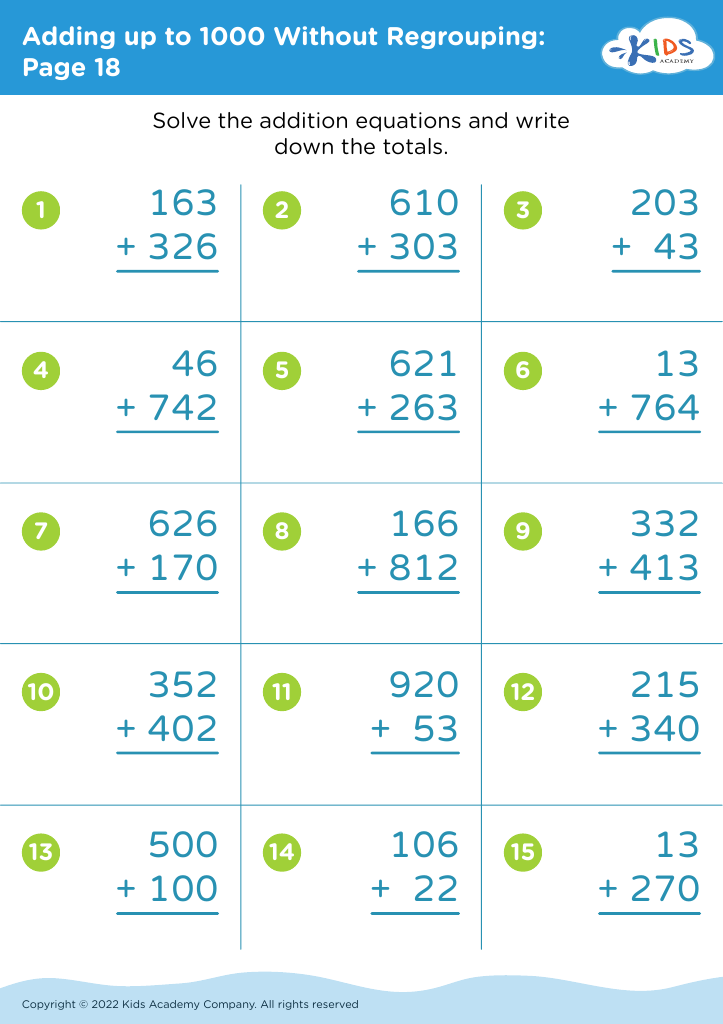
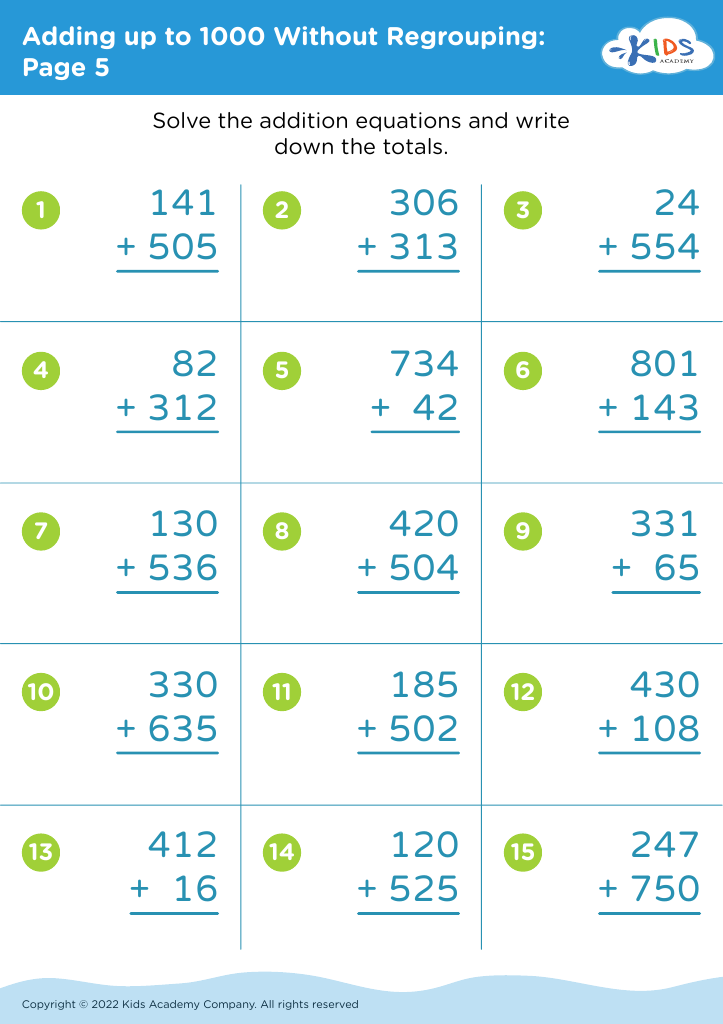
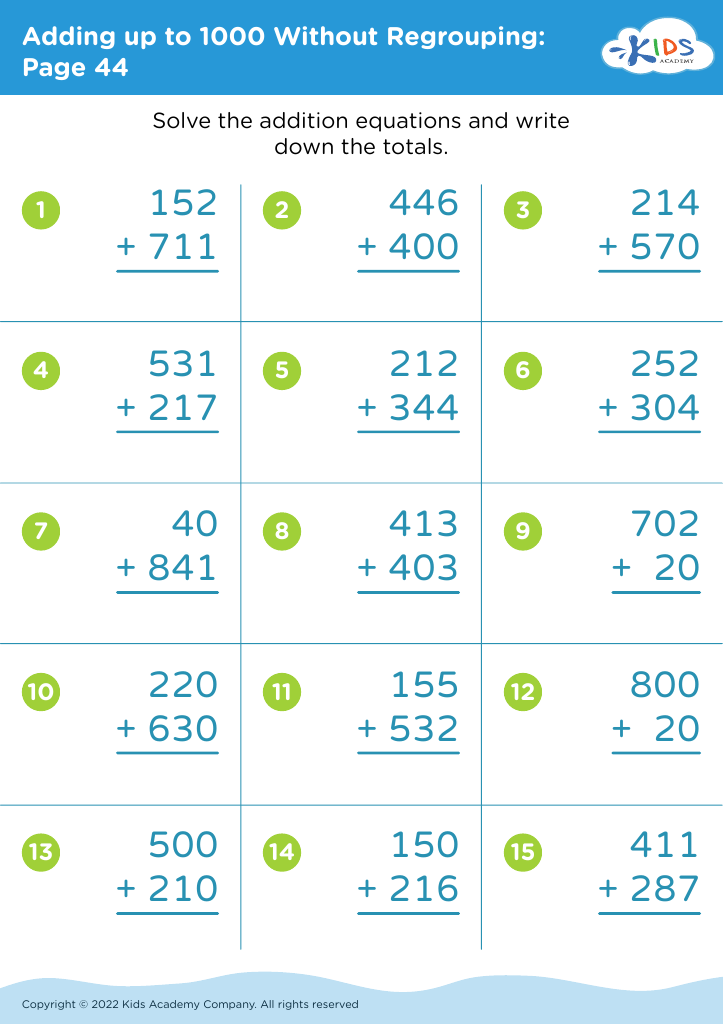
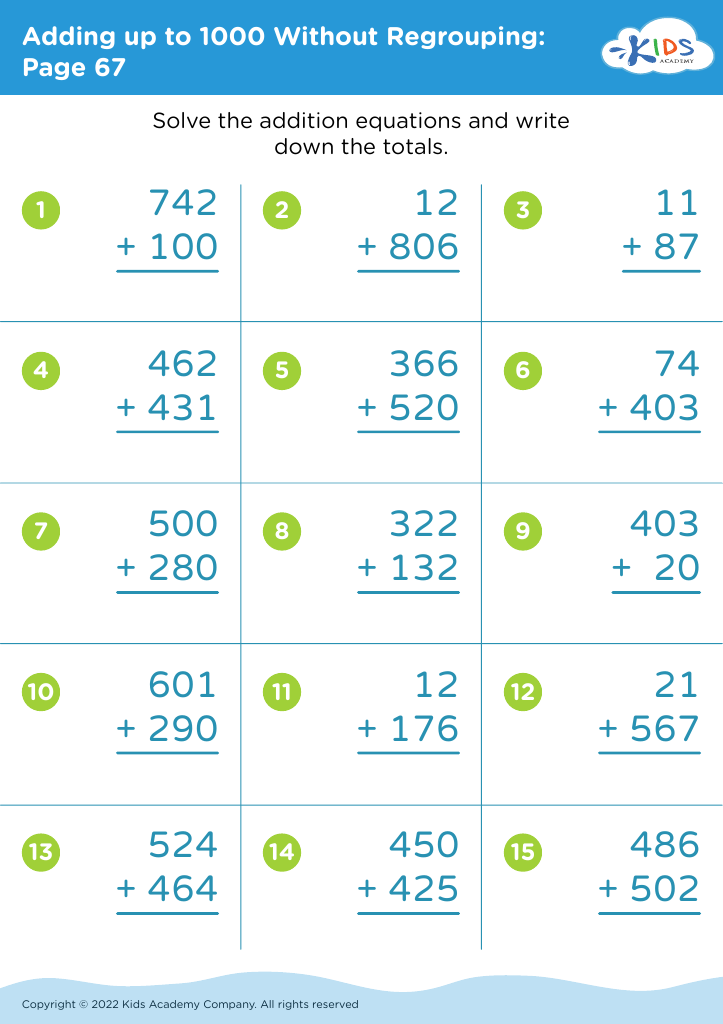
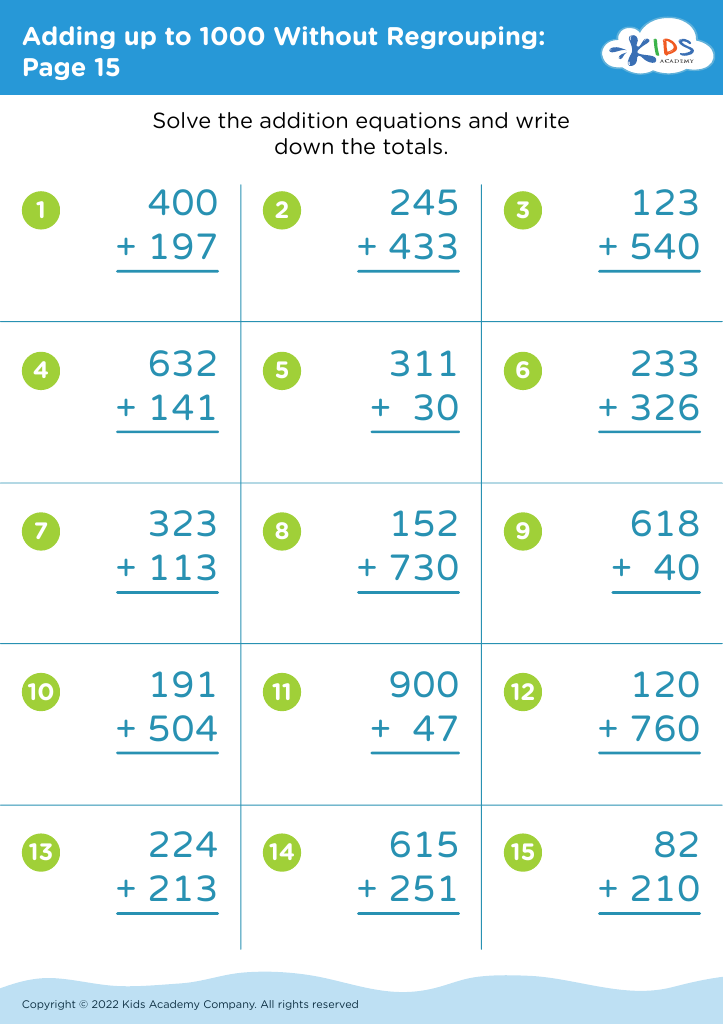
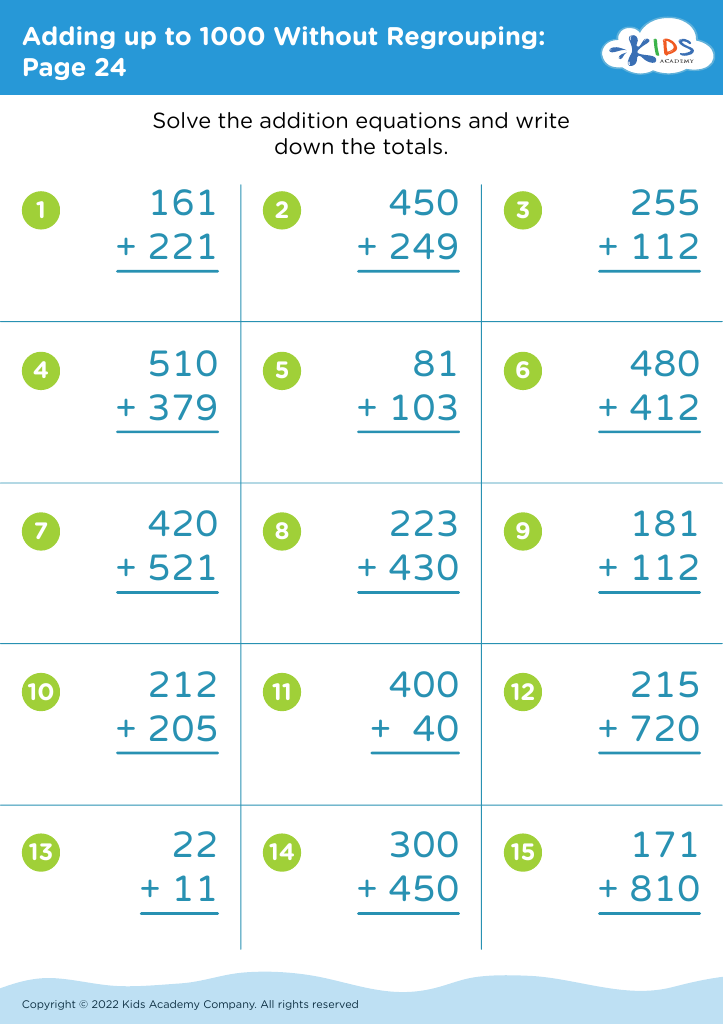


Understanding fractions and the concept of adding numbers up to 1000 without regrouping is crucial for Grade 3 students as it lays the foundation for more advanced mathematics. Parents and teachers should care about this because these skills develop critical thinking and problem-solving abilities. Mastering fractions helps students understand how parts relate to a whole, which is essential in everyday life, like cooking or sharing items.
Furthermore, adding numbers without regrouping encourages computational fluency, allowing children to perform arithmetic operations confidently and accurately. This skill is particularly important since it simplifies initial exposure to addition, fostering a strong mathematical sense without the complexities of carrying over digits. Parents can support this learning by incorporating fractions in practical activities—like measuring ingredients—while teachers can engage students with interactive fraction games and group activities. This reinforces learning, making it both enjoyable and relevant.
Consequently, focusing on these foundational concepts equips children with the necessary tools to tackle more complex mathematical scenarios in the future, ultimately contributing to their overall academic success and confidence. Thus, the active involvement of parents and teachers in this learning process is vital for creating a solid groundwork for future mathematical exploration.