Problem-Solving Skills Grade 3 Adding up to 1000 Worksheets
25 filtered results
-
From - To
Our "Problem-Solving Skills Grade 3 Adding up to 1000 Worksheets" are designed to enhance your child's math proficiency through engaging and interactive exercises. Tailored for third graders, these worksheets align with curriculum standards, offering numerous problems that focus on adding up to 1000. Each worksheet encourages critical thinking and analytical skills, ensuring your child develops a strong mathematical foundation. Whether practicing addition on paper or solving word problems, these printable resources promote confidence and problem-solving abilities in young learners, making math practice fun and effective. Access now to help your third grader excel in math!
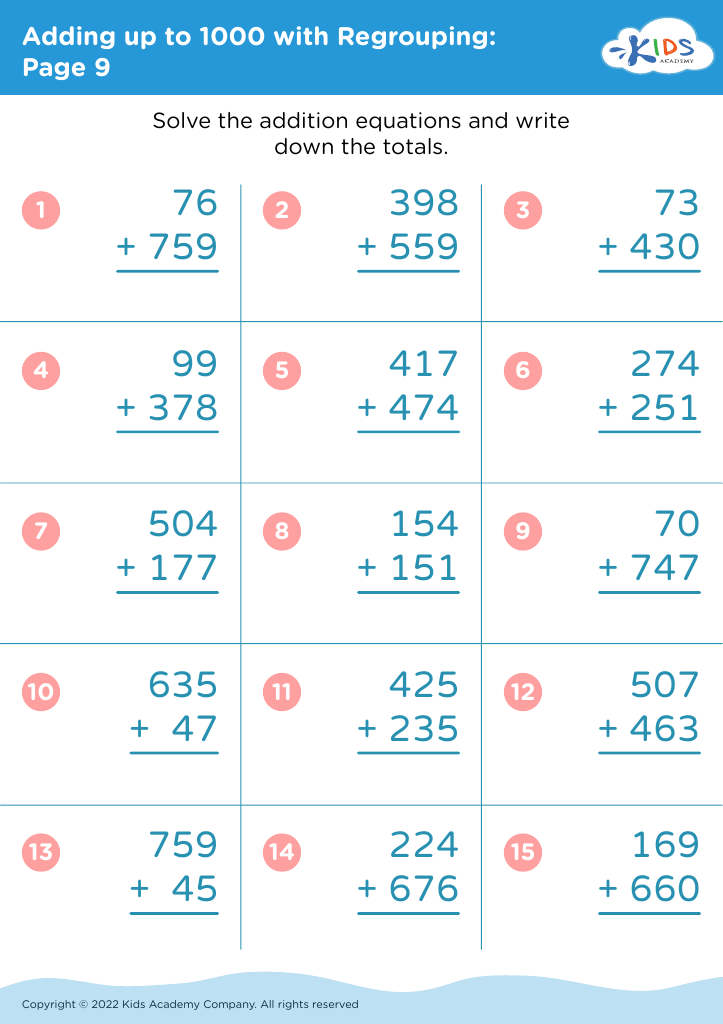
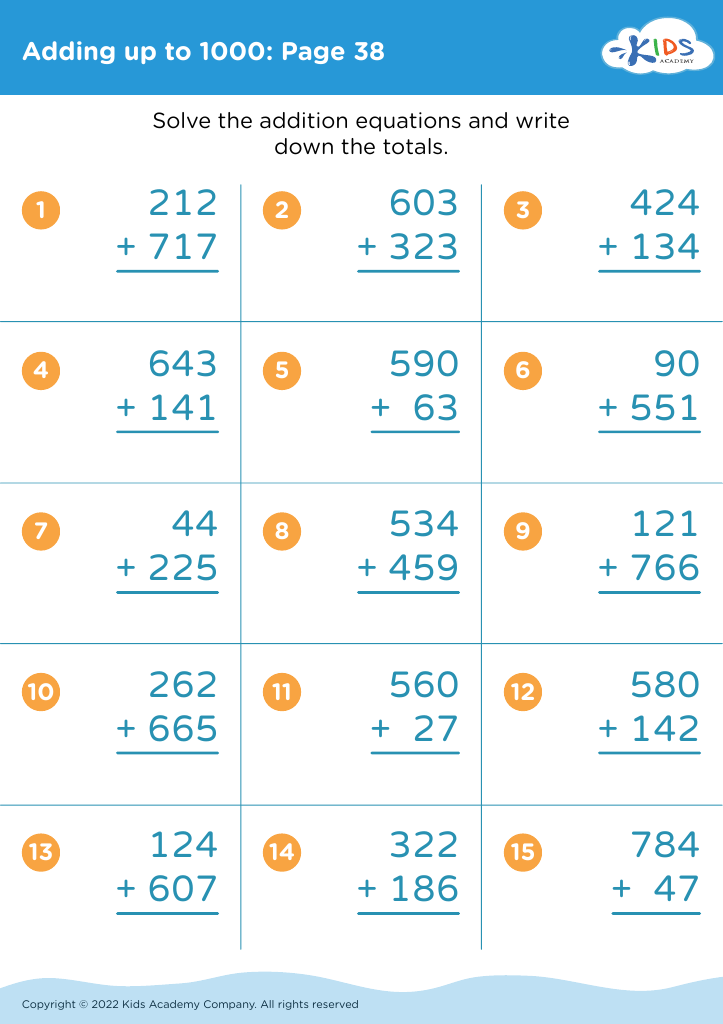
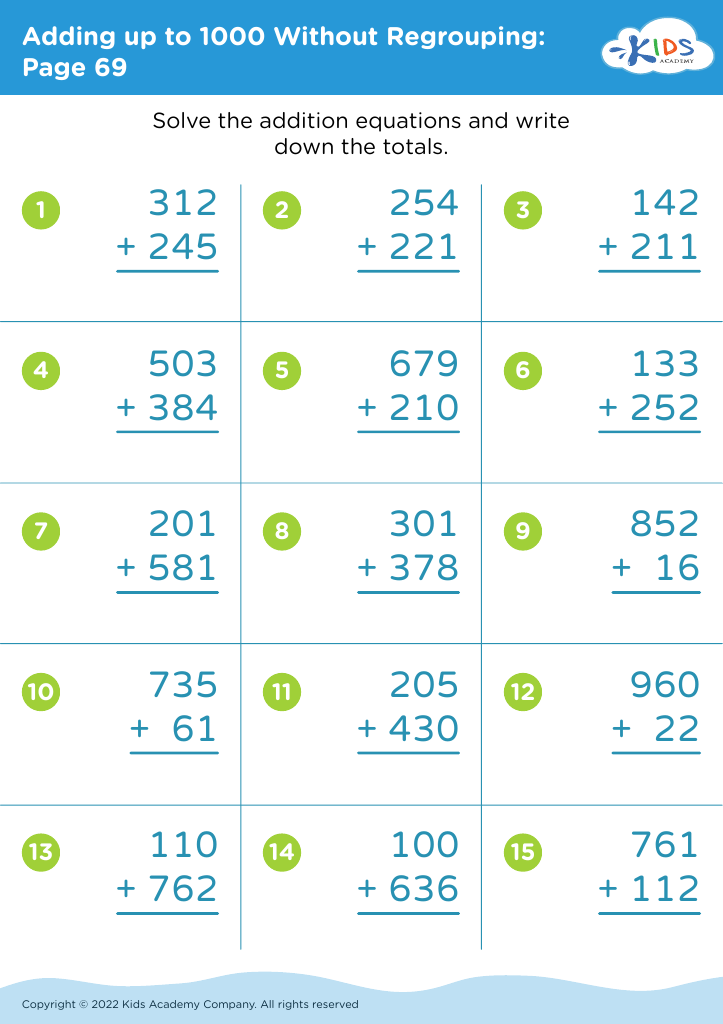
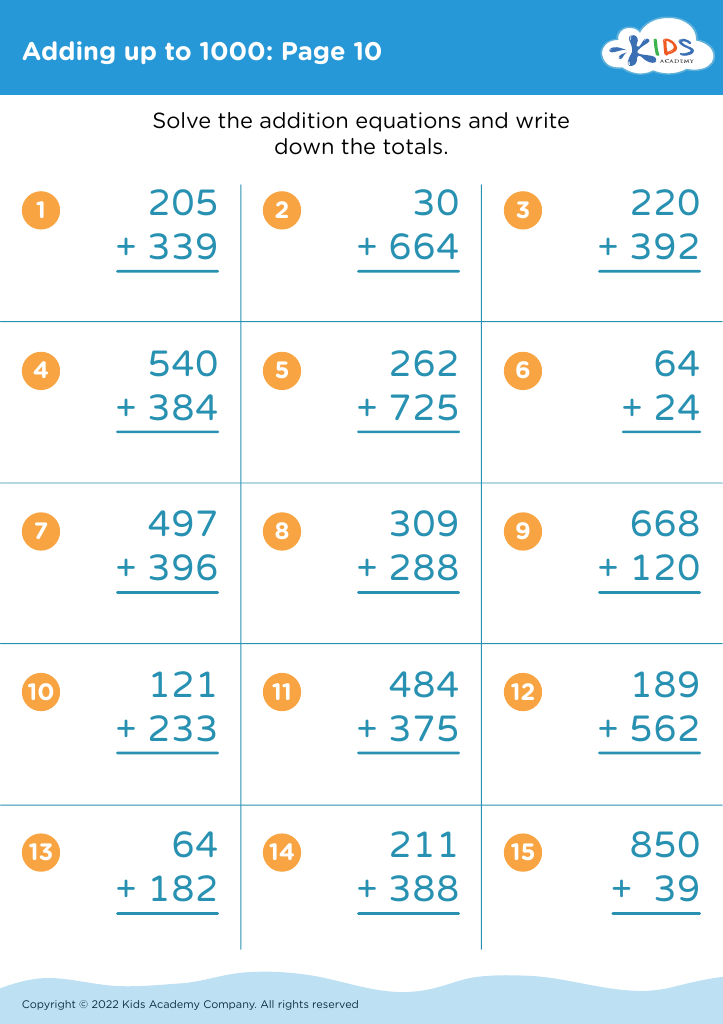
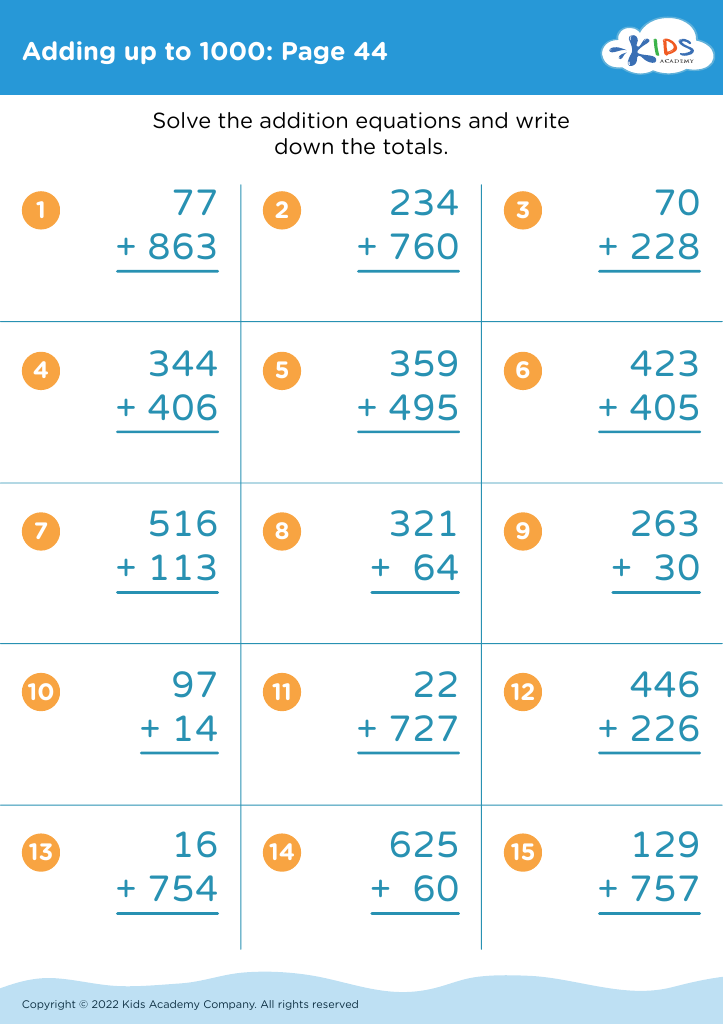
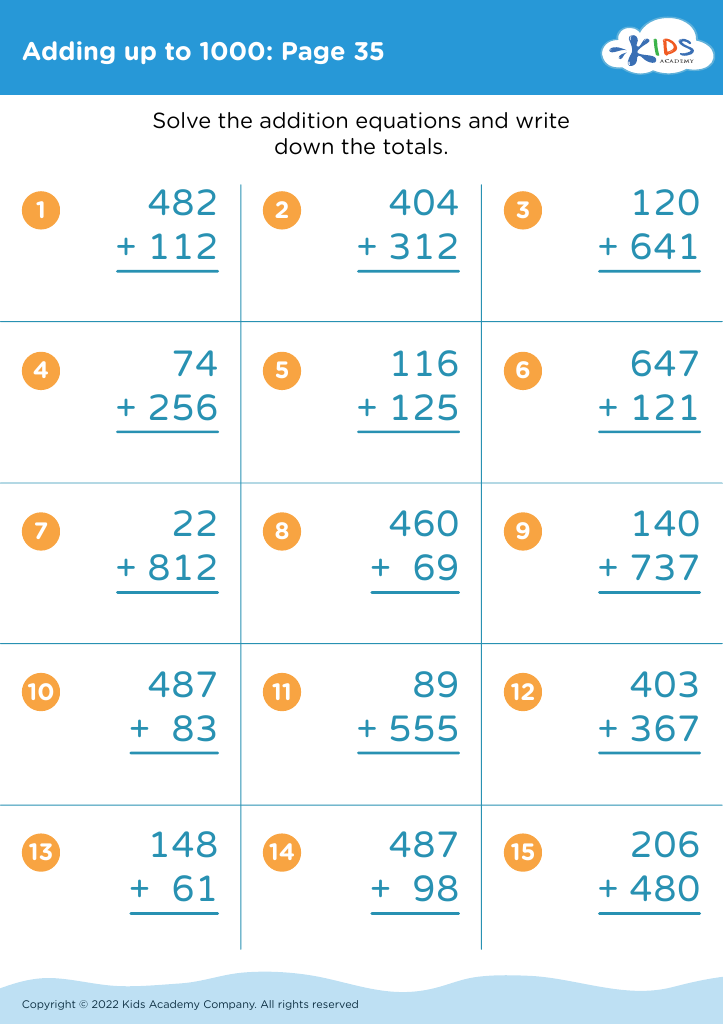
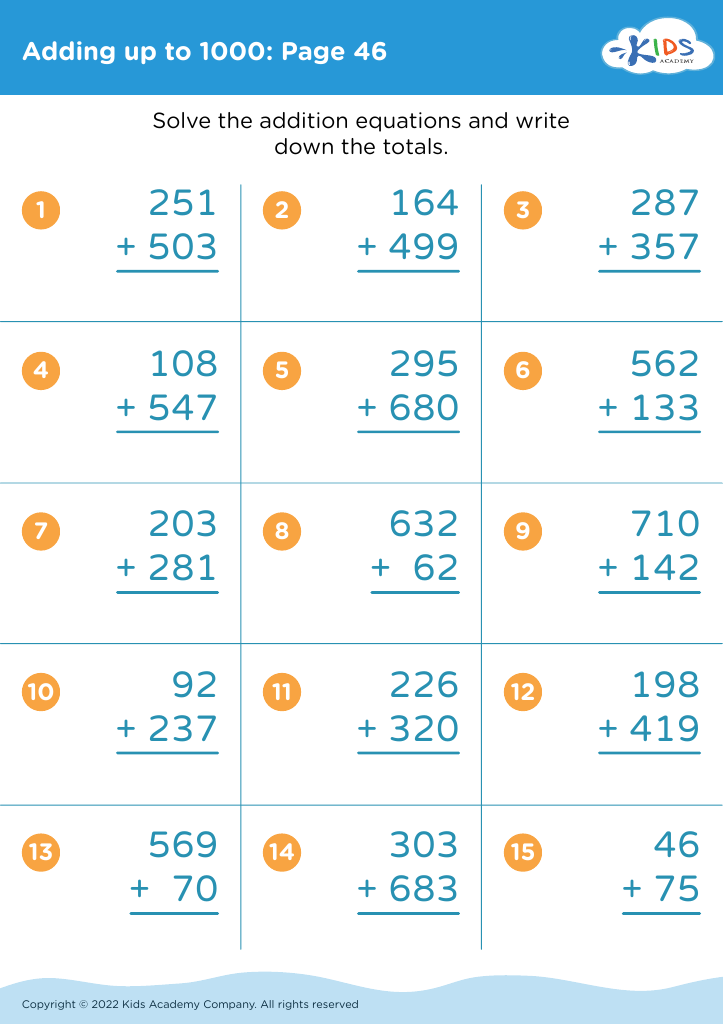
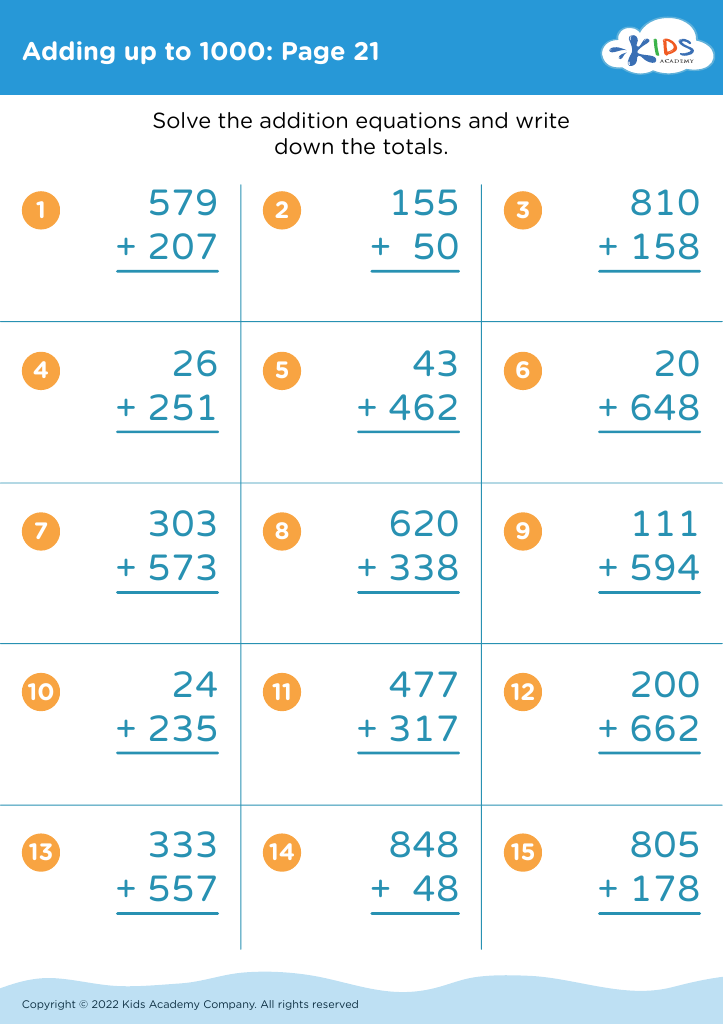
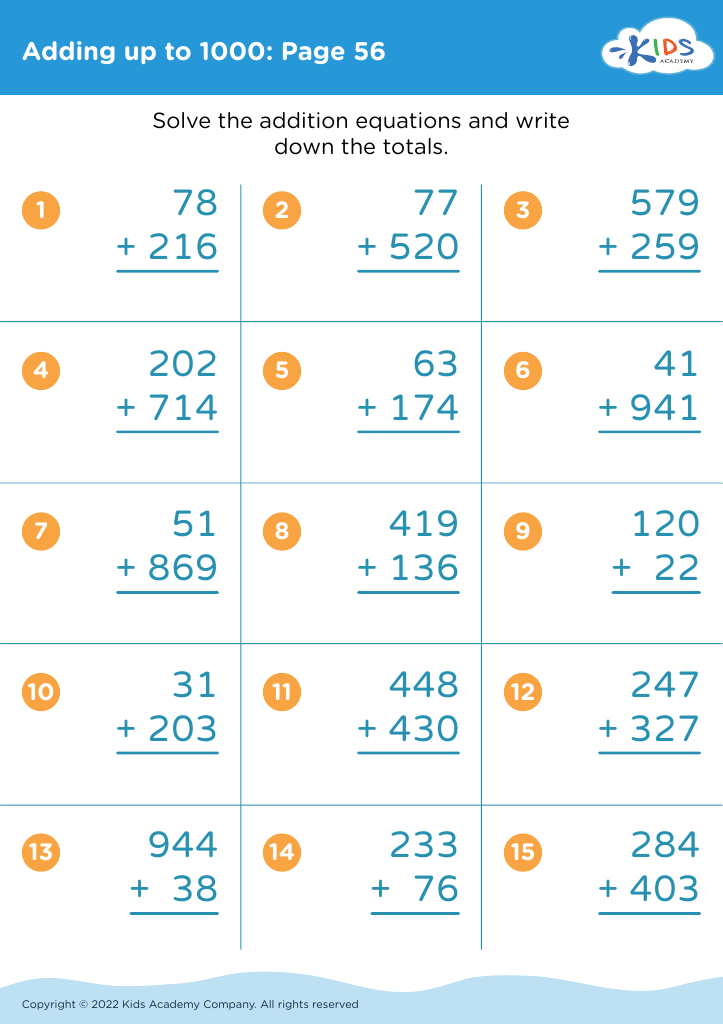
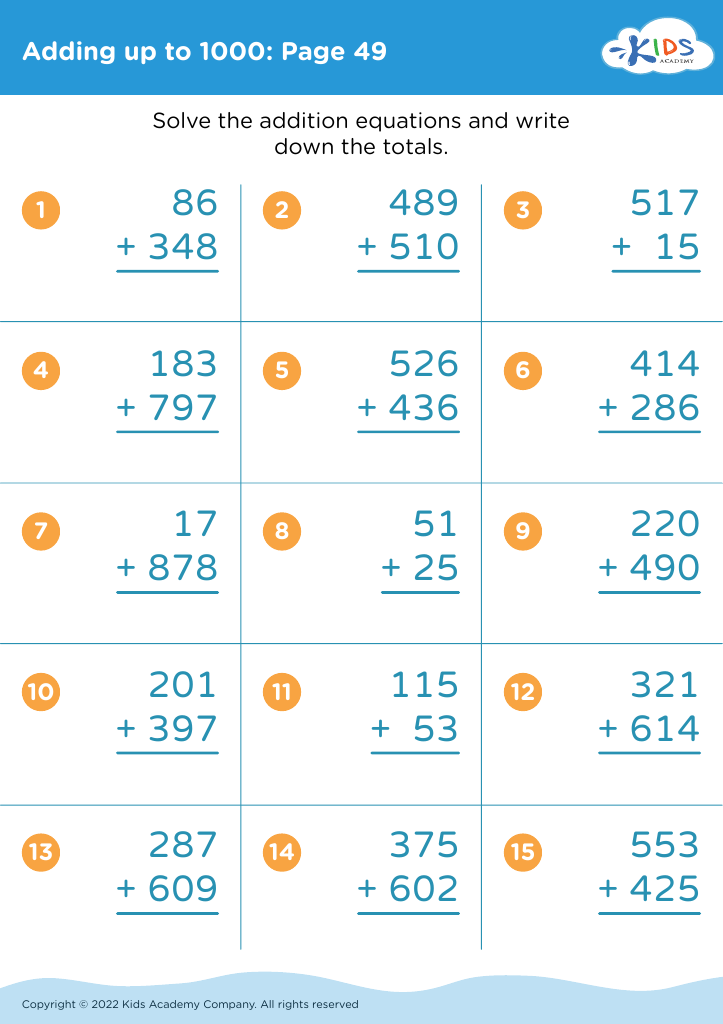
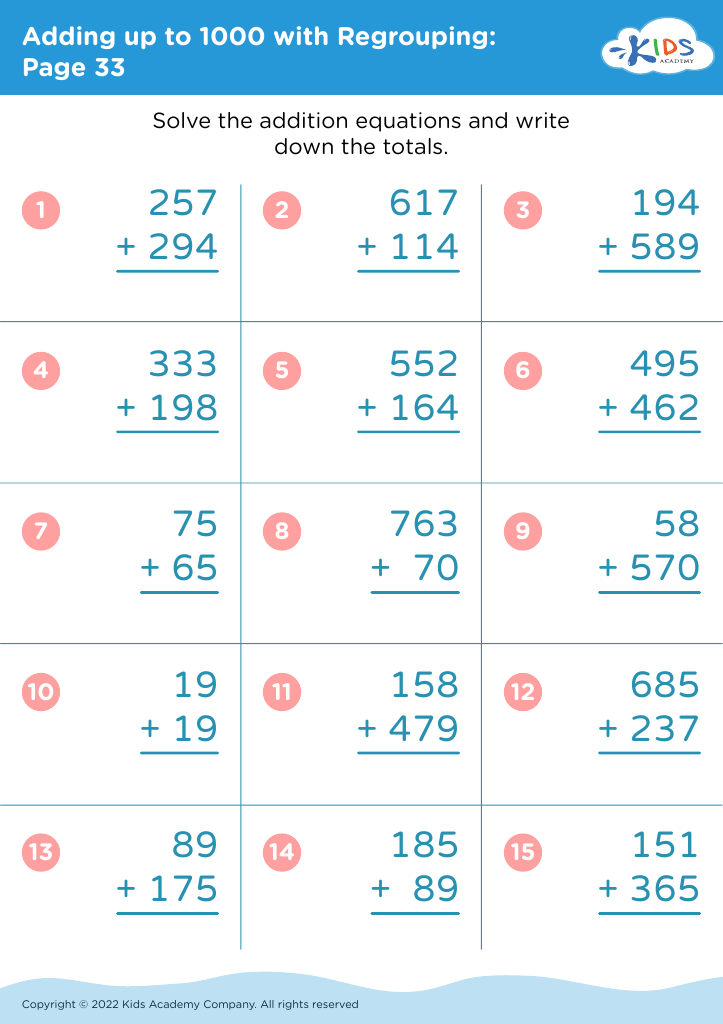
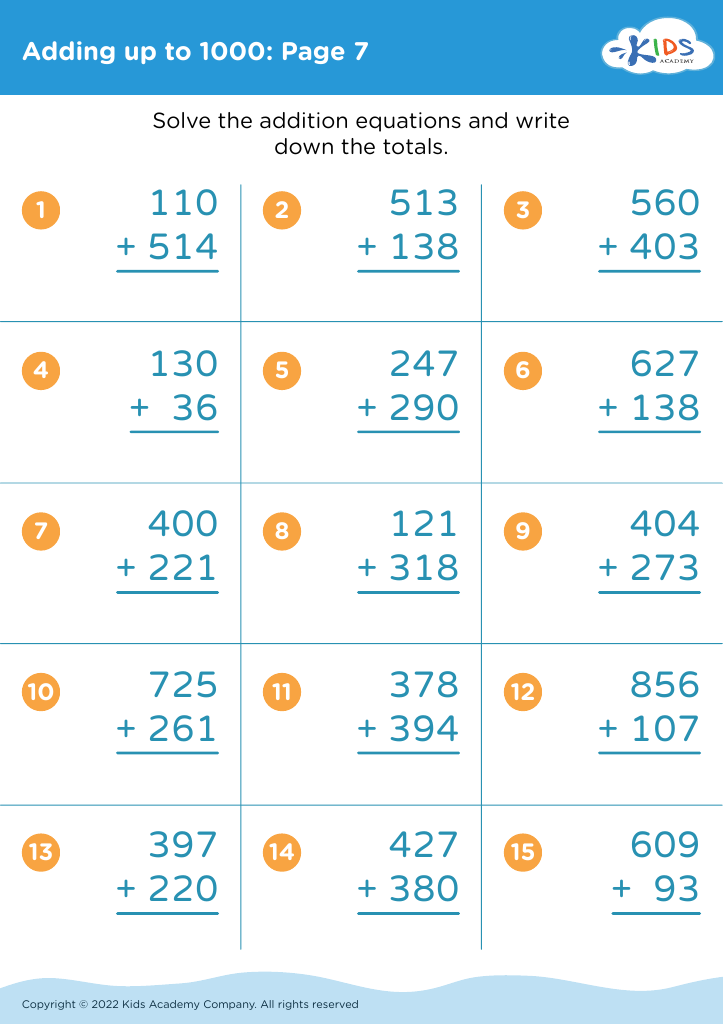
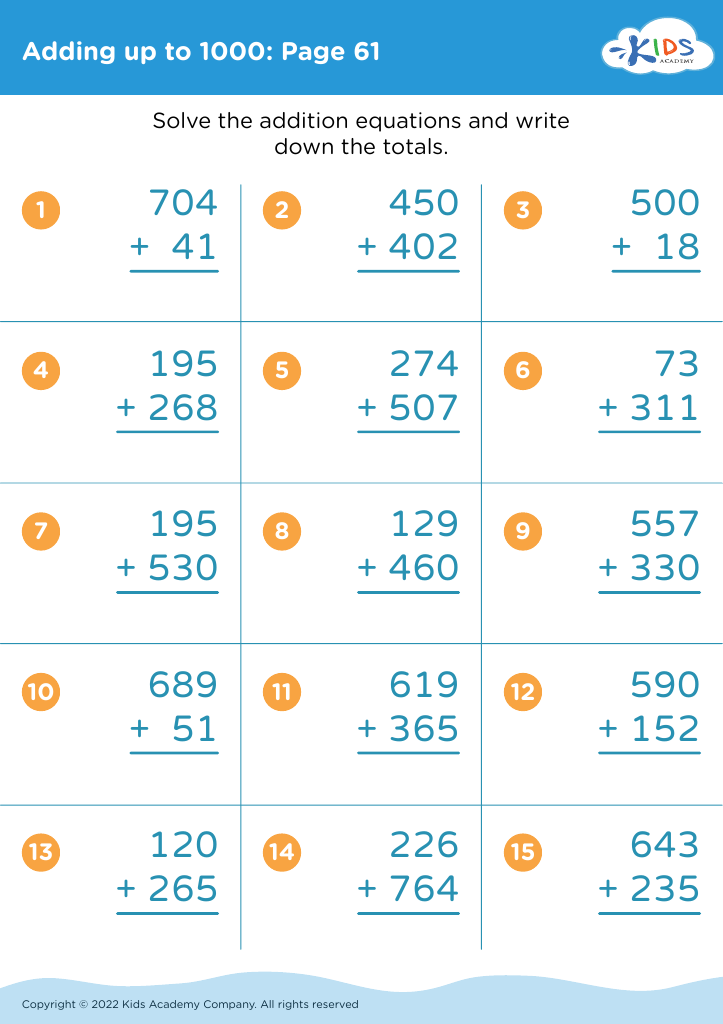
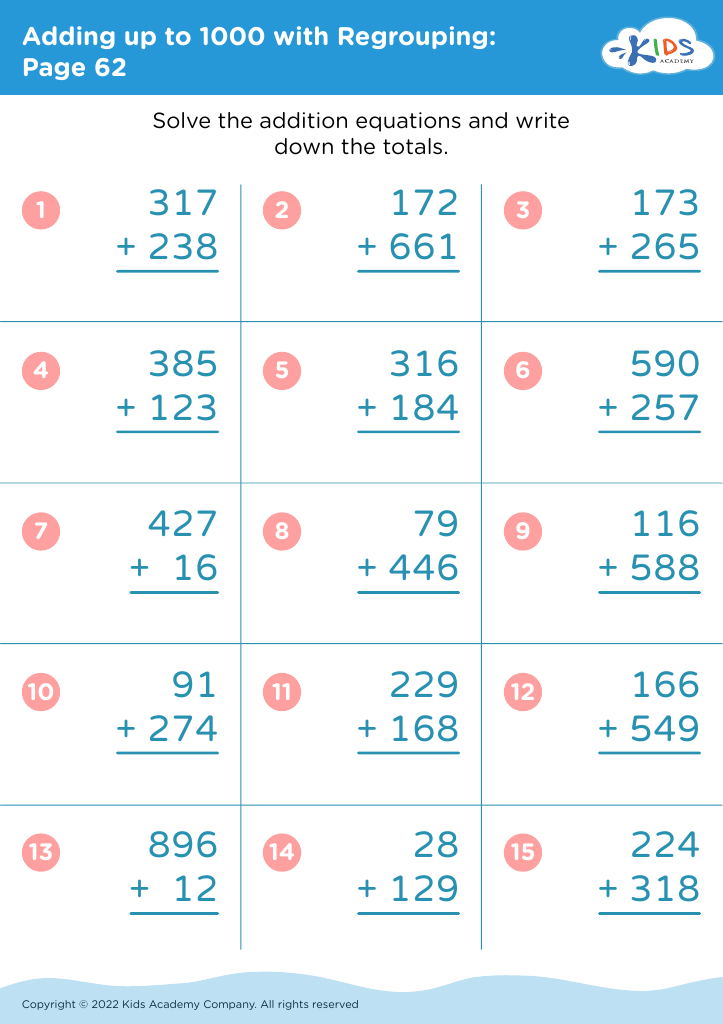
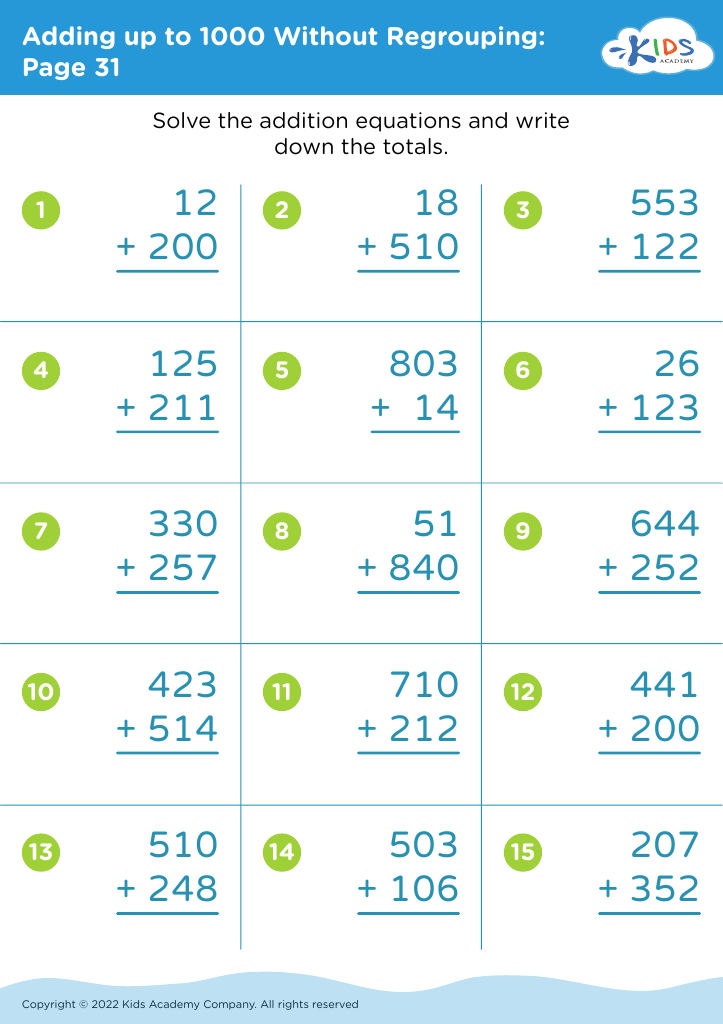
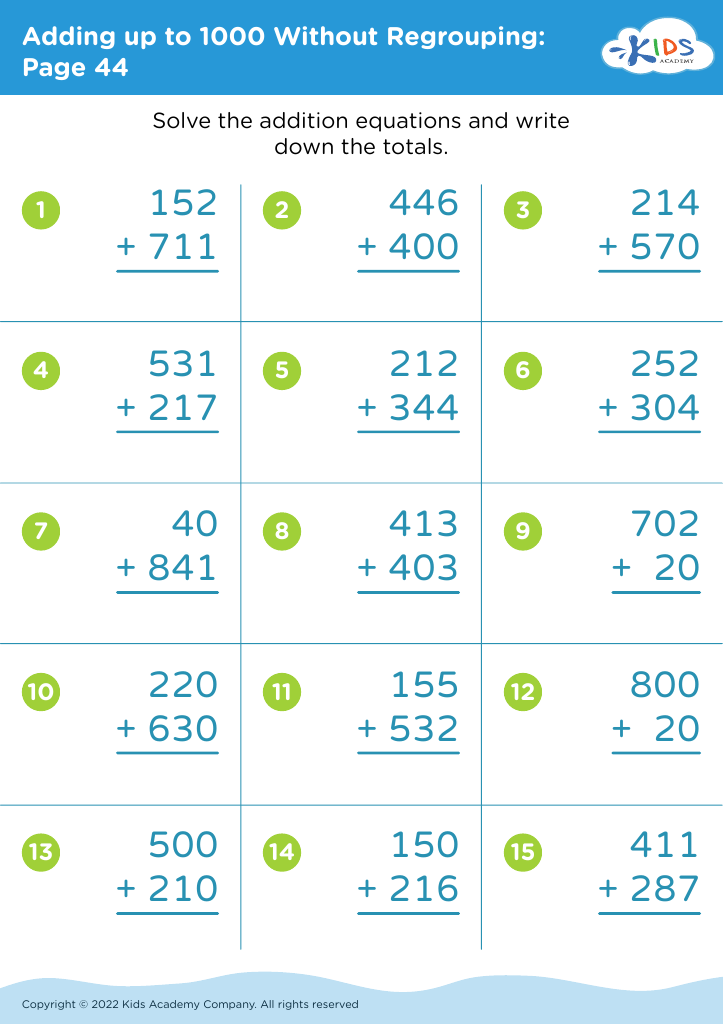
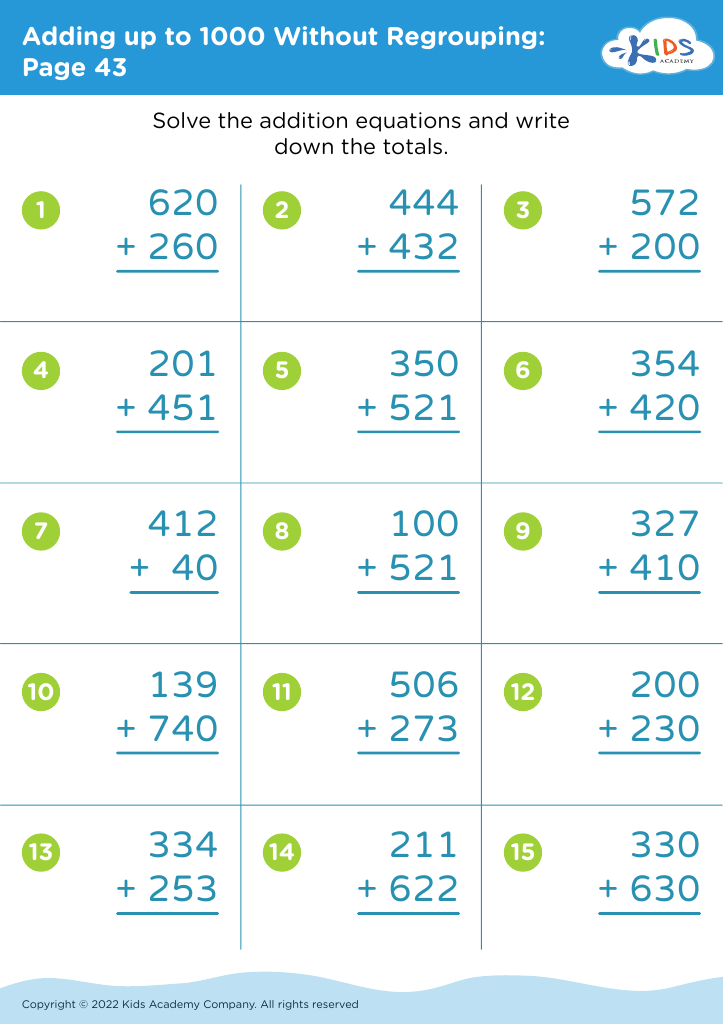
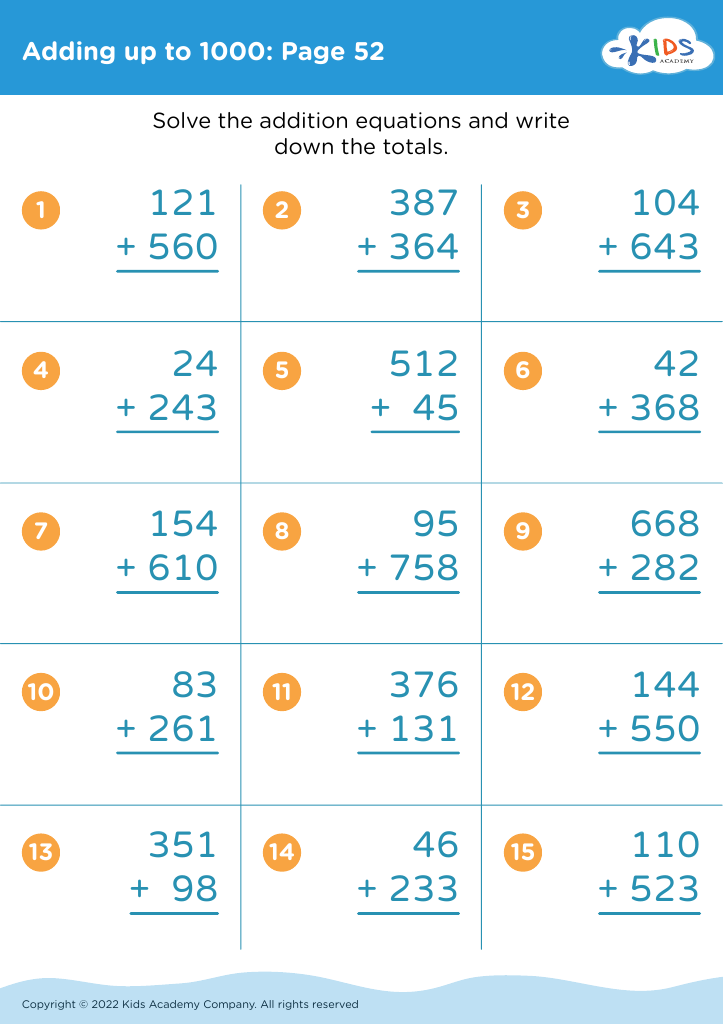
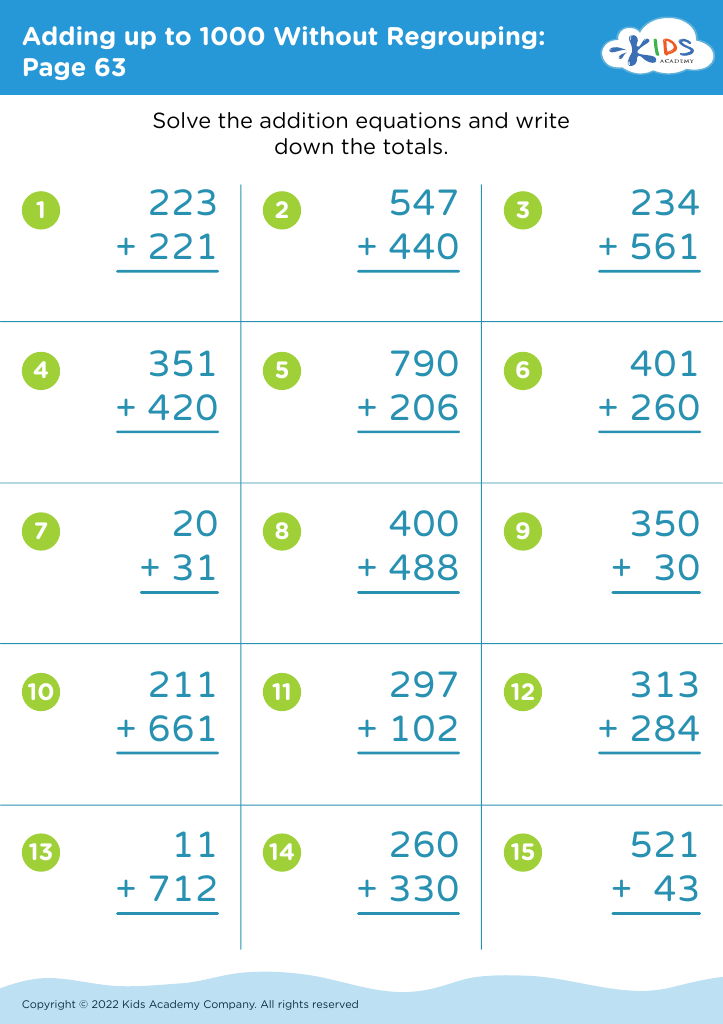
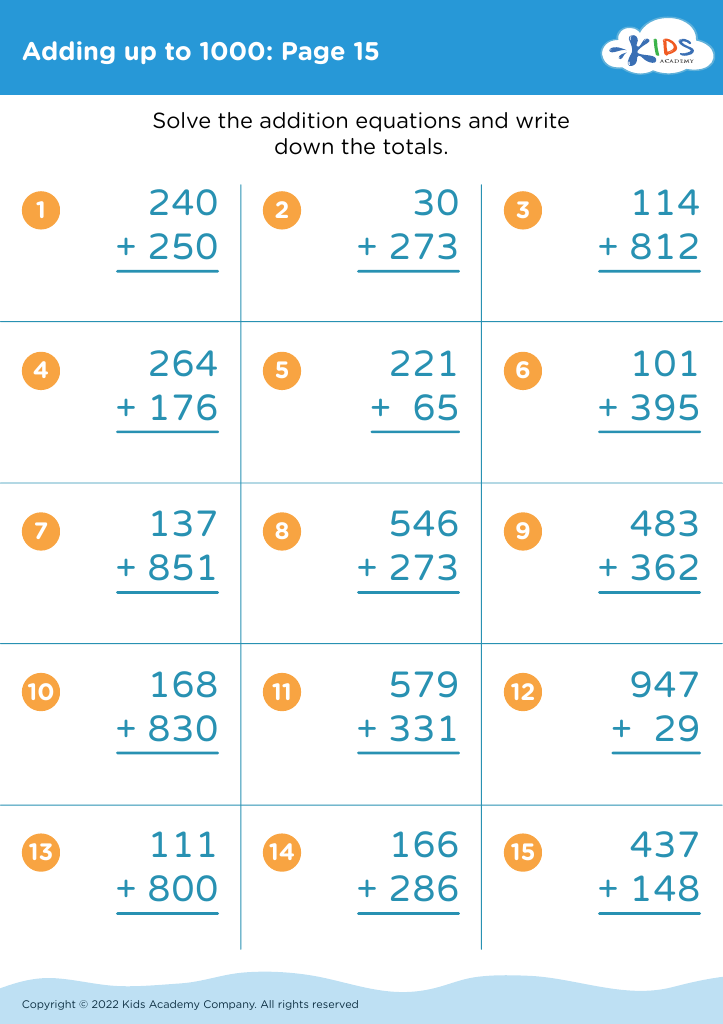
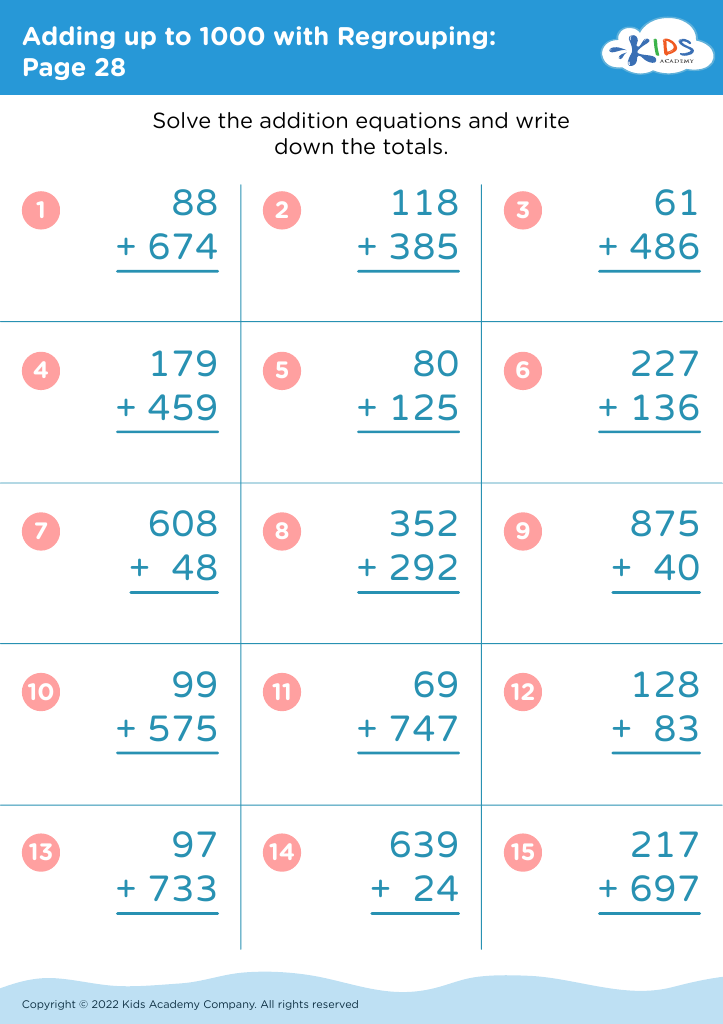
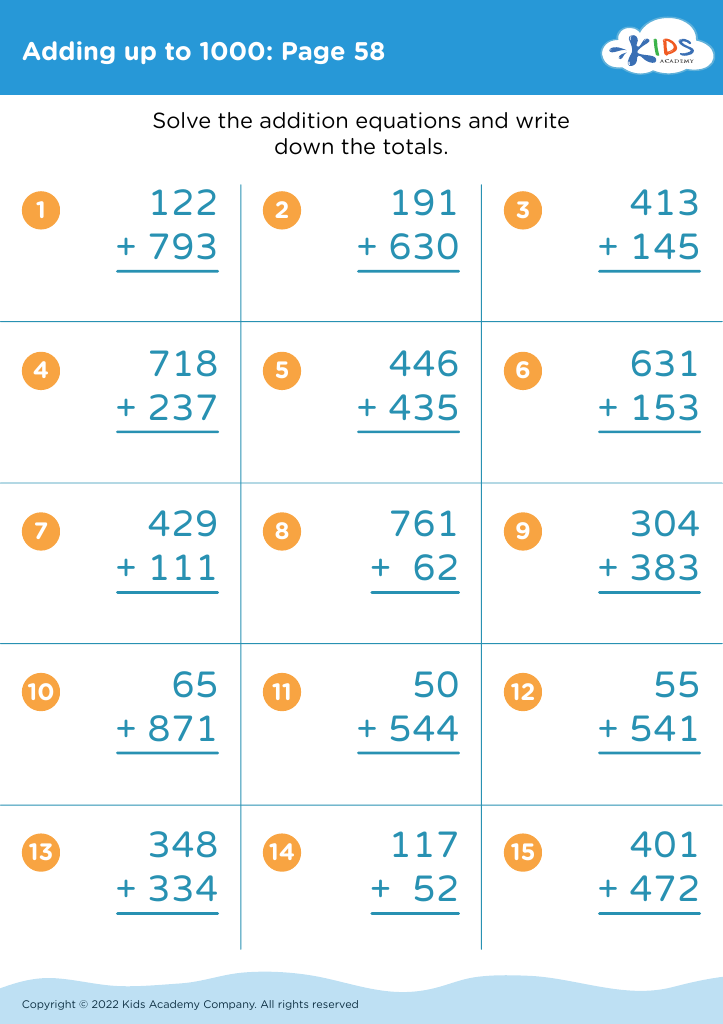
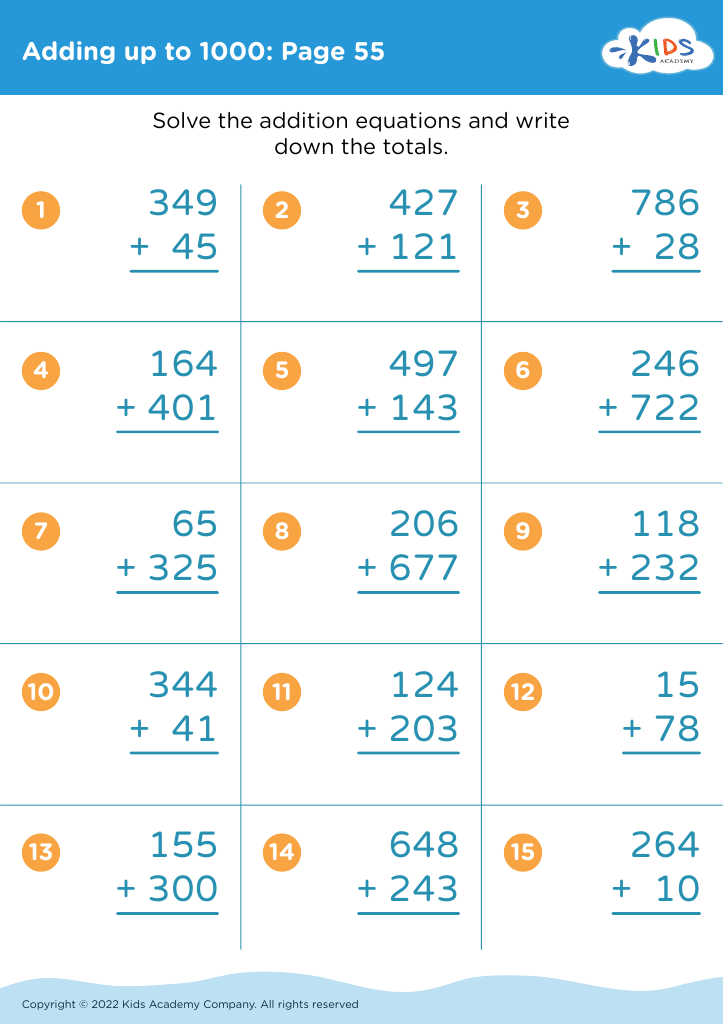
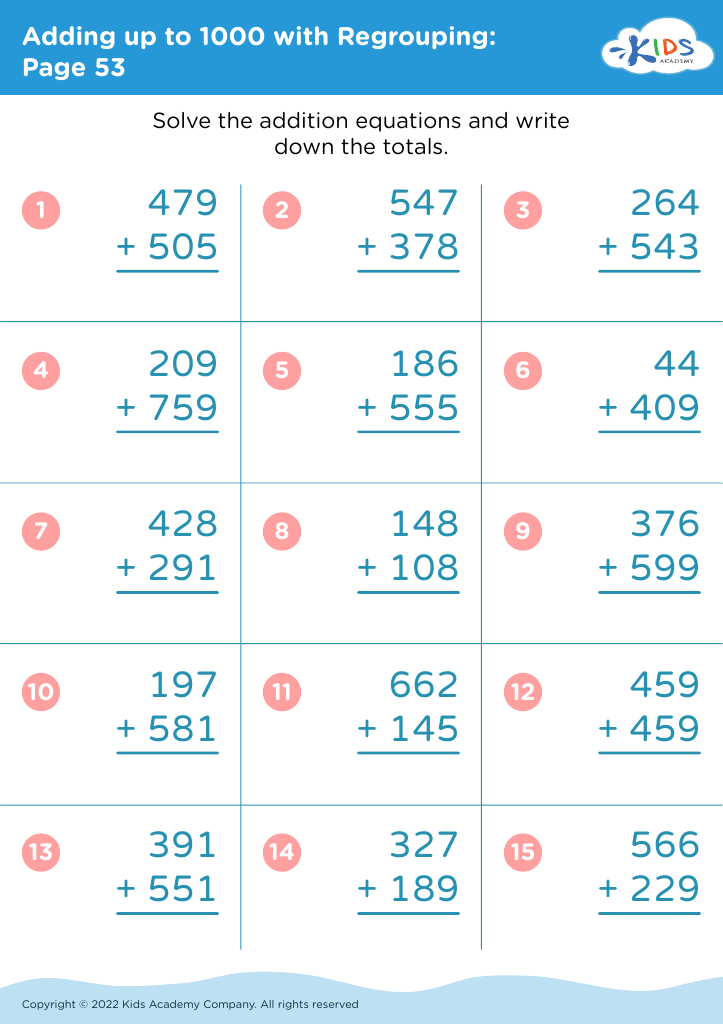


Parents and teachers should place significant emphasis on problem-solving skills for third graders, particularly when it comes to adding numbers up to 1000, because these skills form the bedrock of mathematical competence and broader cognitive development. At this critical educational stage, children are transitioning from simple arithmetic to more complex mathematical concepts, and mastering addition within this range strengthens numerical fluency and mental math abilities. It offers students practical experience in handling larger numbers and understanding place value, which are essential for future arithmetic operations like subtraction, multiplication, and division.
Moreover, problem-solving in mathematics cultivates critical thinking and analytical skills. As students tackle addition problems, they must choose effective strategies, verify their results, and reflect on their methods. These processes enhance their logical reasoning and decision-making abilities, which are invaluable in all areas of learning and everyday life.
From a socio-emotional perspective, successfully solving these math problems bolsters self-confidence and perseverance. When children overcome challenges in math, they learn the value of effort and resilience, leading to a growth mindset. This mindset isn't just limited to mathematics; it carries over to other subjects and personal experiences, helping children face diverse challenges with determination and optimism. Thus, strong problem-solving skills at this stage set the foundation for academic success and lifelong learning.