Simplifying Fractions Grade 3 Adding up to 1000 Worksheets
6 filtered results
-
From - To
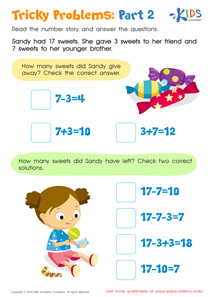
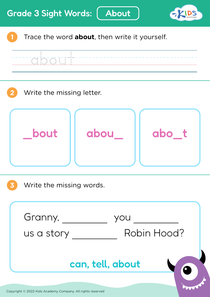
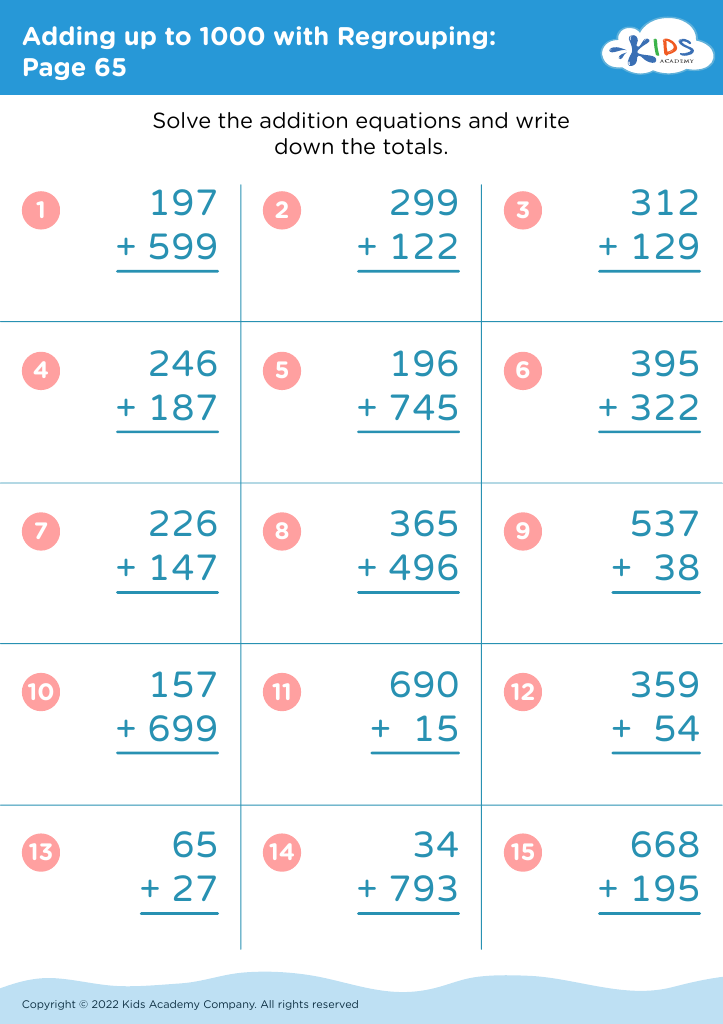
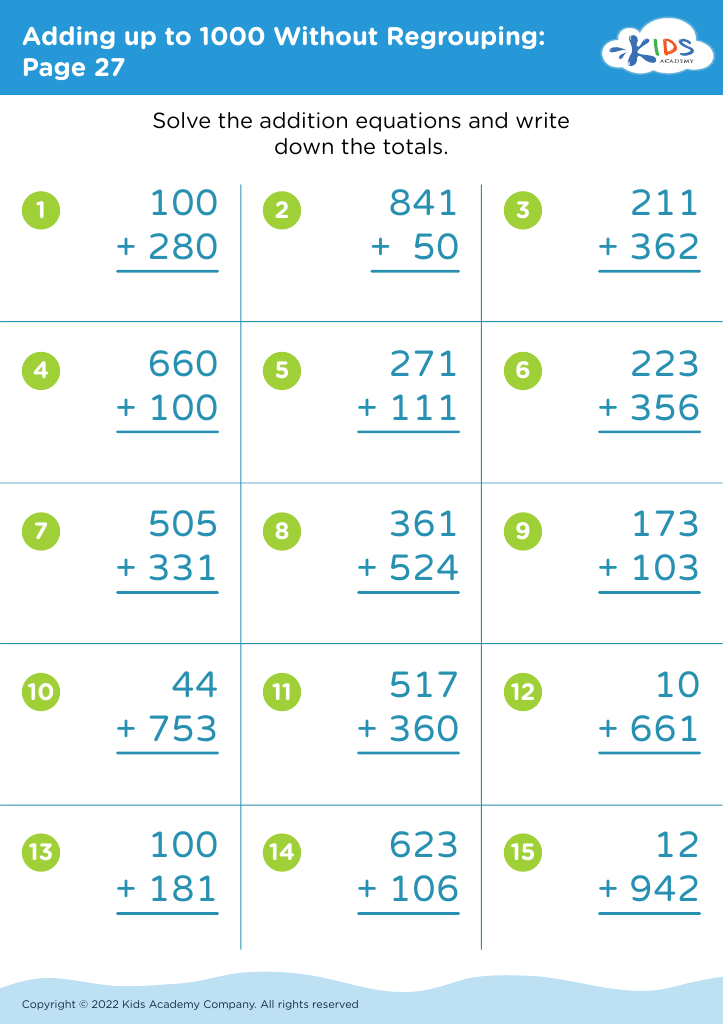
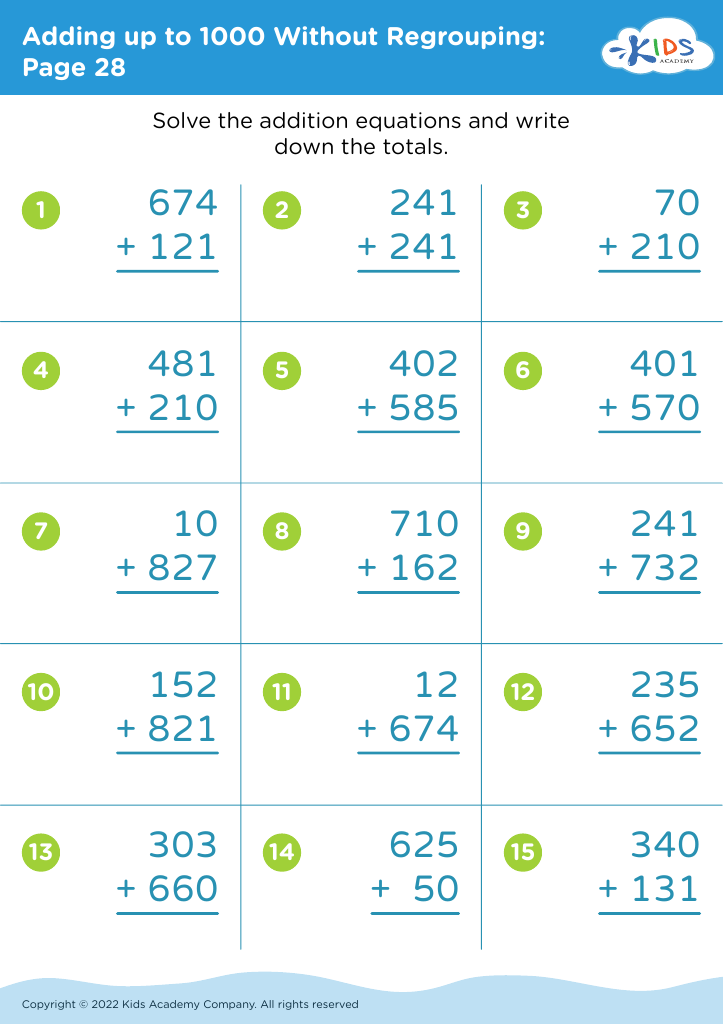
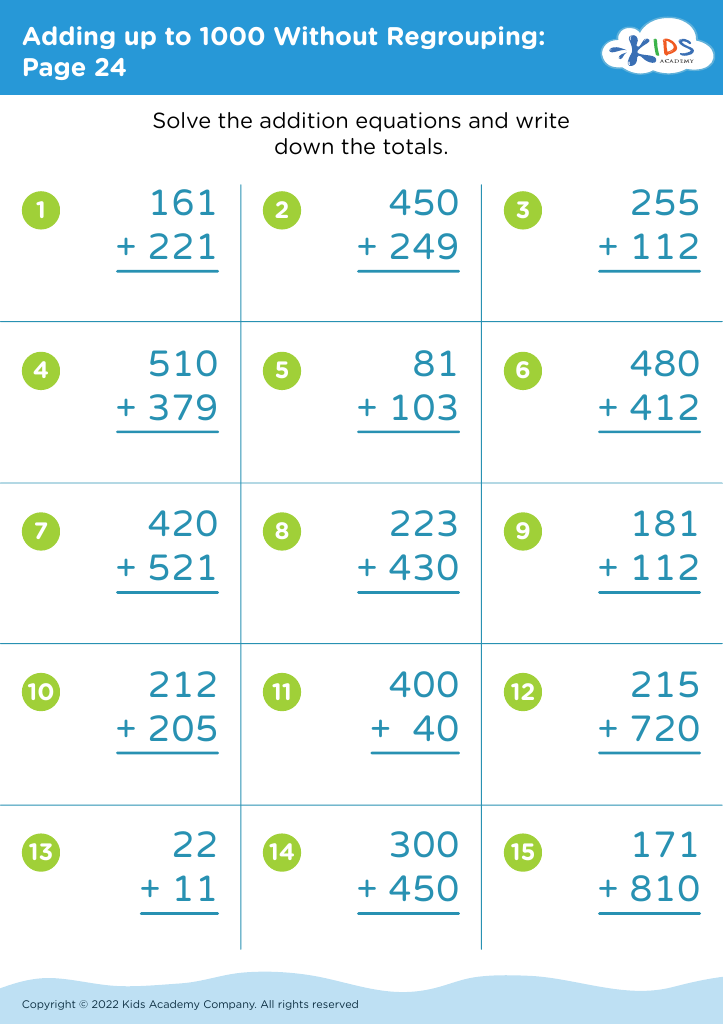
Discover our "Simplifying Fractions Grade 3 Adding up to 1000 Worksheets" designed to help young learners master fraction concepts in a fun and engaging way! These worksheets provide clear instructions and practice problems that support students in simplifying fractions, making it easier for them to understand the relationship between numbers. Tailored for third graders, our resources not only reinforce fraction skills but also integrate addition up to 1000, enhancing overall math proficiency. Whether used in the classroom or at home, these worksheets offer a great way for children to build confidence in their math abilities while enjoying interactive learning. Print now to get started!
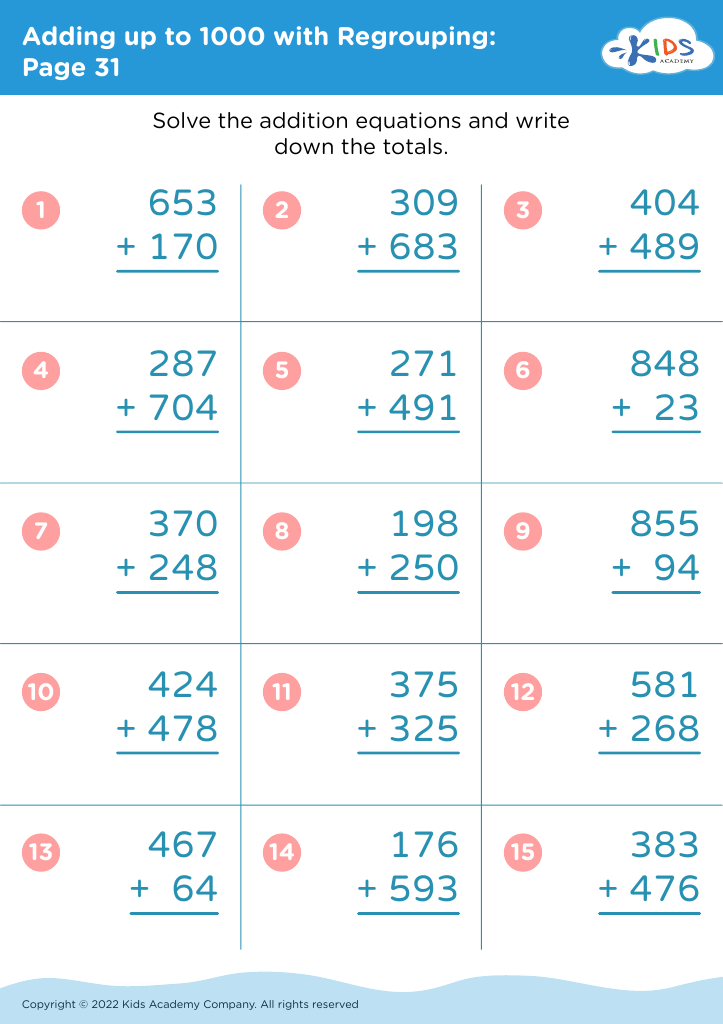
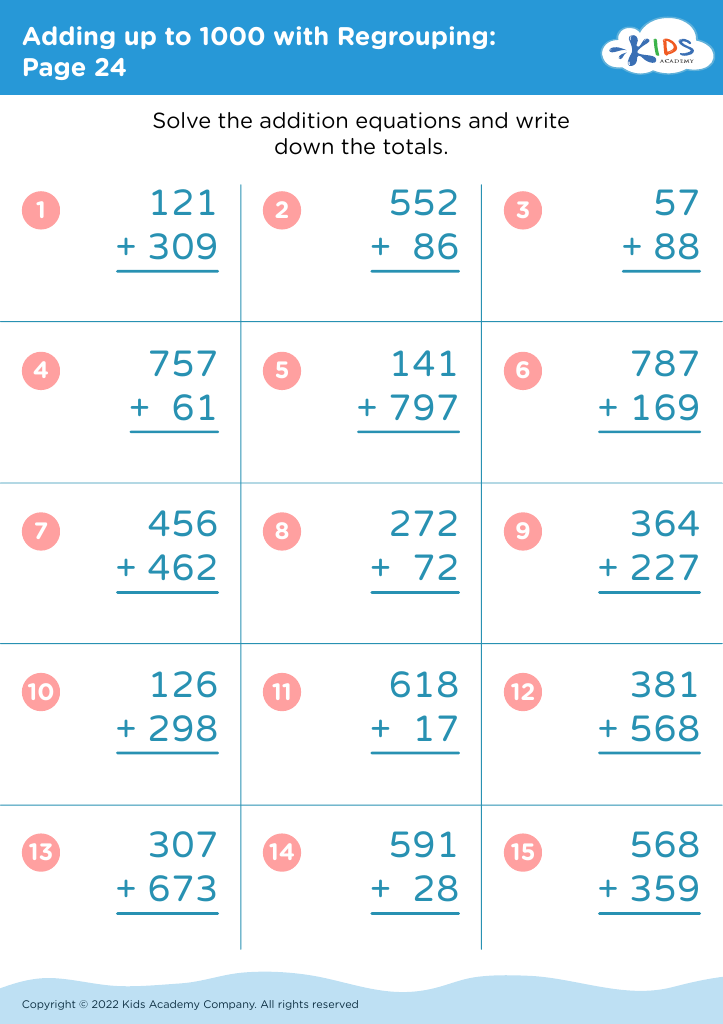


Understanding how to simplify fractions is an essential skill for third graders, as it lays the groundwork for more advanced mathematical concepts. Teachers and parents should prioritize this learning because simplifying fractions helps children develop a strong foundation in number sense and visual representation of fractions. It encourages logical thinking and problem-solving skills, which are vital in mathematics and other disciplines.
Moreover, simplifying fractions can foster a child’s ability to relate fractions to real-life situations, such as cooking or sharing. In Grade 3, students are often working with fractions within the context of whole numbers, such as adding or subtracting fractions that sum up to 1000. By mastering simplifying fractions, students can approach problems more efficiently and accurately.
Additionally, this skill promotes confidence in mathematics. When students understand how to manipulate fractions, they feel more empowered to tackle more complex problems in the future. Collaborative learning opportunities, such as group activities or games, can make this skill engaging. Parents and teachers advocating for the simplification of fractions are not just teaching math; they're nurturing critical thinkers equipped for future challenges. This foundational skill encourages a lifelong appreciation for mathematics and sets students up for success in their educational journey.