Understand fractions Grade 3 Adding up to 1000 Worksheets
4 filtered results
-
From - To
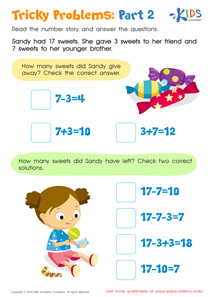
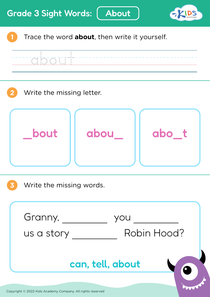
Welcome to our Grade 3 Adding Up to 1000 Worksheets focused on understanding fractions! These engaging resources are designed to help young learners grasp the fundamentals of fractions in a fun and interactive way. Students will explore various activities that support their ability to identify, compare, and add fractions, nurturing critical math skills essential for their academic journey. Our worksheets offer a blend of visual aids and practical exercises, ensuring that children not only practice adding fractions but also develop a deeper understanding of their concepts. Strengthen your child's math foundation today with our comprehensive and printable worksheets!
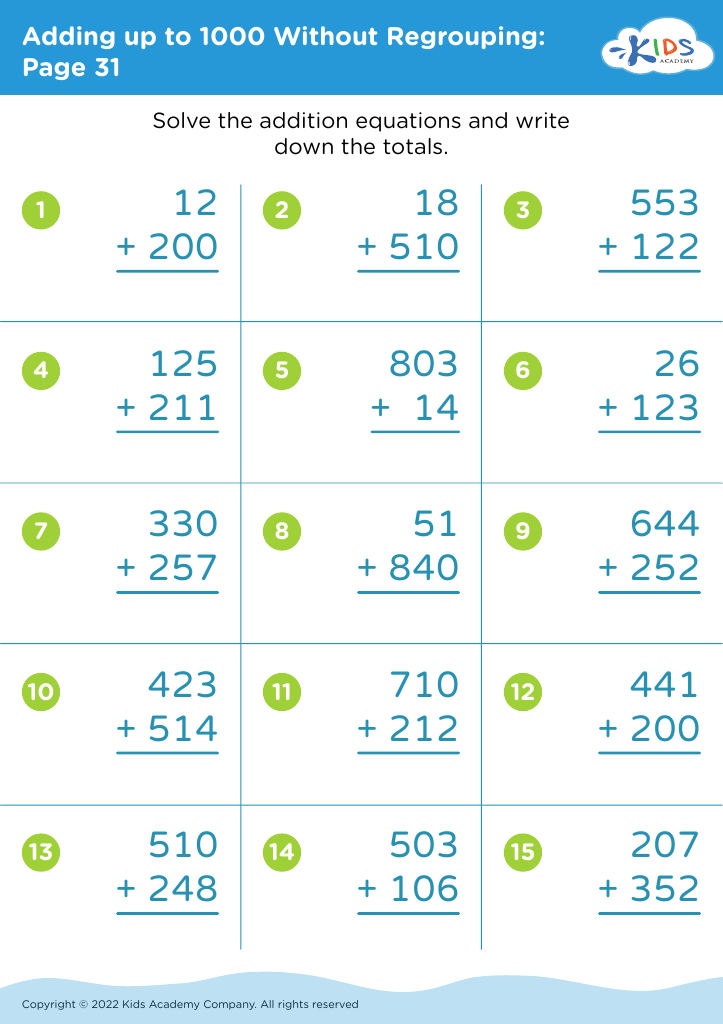
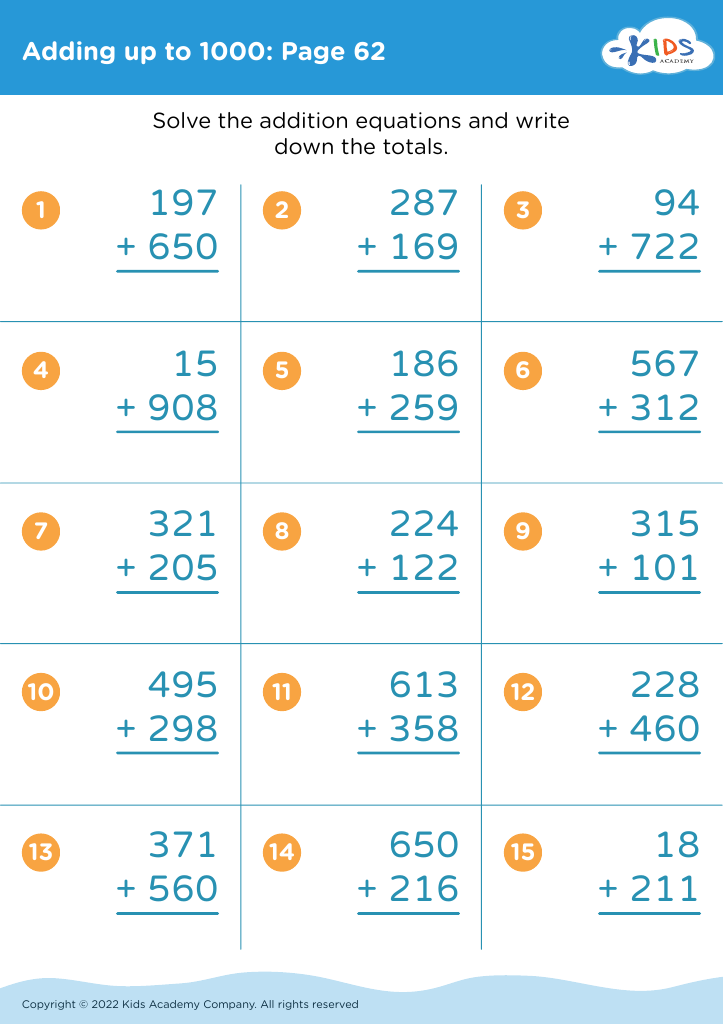
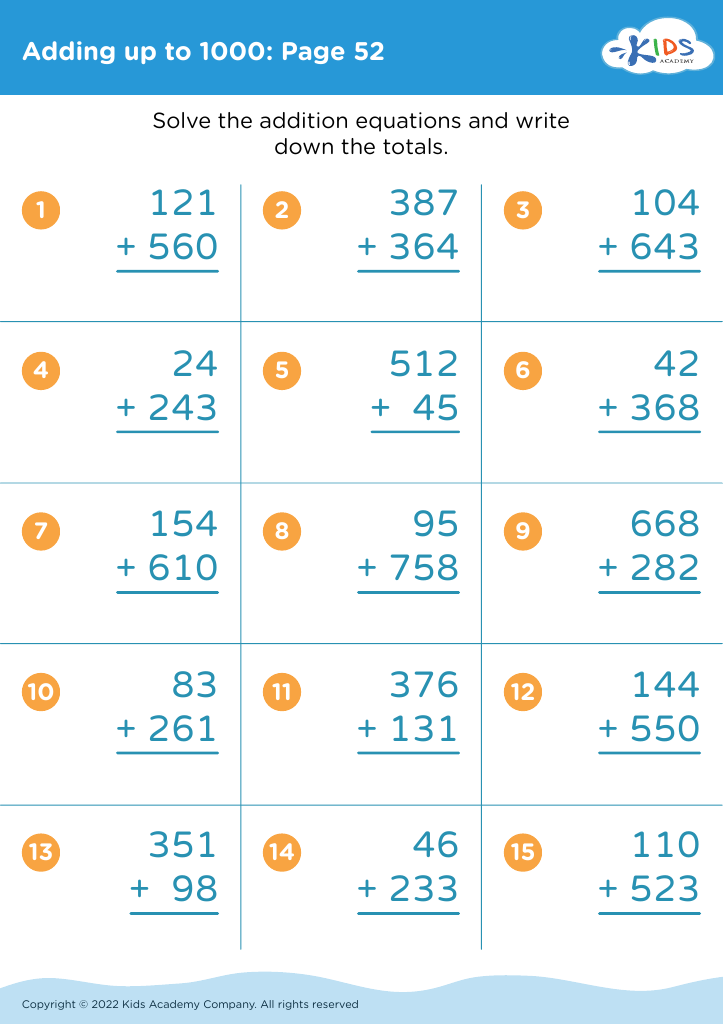
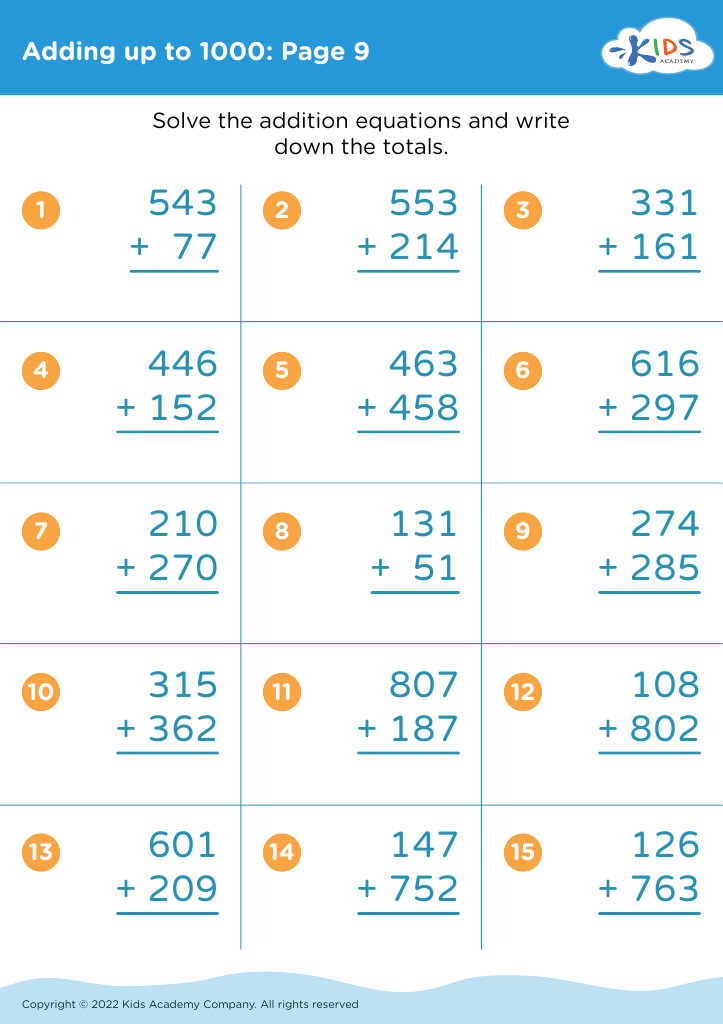


Understanding fractions is a critical skill for third graders as it lays the foundation for future math concepts. When parents or teachers emphasize the importance of mastering fractions, particularly in addition with numbers up to 1000, they empower students with essential problem-solving tools. Learning fractions helps children comprehend how parts relate to a whole, promoting logical thinking and enhancing their ability to break down complex problems.
Furthermore, fractions appear in various real-life situations, such as cooking, shopping, or measuring, making them incredibly relevant. When students grasp these concepts, they gain confidence in dealing with numbers, which can foster a positive attitude toward math as a whole.
Additionally, understanding how to add fractions to amounts up to 1000 involves beneficial skills, such as estimation and the ability to recognize equivalent fractions, further reinforcing their overall arithmetic skills.
Teachers and parents should collaboratively support students in this journey, using engaging activities and examples to cultivate interest and comprehension, ensuring that children do not just learn to memorize fractions but genuinely understand their value and application. Thus, nurturing a solid mathematical foundation in fractions can lead to greater academic success in higher-grade levels.