Understanding fractions Grade 3 Adding up to 1000 Worksheets - Page 2
44 filtered results
-
From - To
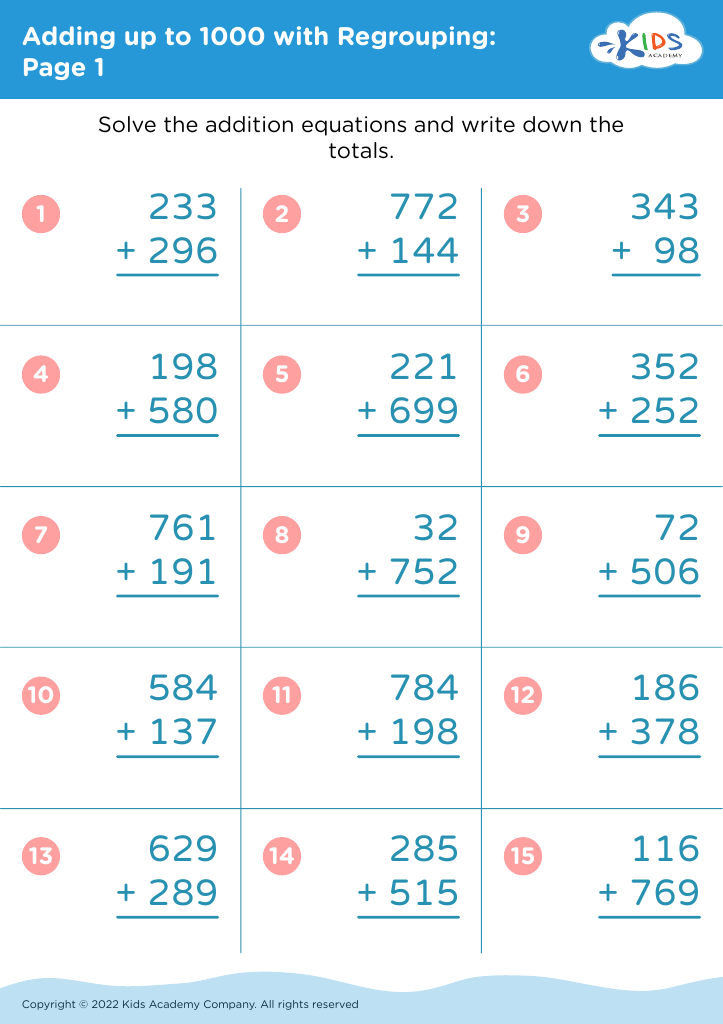
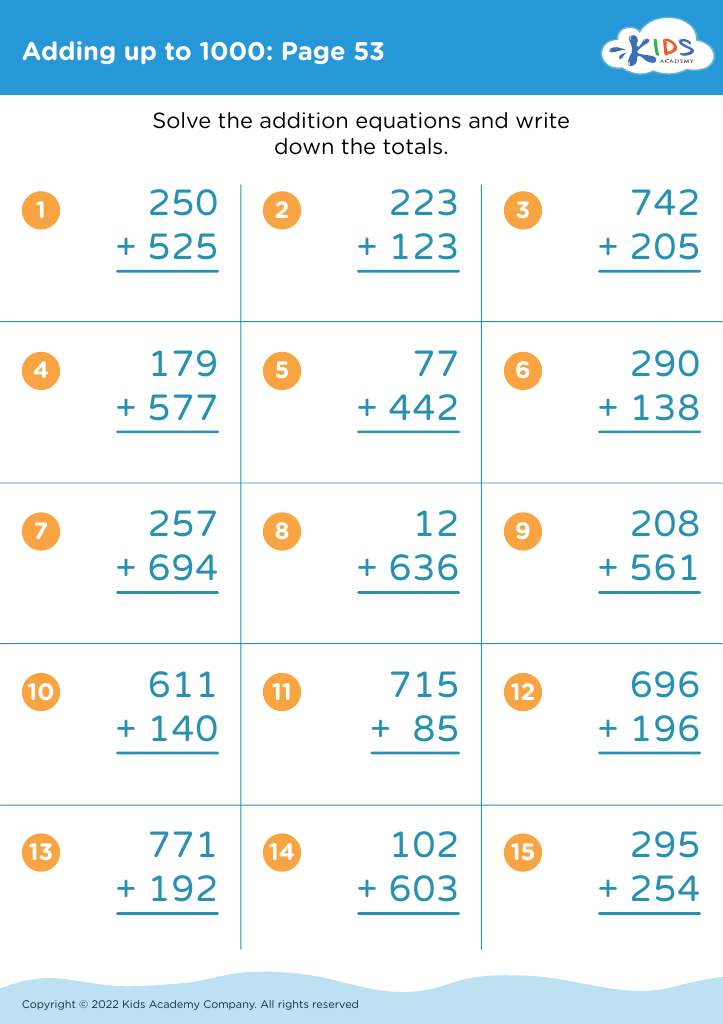
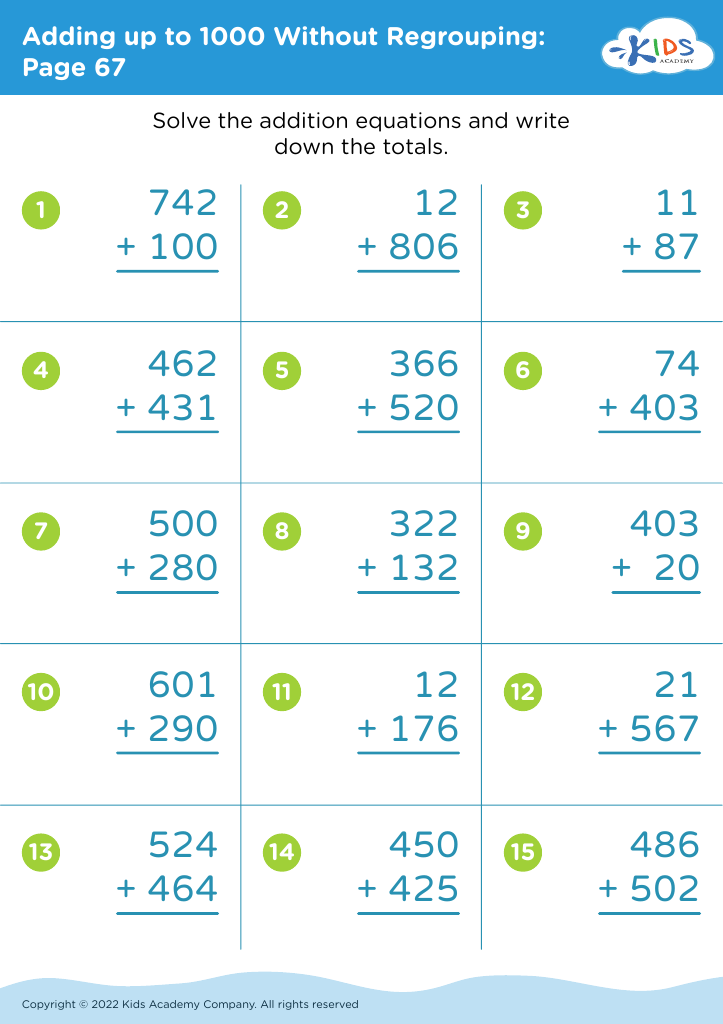
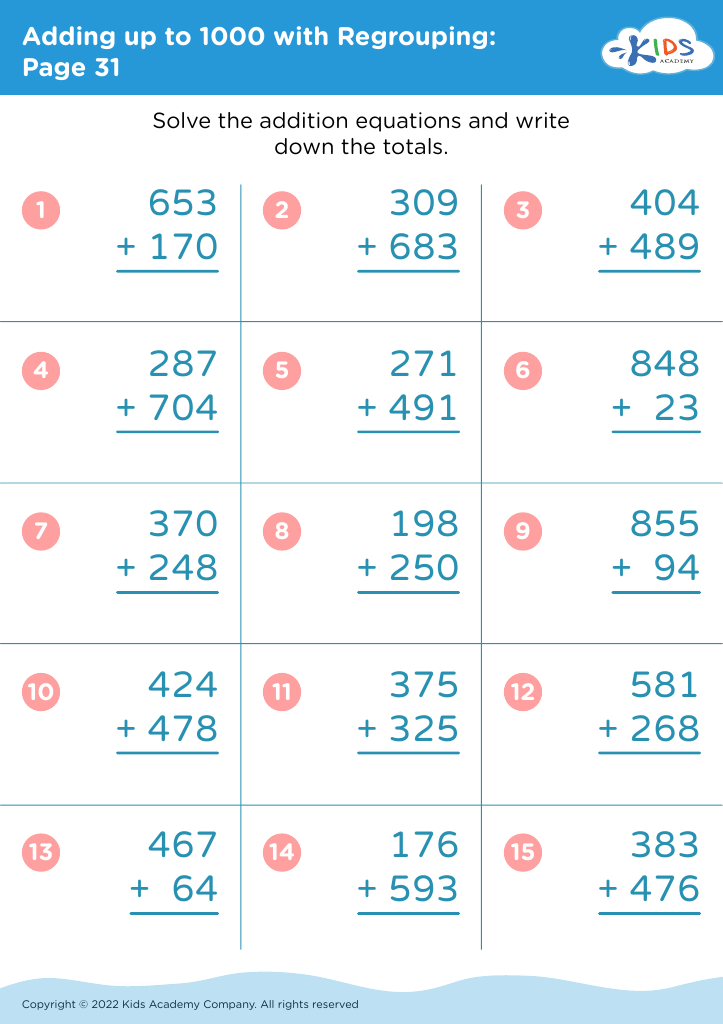
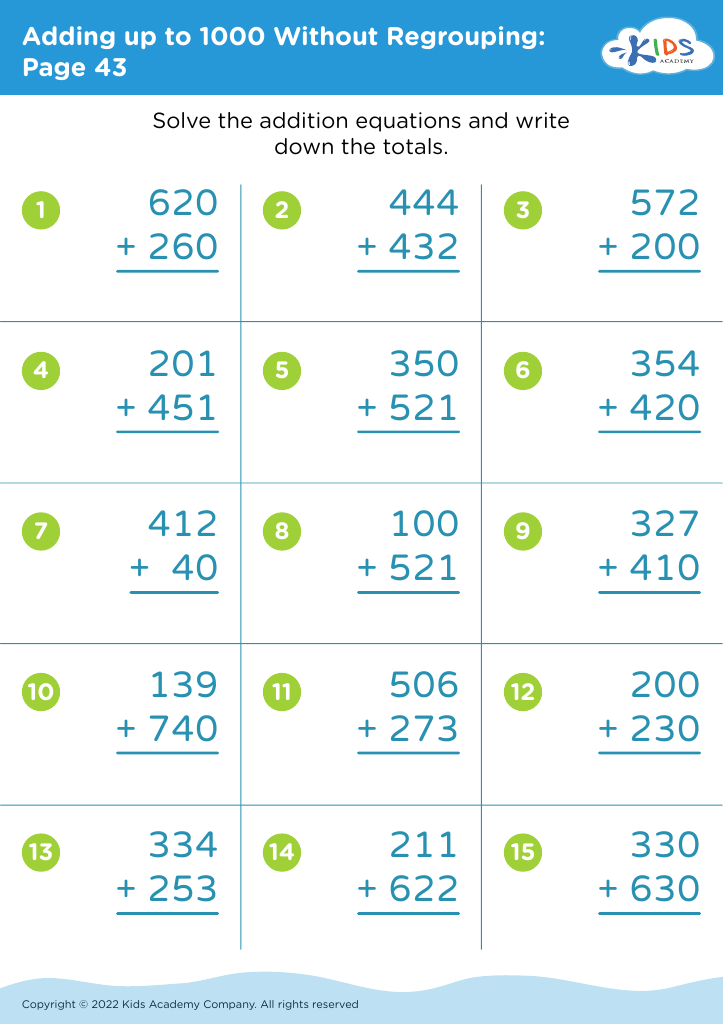
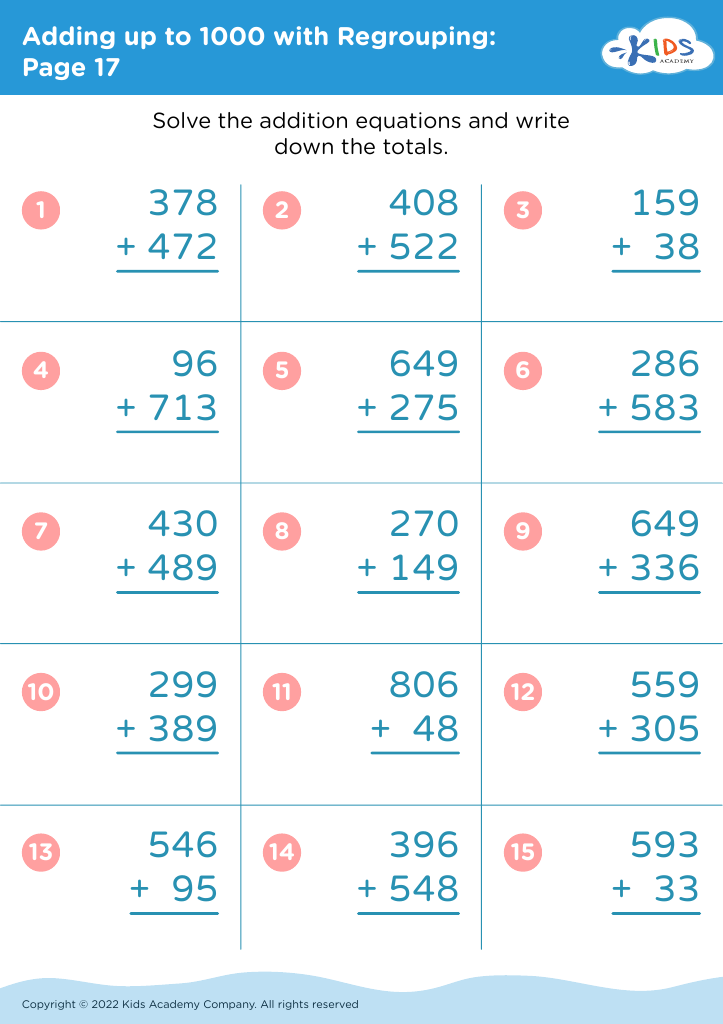
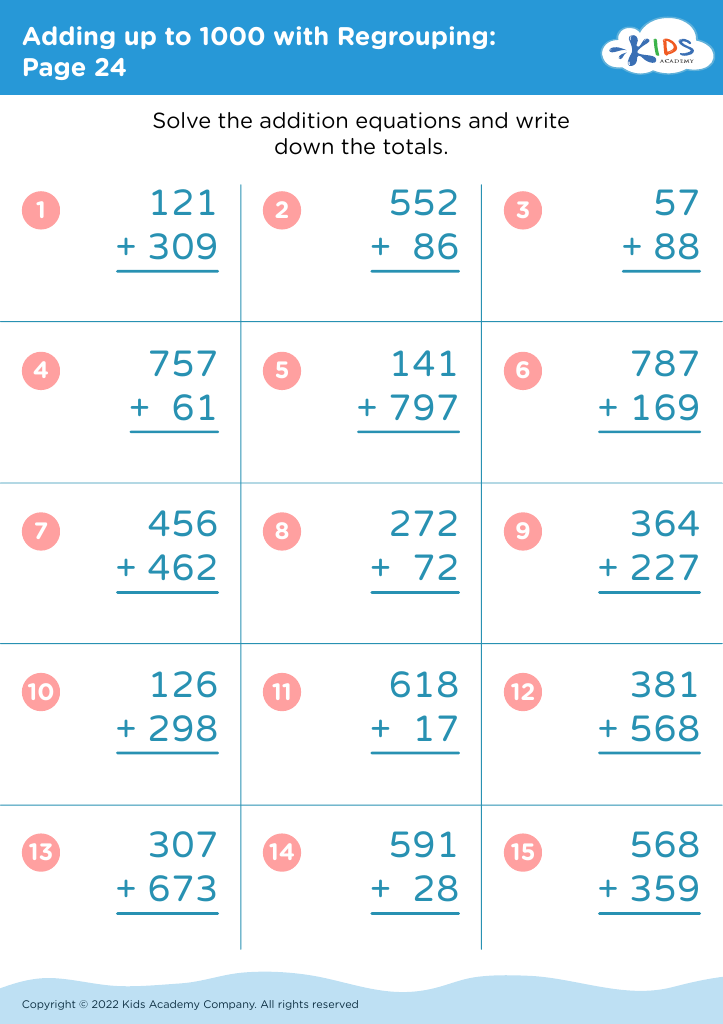
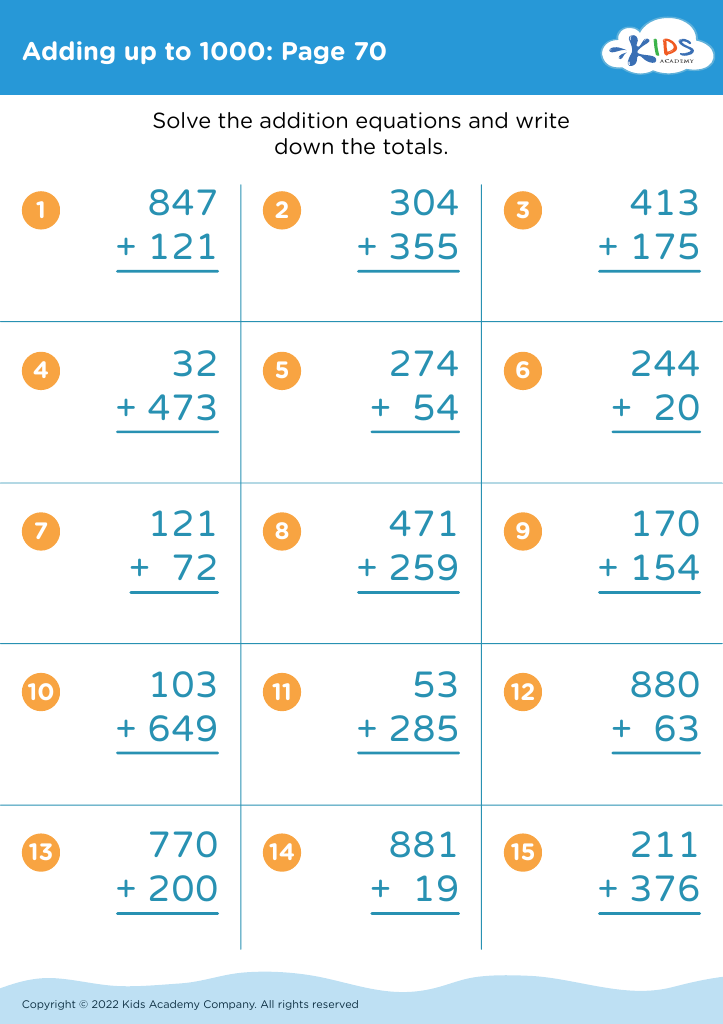
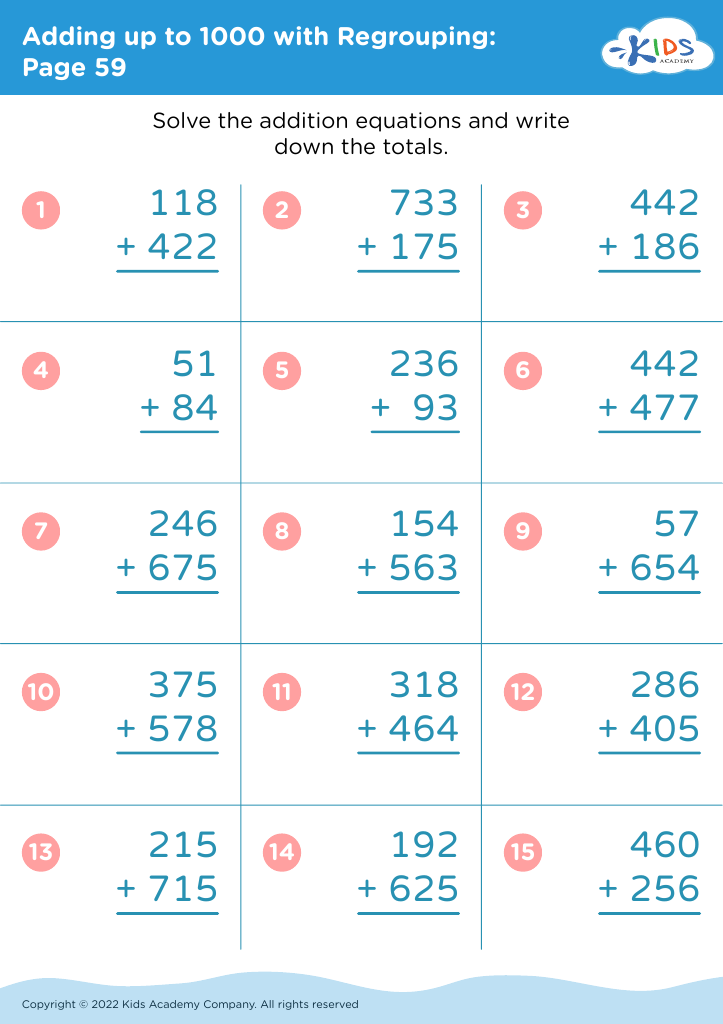
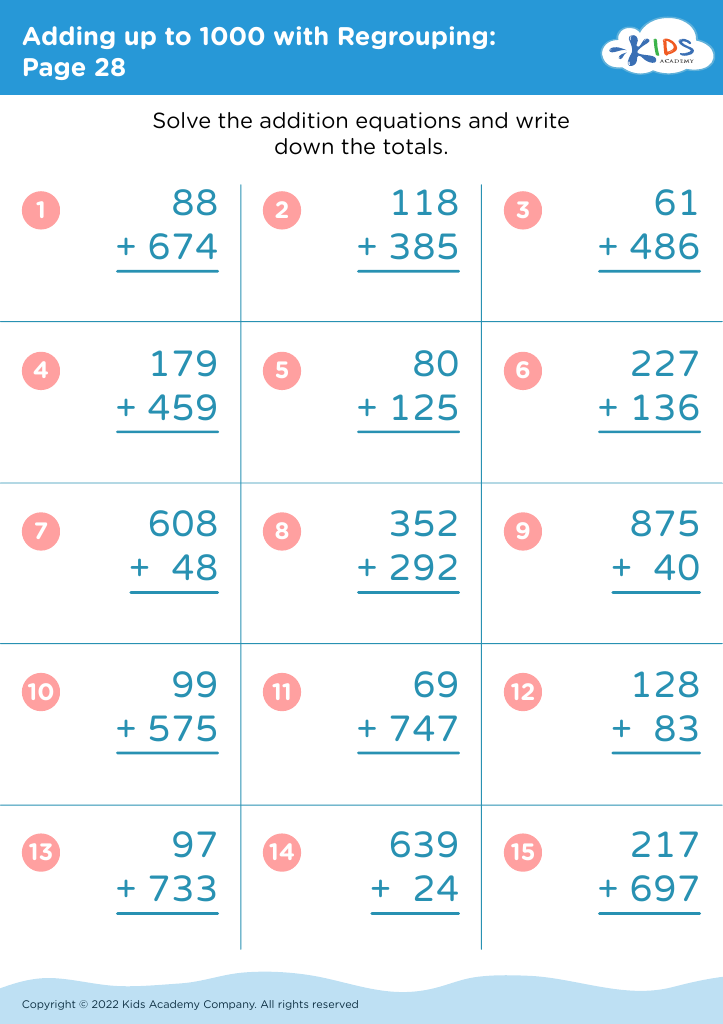
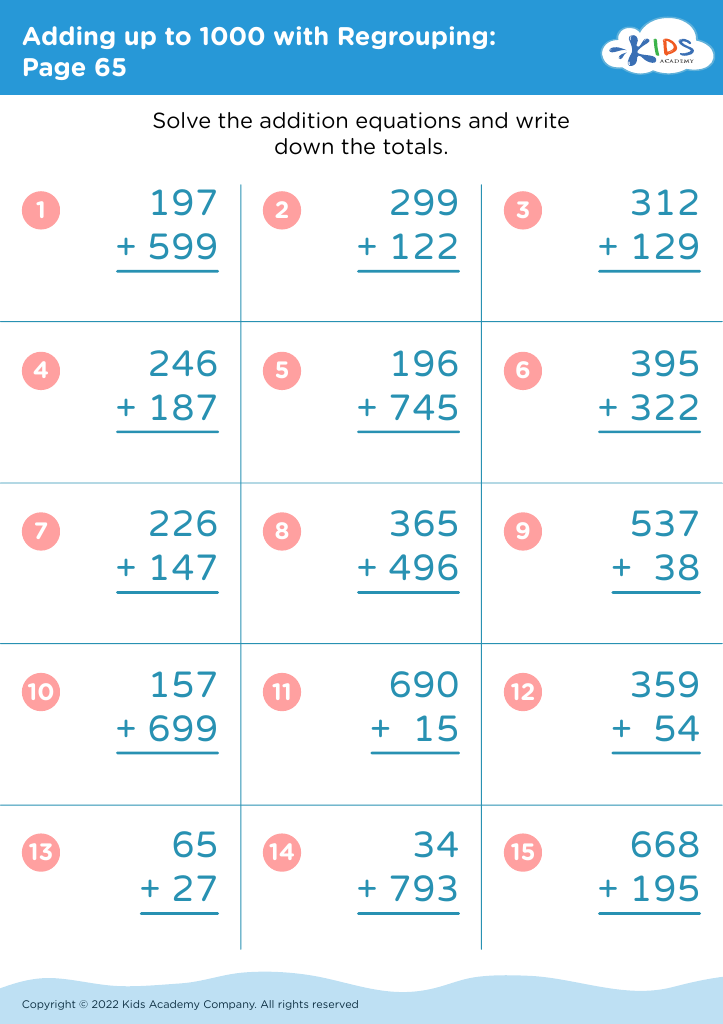
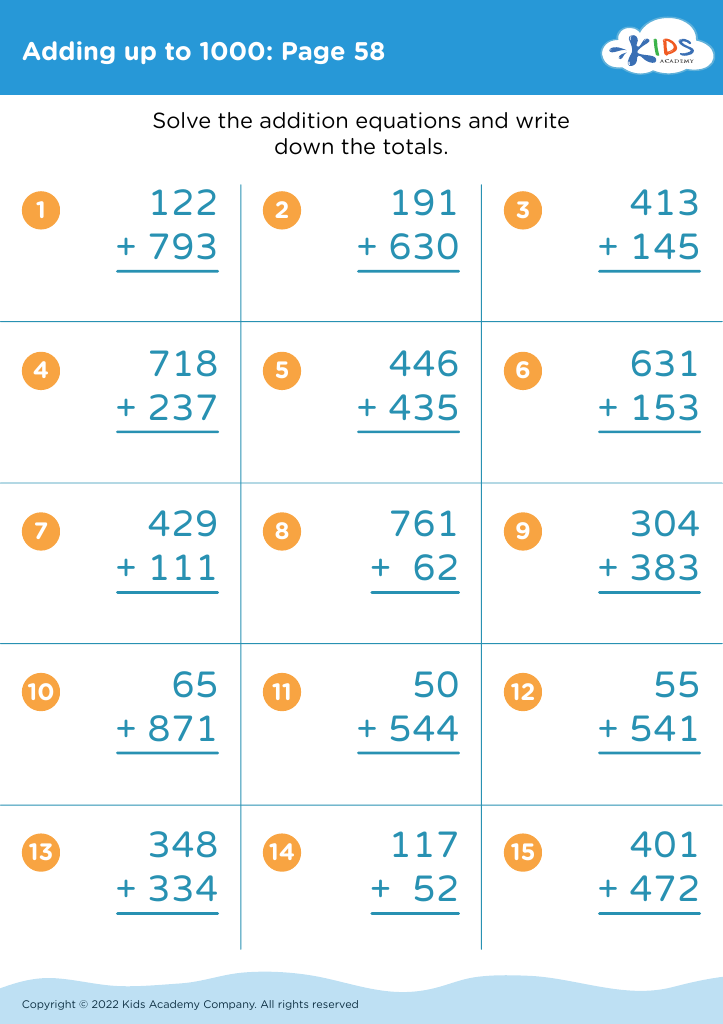
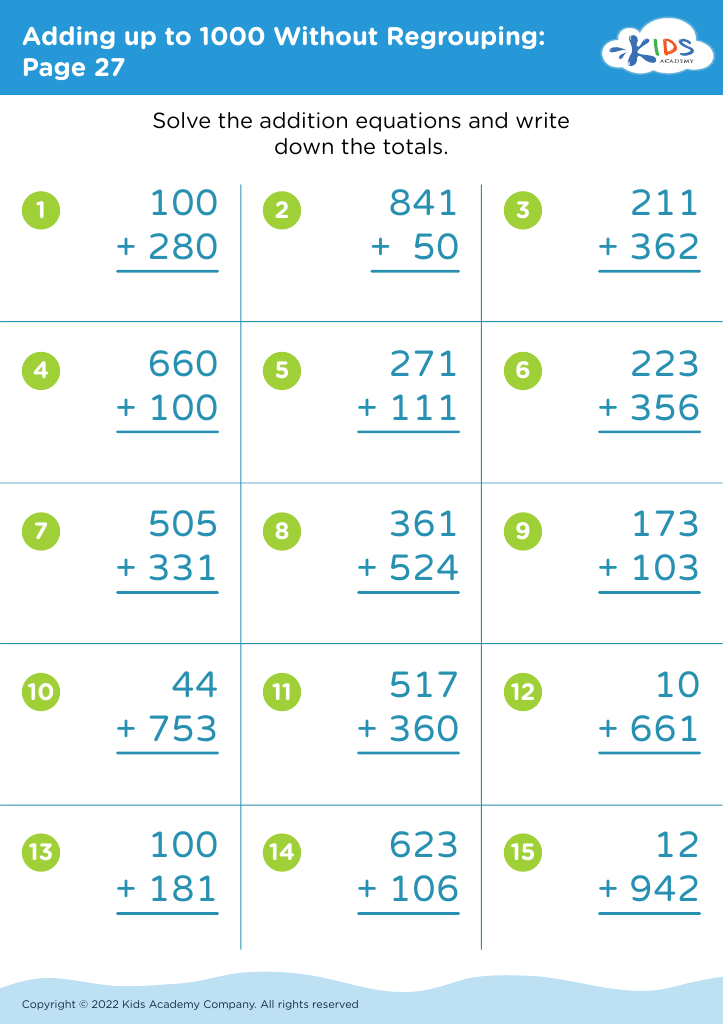
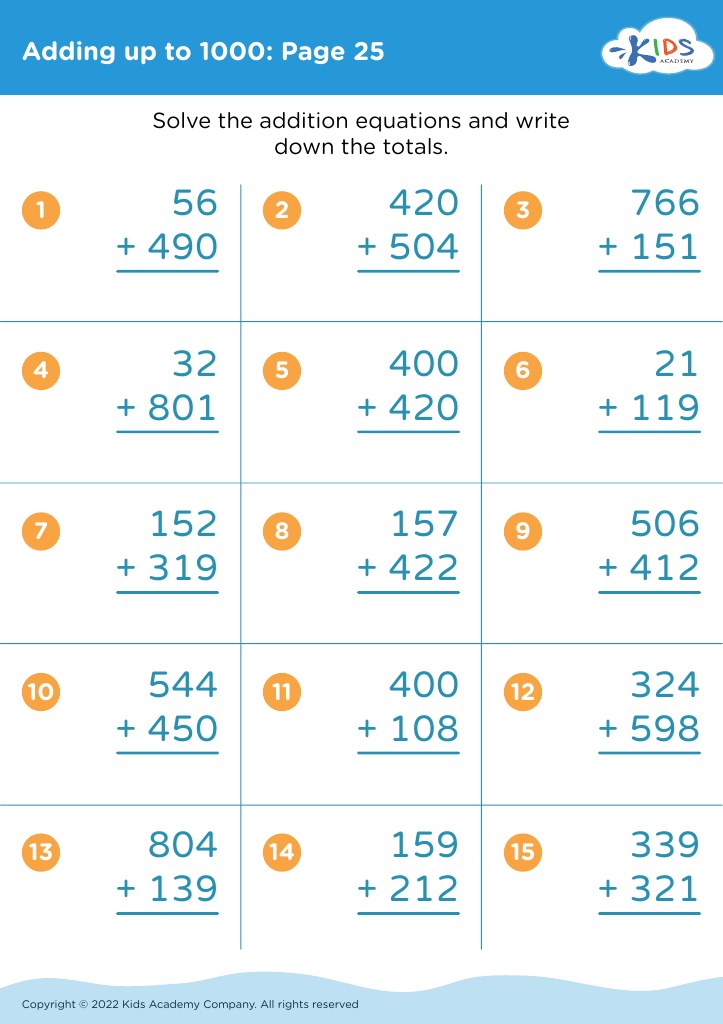
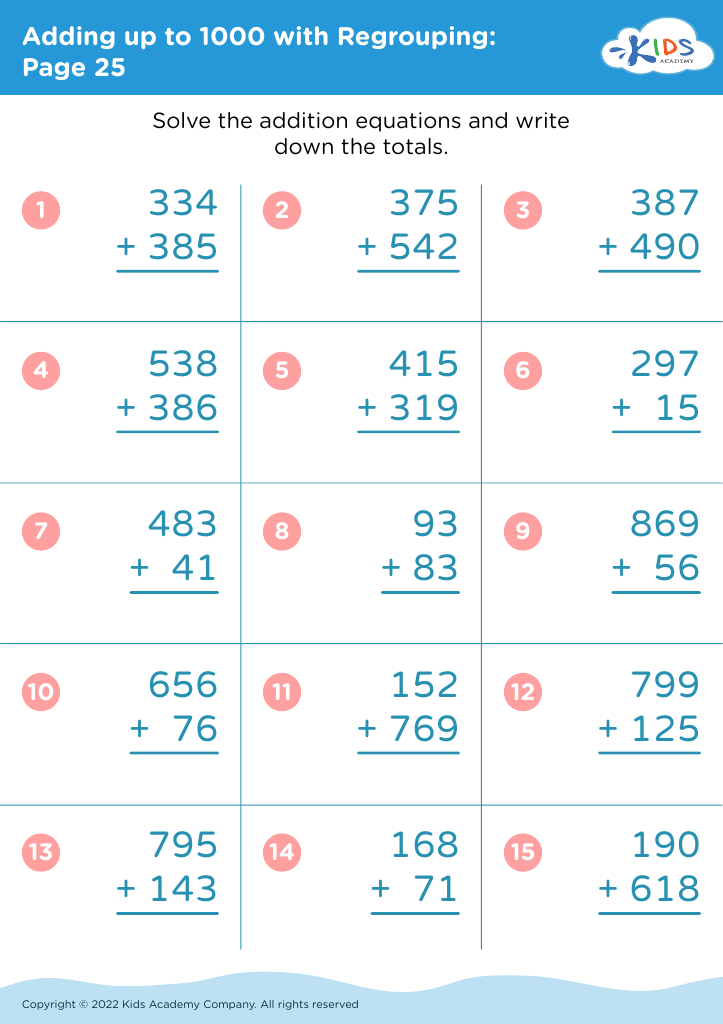
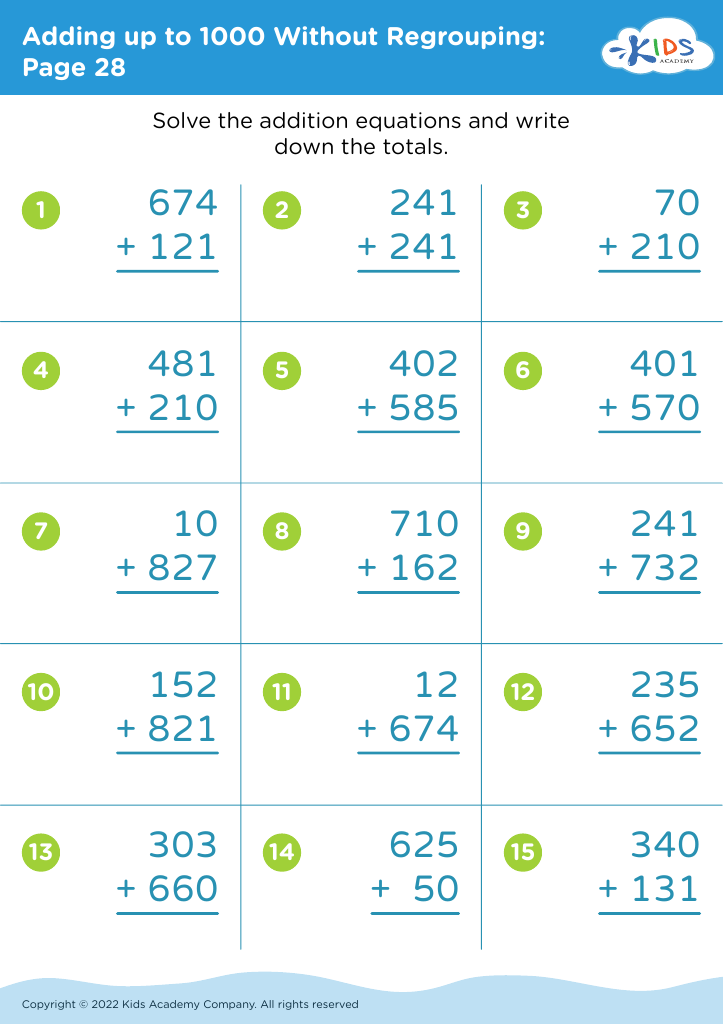
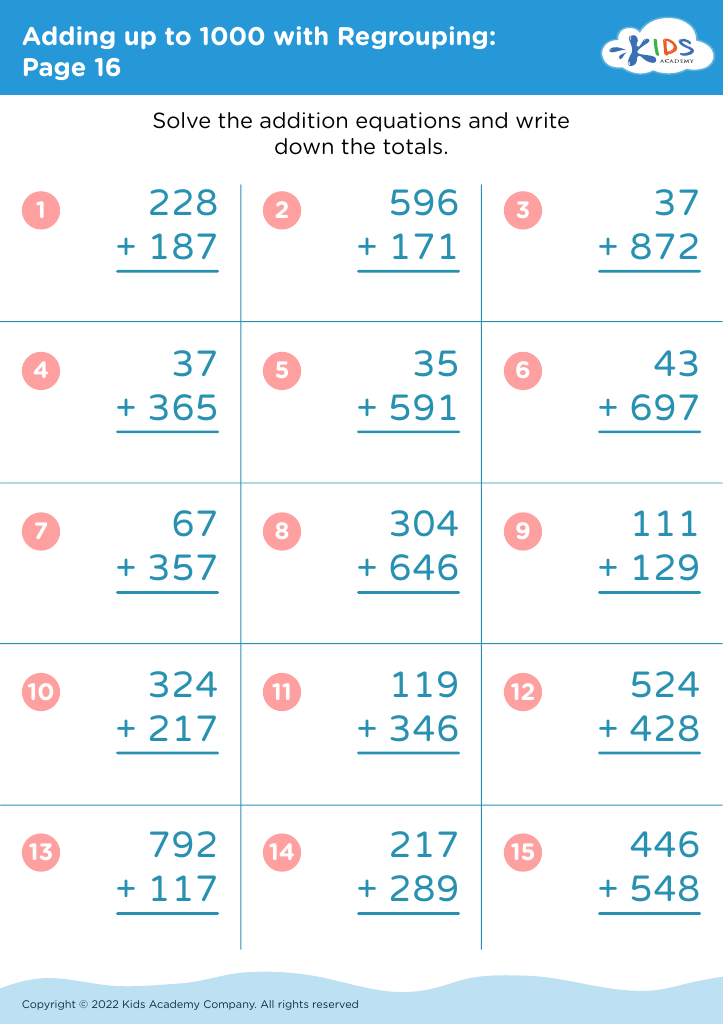
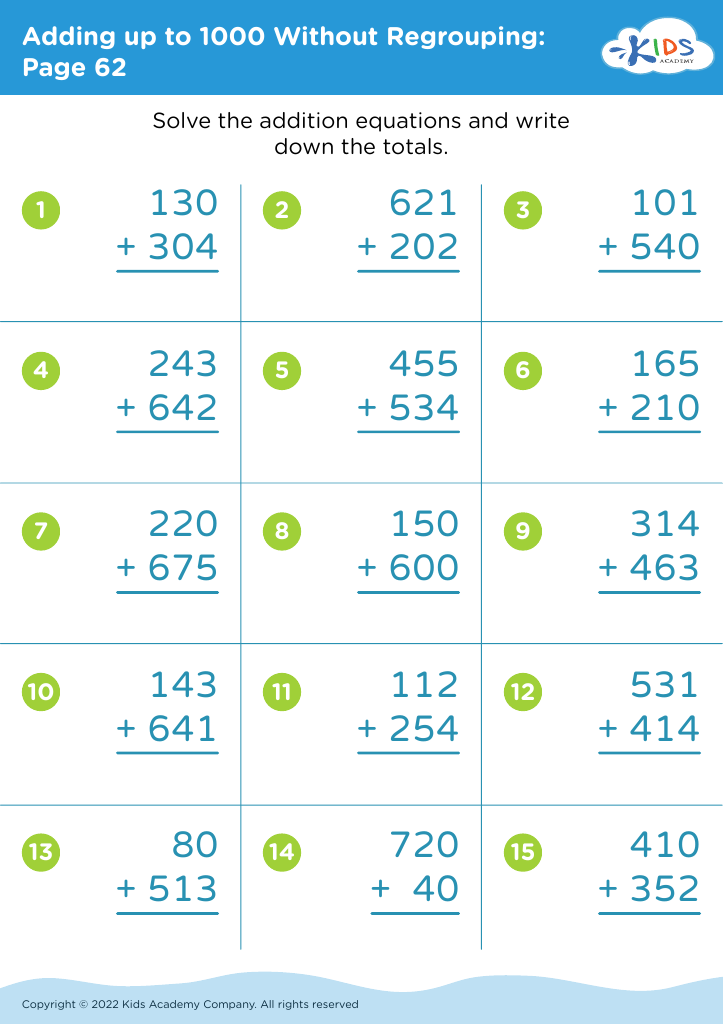
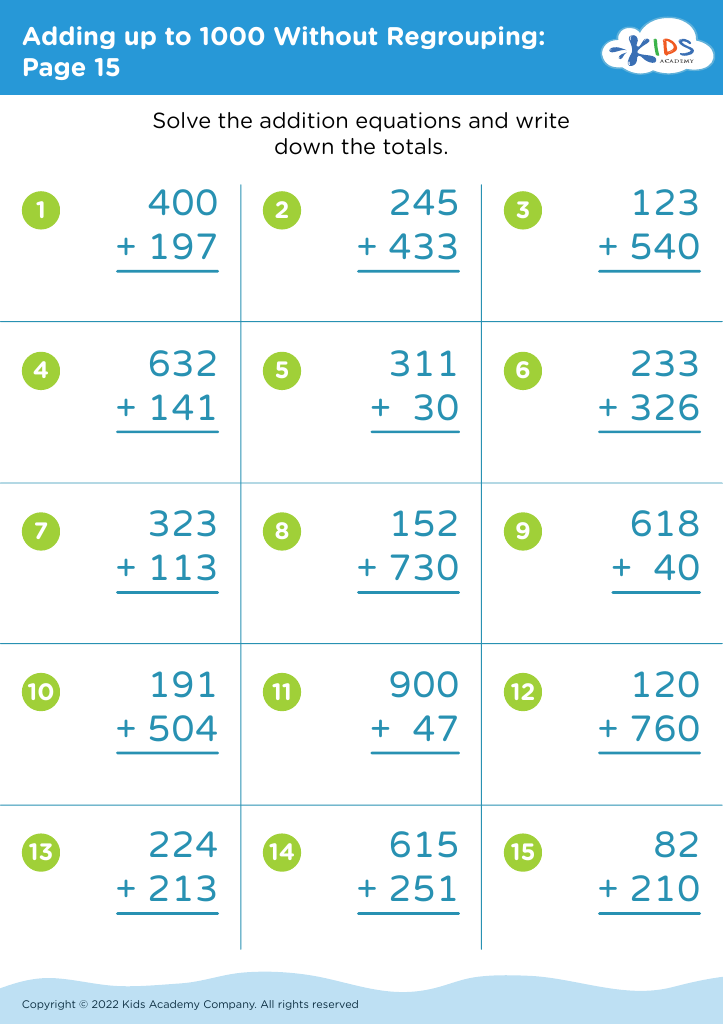
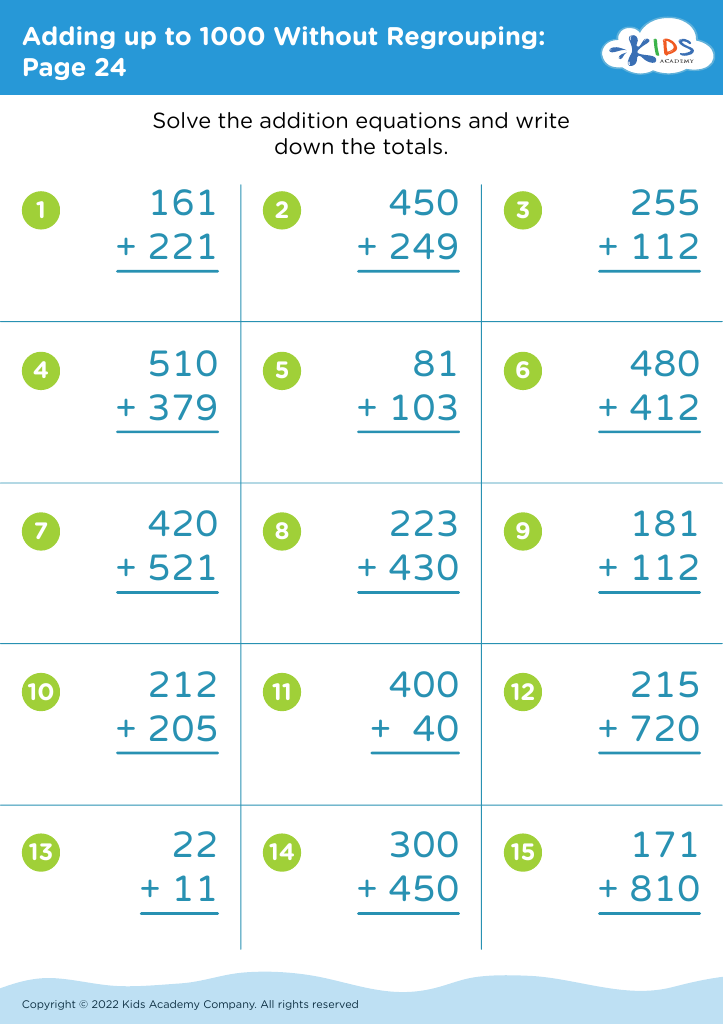



Understanding fractions is a fundamental math skill emphasized in the third grade that lays the groundwork for future math proficiency. When parents and teachers prioritize teaching and learning of fractions up to 1000, they are investing in a child's foundational comprehension of numbers and their relationships.
First, fractions are everywhere in daily life, from cooking and dividing foods to managing time and budgeting. Mastering fractions helps children apply these skills practically. Second, a solid grasp of fractions prepares children for more complex math topics they will encounter in later grades, such as algebra and geometry, enhancing their overall mathematical literacy.
Furthermore, learning fractions helps develop critical thinking and problem-solving skills. By understanding how parts equate to a whole and how to manipulate these parts effectively, children enhance their analytical abilities. They come to grasp the importance of precision and accuracy, crucial for scientific measurements and technical subjects.
When students see consistent support from parents and teachers, they build confidence and a positive attitude toward math. This encouragement helps mitigate math anxiety, making future learning smoother and more enjoyable. Thus, focusing on fractions is not just about math class but about empowering children with vital life skills and setting them up for long-term success.