Basic Arithmetic Grade 3 Addition and Subtraction Word Problems Worksheets
5 filtered results
-
From - To
Boost your child's math skills with our "Basic Arithmetic Grade 3 Addition and Subtraction Word Problems Worksheets." These engaging worksheets are designed to develop critical thinking and problem-solving abilities in third graders. With a variety of real-life scenarios, students will practice adding and subtracting while enhancing their comprehension skills. Each problem encourages logical reasoning and analytical thinking, featuring vibrant illustrations to make learning fun and interactive. Ideal for both classroom and home use, these worksheets align with college readiness standards, providing a solid foundation for future math success. Download now and watch your child master essential arithmetic skills!
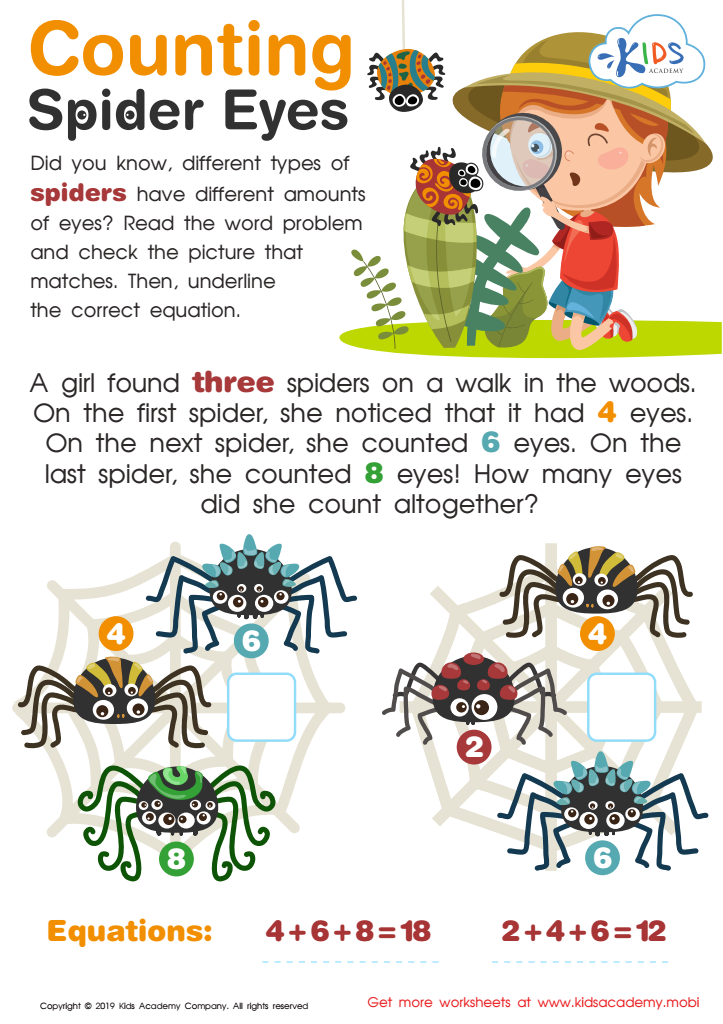
Counting Spider Eyes Worksheet
 Assign to My Students
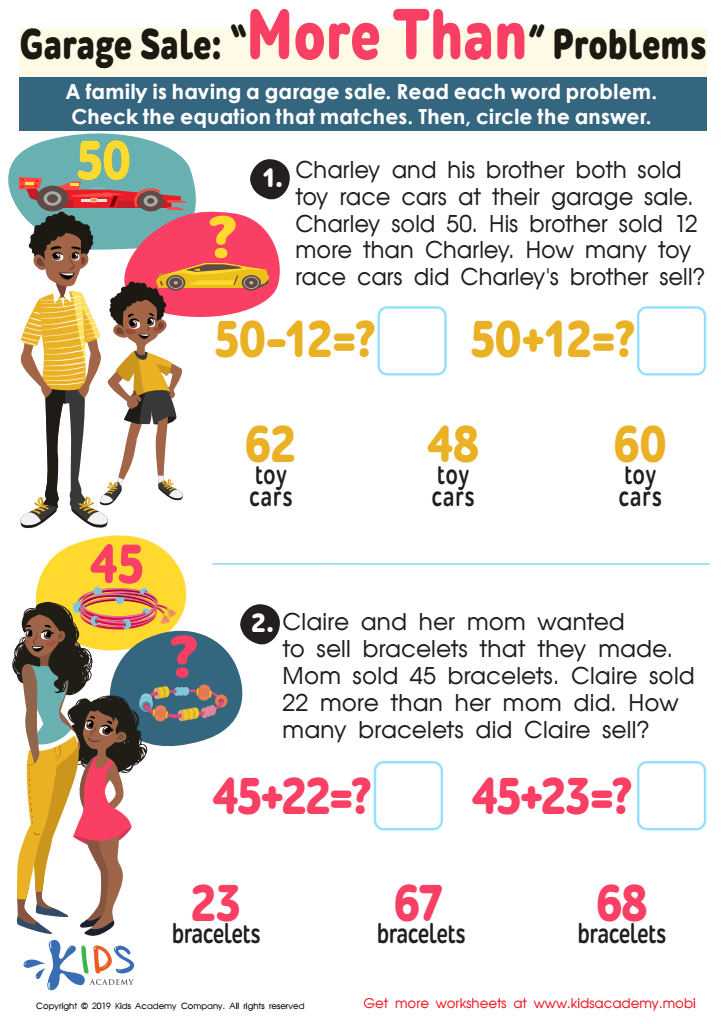
Garage Sale - More yhan Worksheet
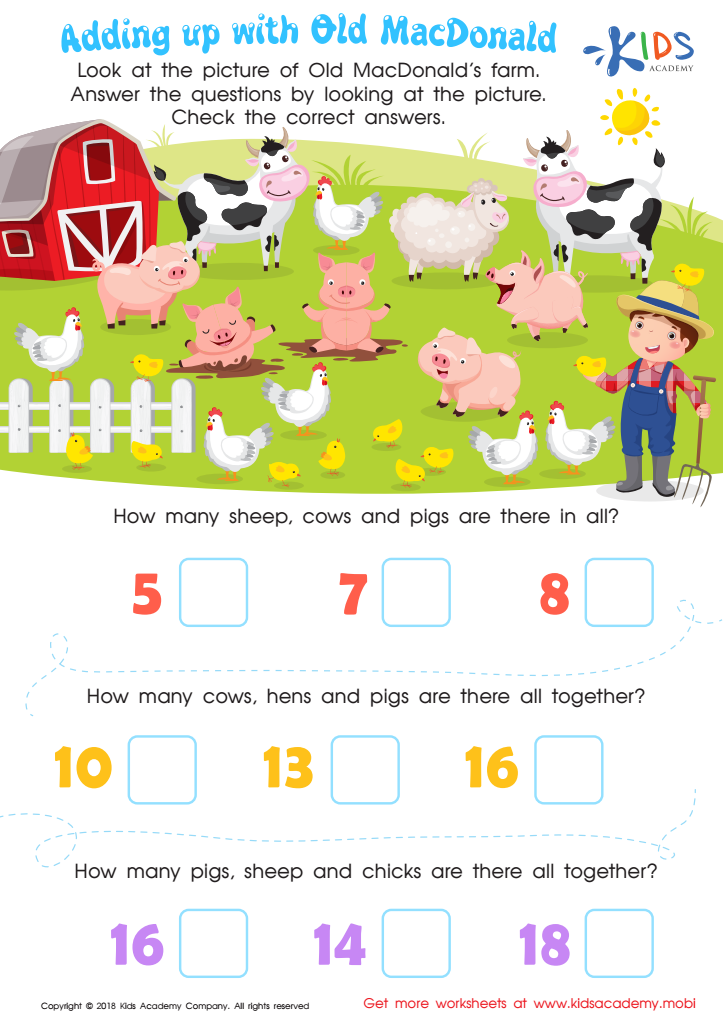
Adding Up with Old MacDonald Worksheet
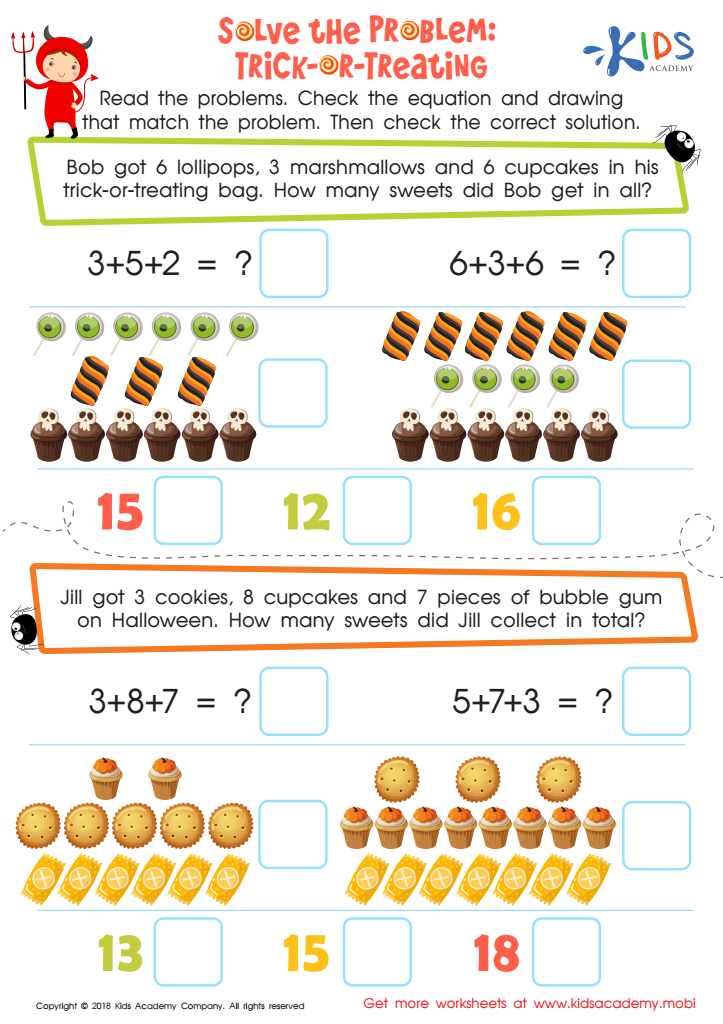
Solve the Problem: Trick–or–treating Worksheet
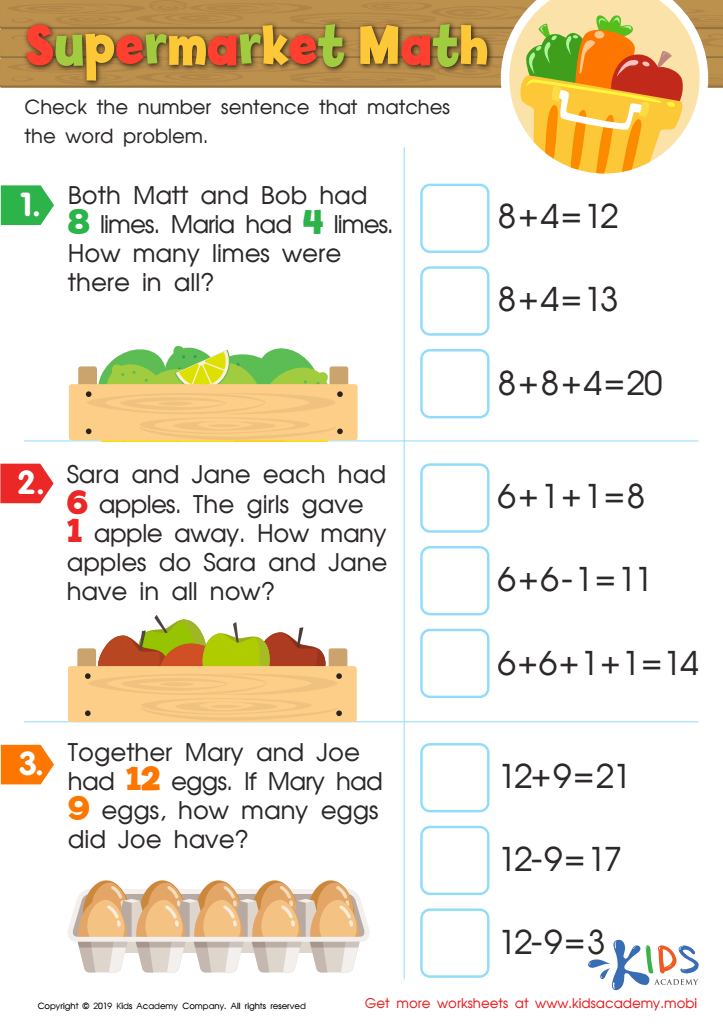
Supermarket Math Worksheet








Parents and teachers should care about Basic Arithmetic Grade 3 Addition and Subtraction Word Problems because these foundational skills are crucial for a child's overall mathematical development. At this stage, children are transitioning from simple arithmetic to more complex problem-solving tasks that involve real-world scenarios. Word problems require students not only to perform calculations but also to comprehend the context, ensuring they understand what the numbers and operations represent.
Working on addition and subtraction word problems enhances critical thinking and analytical skills. Children learn to break down a problem, identify relevant information, and apply appropriate strategies to find a solution. This process is essential not just for mathematics but for everyday decision-making and problem-solving.
Additionally, proficiency in these basic arithmetic skills sets the stage for more advanced mathematical concepts they will encounter later in their academic journey, such as multiplication, division, fractions, and eventually algebra and higher math. Early mastery helps build confidence and decreases math anxiety, promoting a positive attitude toward the subject.
Involving parents and teachers in this learning process creates a support system for the child. Parents can provide practice and real-life examples at home, while teachers can offer varied and engaging learning activities in the classroom. Together, they can encourage a strong mathematical foundation that supports future academic and life success.