Logical thinking development Grade 3 Addition and Subtraction Word Problems Worksheets
3 filtered results
-
From - To
Our Grade 3 Addition and Subtraction Word Problems Worksheets are expertly crafted to enhance your child's logical thinking skills. By presenting mathematical challenges within the framework of real-world scenarios, these worksheets engage young minds while reinforcing essential addition and subtraction concepts. Each problem requires critical thinking, helping students to articulate and solve word problems effectively. These worksheets build strong problem-solving strategies, boost confidence, and promote a solid foundation in logical reasoning. Ideal for classroom use or homeschooling, this resource ensures your child’s academic growth and nurtures a lifelong love for math. Watch them thrive with our interactive and educational worksheets!
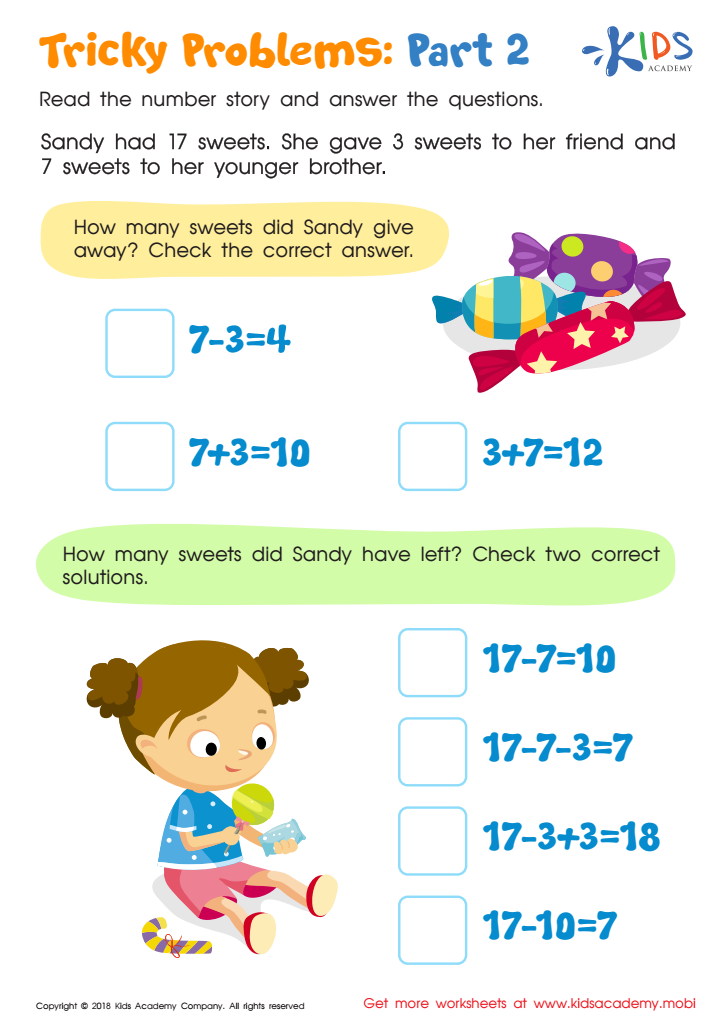
Tricky Problems Worksheet: Part 2
 Assign to My Students
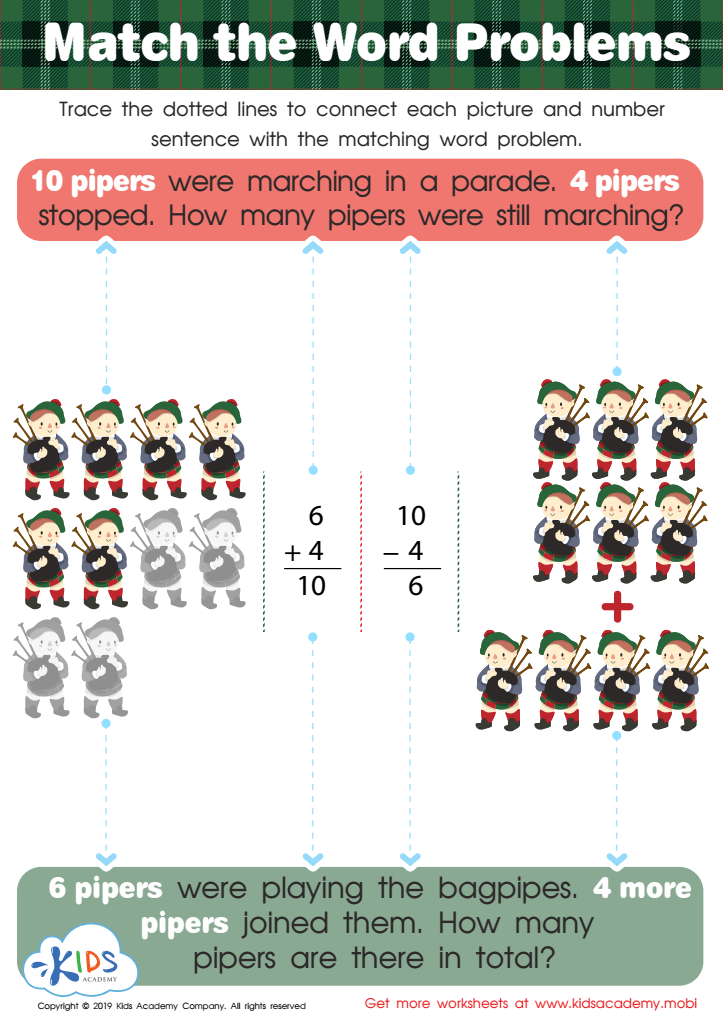
Match the Word Problems Worksheet
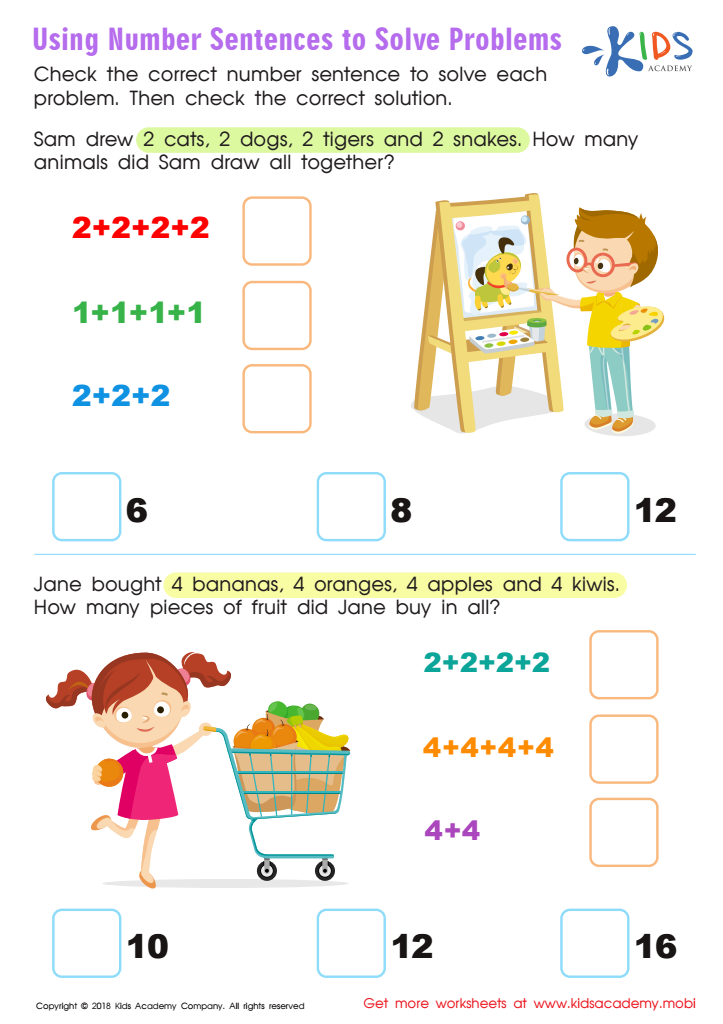
Using Number Sentences to Solve Problems Worksheet








Parents and teachers should care about developing logical thinking in Grade 3 addition and subtraction word problems because it establishes a foundation for essential cognitive skills and future academic success. Logical thinking involves reasoning systematically and solving problems through structured steps. Applied in math, this skill helps children break down word problems into manageable parts, understand the relationships between numbers, and determine the methods needed to find solutions.
At this age, children are not just learning computational skills but also how to think critically about the information presented. Mastering these early math skills impacts their confidence and competence in more complex math concepts later on, such as multiplication, division, fractions, and even algebra. Furthermore, logical thinking cultivated through word problems enhances students' abilities to tackle real-world challenges, plan tasks, and make reasoned decisions.
Additionally, strong logical thinking skills contribute to other academic areas and daily life. Reading comprehension, science experiments, and even social interactions benefit from a structured way of thinking. Therefore, guiding children through addition and subtraction word problems can profoundly influence their overall intellectual development, problem-solving abilities, and future educational opportunities. Providing a supportive environment ensures children develop these crucial skills in a way that is both engaging and effective.