Mental math practice Grade 3 Addition and Subtraction Word Problems Worksheets
3 filtered results
-
From - To
Enhance your child’s arithmetic skills with our Grade 3 Mental Math Practice Worksheets focused on addition and subtraction word problems. Whether they're tackling one-step problems or advancing to two-step equations, these exercises are designed to refine their quick-thinking abilities in everyday math scenarios. Each worksheet presents relatable problems that challenge and engage young minds, helping them develop confidence and proficiency in mental math. Tailored for third graders, our printable resources provide a fun yet educational approach to mastering essential math skills, ensuring your child’s ongoing success in mathematics. Start practicing today with Kids Academy and watch them excel!
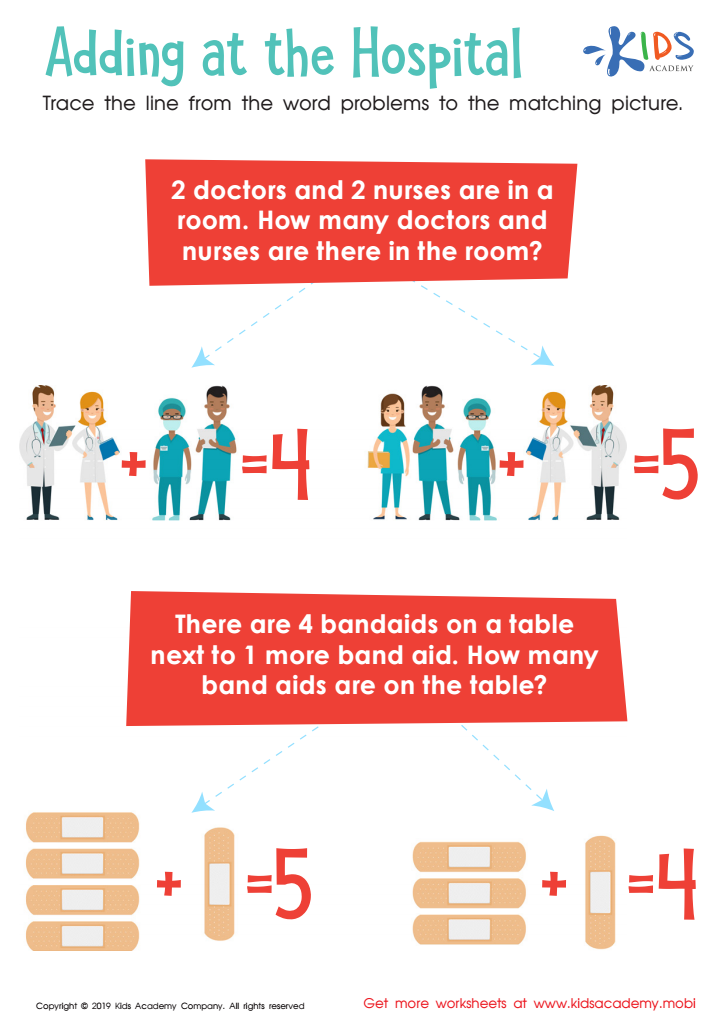
Adding at the Hospital Worksheet
 Assign to My Students
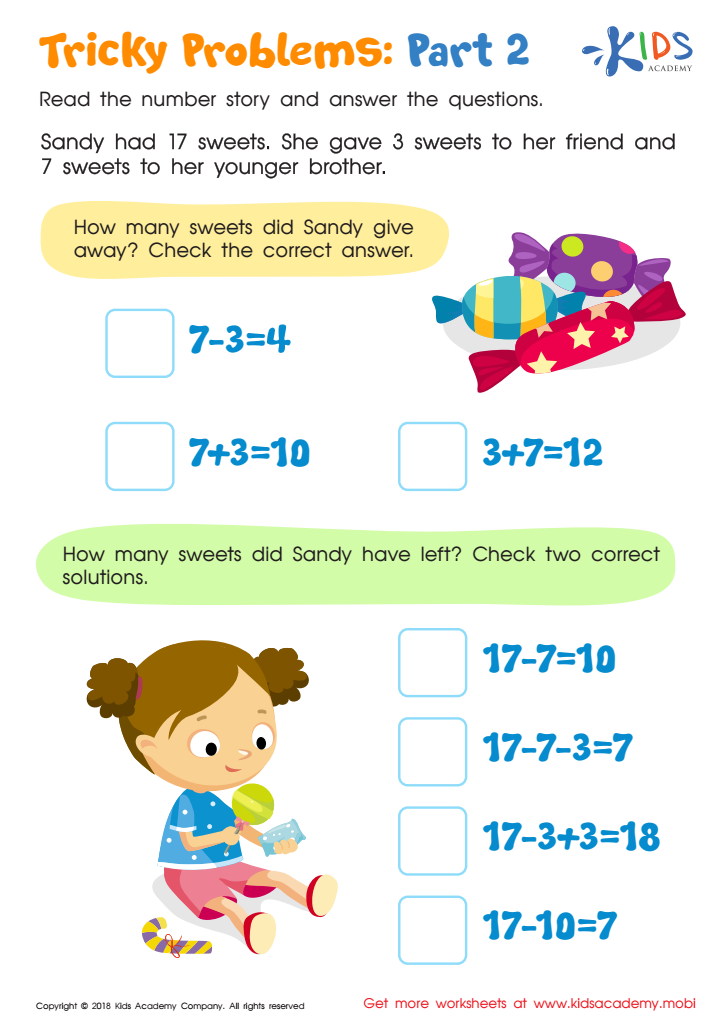
Tricky Problems Worksheet: Part 2
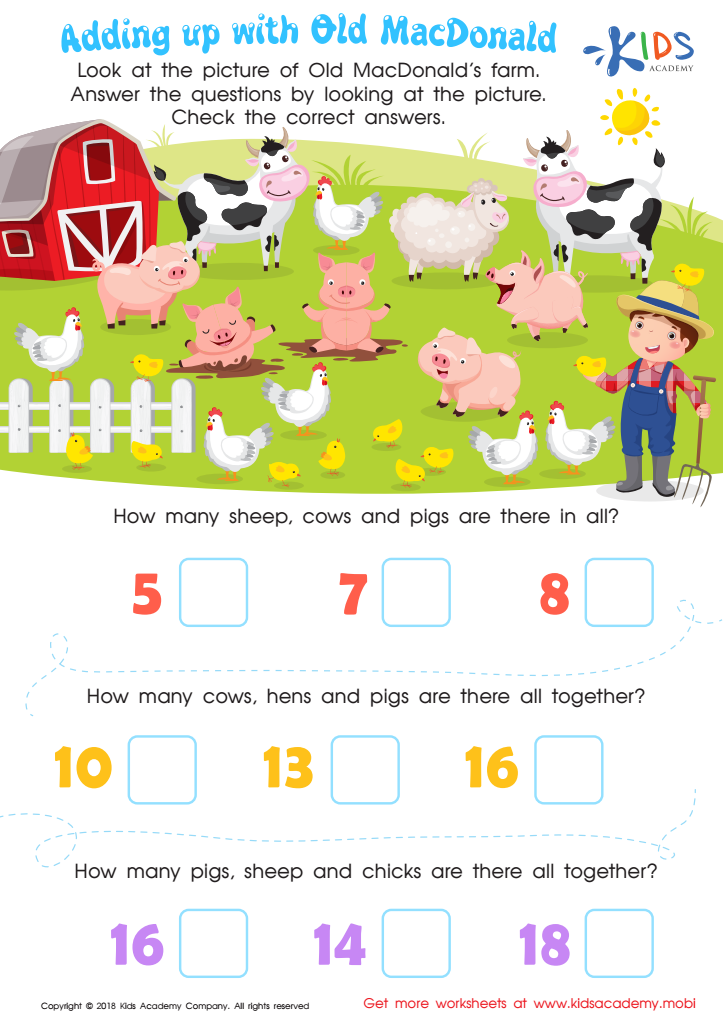
Adding Up with Old MacDonald Worksheet








Parents and teachers should care about mental math practice for Grade 3 students, especially addition and subtraction word problems, for several key reasons. First, mental math enhances cognitive development by improving memory, concentration, and logical thinking. When children practice solving problems mentally, they are forced to internalize number relationships, which makes them efficient problem solvers.
Second, real-world applications of math necessitate quick thinking and adaptability. For instance, calculating change, budgeting, or splitting bills are everyday tasks that require strong mental math skills. Starting early with these essential skills ensures that children build confidence and competence.
Third, practicing word problems develops critical reading and comprehension skills. Students must accurately interpret the problem, identify what is being asked, and decide on the best solution strategy. This dual focus on math and language enhances overall academic performance.
Moreover, mental math practice fosters a positive attitude towards math. When students regularly engage in these exercises, they often develop a love for the subject, reducing math anxiety. Encouraging mental math in a fun, engaging way also promotes a growth mindset and resilience, as students learn that effort and practice lead to improvement.
Overall, integrating mental math into early education sets the foundation for academic success and real-world proficiency.