Real-life application Grade 3 Addition and Subtraction Word Problems Worksheets
3 filtered results
-
From - To
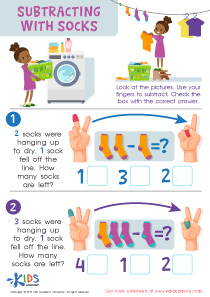
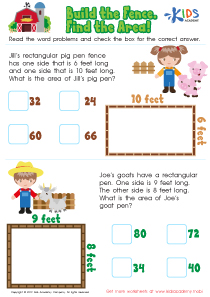
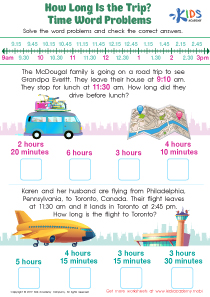
Discover our engaging Grade 3 Addition and Subtraction Word Problems Worksheets that bring math to life! Designed to enhance students' understanding of real-life applications, these worksheets feature relatable scenarios that challenge young learners to solve practical problems using addition and subtraction. By incorporating everyday contexts, such as shopping and sharing, these activities encourage critical thinking and problem-solving skills. Perfect for classroom use or homework, these worksheets promote a fun and interactive way to improve mathematical proficiency while preparing students for real-world situations. Help your child build confidence and competence in math with our comprehensive collection of printable word problems!
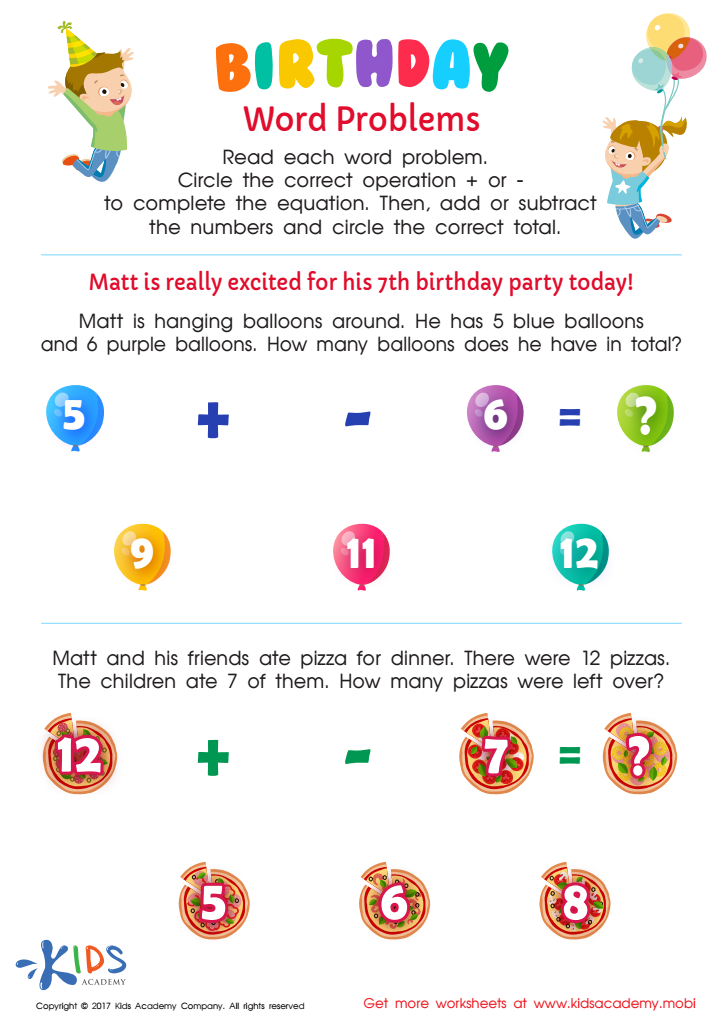
Birthday Word Problems Substraction Worksheet
 Assign to My Students
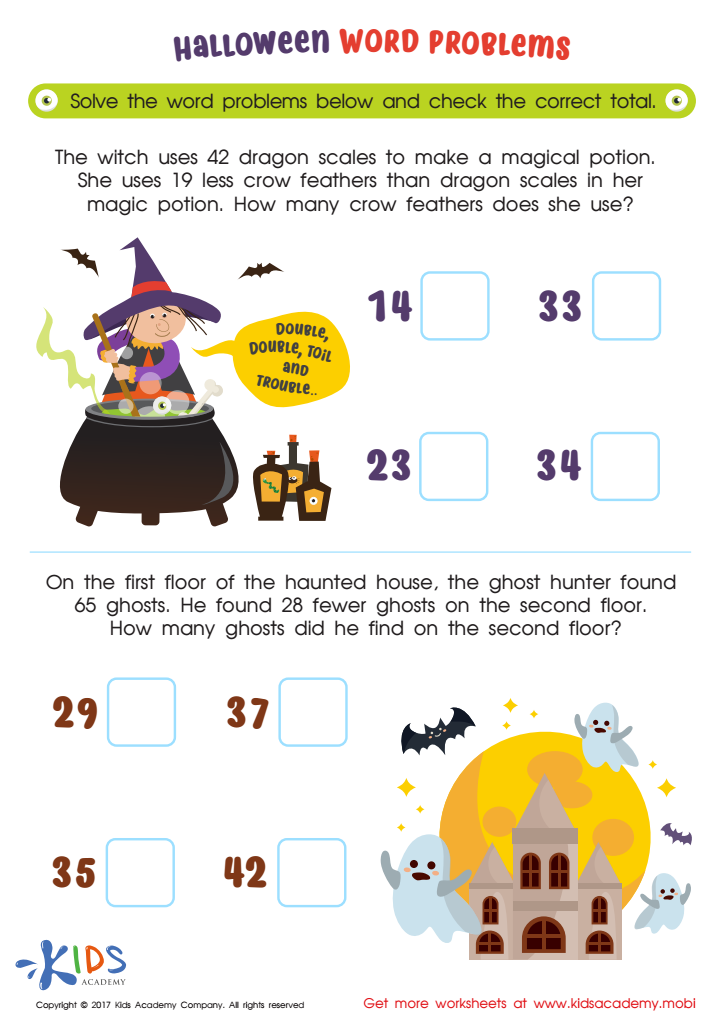
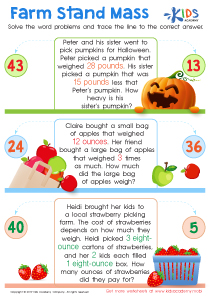
Halloween Word Problems Printable
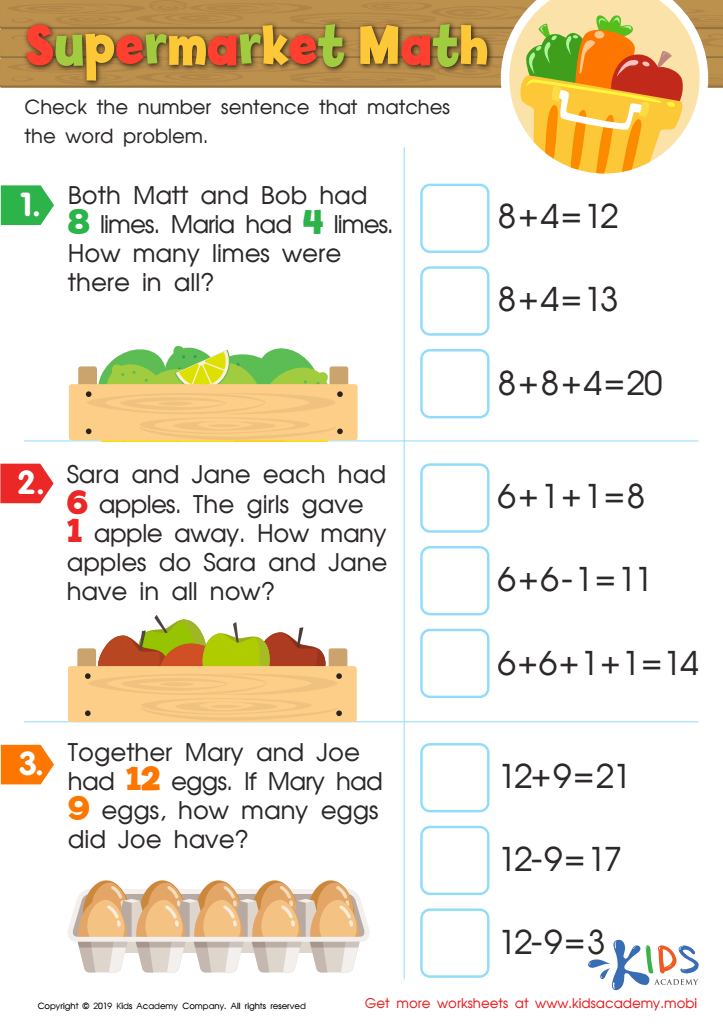
Supermarket Math Worksheet








Parents and teachers should prioritize real-life application of Grade 3 addition and subtraction word problems for several crucial reasons. Firstly, these math skills are foundational, not just in academics but in everyday life. Understanding how to apply addition and subtraction to real-world situations helps children grasp essential concepts, fostering problem-solving abilities they can use outside the classroom.
Engaging in real-life applications helps students recognize the relevance of math in daily tasks, such as managing money, cooking, or planning activities. This contextual learning makes abstract concepts more tangible, enhancing comprehension and retention. Additionally, solving word problems encourages critical thinking and the ability to extract meaningful information from written scenarios—key skills for future learning.
Furthermore, real-life problems often involve multiple steps and require logical reasoning, enabling children to develop persistence and patience when confronted with challenges. As they learn to efficiently break down complex scenarios into manageable parts, students build confidence in their math abilities.
Ultimately, integrating real-life word problems aligns schooling with practical experiences, making learning engaging and meaningful. By fostering this connection between math and daily activities, parents and teachers help cultivate students who are not only confident mathematicians but also capable, responsible individuals.