Color Identification Grade 3 Addition & Subtraction Worksheets
6 filtered results
Difficulty Level
Grade
Age
-
From - To
Subject
Activity
Standards
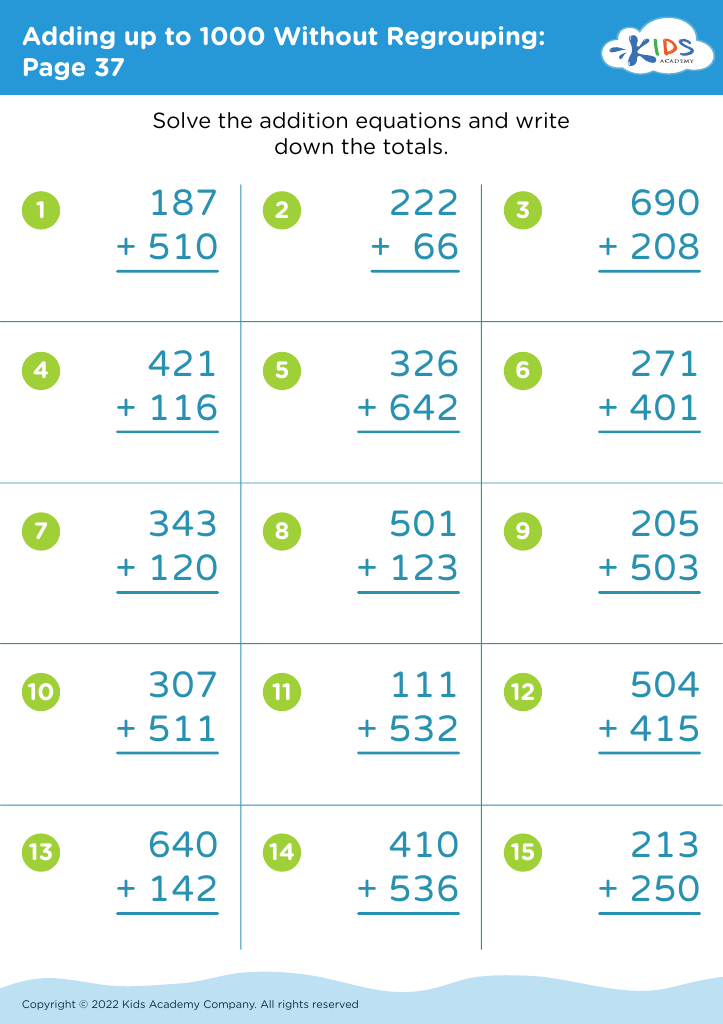
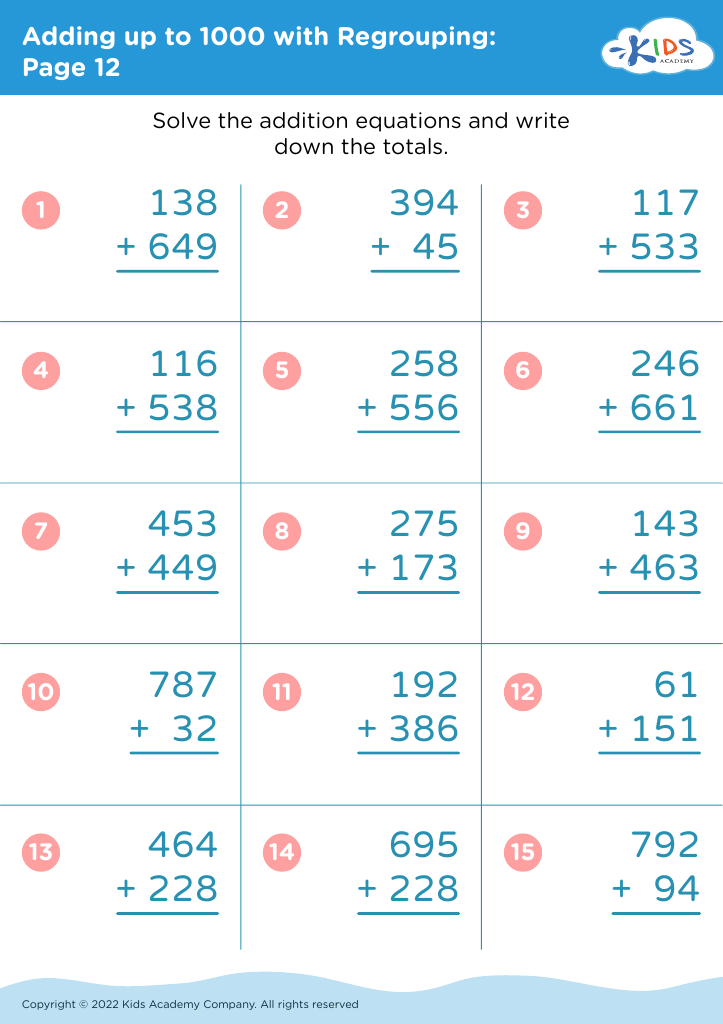
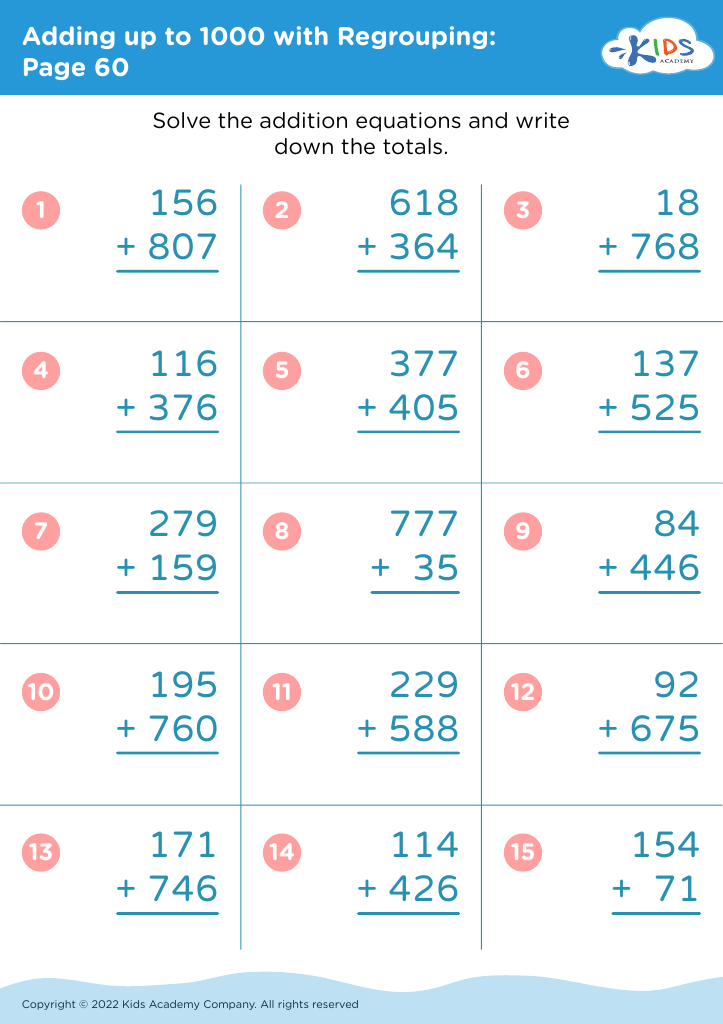
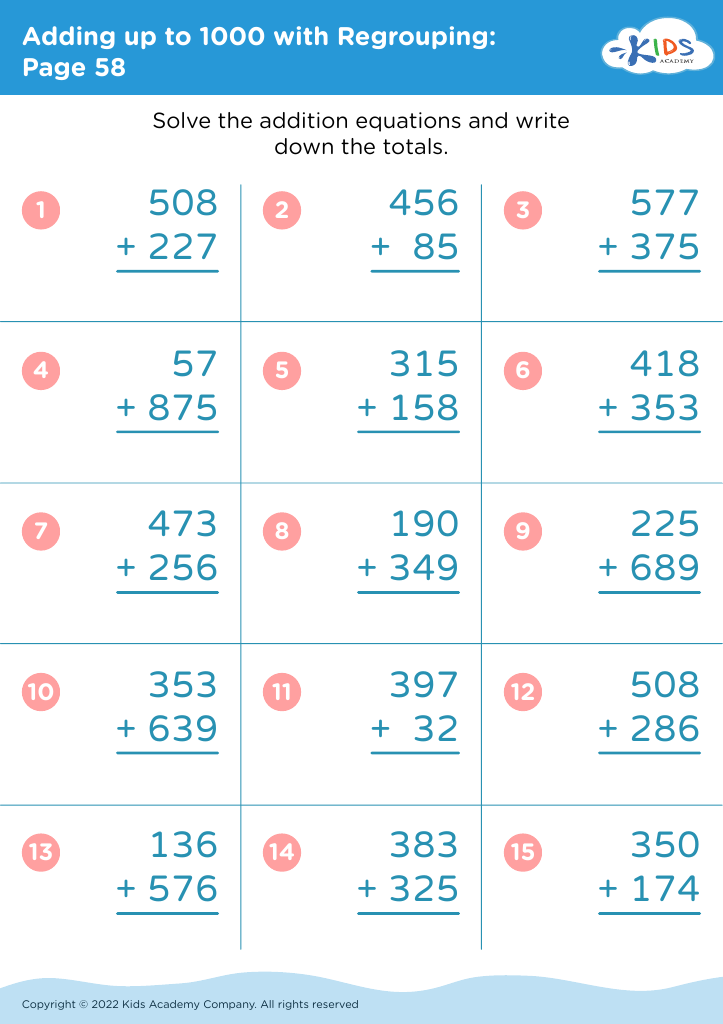
Engage your third graders in a vibrant learning experience with our "Color Identification Grade 3 Addition & Subtraction Worksheets" designed by Kids Academy. These dynamic worksheets combine essential math skills with fun color identification tasks, making learning a more enjoyable endeavor. Students will enhance their addition and subtraction abilities while refining their skill in recognizing and applying colors. Ideal for classroom use or supplementary home practice, these thoughtfully designed exercises spark curiosity and boost confidence in young learners, promoting an interactive and visually stimulating approach to mastering fundamental math concepts. Spark your child's passion for learning today!
Favorites
With answer key
Interactive
Join Kids Academy for Free
Who is primarily going to use this learning content?








Color identification and mathematical skills such as addition and subtraction may seem fundamentally different, but both are crucial for a child’s cognitive development. In the context of a Grade 3 classroom, the intersection of these skills fosters significant educational growth. Here’s why parents and teachers should pay attention:
Color identification plays a key role in enhancing a child's visual and cognitive processing. It aids in distinguishing and associating different objects, patterns, and concepts, which is foundational for problem-solving and critical thinking tasks. Additionally, being able to differentiate colors can enhance organizational skills and improve the ability to follow instructions.
Grade 3 addition and subtraction are pivotal mathematical skills that underpin all future learning in math. Proficiency in these areas is essential as students encounter more complex mathematical problems. Integrating color identification in mathematical exercises can make learning more engaging and accessible. For example, using color-coded visual aids for different number operations can help clarify and reinforce concepts, making learning more effective and enjoyable.
By focusing on both, parents and teachers provide a holistic educational experience that sharpens critical thinking, problem-solving, and cognitive development. When students enjoy the learning process through interactive and colorful activities, it fosters a positive attitude toward education and nurtures lifelong learning skills.