Critical thinking skills Grade 3 Addition & Subtraction Worksheets
3 filtered results
Difficulty Level
Grade
Age
-
From - To
Subject
Activity
Standards
Enhance your third grader's mathematical journey with our engaging Critical Thinking Skills Worksheets focused on addition and subtraction! Designed for Grade 3 learners, these worksheets encourage students to think critically and solve problems creatively. Each exercise promotes analytical skills through a variety of challenges, helping kids to not only improve their arithmetic abilities but also build confidence in their reasoning skills. With fun and interactive tasks, these worksheets make learning math enjoyable and effective. Equip your child with the vital skills they need to tackle math challenges both in and out of the classroom. Download these valuable resources today!
Favorites
With answer key
Interactive
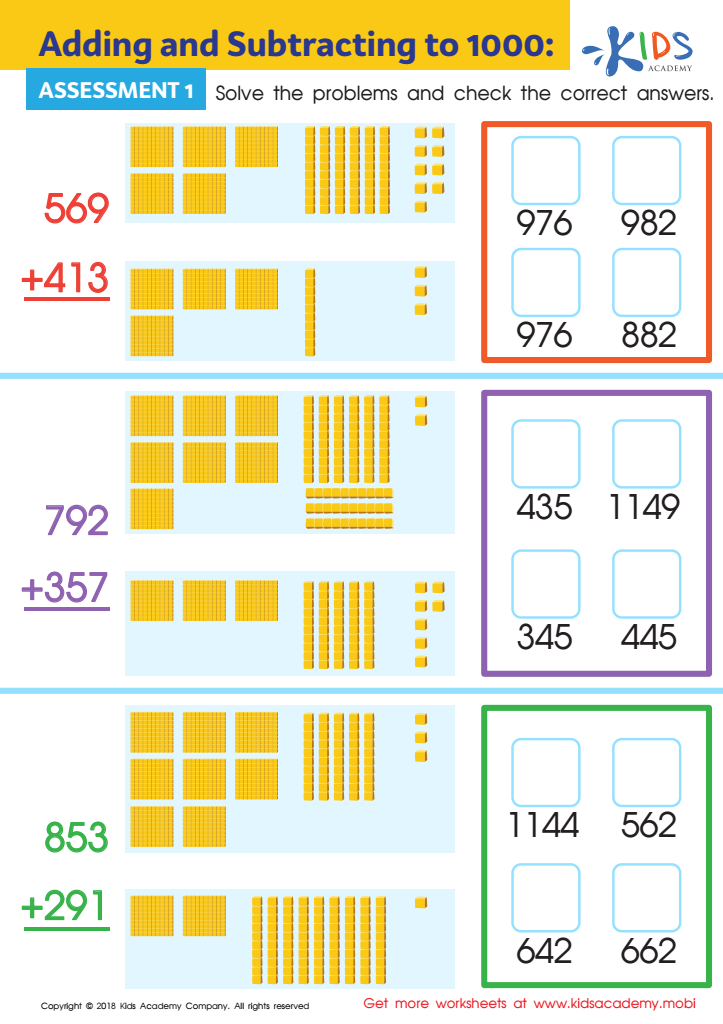
Adding and Subtracting to 1 Worksheet: Assessment 1
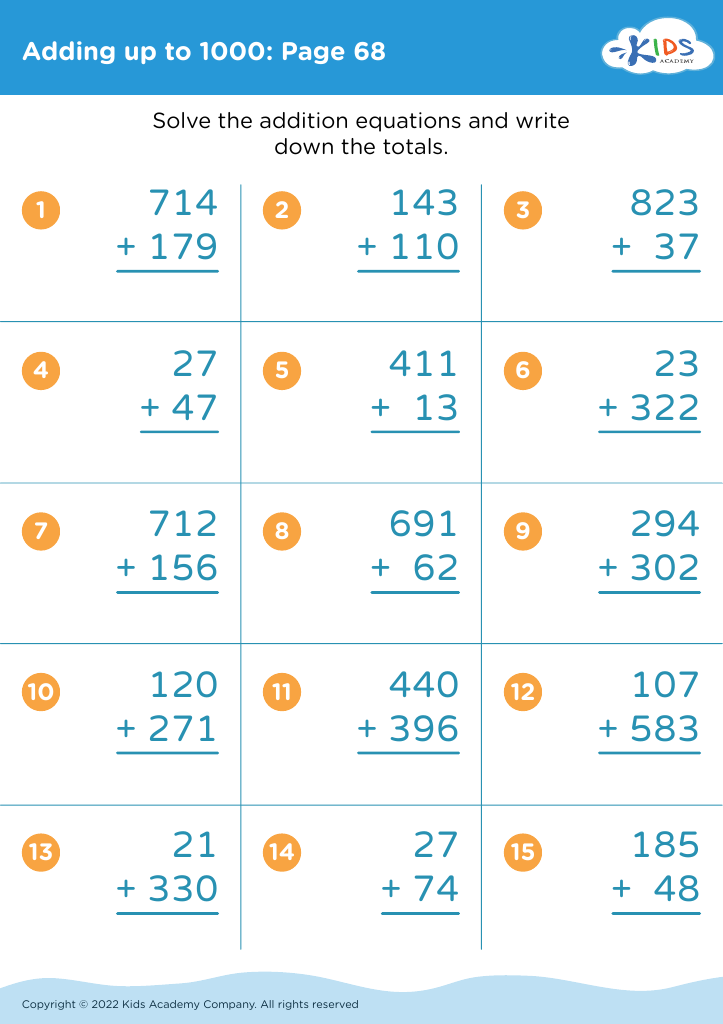
This assessment worksheet tests your child's addition skills. It has 3 3-digit problems with base ten blocks for visual aid. Encourage learners to use these visuals for better understanding. When they have solved the problems, they can check the box with the right answer. It's a quick and easy way to gauge numeracy development.
 Assign to My Students
Adding and Subtracting to 1 Worksheet: Assessment 1
Worksheet
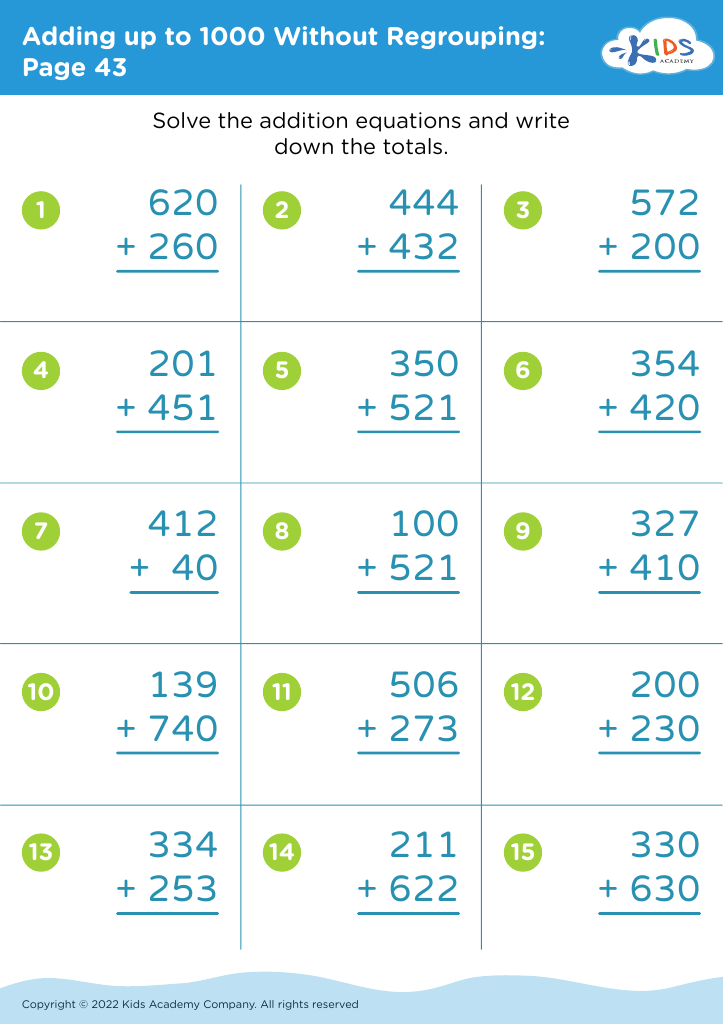
Join Kids Academy for Free
Who is primarily going to use this learning content?








Critical thinking skills are essential for third-grade students, particularly when it comes to addition and subtraction. At this stage, children are not just memorizing facts and algorithms; they are learning to reason through problems and apply their mathematical knowledge in various contexts. When parents and teachers emphasize critical thinking in mathematics, they empower children to understand the 'why' behind mathematical procedures, which builds a deeper comprehension of numbers and operations.
For example, instead of simply learning how to add or subtract, students should be encouraged to think about alternative strategies, recognize patterns, and solve real-world problems. This not only boosts their confidence in math but also enhances their problem-solving skills—traits that extend beyond the classroom and into everyday life.
Moreover, fostering critical thinking at an early age helps students become more adaptable learners. As they progress through grades, these skills will be foundational in tackling complex concepts, not just in math but across various subjects. Teachers and parents play crucial roles in nurturing these skills by providing engaging challenges and encouraging inquiry, thus helping students grow into thoughtful, analytical individuals prepared for future challenges.