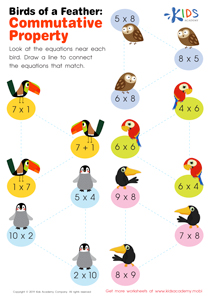
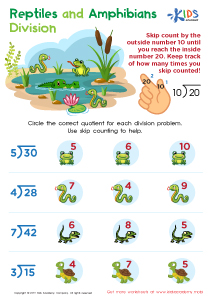
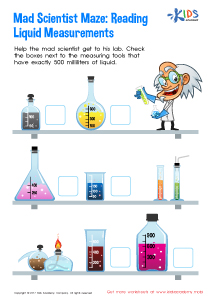
Enhancing problem-solving abilities Grade 3 Addition & Subtraction Worksheets
3 filtered results
-
From - To
Unlock your child's problem-solving potential with our Grade 3 Addition & Subtraction Worksheets! Designed to make math engaging and effective, these worksheets help young learners confidently tackle various math challenges. Each activity focuses on enhancing critical thinking skills through exciting word problems, interactive exercises, and real-world scenarios. Your third grader will develop a solid understanding of addition and subtraction concepts while honing their analytical abilities. Ideal for homeschoolers and classroom settings, our resources promote independent learning and cater to different learning styles. Inspire a love for math and strengthen problem-solving skills today with our thoughtfully crafted worksheets!
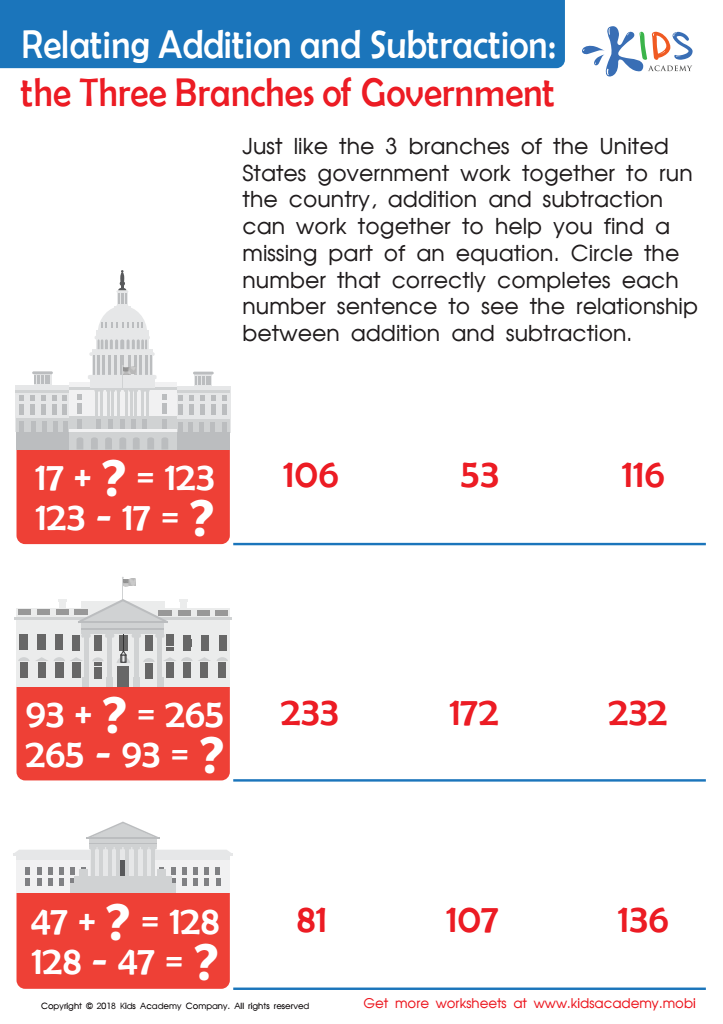
The Three Branches of Government Worksheet
 Assign to My Students
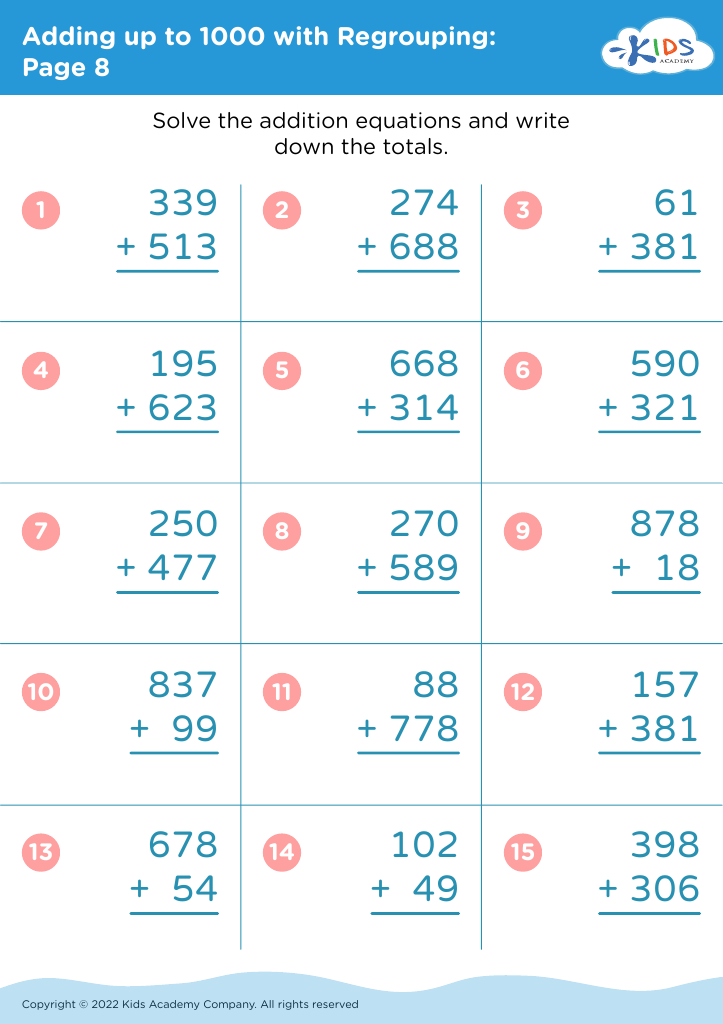
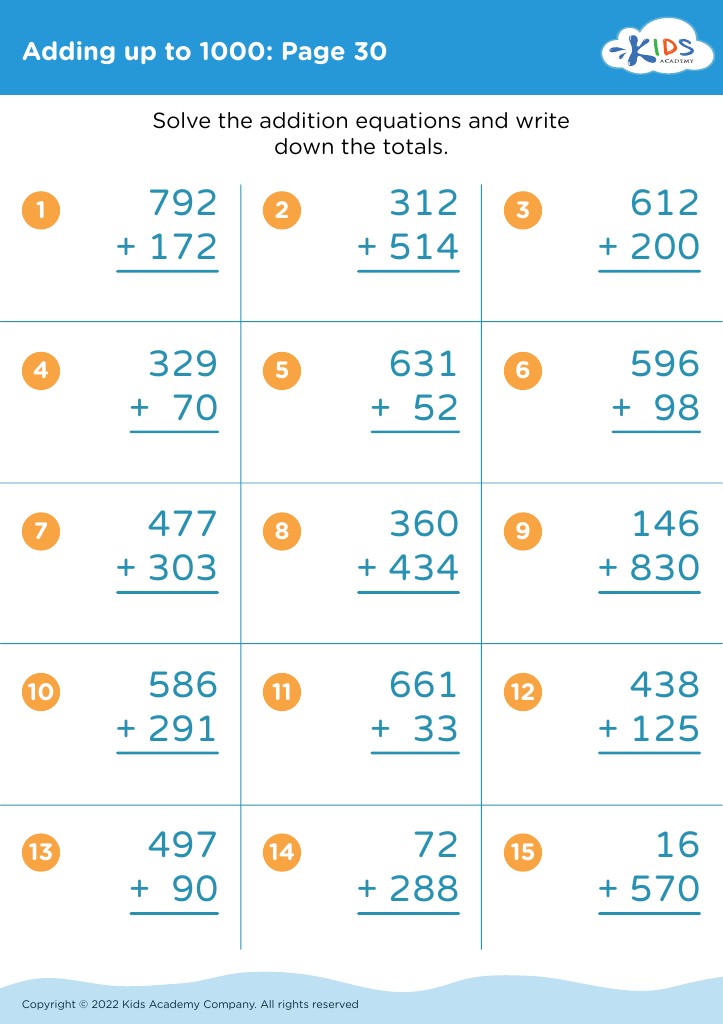








Enhancing problem-solving abilities in Grade 3, particularly in addition and subtraction, is crucial for fostering a solid mathematical foundation in children. At this developmental stage, students begin to transition from basic computation to understanding mathematical concepts, which is essential for their overall academic success.
First, proficient problem-solving skills promote critical thinking. When children learn to approach addition and subtraction challenges systematically, they develop strategies to tackle complex problems, leading to improved cognitive abilities. This critical thinking transcends mathematics, benefiting students in various subjects and real-life situations.
Moreover, strengthening these skills encourages a growth mindset. When children encounter and solve mathematical problems, they develop resilience and persistence, learning that making mistakes is a crucial part of the learning process. This mindset is vital for lifelong learning.
Additionally, strong problem-solving abilities foster greater confidence in mathematics. As students experience success in adding and subtracting, they are more likely to engage positively with future math concepts, laying the groundwork for advanced mathematics.
In summary, enhancing problem-solving abilities in addition and subtraction not only builds essential mathematical skills but also promotes critical thinking, resilience, and confidence in learning, all of which are fundamental for a child's overall educational journey.