Number Sequencing Grade 3 Addition & Subtraction Worksheets
5 filtered results
-
From - To
Unlock the power of math fluency with our "Number Sequencing Grade 3 Addition & Subtraction Worksheets." Designed for third graders, these engaging worksheets will sharpen your child's skills in number sequencing through targeted addition and subtraction exercises. Each sheet encourages strategic thinking, pattern recognition, and problem-solving. With vibrant visuals and diverse tasks, learning becomes fun and effective. Perfect for classroom use or extra practice at home, these worksheets are tailored to build a strong foundational understanding of mathematical concepts, ensuring academic success and boosting confidence in young learners. Download now to inspire a love for math!
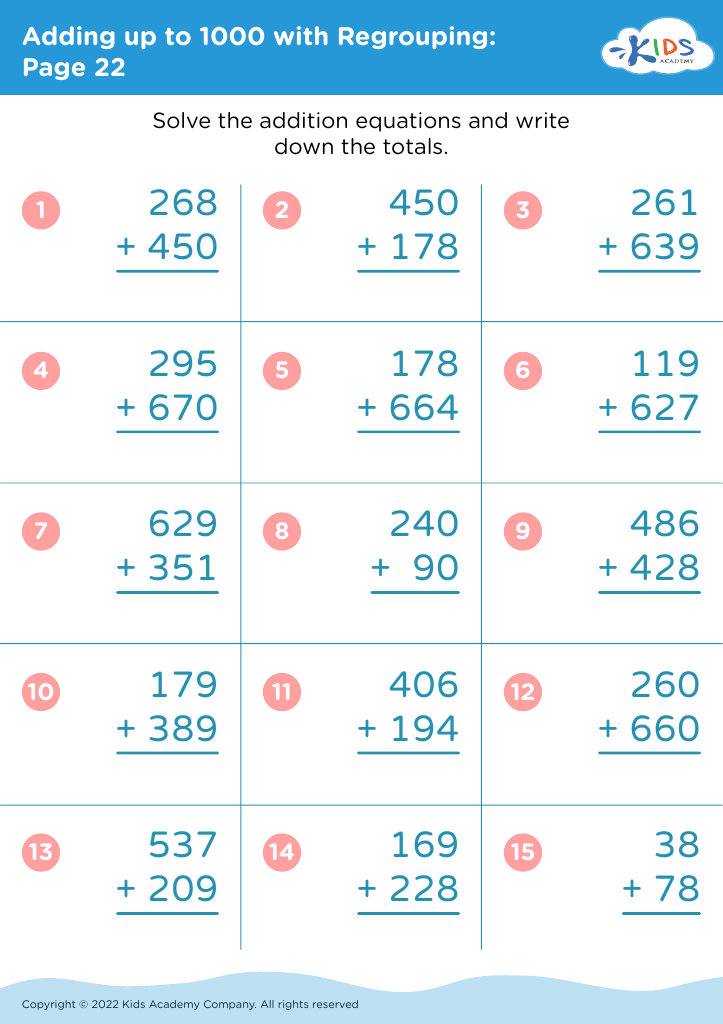
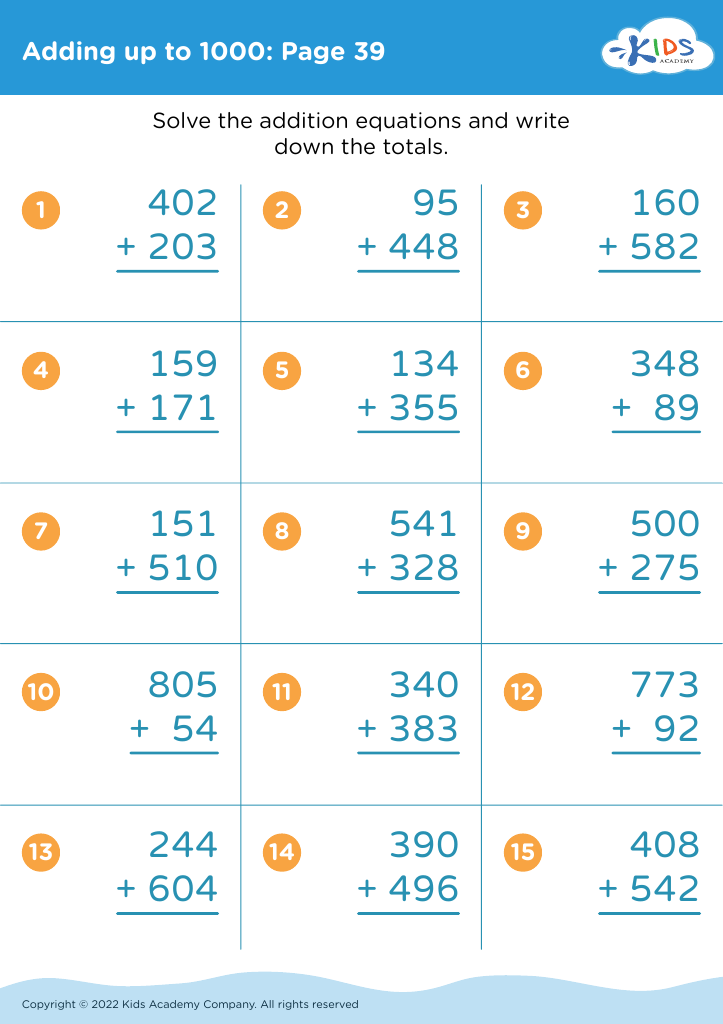
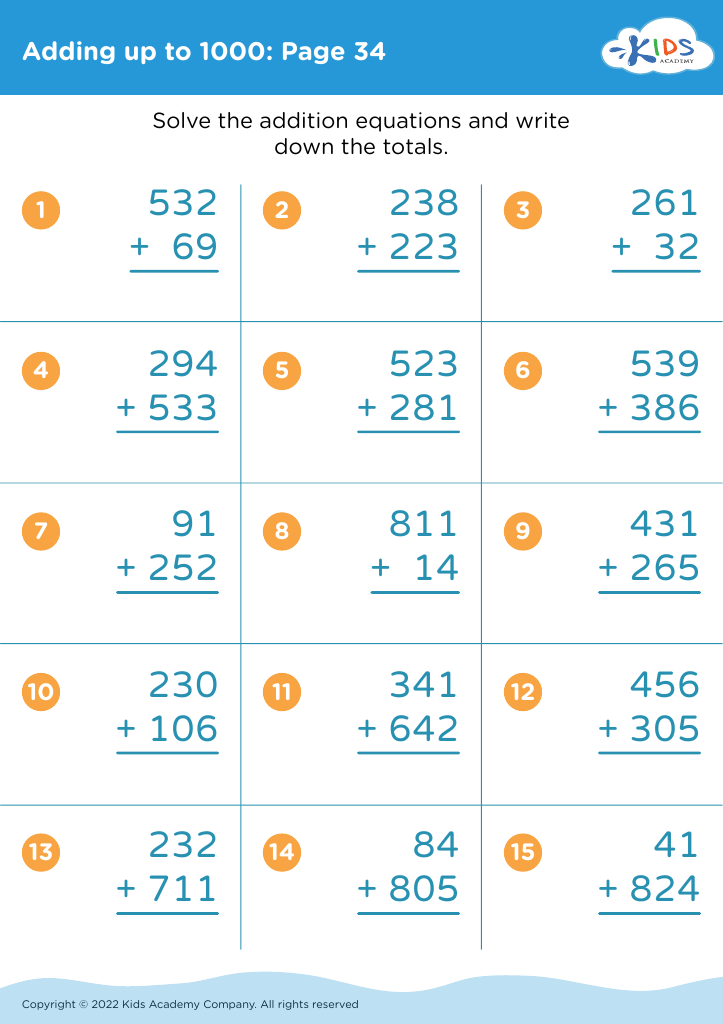
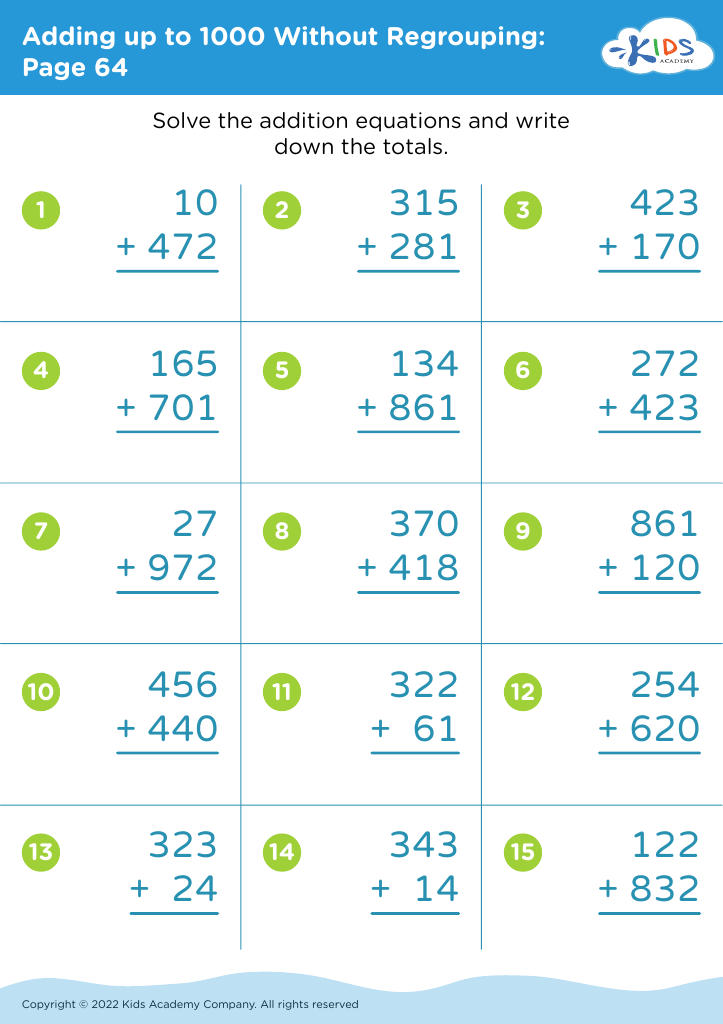
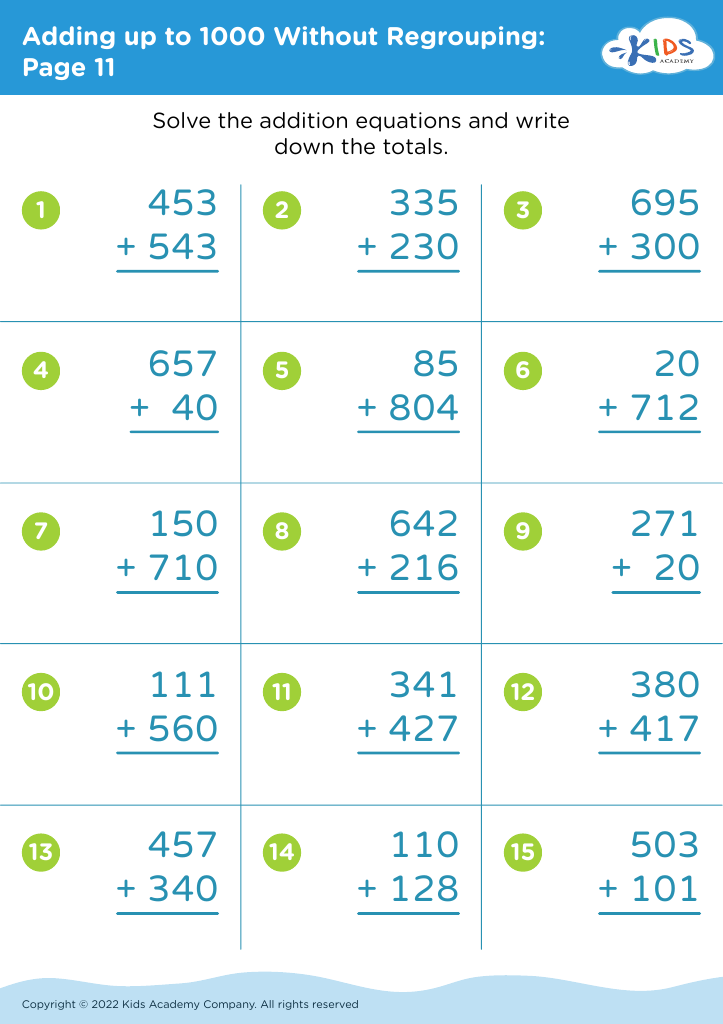








Parents and teachers should place significant emphasis on Number Sequencing in Grade 3 Addition & Subtraction due to its critical role in developing essential mathematical foundations. At this stage, students transition from simple arithmetic to more complex concepts, making a strong grasp of number sequencing pivotal for success in higher math. Mastering sequencing helps kids understand the logical order of numbers, an understanding that is crucial for performing addition and subtraction accurately.
These skills teach children to recognize number patterns, which fosters mental math capabilities and problem-solving strategies. With a firm understanding of number sequences, students can more easily predict outcomes, fill in missing numbers in sequences, and develop the ability to add and subtract with confidence. This not only helps in math but also promotes logical thinking and patience, which are valuable across all subjects.
Furthermore, a solid proficiency in number sequencing boosts students' confidence and reduces math-related anxiety—an important factor for academic success. By prioritizing this aspect of their mathematical education, parents and teachers ensure students build a resilient foundation that will enable them to handle increasingly complex mathematical tasks as they progress through their education journey.