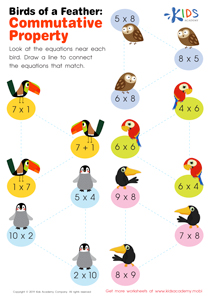
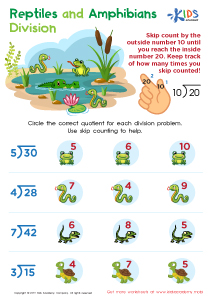
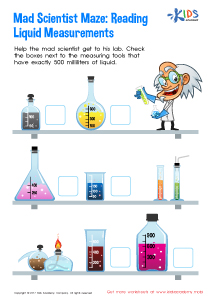
Pattern recognition Grade 3 Addition & Subtraction Worksheets
3 filtered results
-
From - To
Unlock the power of math with our Pattern Recognition Grade 3 Addition & Subtraction Worksheets! Designed specifically for third graders, these engaging worksheets focus on enhancing students' ability to recognize patterns in mathematical scenarios. By identifying relationships within numbers, young learners will strengthen their addition and subtraction skills while boosting their confidence. With a variety of exercises, from simple number sequences to complex problem-solving tasks, our resources ensure a comprehensive understanding of key concepts. Perfect for classroom use or at-home practice, these worksheets offer a fun and effective way to support your child's mathematical development. Start exploring today!
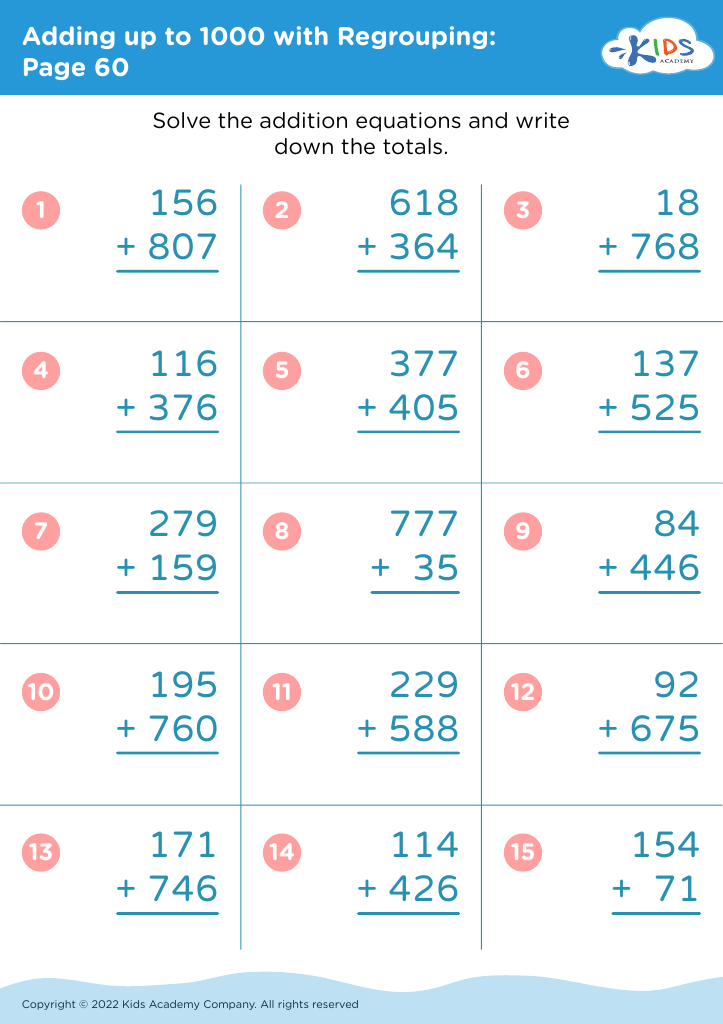
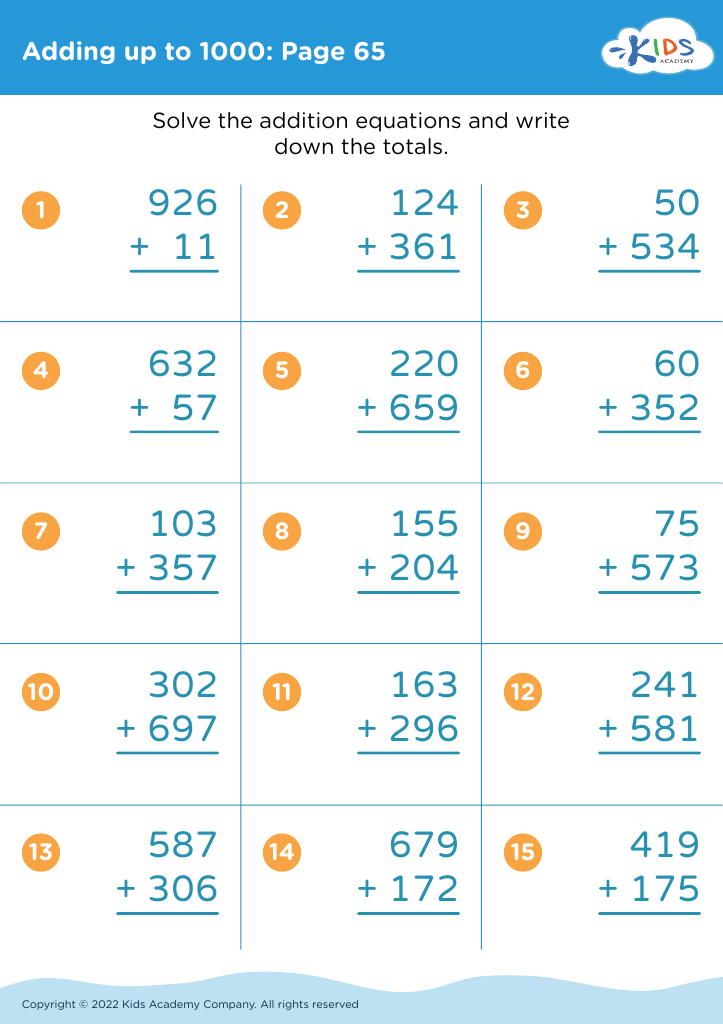
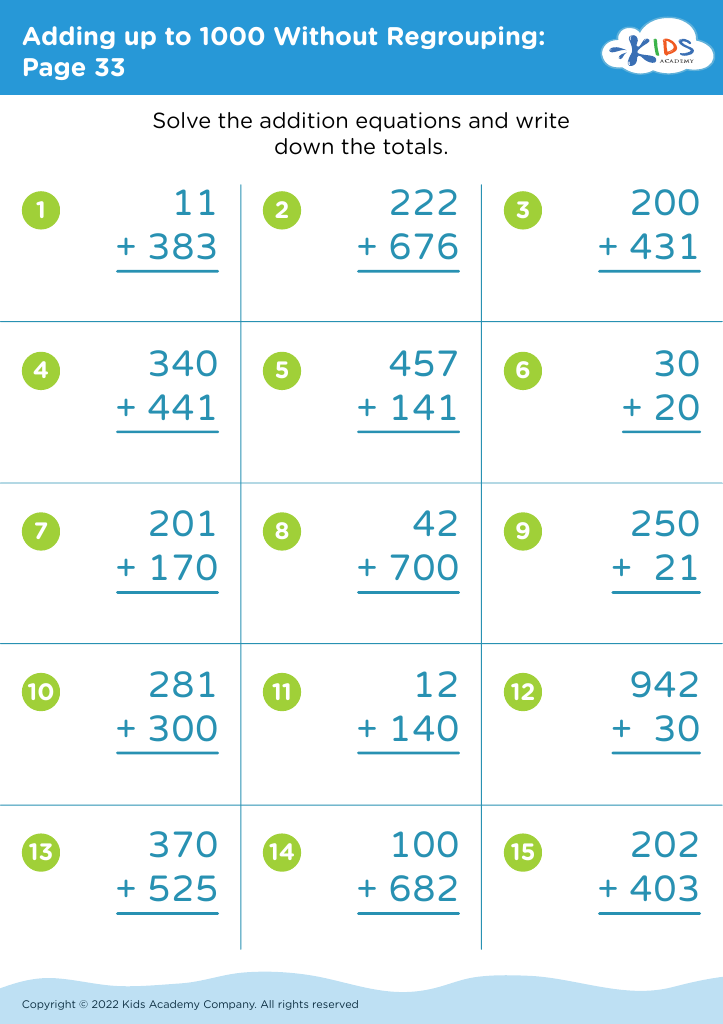








Pattern recognition in Grade 3 Addition and Subtraction is crucial for several reasons. Firstly, it lays the groundwork for more advanced mathematical concepts. By recognizing patterns, students can identify relationships between numbers, which enhances their understanding of mathematical operations and improves problem-solving skills.
Additionally, pattern recognition promotes number sense. When students can see patterns in addition and subtraction, they learn to predict outcomes and make educated guesses. This skill is vital for mental math and encourages quicker, more accurate calculations without reliance on calculators or lengthy methods.
Moreover, patterns help develop critical thinking skills. When students learn to identify and work with patterns, they engage in higher-order thinking, allowing them to apply mathematical principles in real-world scenarios successfully. This not only fosters a love for mathematics but also builds confidence in their abilities.
Lastly, students equipped with strong pattern recognition skills tend to excel in collaborative settings, where they can share strategies and approaches with peers. As educators and parents, nurturing these skills ensures that children are not only proficient in basic arithmetic but also prepared for future academic challenges. Recognizing patterns is a fundamental component of becoming a successful, lifelong learner.