Reading analog clocks Grade 3 Addition & Subtraction Worksheets
3 filtered results
-
From - To
Boost your third graders' math skills with our engaging "Reading Analog Clocks" worksheets, designed specifically for addition and subtraction practice! These printable activities help students master telling time while reinforcing critical math concepts. Each worksheet features colorful clock illustrations and encourages learners to solve time-related word problems, adding depth to their understanding of both time and mathematics. With clear instructions and a variety of exercises, your students will build confidence in reading analog clocks while honing their addition and subtraction skills. Perfect for classroom use or at-home learning, these worksheets make math fun and relevant for young learners!
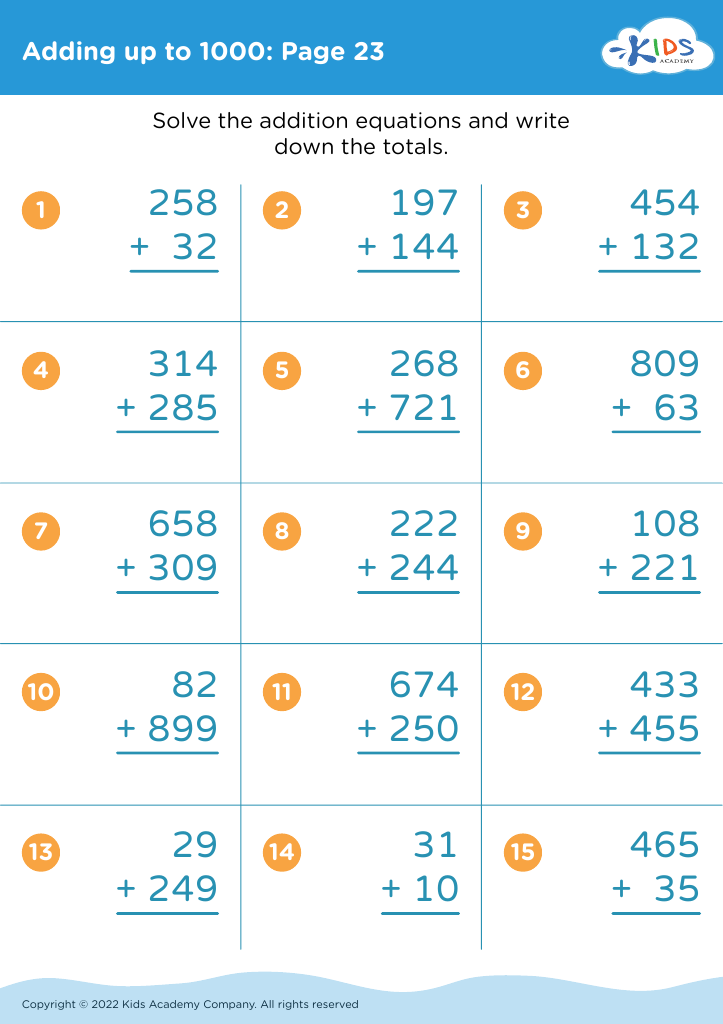
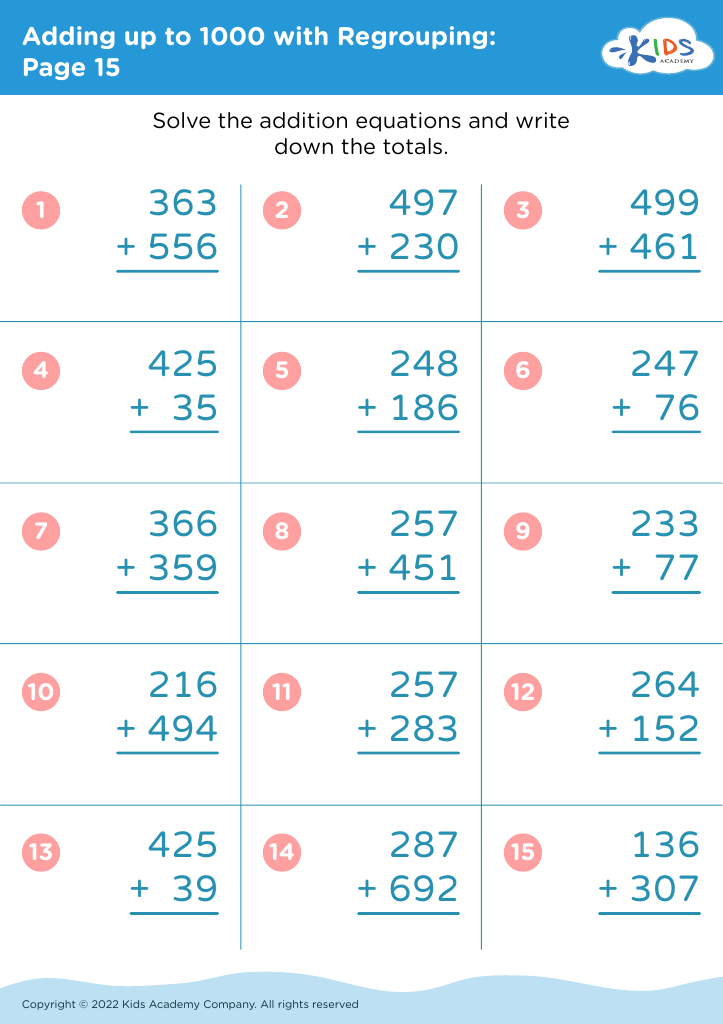








Teaching students to read analog clocks and to understand addition and subtraction fundamentals is vital for their overall developmental success. At the Grade 3 level, children are increasingly gaining independence and learning practical life skills, and understanding how to read an analog clock is one of them. It helps develop their time management skills, which are essential for daily routines, such as arriving at school on time or managing homework schedules. Parents and teachers should care about this because it enables children to make better decisions regarding their time, thus fostering responsibility and autonomy.
Additionally, addition and subtraction are foundational skills in mathematics. Mastery of these operations imbues students with confidence and prepares them for more complex mathematical concepts. When students engage with questions that combine time with arithmetic, such as calculating durations or intervals, they not only practice these essential math skills but also learn to work with real-world contexts, making their learning more relevant and engaging.
Ultimately, equipping children with the ability to read analog clocks and master addition and subtraction is key to fostering critical life skills and a strong mathematical foundation, which will benefit them throughout their education and in their everyday lives.