Real-life application Grade 3 Addition & Subtraction Worksheets
3 filtered results
Difficulty Level
Grade
Age
-
From - To
Subject
Activity
Standards
Elevate your third grader’s math skills with our Real-life Application Grade 3 Addition & Subtraction Worksheets! These engaging and thoughtfully designed worksheets bridge the gap between textbook learning and real-world scenarios. By applying addition and subtraction concepts to everyday problems, children build essential math skills while gaining practical knowledge. Tailored to meet educational standards, our activities challenge and encourage young learners to think critically and solve problems they encounter in daily life. Ideal for enhancing classroom learning or supplementing home study, our printable worksheets make math both fun and relevant for any third grader.
Favorites
With answer key
Interactive
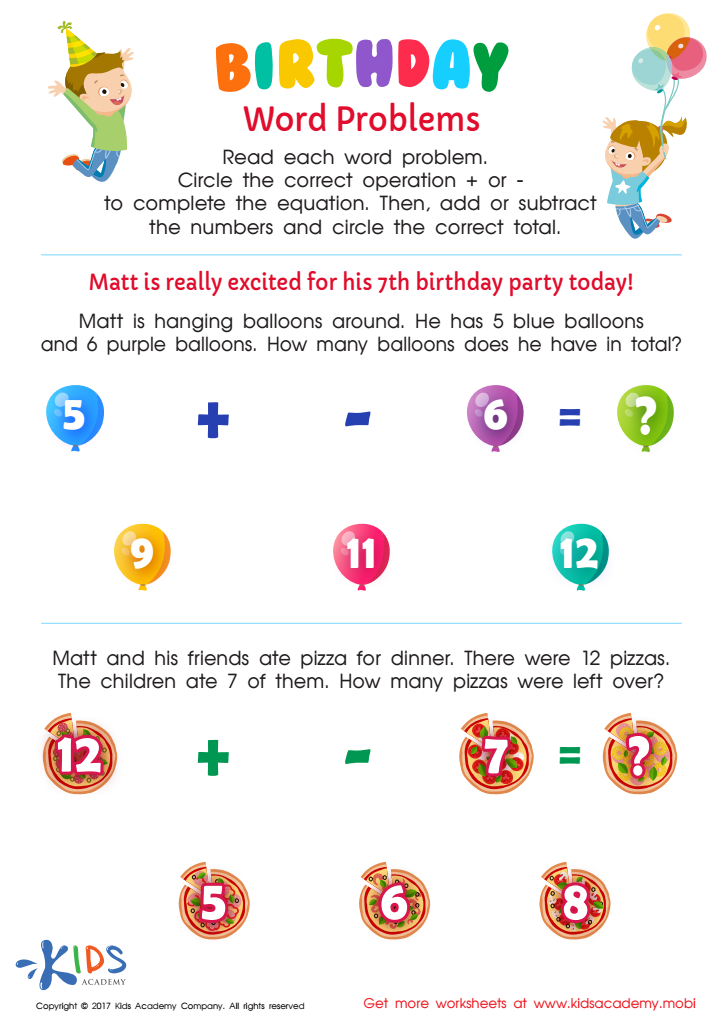
Birthday Word Problems Substraction Worksheet
This worksheet, Birthday Word Problems, is a great way to improve your child's math and literacy skills. It features tricky subtraction equations based on a birthday celebration - perfect for kids who love birthdays!
 Assign to My Students
Birthday Word Problems Substraction Worksheet
Worksheet
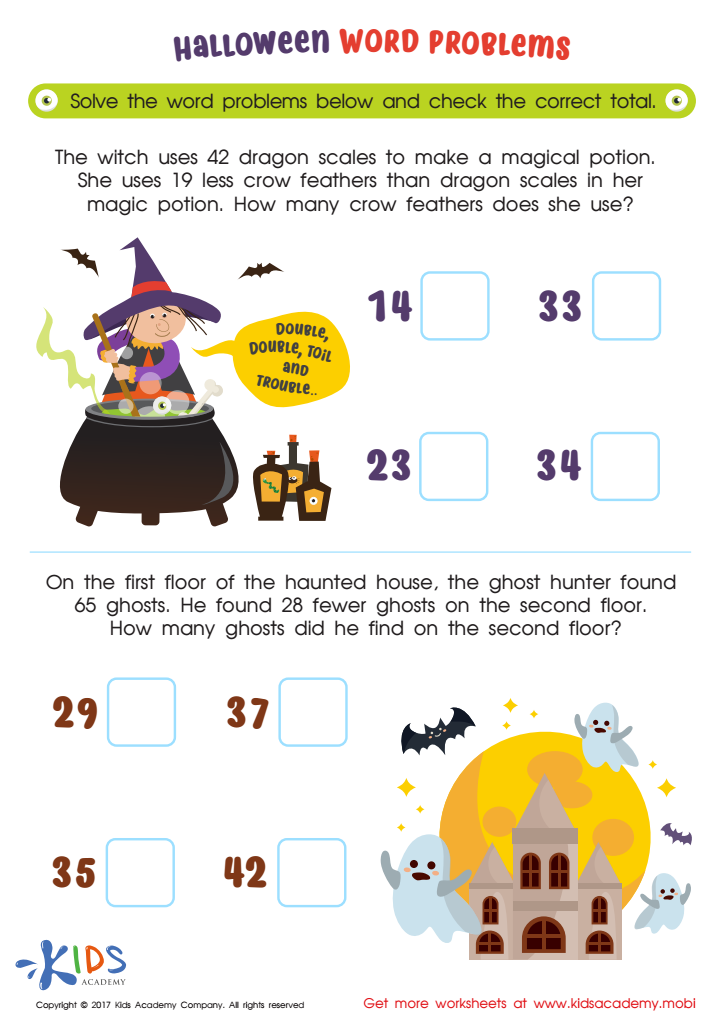
Halloween Word Problems Printable
Ghosts, witches, and other spooky characters make these problems exciting and interactive. Get ready to have some math fun!
Halloween Word Problems Printable
Worksheet
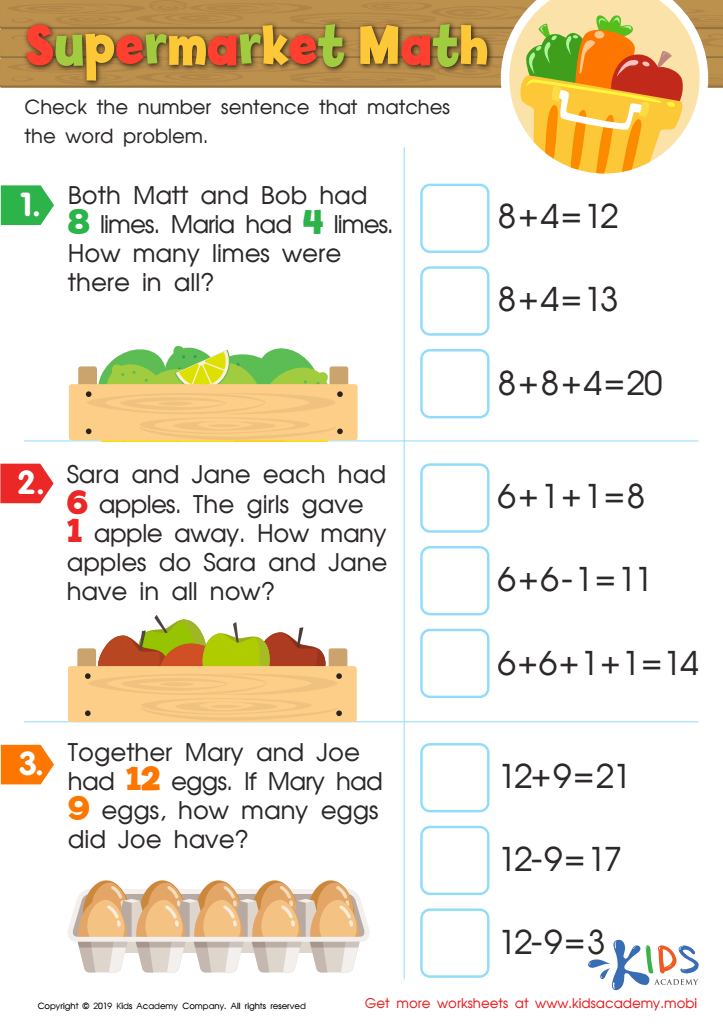
Supermarket Math Worksheet
Take your kids to the supermarket and ask what they're looking forward to buying. Help them solve the three questions in the worksheet by interpreting each one into an equation, then choose the right answer.
Supermarket Math Worksheet
Worksheet
Join Kids Academy for Free
Who is primarily going to use this learning content?








Understanding addition and subtraction in real-life contexts is crucial for Grade 3 students since it forms a foundation for their overall mathematical literacy and critical thinking skills. When parents and teachers integrate real-life application of these operations into lessons, children are more likely to see the relevance and importance of math in their everyday lives.
For instance, solving problems involving money, time, and measurements teaches students to take purposeful steps in scenarios such as budgeting their allowance, planning their day, and following a recipe. These practical applications foster problem-solving skills, making concepts more meaningful compared to abstract numbers alone. Additionally, real-life examples boost engagement and motivation, as children often find such relatable problems more interesting and rewarding to solve.
Moreover, using real-life applications to teach addition and subtraction can enhance collaborative learning and communication skills. Group activities that simulate real-world situations encourage students to discuss strategies, share ideas, and learn from each other.
Lastly, early competence in these fundamental operations builds confidence and prepares students for more advanced math concepts. Parents and teachers play vital roles in emphasizing the practical importance of these skills, ensuring that children are well-equipped to navigate more complex scenarios both inside and outside the classroom.