Recognize patterns Grade 3 Addition & Subtraction Worksheets
6 filtered results
-
From - To
Unlock the power of patterns with our engaging Grade 3 Addition and Subtraction Worksheets designed to enhance math skills! These worksheets provide students with essential practice in recognizing numerical patterns while solving addition and subtraction problems. Aligning with Common Core standards, our resources encourage critical thinking and promote a deep understanding of mathematical concepts. With a variety of exercises, including number sequences and word problems, students will cultivate their problem-solving abilities. Perfect for classroom or home use, these worksheets are a valuable tool for reinforcing math skills in an enjoyable and interactive manner. Start discovering mathematical patterns today!
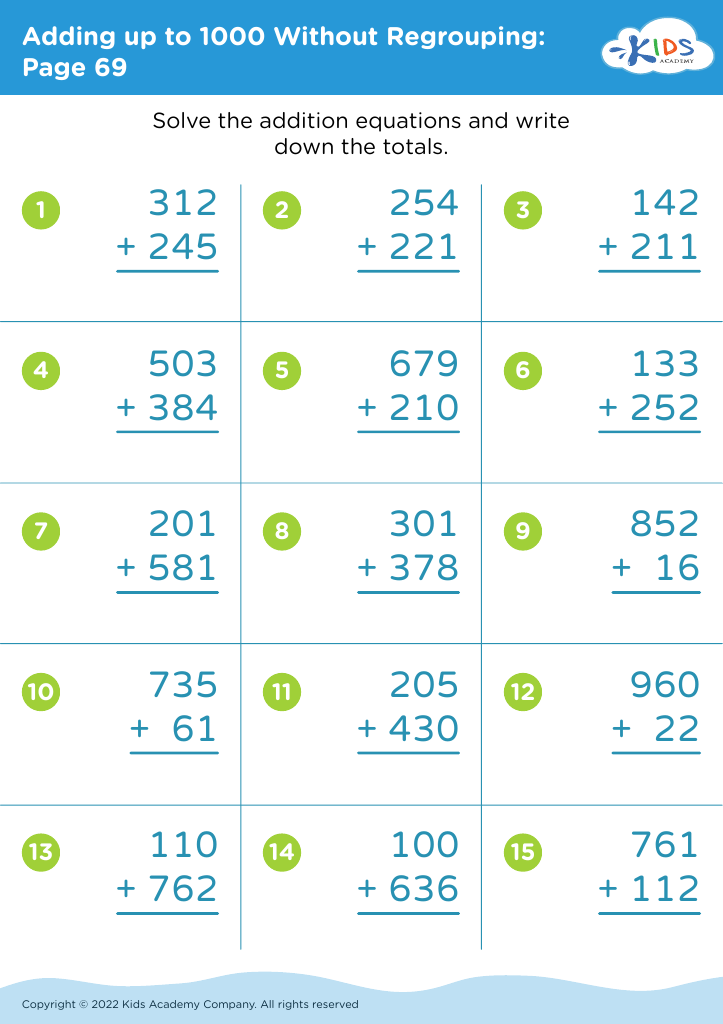
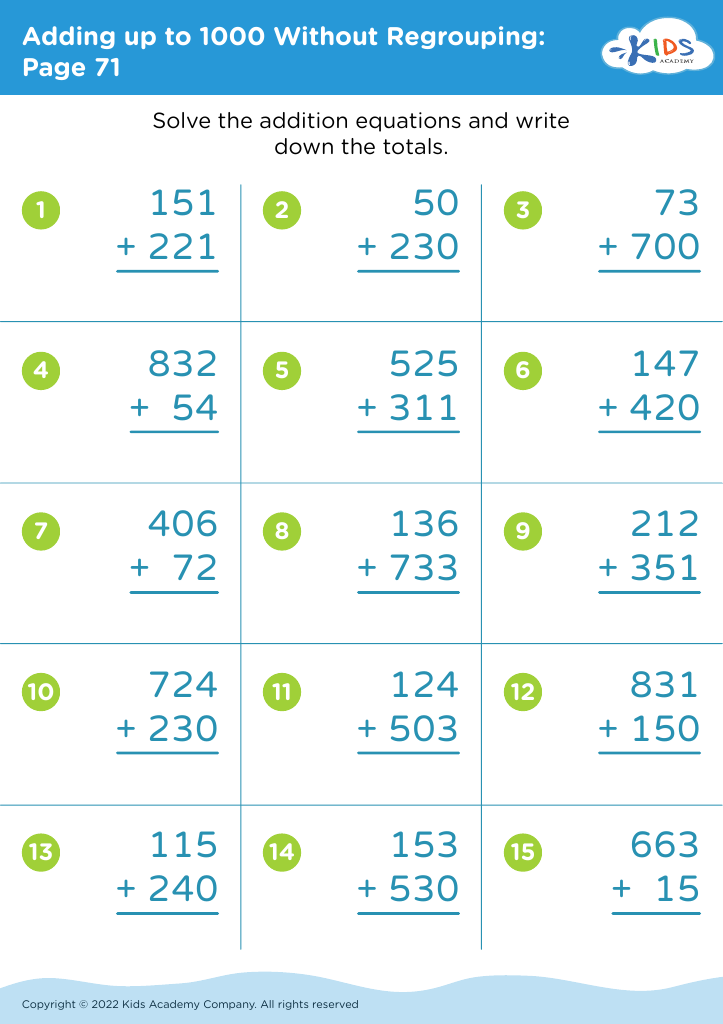
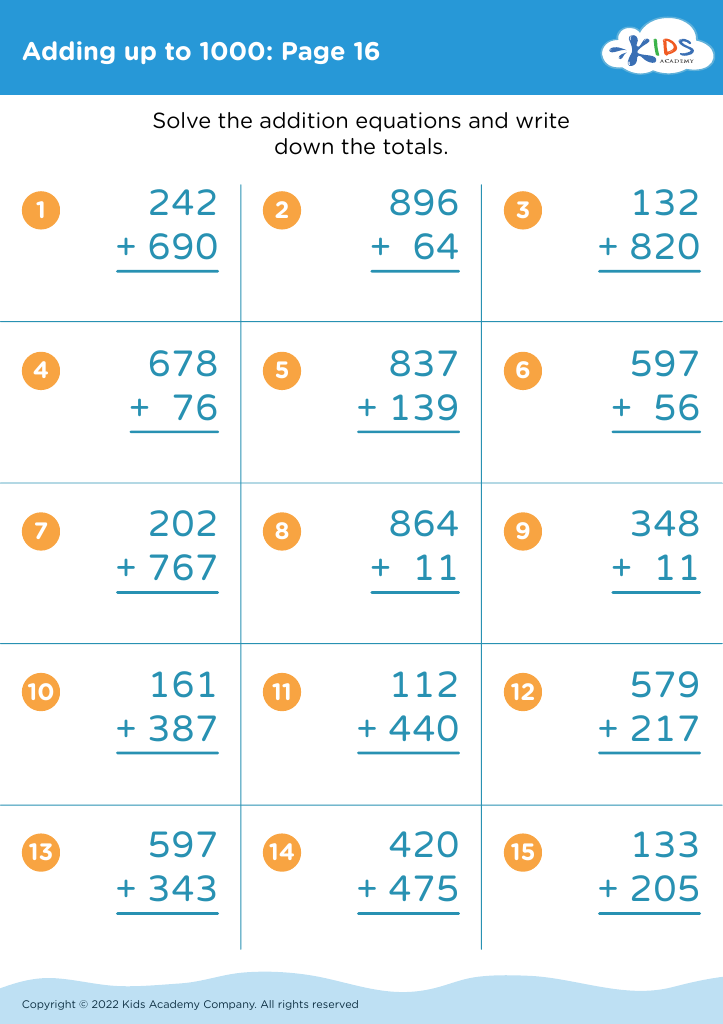
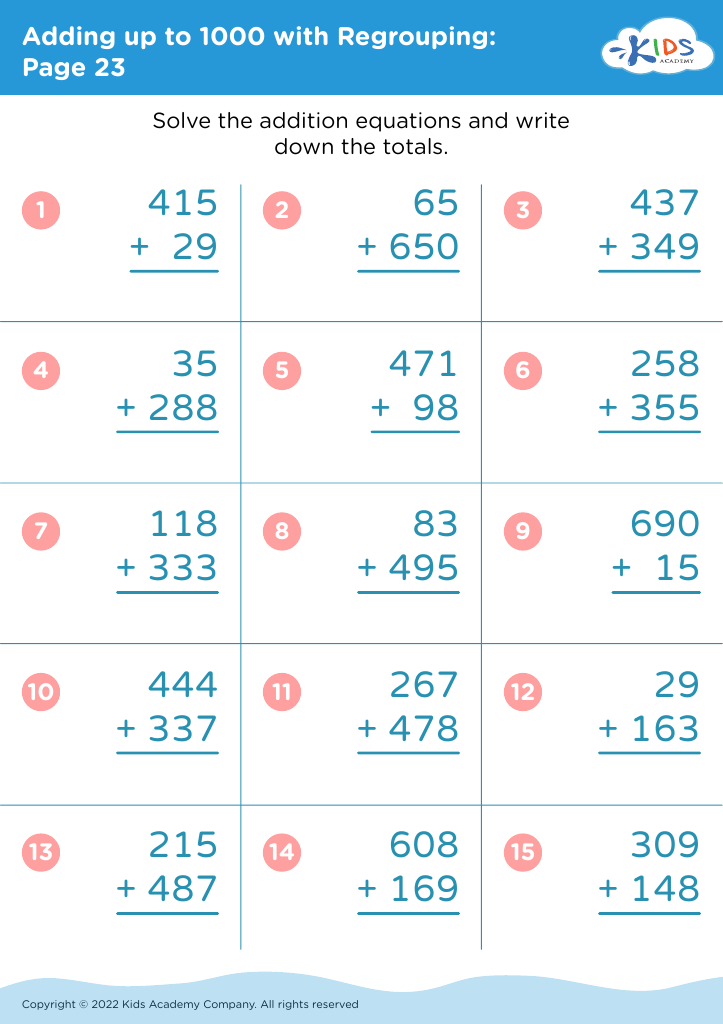
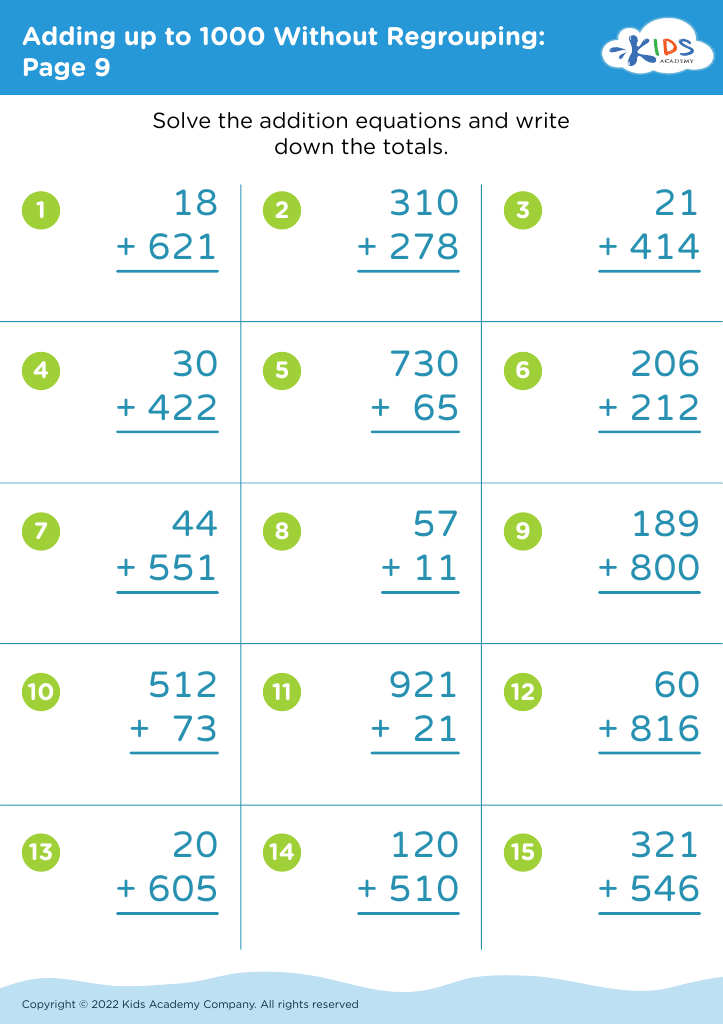
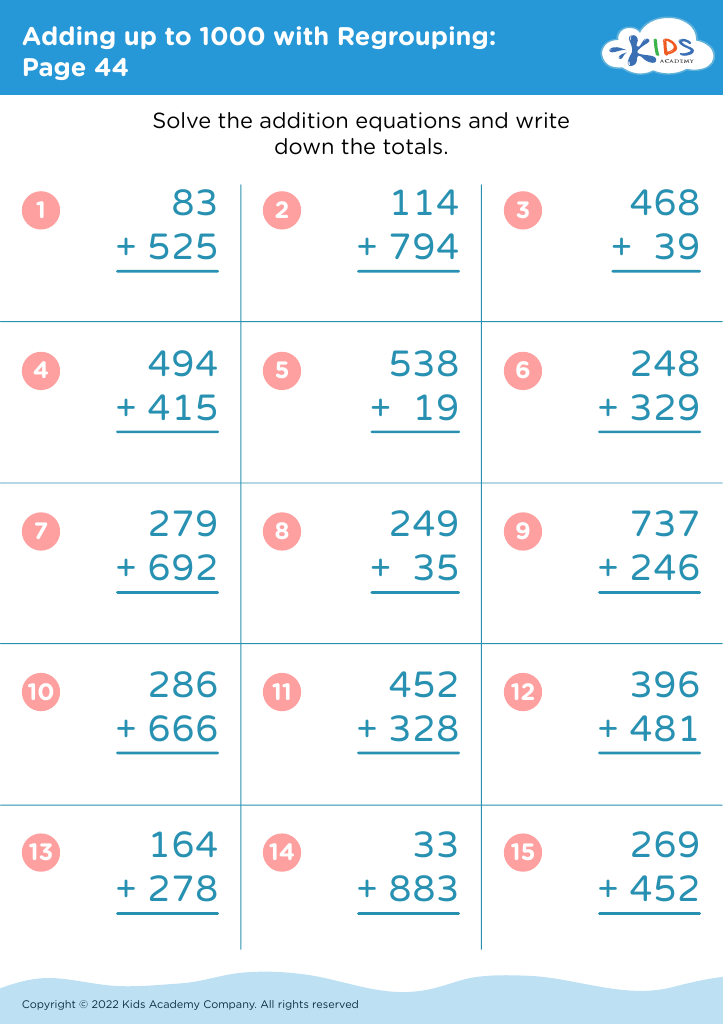








Recognizing patterns in addition and subtraction is crucial for Grade 3 students as it lays the groundwork for more advanced mathematical concepts. At this stage, students begin to transition from basic arithmetic to deeper problem-solving skills, and understanding patterns enhances their ability to solve equations more efficiently.
When teachers and parents emphasize pattern recognition, they help students develop critical thinking skills and foster an intuitive grasp of numbers. For instance, recognizing that 8 + 2 is the same as 10 – 2 allows students to make connections between addition and subtraction, reinforcing the relationships between numbers. This understanding not only aids in performing calculations but also in verifying their answers, as they can use the inverse relationship.
Additionally, recognizing patterns promotes confidence in young learners. When they consistently identify and apply these patterns, students feel more competent and empowered in their math abilities. This Engagement can reduce math anxiety, making the subject more enjoyable.
Ultimately, understanding patterns in addition and subtraction contributes to improved problem-solving skills, better mathematical reasoning, and prepares students for complex concepts in future grades, making it a foundational skill that parents and teachers must prioritize.