Understanding Sequences Grade 3 Addition & Subtraction Worksheets
6 filtered results
-
From - To
"Understanding Sequences Grade 3 Addition & Subtraction Worksheets"
Mastering addition and subtraction sequences is crucial for developing critical mathematical skills in third graders. Our expertly crafted worksheets, available at Kids Academy, provide an engaging and interactive way for students to grasp sequence patterns and improve their arithmetic understanding. These resources are designed to bolster logical thinking and problem-solving abilities through varied exercises that reinforce core concepts. With colorful graphics and step-by-step instructions, our worksheets make learning enjoyable and effective. Perfect for classroom use or at-home practice, these materials will boost your child's confidence and proficiency in math, laying a strong foundation for future success.
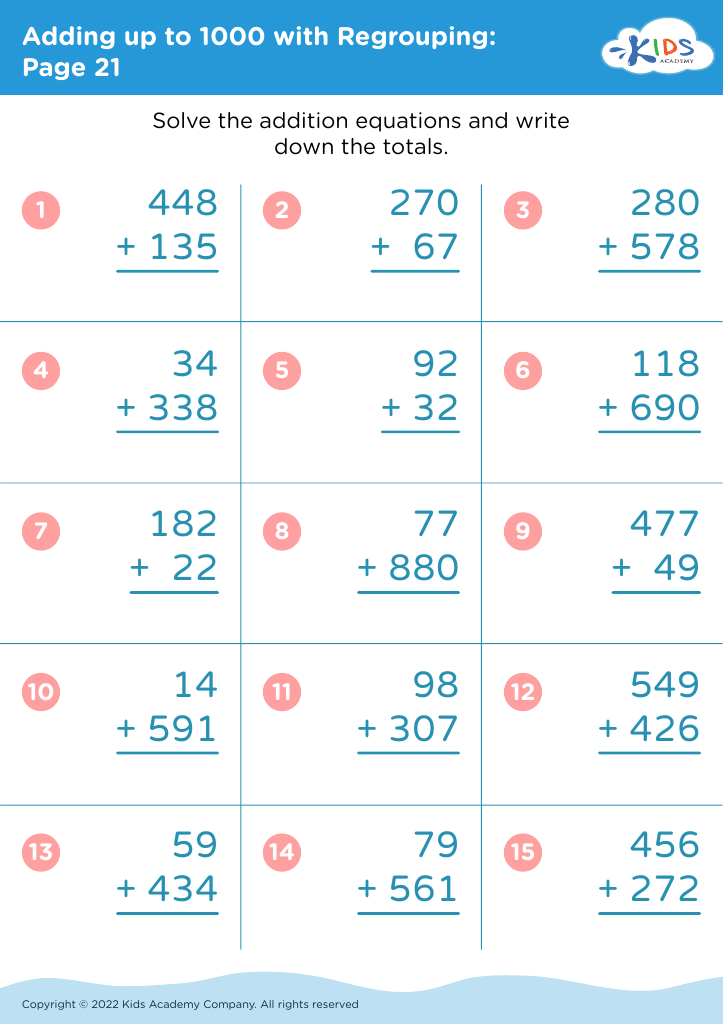
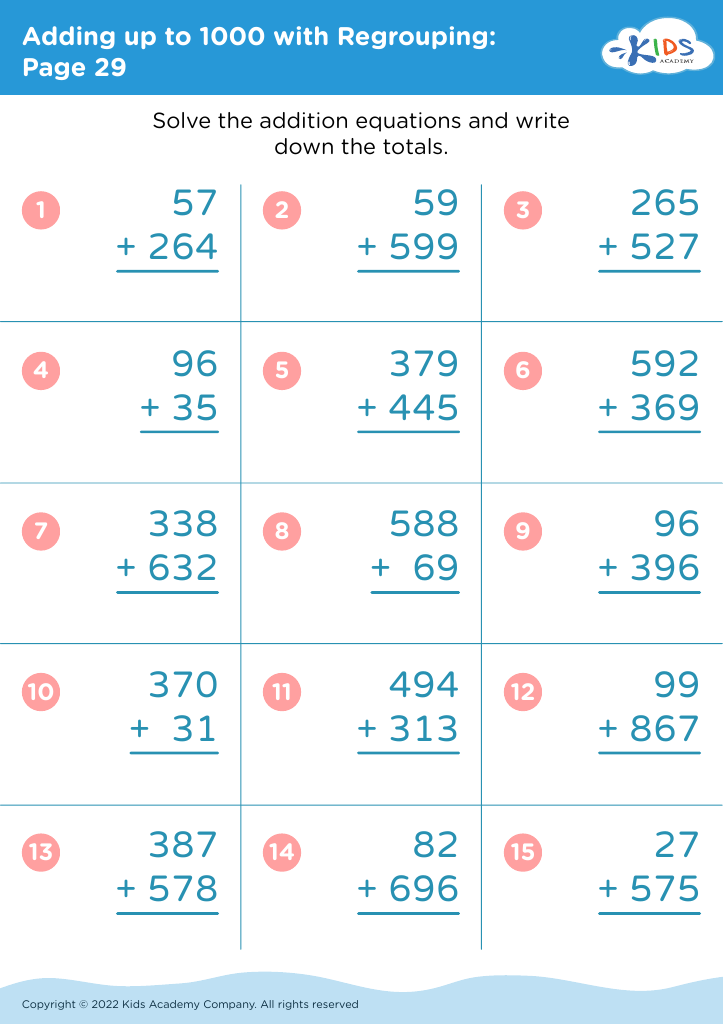
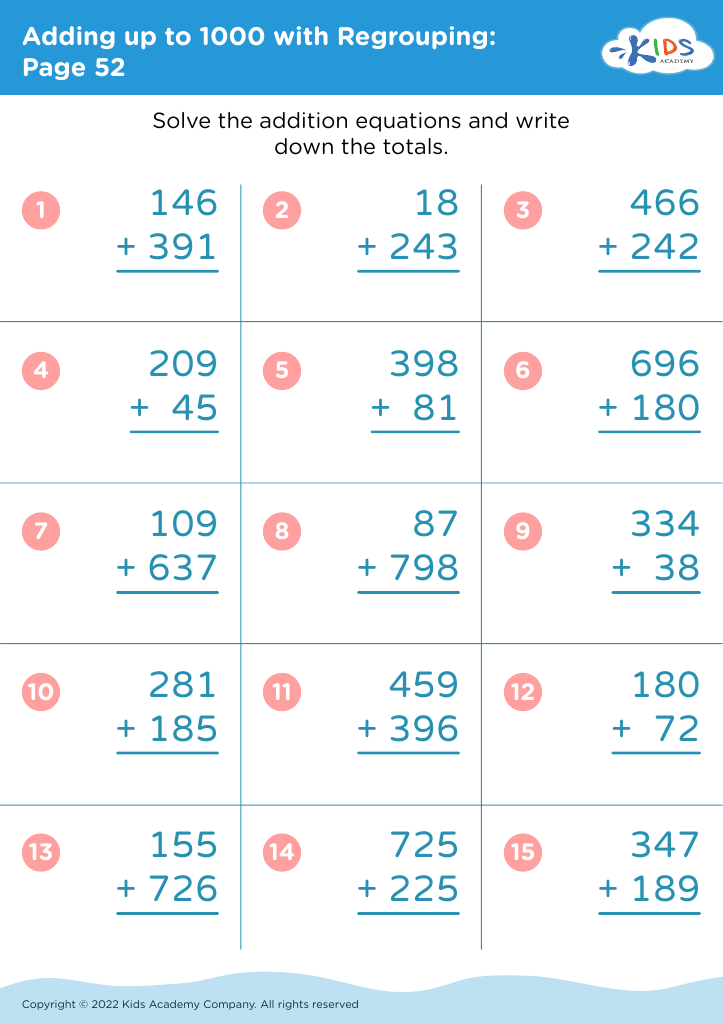
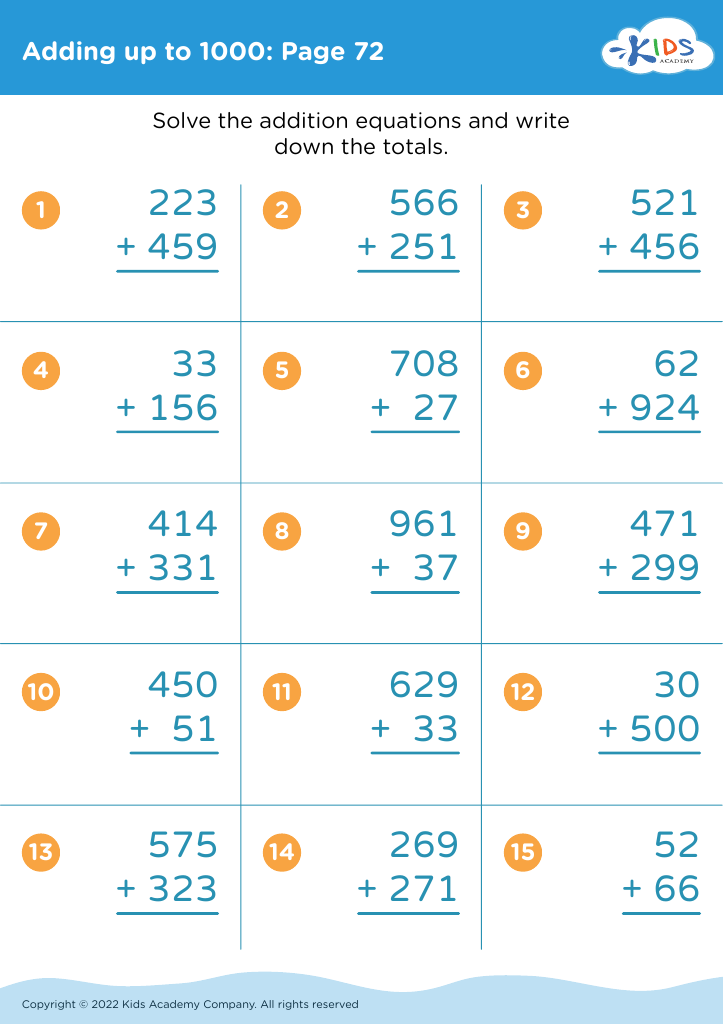
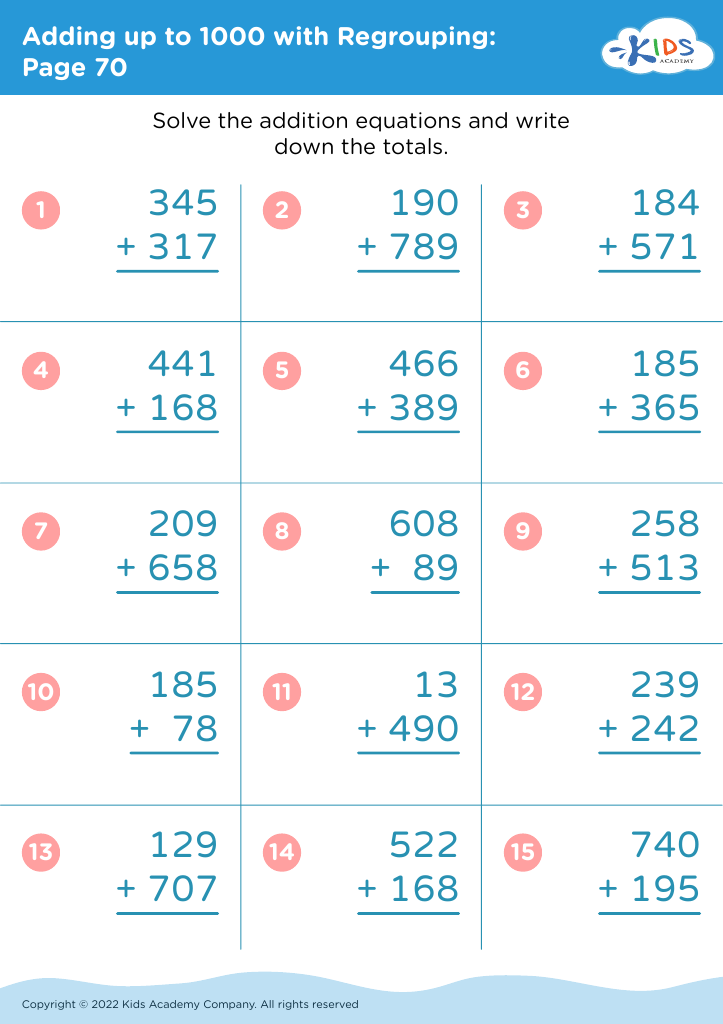
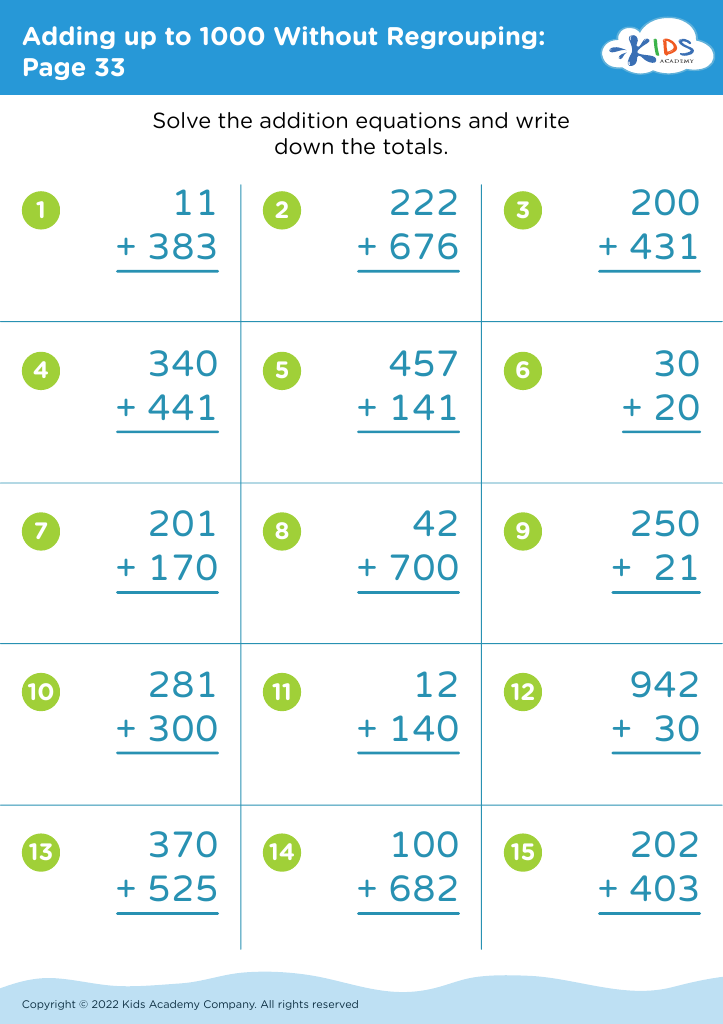








Understanding sequences in Grade 3 addition and subtraction is fundamental for young learners, as it builds the basis for more complex mathematical concepts they'll encounter later in their education. Parents and teachers should prioritize this foundational skill for several reasons:
Firstly, sequences teach students the natural order of numbers and enhance their number sense. Recognizing patterns helps children predict the next numbers in a sequence, which can aid in quicker mental calculations and a deeper understanding of mathematical relationships.
Secondly, grasping the principles of addition and subtraction sequences promotes arithmetic fluency. Students become more comfortable with basic operations, which boosts their confidence and enables them to tackle more challenging math problems with ease.
Thirdly, understanding sequences fosters logical thinking and problem-solving skills. It encourages students to use reasoning to identify rules and apply them systematically, which are critical skills in both mathematics and everyday life.
Lastly, a strong grasp of sequences in early math sets a positive trajectory for future learning. It prepares children for higher-level math topics such as multiplication, division, and fractions, and ensures they are well-prepared for standardized tests and academic success.
Therefore, by focusing on sequences in Grade 3, parents and teachers are laying a robust mathematical foundation that will support continued learning and growth in young students.