Understanding symmetry Grade 3 Addition & Subtraction Worksheets
5 filtered results
-
From - To
Explore our engaging "Understanding Symmetry Grade 3 Addition & Subtraction Worksheets" designed to enhance your child’s math skills while fostering a love for geometry! These worksheets are tailored for third graders, combining critical addition and subtraction practice with the concept of symmetry. Students will practice visualizing equal halves through fun exercises that reinforce understanding of shapes and numbers. Each worksheet promotes problem-solving abilities and strengthens math foundations in a unique way. Perfect for classroom use or at-home practice, these printable resources make learning about symmetry enjoyable and interactive, ensuring a comprehensive grasp of mathematical concepts. Help your child shine in math today!
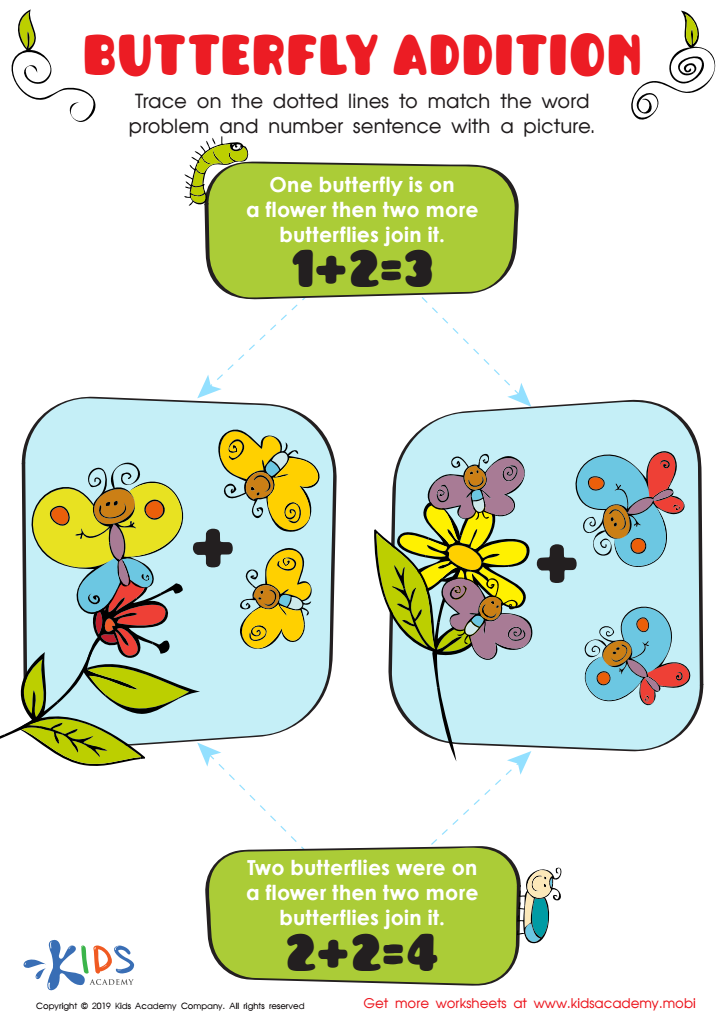
Butterfly Addition Worksheet
 Assign to My Students
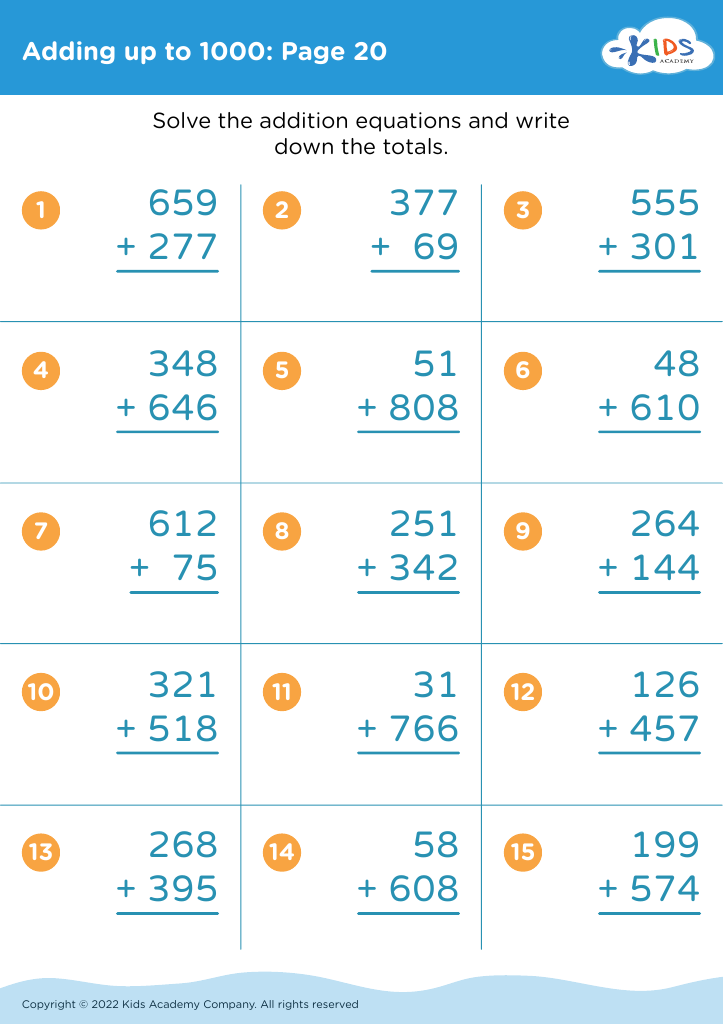
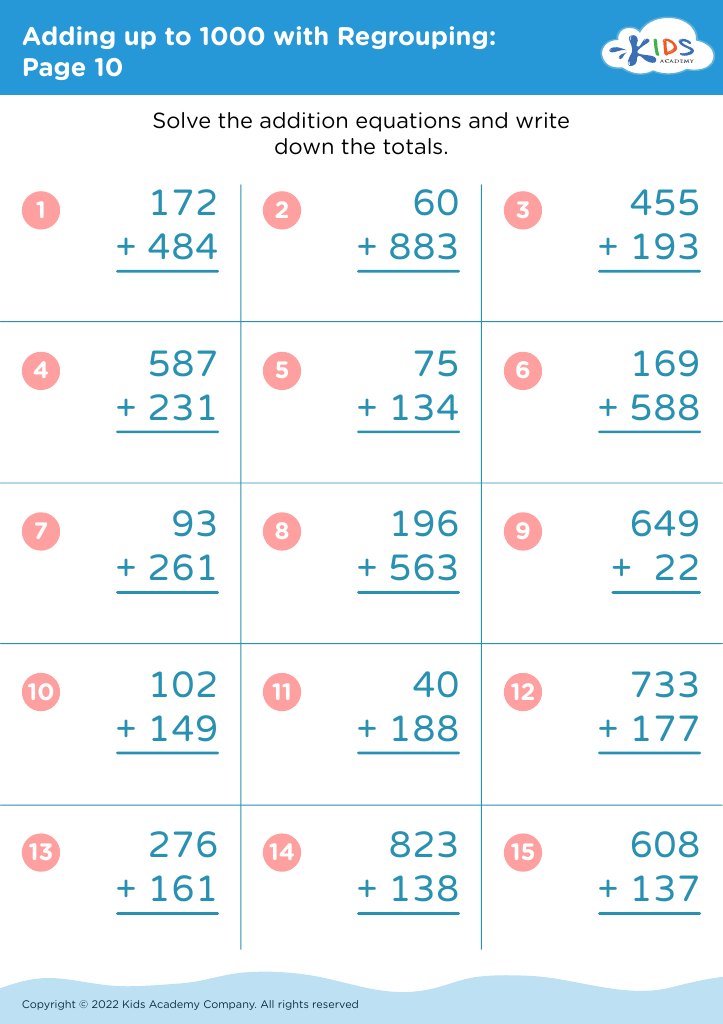
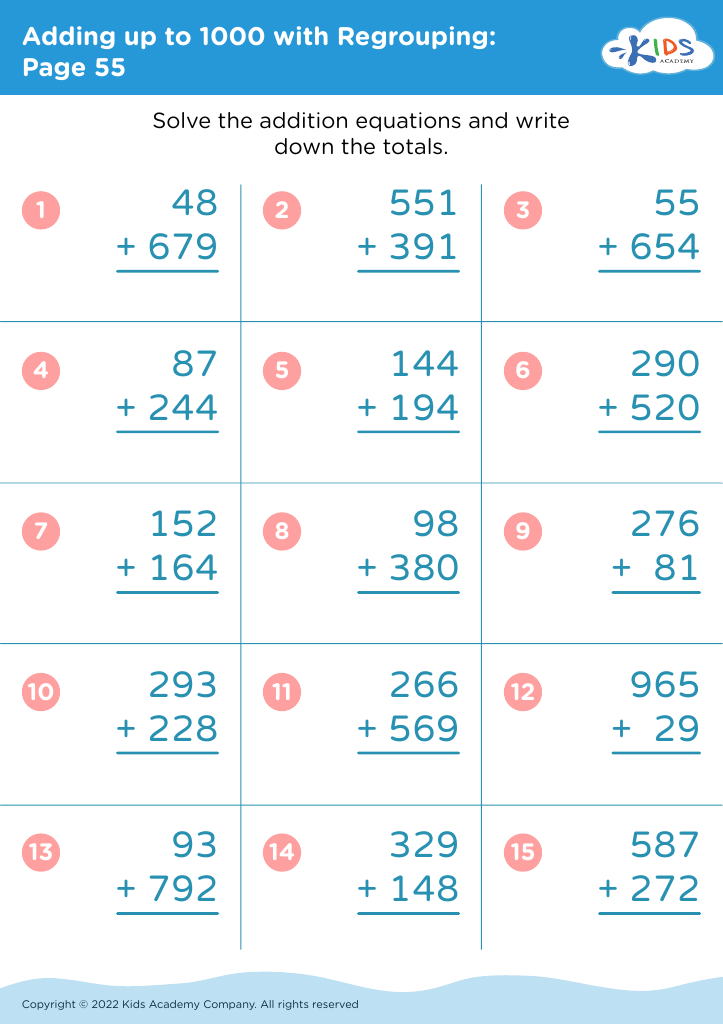
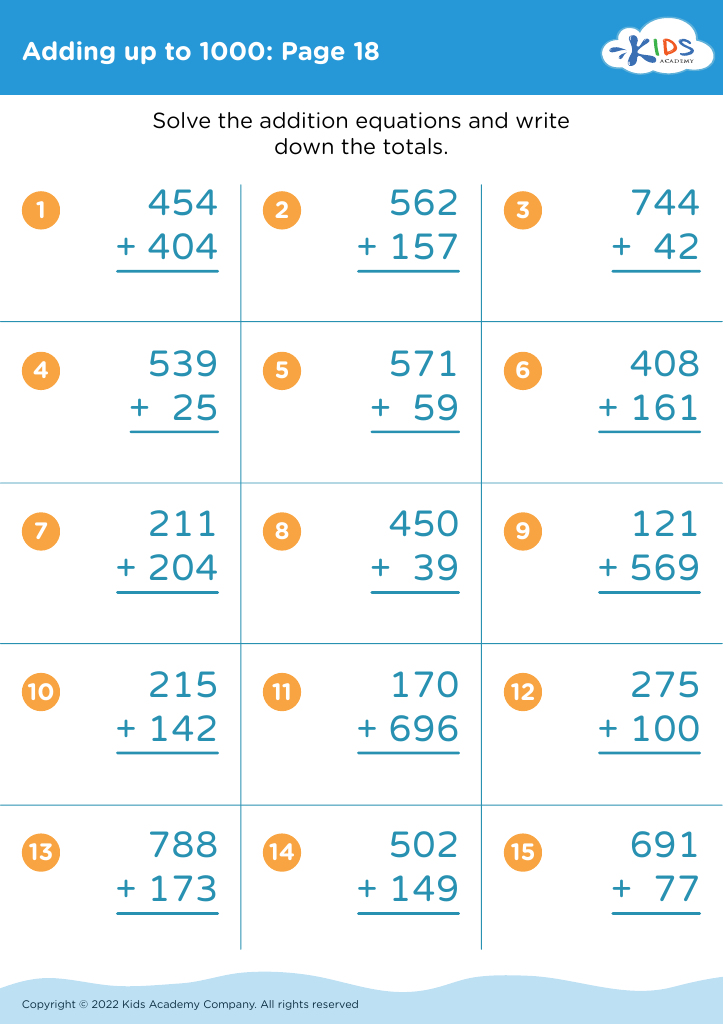








Understanding symmetry is a foundational concept in mathematics, and it plays a vital role in mastering addition and subtraction, particularly for third graders. Parents and teachers should care about this as it helps children recognize patterns, shape relationships, and develop spatial awareness, which enhances problem-solving skills.
In grade 3, students begin to work with more complex addition and subtraction problems. Recognizing symmetry enables them to approach these math operations from different angles, leading to a deeper understanding of numbers and mathematical relationships. For example, by seeing how numbers can be added or subtracted symmetrically, like using mirrored numbers (e.g., 4 + 4 = 8), students can confidently manipulate them, easing their path to greater numerical fluency.
Moreover, discussions around symmetry can bridge mathematics with art and real-world applications, making learning more engaging and relatable. It fosters critical thinking and analytical skills, key components of overall academic success. When both parents and teachers emphasize the importance of symmetry in math, they not only support children's academic growth but also instill a genuine love for learning, making mathematical concepts more relatable and enjoyable. This sense of relevance encourages students to explore and absorb more complex ideas as they progress in their education.