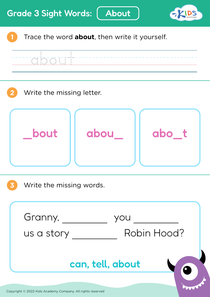
Color Identification Grade 3 Addition Worksheets
6 filtered results
-
From - To
Enhance your child's learning experience with our engaging Color Identification Grade 3 Addition Worksheets! Designed to combine creativity and math skills, these worksheets encourage students to identify colors while practicing addition. With a variety of fun exercises, children will not only boost their mathematical abilities but also develop their color recognition and fine motor skills. Ideal for classroom use or homework, our worksheets are tailored to meet third-grade learning standards. Foster a love of learning with vibrant activities that challenge your child to explore numbers and colors. Visit today and watch your third grader thrive while having fun!
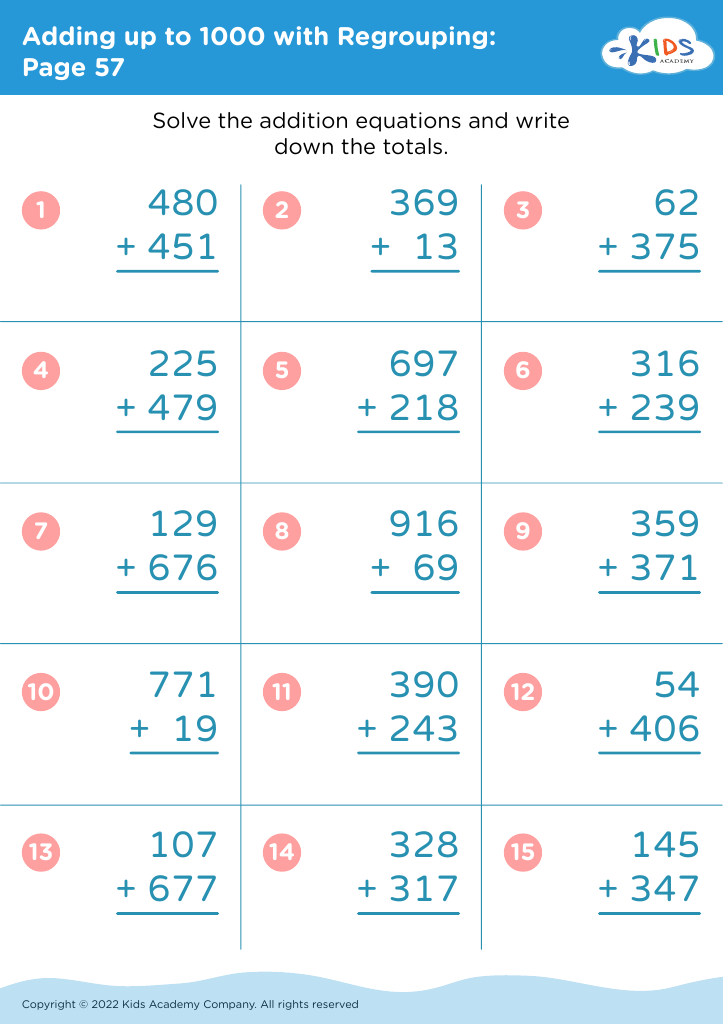
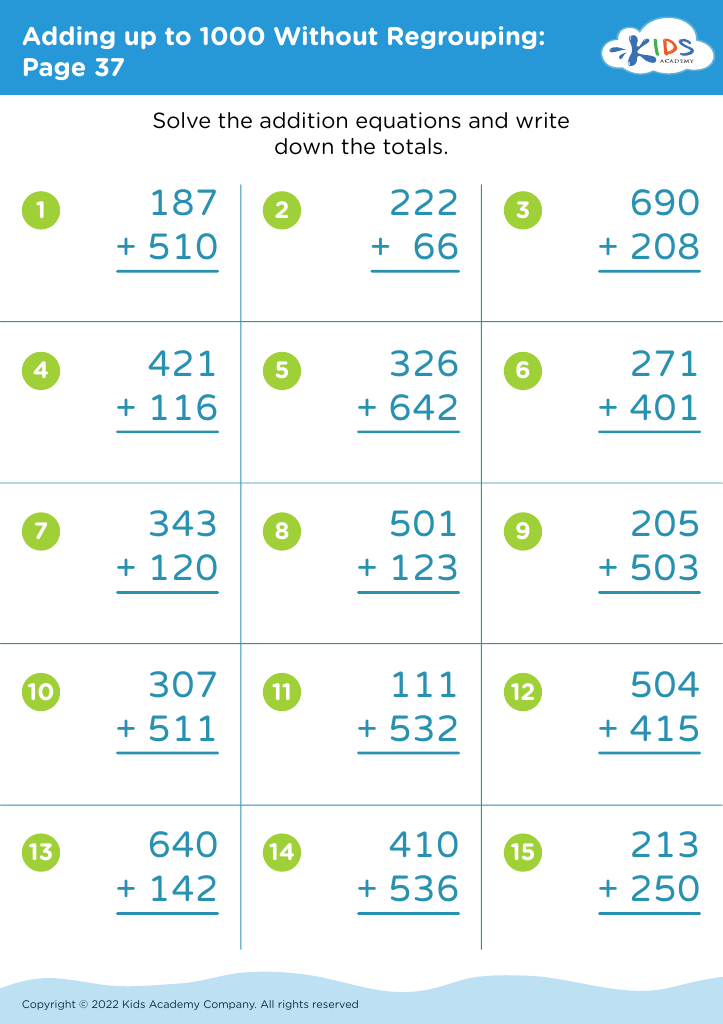
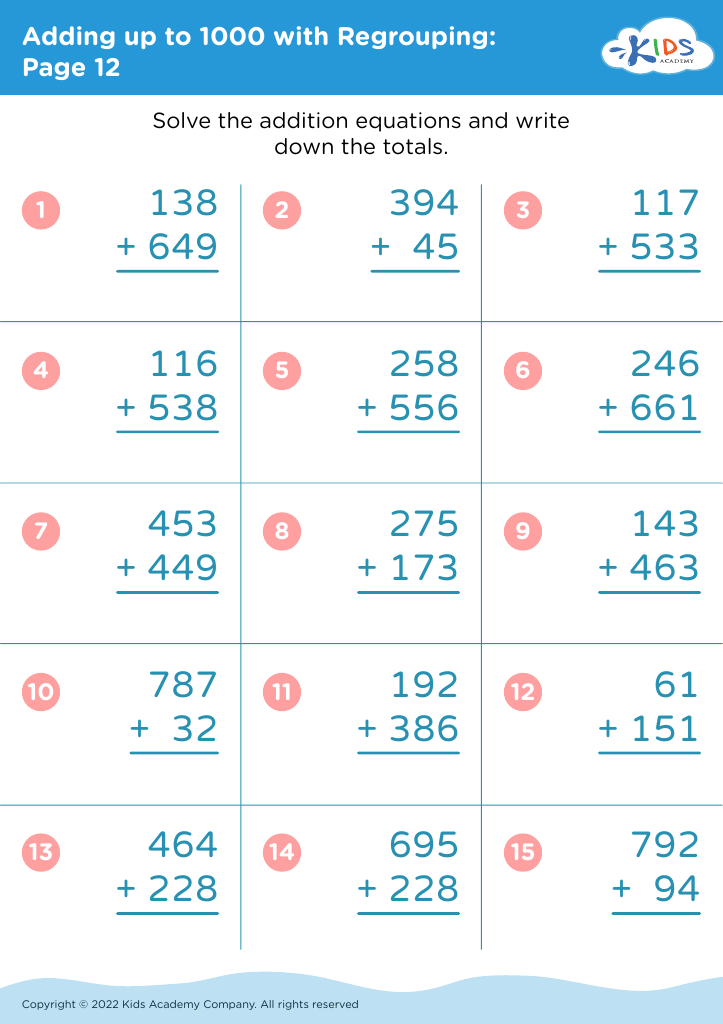
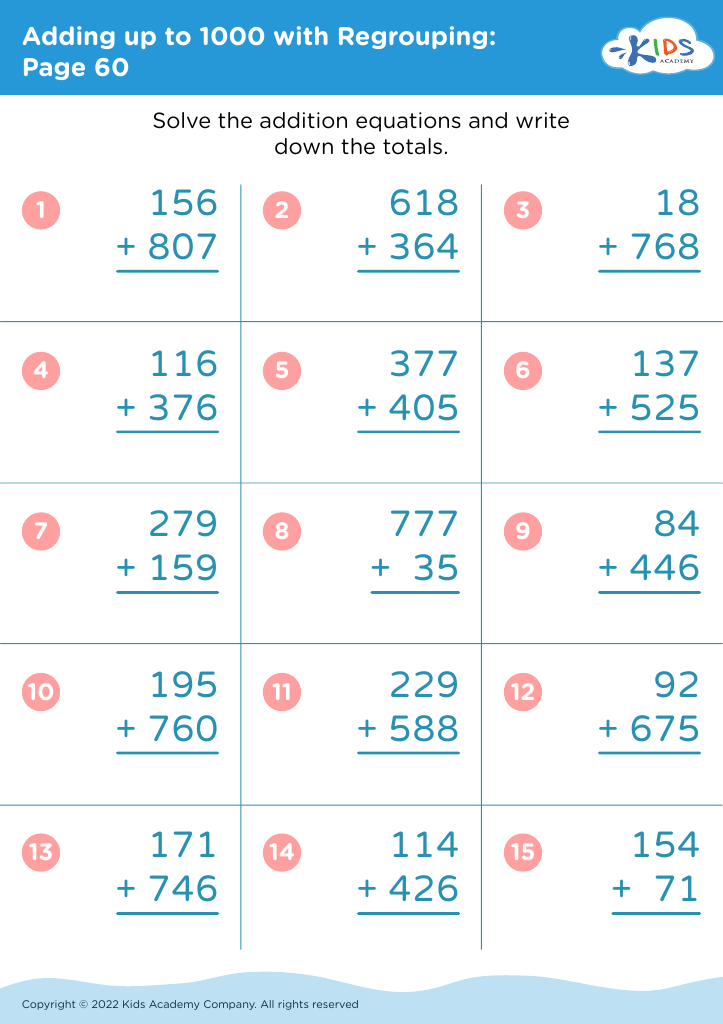
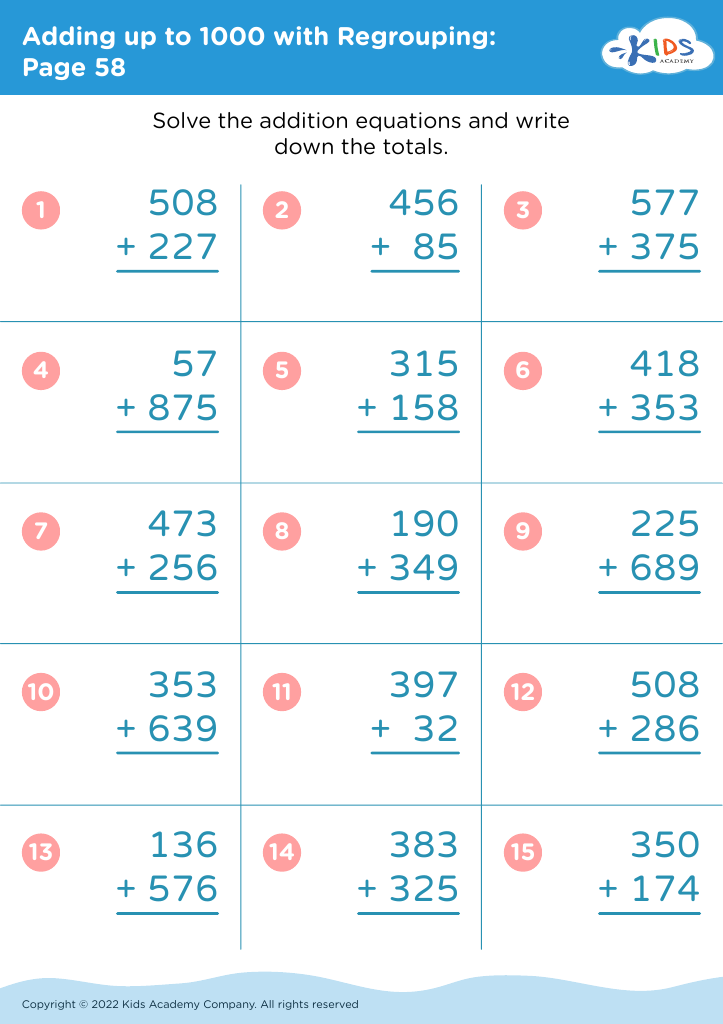
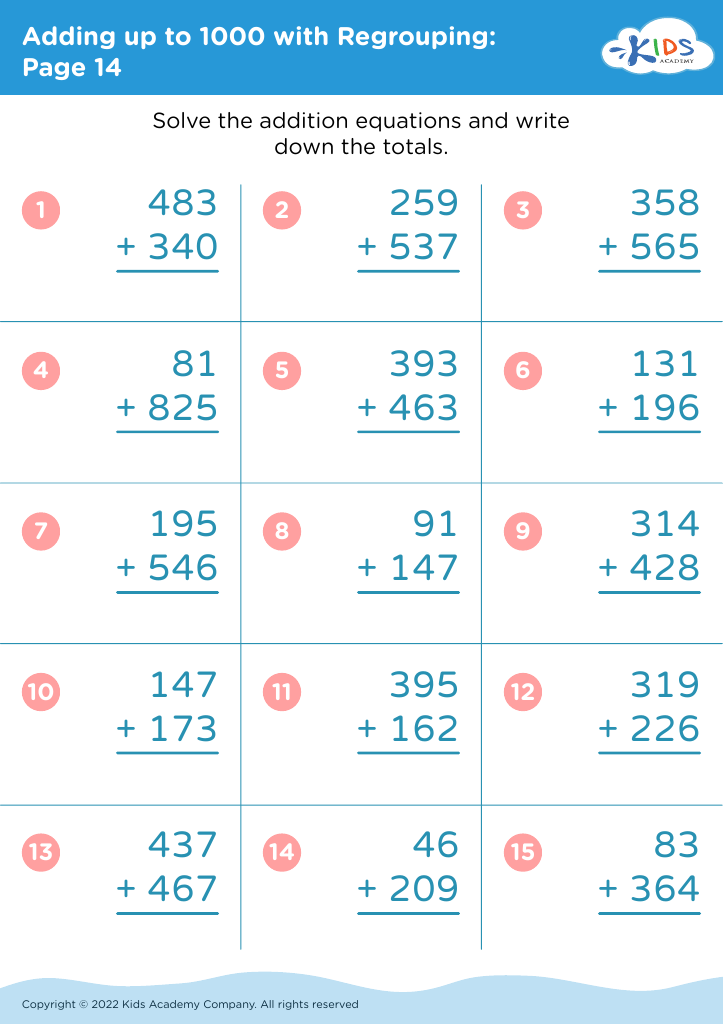








Color identification in the context of Grade 3 math, specifically during addition exercises, plays a crucial role in a child's cognitive and emotional development. At this stage, many students are strengthening their understanding of numerical concepts and developing math fluency. By integrating color identification into addition activities, teachers and parents can enhance engagement and enjoyment of learning.
Utilizing colors helps to create visual associations between numbers, making abstract concepts more relatable. For example, using different colors for addends can aid students in organizing their thoughts and preventing confusion when adding multi-digit numbers. This method taps into the varied learning styles of children, particularly visual learners, allowing them to grasp addition more easily.
Moreover, color coding fosters a sense of enthusiasm and motivation, turning math practice into a playful adventure. When learning is enjoyable, students are more likely to retain information and develop a positive attitude towards mathematics.
In essence, by prioritizing color identification in Grade 3 addition, parents and teachers can cultivate an engaging learning environment, developing both mathematical skills and a love for learning. This approach encourages students to explore problem-solving in innovative ways, laying a solid foundation for their future academic success.