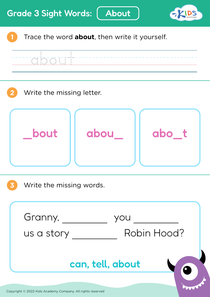
Color recognition Grade 3 Addition Worksheets
3 filtered results
Difficulty Level
Grade
Age
-
From - To
Subject
Activity
Standards
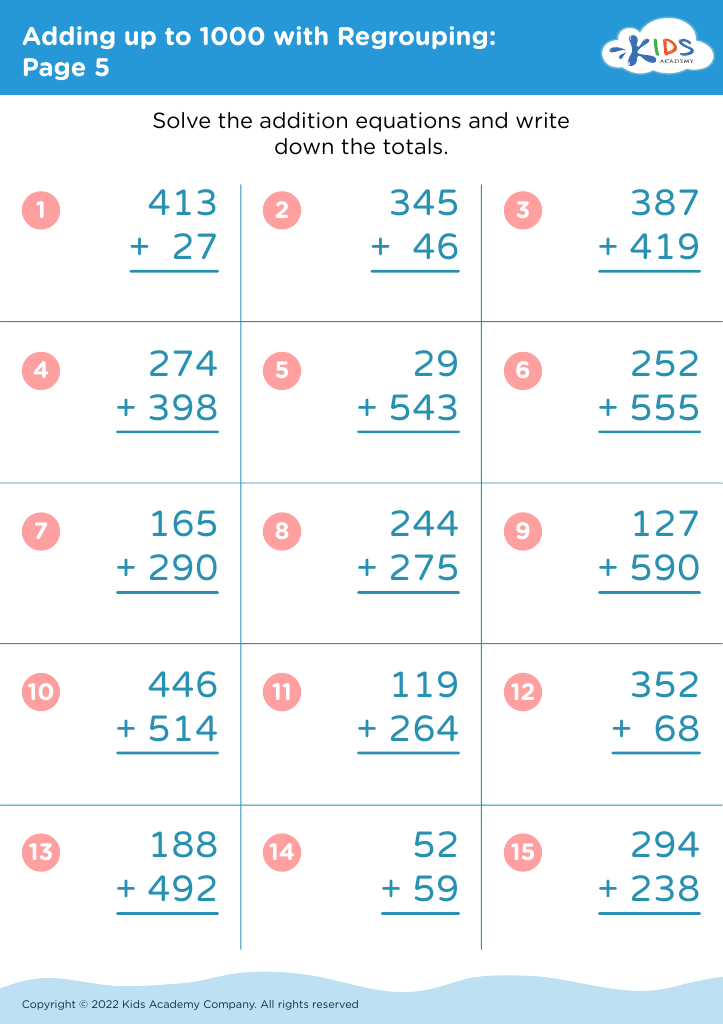
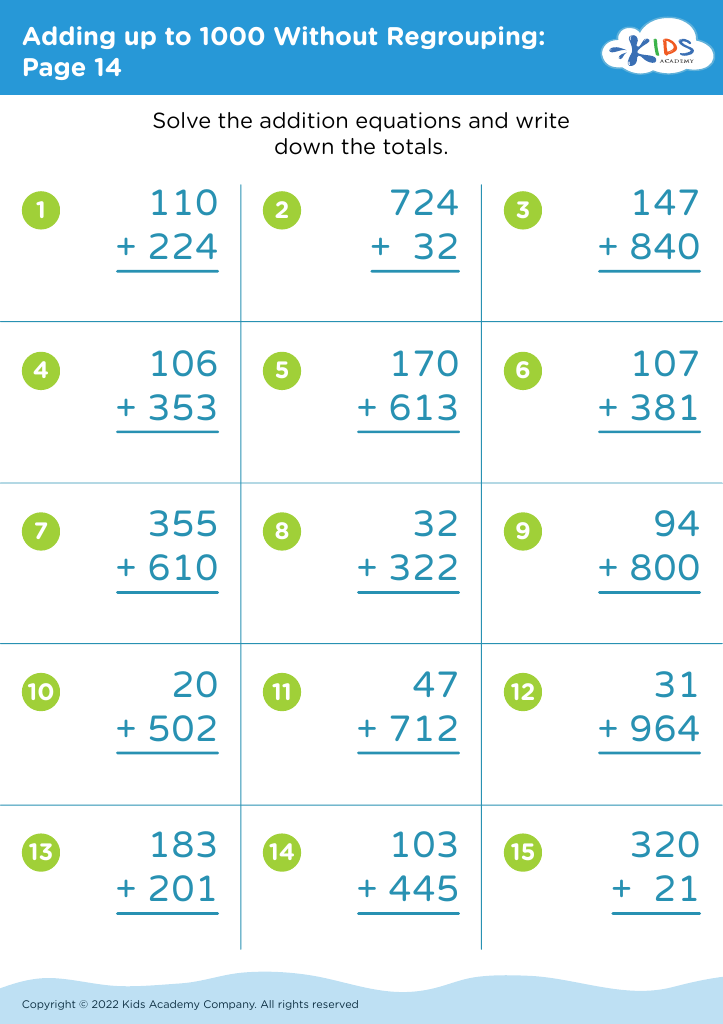
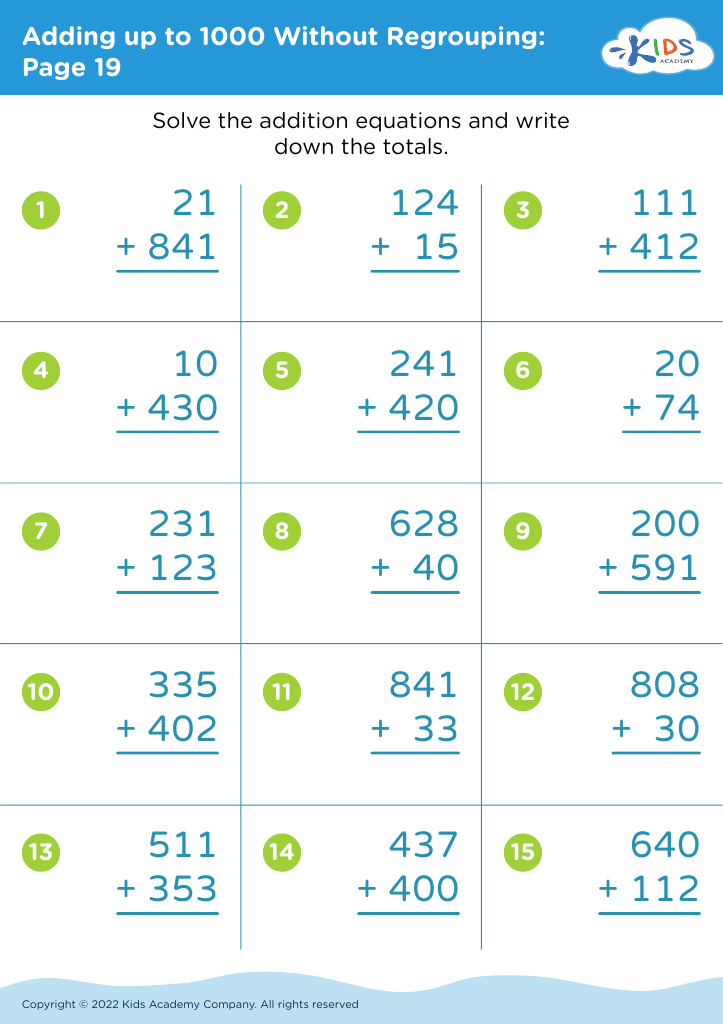
Unlock the colorful world of numbers with our "Color Recognition Grade 3 Addition Worksheets." Tailored for third graders, these engaging printable worksheets combine math addition exercises with vibrant colors to enhance learning and make math practice enjoyable. Our expertly crafted exercises approach addition problems creatively, aiding in the development of color recognition skills. Children will practice addition by linking numerical problems with specific colors, solidifying their understanding while having fun. Perfect for classroom activities or at-home learning, these worksheets not only boost mathematical confidence but also help sharpen critical thinking and visual learning skills. Download today and brighten up math time!
Favorites
With answer key
Interactive
Join Kids Academy for Free
Who is primarily going to use this learning content?







Color recognition and grade 3 math skills, such as addition, are fundamental in a child's cognitive development and overall academic success. Parents and teachers should care about these skills for several reasons. Firstly, color recognition is a key component of early childhood learning, influencing various aspects of a child's life, from reading and math to everyday decision-making. Understanding and distinguishing between colors can enhance a child’s visual memory and attention to detail, which is crucial for more complex learning tasks.
In grade 3, addition becomes more advanced, requiring children to work with larger numbers and more intricate mathematical concepts. Proficiency in addition not only solidifies foundational math skills but also prepares children for future academic challenges, like multiplication and division. It also encourages logical thinking and problem-solving abilities that are essential in all areas of life.
Blending these concepts through activities that incorporate colors into math problems can make learning more engaging and effective. For example, using colored objects or visual aids in math problems can help children better understand and retain addition concepts. Ultimately, parents and teachers who prioritize these skills are equipping their children with the tools needed for successful education, fostering a strong basis for future learning endeavors.