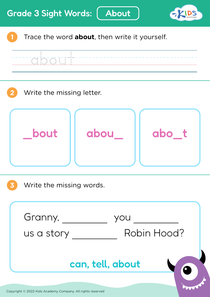
Vocabulary expansion Grade 3 Addition Worksheets
4 filtered results
-
From - To
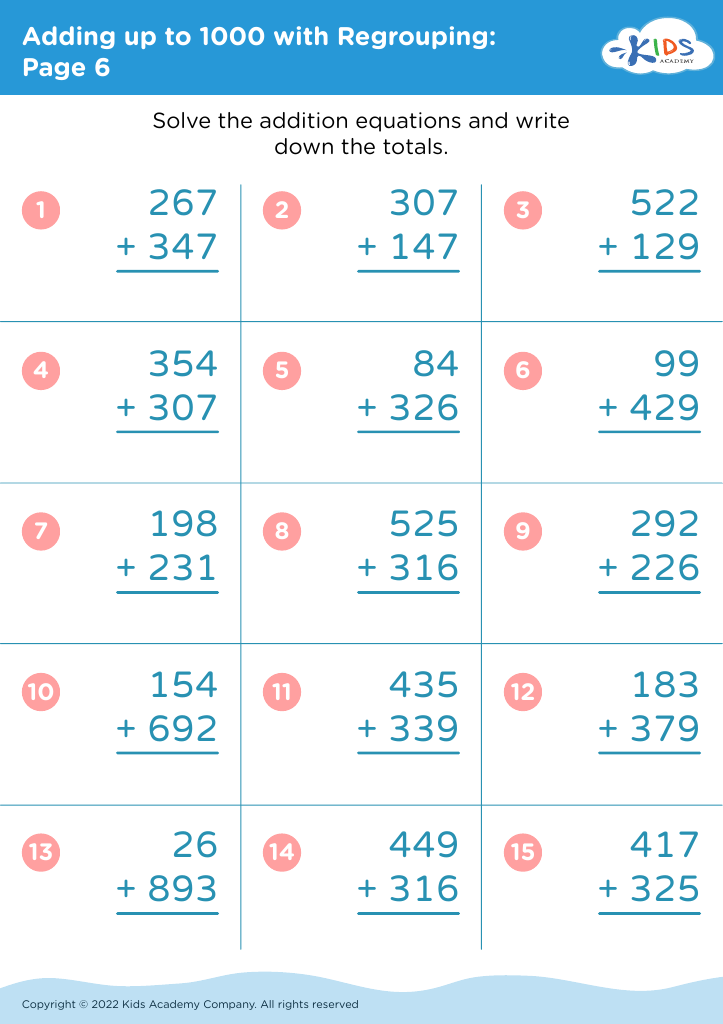
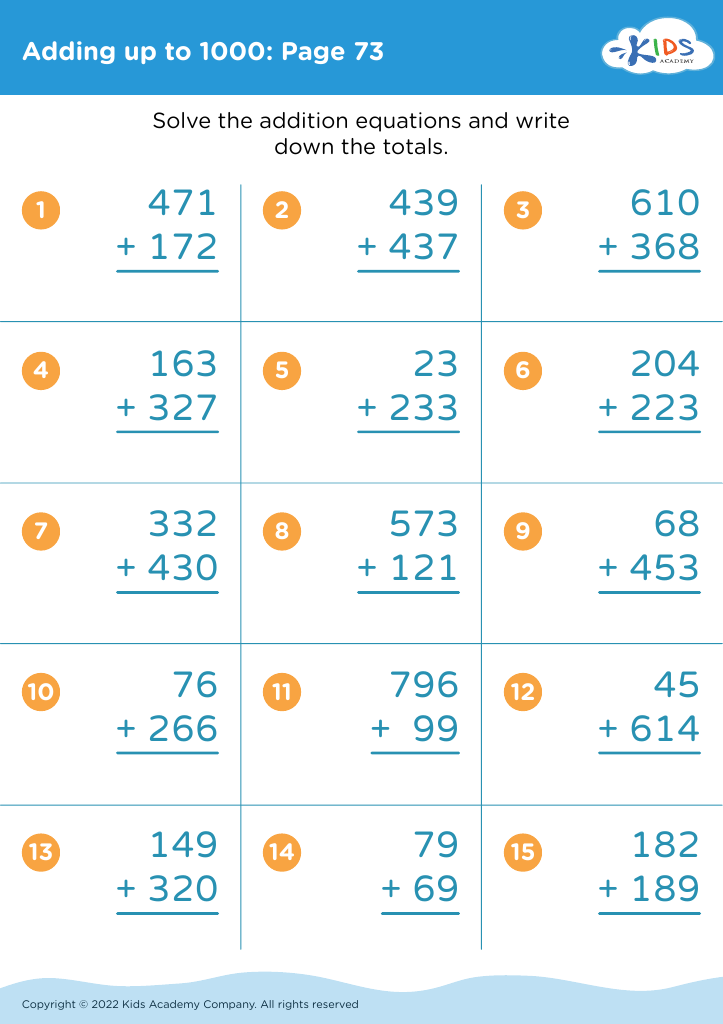
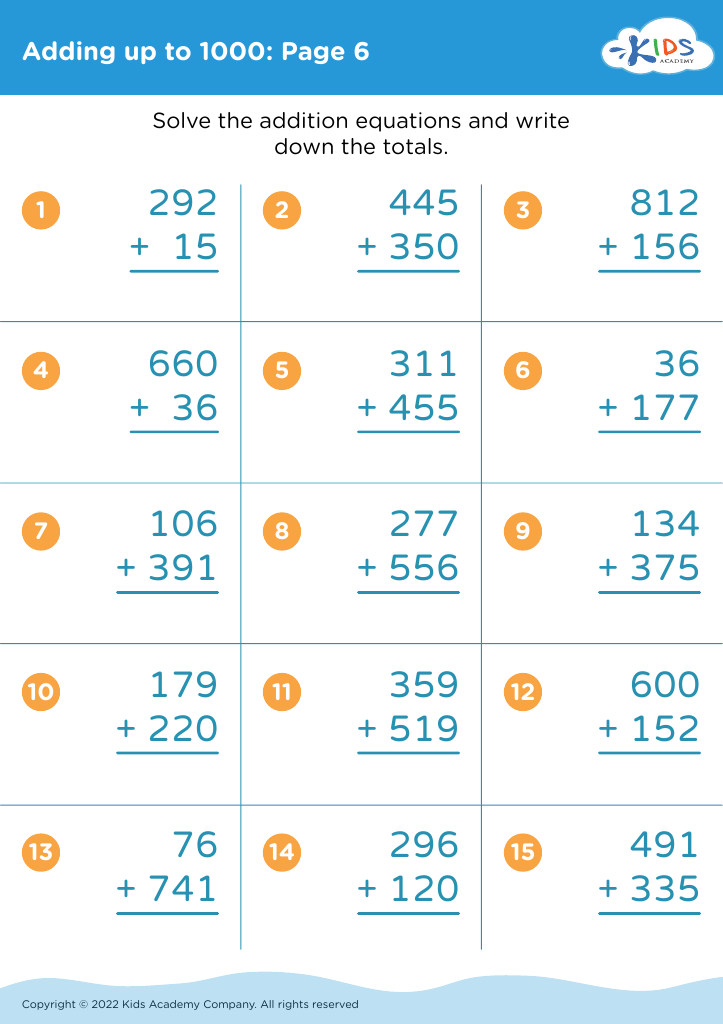
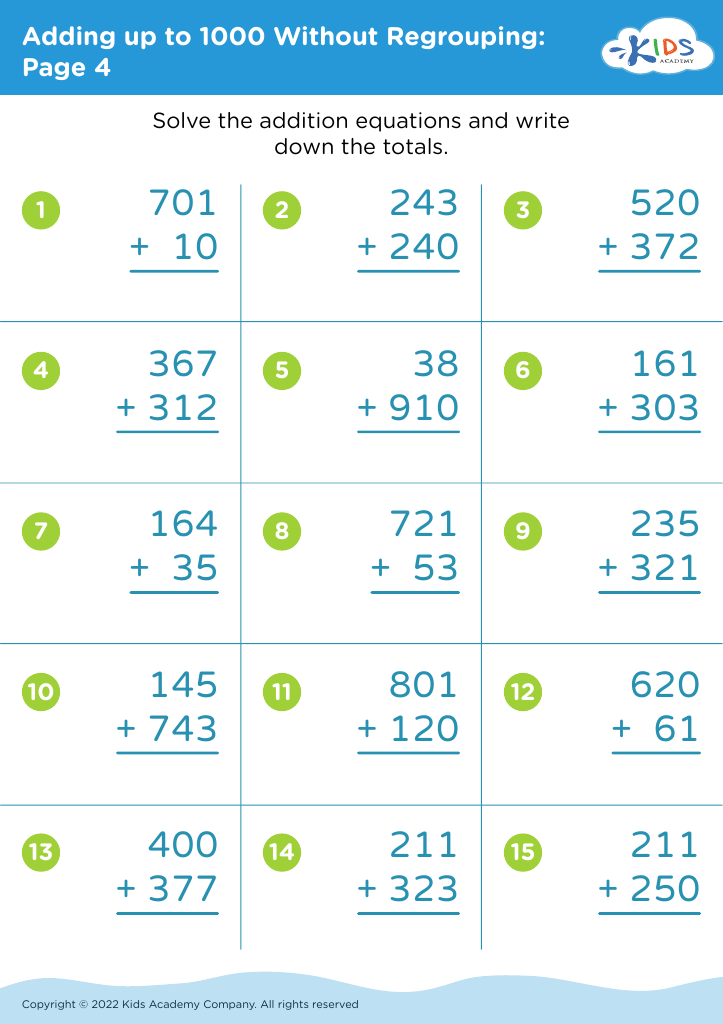
Enhance your third grader's vocabulary and mathematical skills with our engaging Vocabulary Expansion Grade 3 Addition Worksheets. Designed to foster both language development and arithmetic understanding, these worksheets merge essential vocabulary terms with addition practice. Students will engage in fun activities that reinforce critical thinking and enhance their comprehension while solving addition problems. Each worksheet provides diverse exercises, helping learners to connect mathematical concepts with everyday language. Perfect for classroom use or at-home practice, our resources support a comprehensive learning experience that will boost confidence in both vocabulary and math. Discover the joy of learning with these valuable tools today!








Vocabulary expansion is crucial in Grade 3 as it lays the groundwork for effective communication and comprehension skills. At this stage, children begin to tackle more complex texts and ideas, making a rich vocabulary essential for their academic success. When parents and teachers prioritize vocabulary development, they enable students to express their thoughts clearly and understand various subjects in greater depth.
Moreover, a strong vocabulary enhances reading comprehension, allowing children to engage with literature critically and creatively. By understanding more words, students can access a wider range of texts, leading not only to improved literacy skills but also to increased confidence in their abilities.
Additionally, vocabulary expansion is tied closely to academic performance across subjects. For instance, a child who excels in understanding math-related language, such as "sum" or "difference," is likely to perform better in math tasks.
Parents and teachers can support vocabulary growth through engaging conversations, reading diverse literature, and introducing new words in context. This collaborative effort fosters a love for learning and prepares students for future academic challenges. Ultimately, investing in vocabulary expansion helps create well-rounded individuals capable of thriving in school and beyond.