Comparison Skills Grade 3 Math Worksheets
3 filtered results
-
From - To
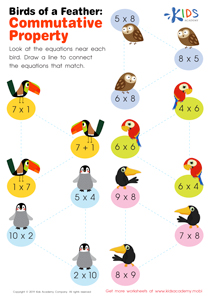
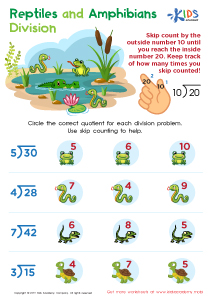
Welcome to our engaging "Comparison Skills Grade 3 Math Worksheets"! Designed for third graders, these worksheets focus on helping students develop essential comparison skills. From comparing numbers, measurements, and quantities to organizing data using charts, each worksheet promotes interactive learning. Our resources include various exercises that encourage students to differentiate between larger and smaller values, enhancing their critical thinking and problem-solving capabilities. With colorful graphics and real-life examples, these printable worksheets keep learning enjoyable. Perfect for classroom use or homework assignments, our comprehensive collection supports educators and parents in nurturing confident young mathematicians. Empower your child's math journey today!
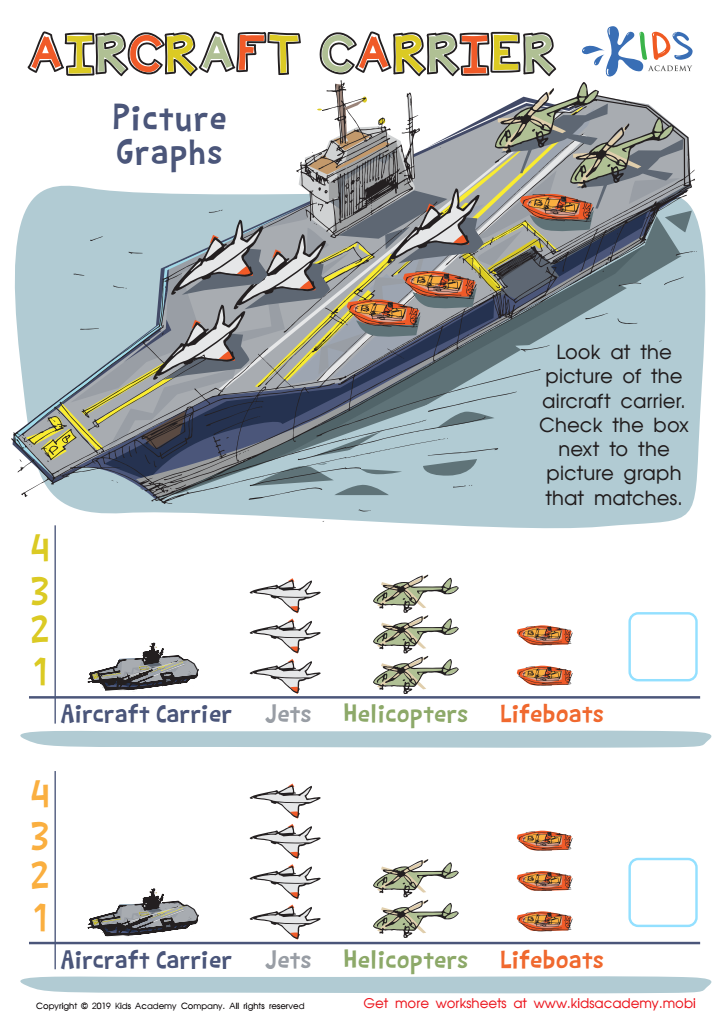
Aircraft Carrier Picture Graphs Worksheet
 Assign to My Students






Comparison skills in Grade 3 math are fundamental for a child’s academic and everyday life development. These skills involve understanding, analyzing, and interpreting numerical data, which are essential for building a strong mathematical foundation. In Grade 3, students transition from basic arithmetic to more complex concepts, such as comparing quantities, understanding greater than/less than relationships, and interpreting graphs or data charts.
Developing comparison skills enhances critical thinking and problem-solving abilities, enabling students to make informed decisions based on numerical information. These skills also foster a deeper comprehension of mathematics, as children begin to relate mathematical concepts to real-world situations—such as determining who has more items or analyzing spending.
Moreover, proficient comparison skills support future academic success in math and science. They help children navigate assessments that require logical reasoning, ultimately boosting their confidence. Teachers and parents should promote these skills through engaging activities and discussions, reinforcing that math is not merely about numbers but is essential for daily experiences, such as shopping, budgeting, and evaluating options. By prioritizing comparison skills now, caregivers lay the groundwork for a child's ongoing academic journey and practical life application of mathematical concepts.