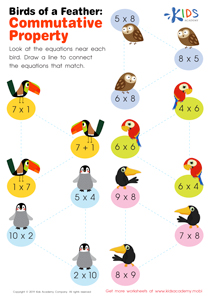
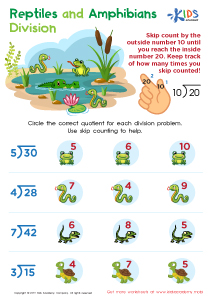
Fine motor skills (writing) Grade 3 Math Worksheets
5 filtered results
-
From - To
Unlock your child’s potential with our Grade 3 Math Worksheets focused on enhancing fine motor skills through writing. Designed specifically for third graders, these worksheets provide an engaging way to practice essential math concepts while honing handwriting skills. Each worksheet combines thought-provoking math problems with exercises aimed at developing precise hand movements, which are critical for legible writing. Ideal for classroom use or at-home practice, these resources help build a sturdy foundation in both mathematics and fine motor dexterity. With colorful, kid-friendly designs, learning becomes both effective and fun. Elevate math and writing skills together to ensure well-rounded academic growth.
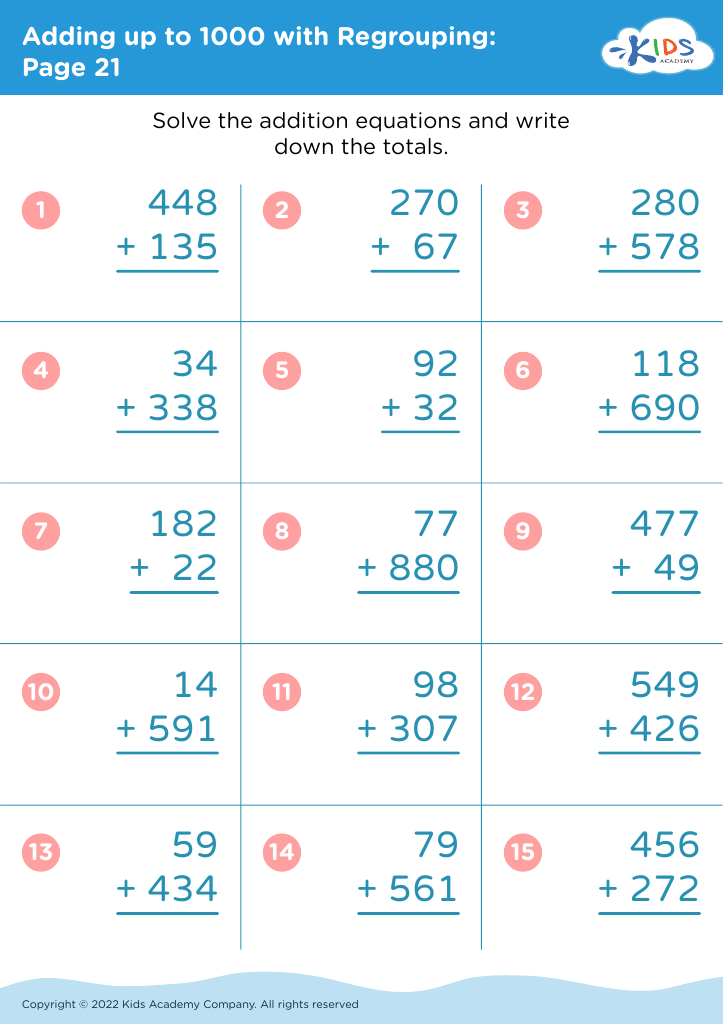
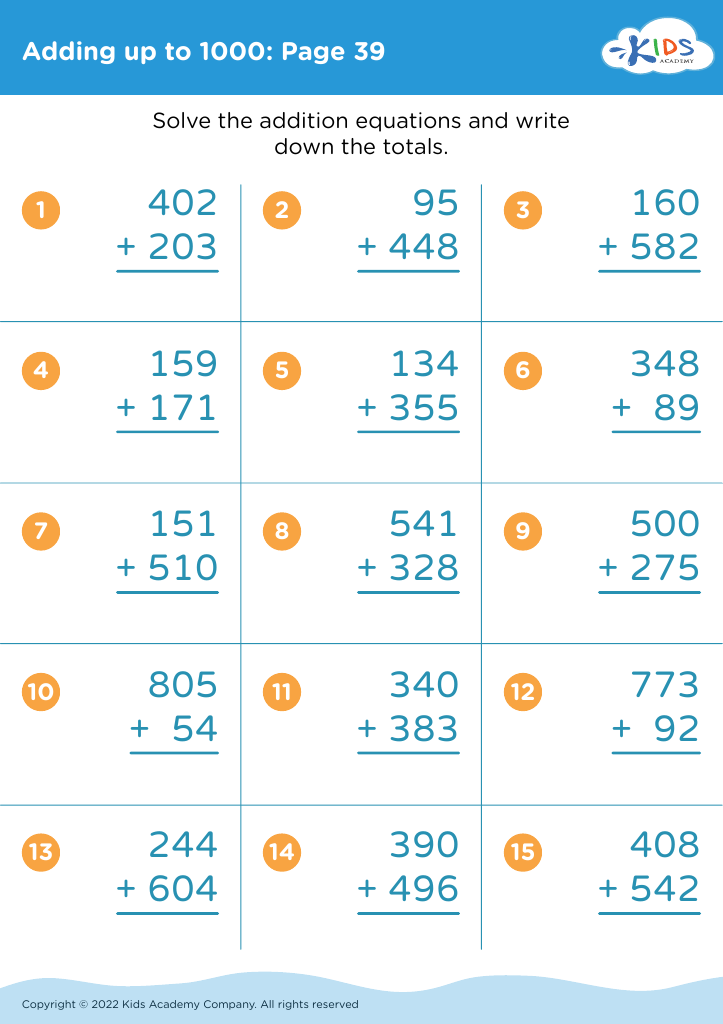
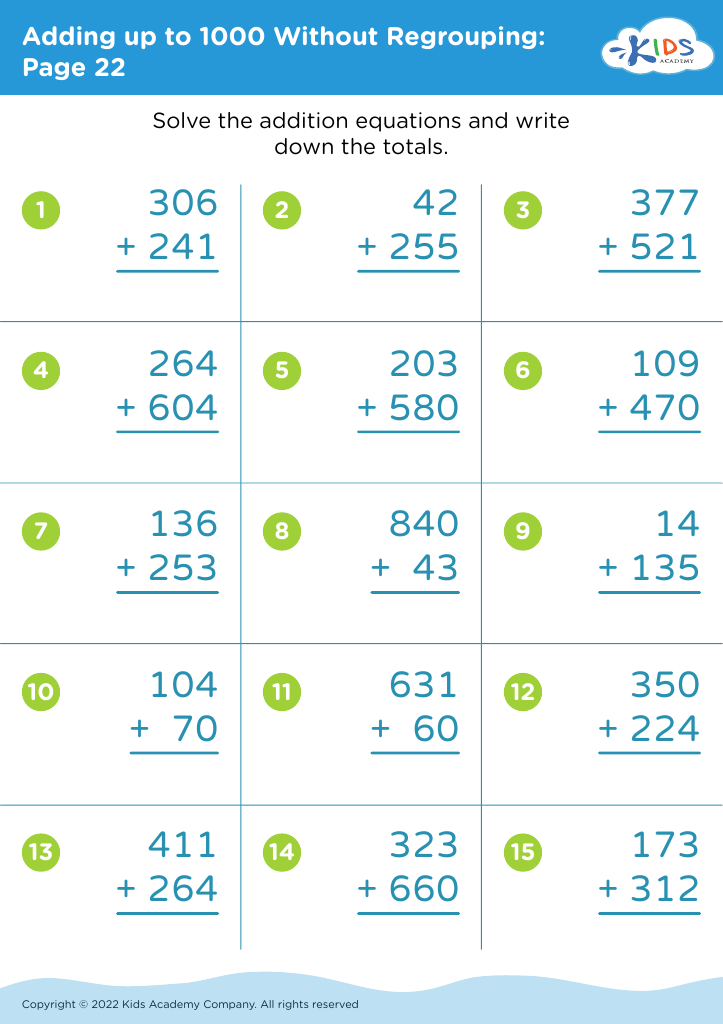
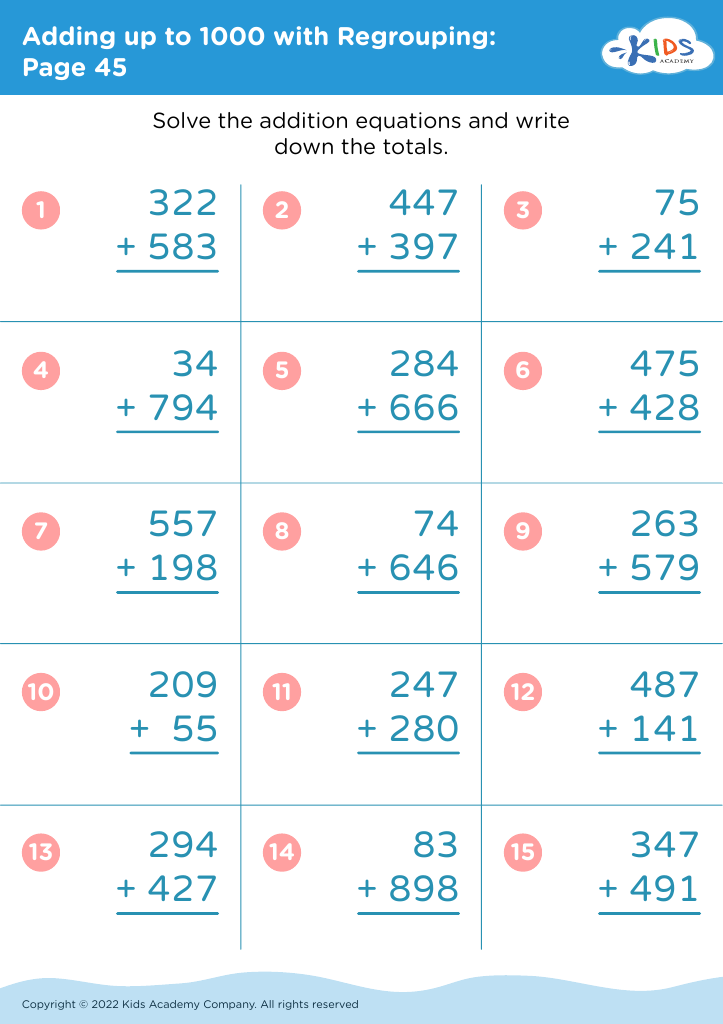
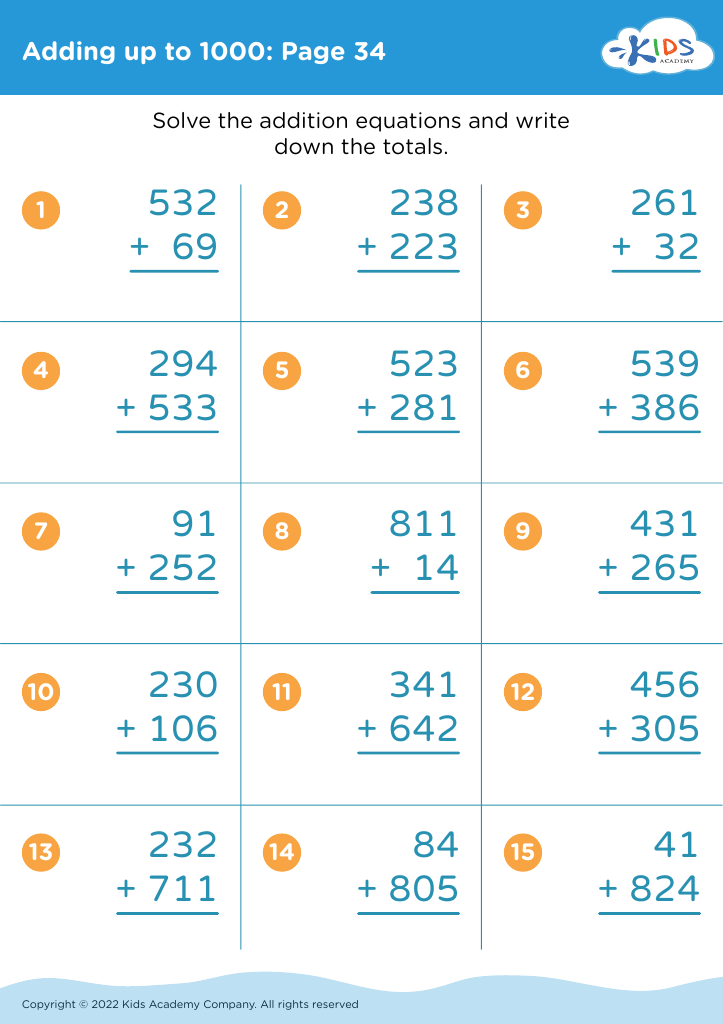







Fine motor skills, particularly writing, are crucial for Grade 3 students, as they significantly impact their success in math and beyond. At this grade level, students encounter more complex math problems that require clear, precise, and organized written work. Proper handwriting skills enable students to accurately record numbers, symbols, and details, which is essential for solving equations, showing their work, and avoiding careless mistakes.
Additionally, writing strengthens hand-eye coordination, cognitive development, and muscle control. These abilities are foundational for executing detailed tasks, such as drawing geometric shapes, using graph paper, and measuring lengths, all common in Grade 3 math curricula. When students struggle with fine motor skills, they spend more cognitive energy on the act of writing itself rather than on comprehending and solving math problems.
For teachers and parents, supporting the development of fine motor skills through activities like drawing, tracing, and hand games can make a significant difference. Fine motor proficiency also fosters independence, confidence, and a positive attitude toward challenging subjects. Consequently, emphasizing fine motor development equips students with the essential tools not only for math but for future academic tasks, contributing to their overall educational success and critical-thinking abilities.