Mental arithmetic skills Grade 3 Math Worksheets
4 filtered results
-
From - To
Unlock your child’s potential with our engaging Grade 3 Math worksheets focused on mental arithmetic skills! Designed to cultivate quick thinking and enhance problem-solving abilities, these worksheets provide a fun way for students to practice addition, subtraction, multiplication, and division without relying on calculators. Each worksheet is tailored to challenge young learners while building their confidence in math. Ideal for classroom use or at-home practice, our printable resources encourage critical thinking and improve computation speed. Help your child master essential math skills necessary for academic success and beyond—download our Grade 3 mental arithmetic skills worksheets today!
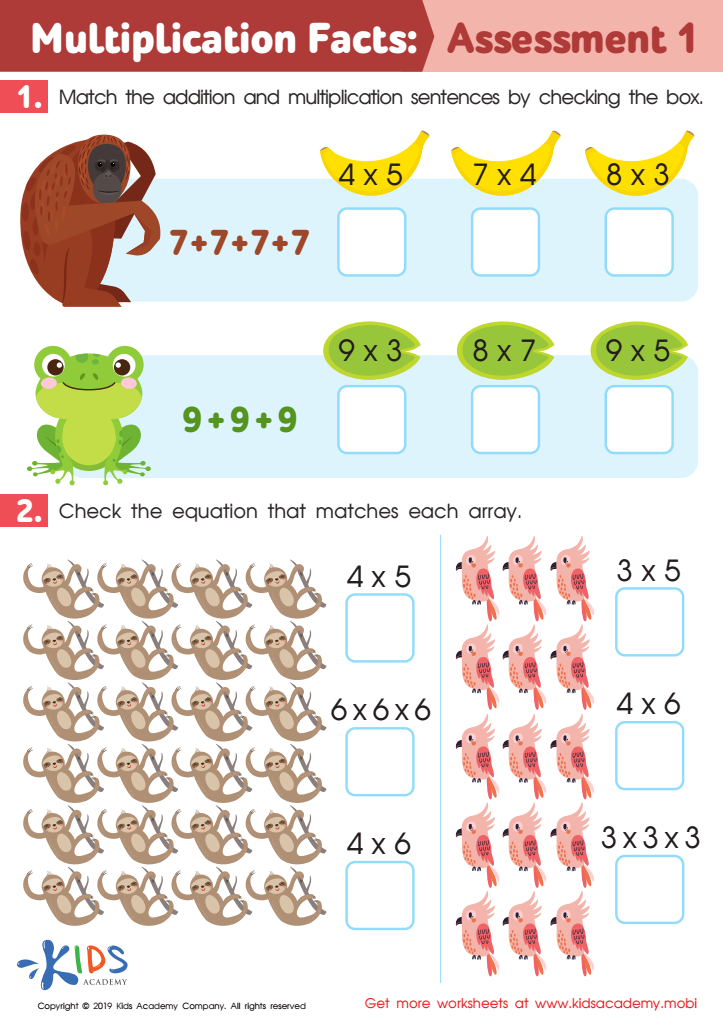
Multiplication Facts: Assessment 1 Worksheet
 Assign to My Students
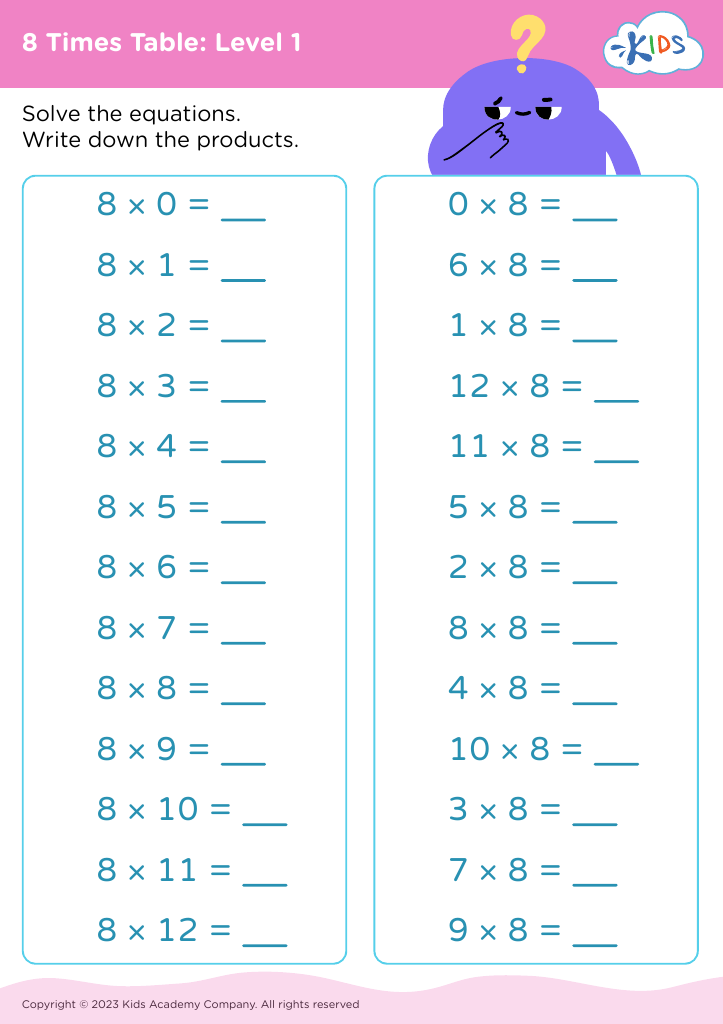
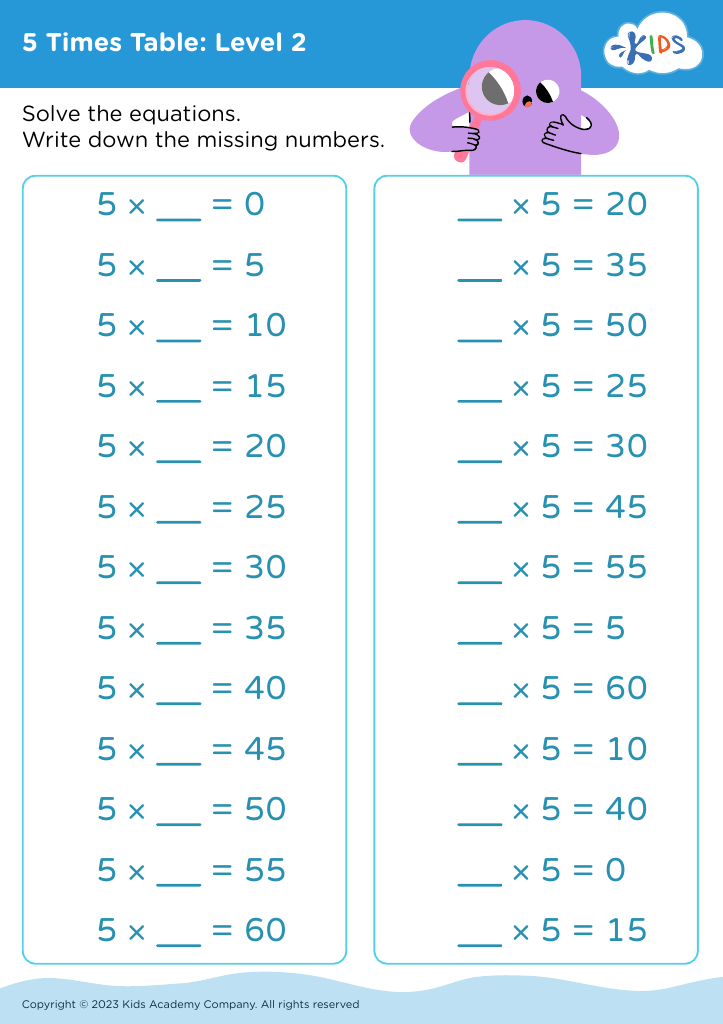
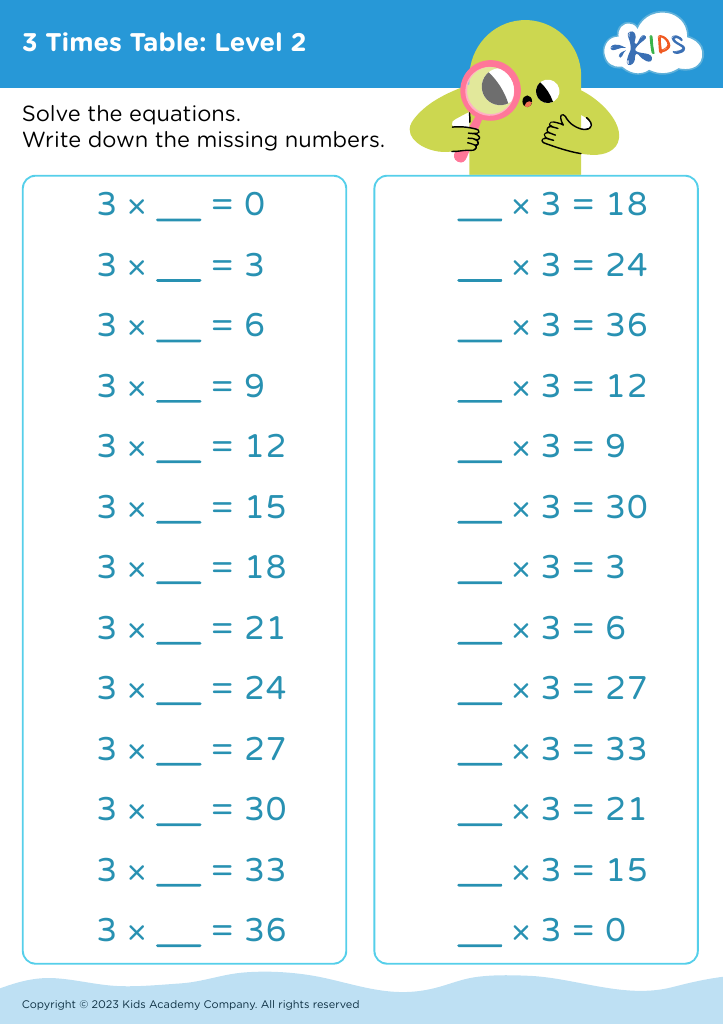







Mental arithmetic skills are crucial for third graders, laying the foundation for future mathematical understanding and problem-solving abilities. At this stage, students begin moving beyond rote memorization of math facts to applying those facts in various contexts. By improving mental arithmetic skills, children enhance their ability to perform calculations quickly and accurately, fostering confidence in their math abilities.
Parents and teachers should care about mental arithmetic because these skills encourage children to think critically and develop number sense. Strong mental arithmetic promotes flexibility in thinking, allowing students to approach problems creatively and efficiently. For example, being able to quickly add or subtract numbers in their heads can significantly aid in real-life situations, helping children manage tasks like budgeting their allowance or dividing treats among friends.
Moreover, mastering mental arithmetic reduces anxiety around math and leads to better performance in assessments. It also sets the stage for more complex topics in upper grades, such as fractions and algebra. Active involvement from parents in reinforcing mental arithmetic through games or everyday activities can make learning fun and enhance retention. Ultimately, supporting mental math skills cultivates not just proficient mathematicians, but confident and capable learners who can tackle challenges beyond the classroom.