Pattern recognition Grade 3 Math Worksheets
5 filtered results
-
From - To
Our Pattern Recognition Grade 3 Math Worksheets are designed to help children master essential math skills while having fun. These expertly crafted worksheets provide engaging exercises to identify, extend, and create patterns with shapes, numbers, and colors. By challenging students with a variety of patterns, children develop critical thinking and analytical abilities. Perfect for classroom use or as homework, each worksheet ensures students build a strong foundation in mathematics. Visit our page to download and start enhancing your child's mathematical journey today with our exciting and effective pattern recognition activities tailored specifically for third graders.
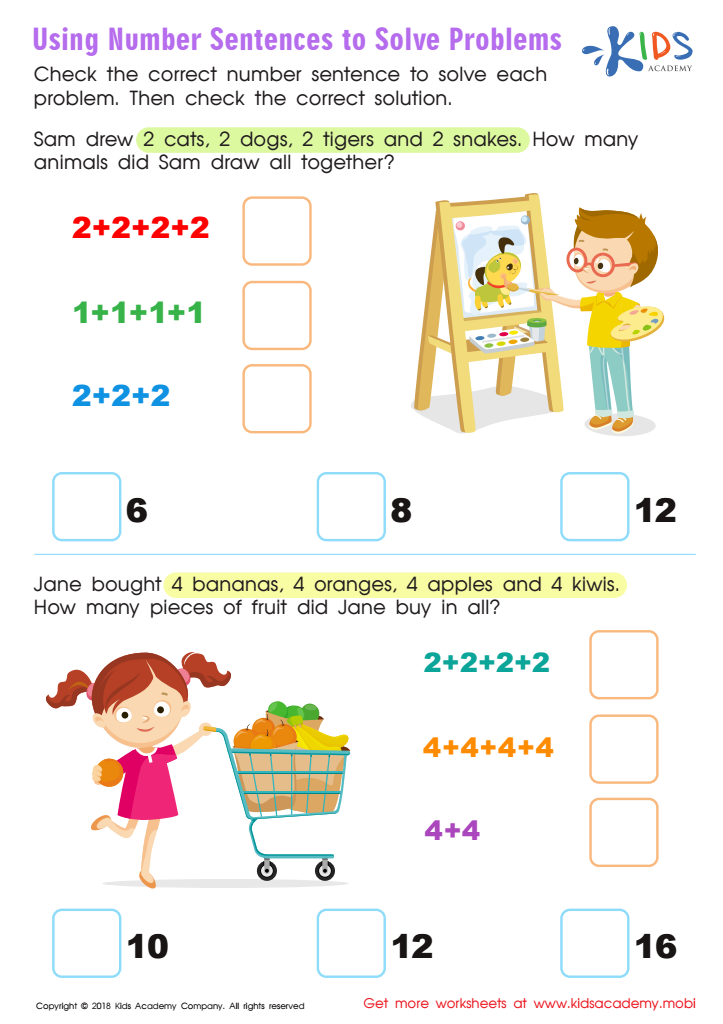
Using Number Sentences to Solve Problems Worksheet
 Assign to My Students
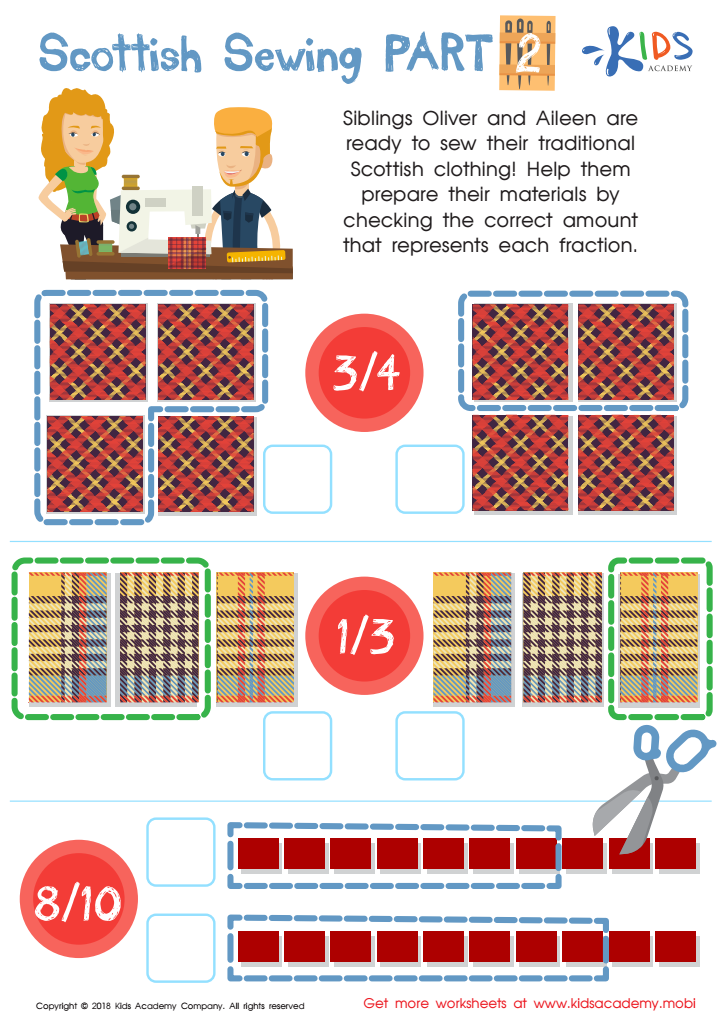
Scottish Sewing Part 2 Worksheet
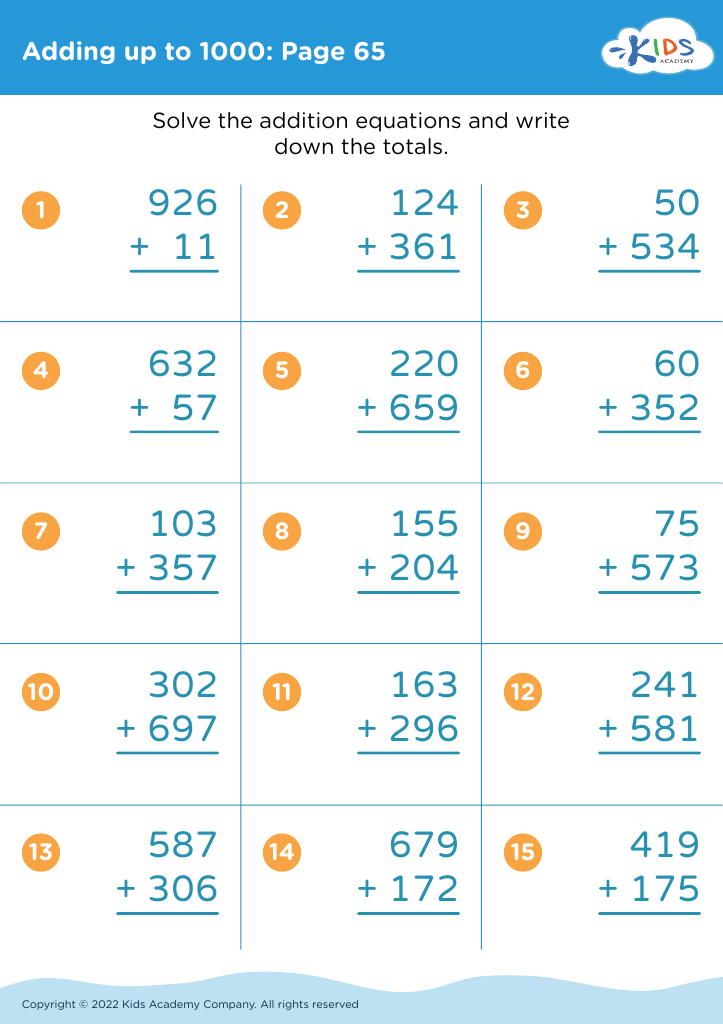
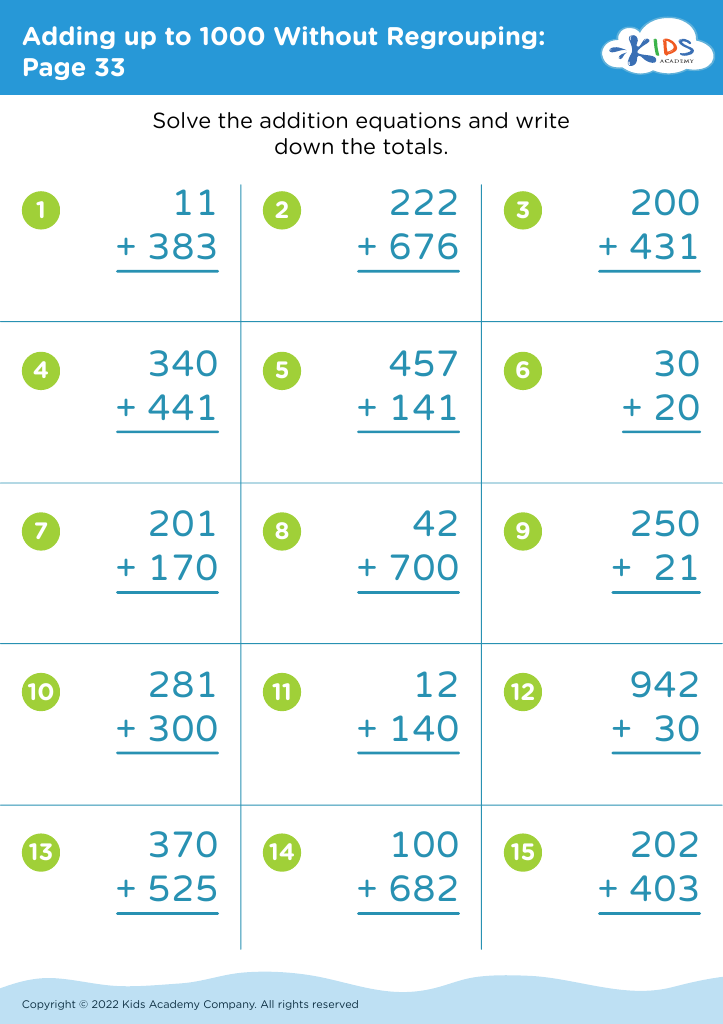





Pattern recognition is a crucial aspect of Grade 3 math as it forms the foundation for higher-level mathematical thinking and problem-solving skills. Parents and teachers should care deeply about fostering this skill because it directly influences a child's ability to understand and apply mathematical concepts. Recognizing patterns helps children make sense of numbers and shapes, weather patterns, seasons, and even sequences in stories or everyday activities.
When children master pattern recognition, they are better equipped to understand concepts like multiplication, division, and the relationships between numbers. It is also an early introduction to algebraic thinking, which involves identifying and predicting the continuation of sequences, fostering logical reasoning abilities. Patterns can also help build spatial awareness when recognizing shapes and understanding symmetry and are fundamental in developing coding skills.
Moreover, engaging with patterns at a young age nurtures critical thinking, concentration, and attention to detail. These cognitive benefits extend beyond mathematics, benefiting learning across all subjects. For teachers, integrating pattern activities in the curriculum keeps learning enjoyable and engaging for students. Parents can support this at home through games and routine activities, creating a collaborative effort in child's education. Altogether, pattern recognition is an essential building block for future academic success and daily life skills.