Shape identification Grade 3 Math Worksheets
7 filtered results
-
From - To
Explore our engaging Shape Identification Grade 3 Math Worksheets designed to enhance students’ understanding of geometric shapes! Our resources include various fun and interactive activities that help third graders identify, categorize, and describe different shapes, including triangles, squares, circles, and more. Each worksheet is crafted to reinforce critical thinking and problem-solving skills while aligning with grade-level math standards. Perfect for classroom use or at-home practice, these worksheets provide a valuable tool to boost students’ confidence in geometry. Download our printable worksheets today, and watch your child's shape recognition skills flourish with exciting, hands-on learning experiences!
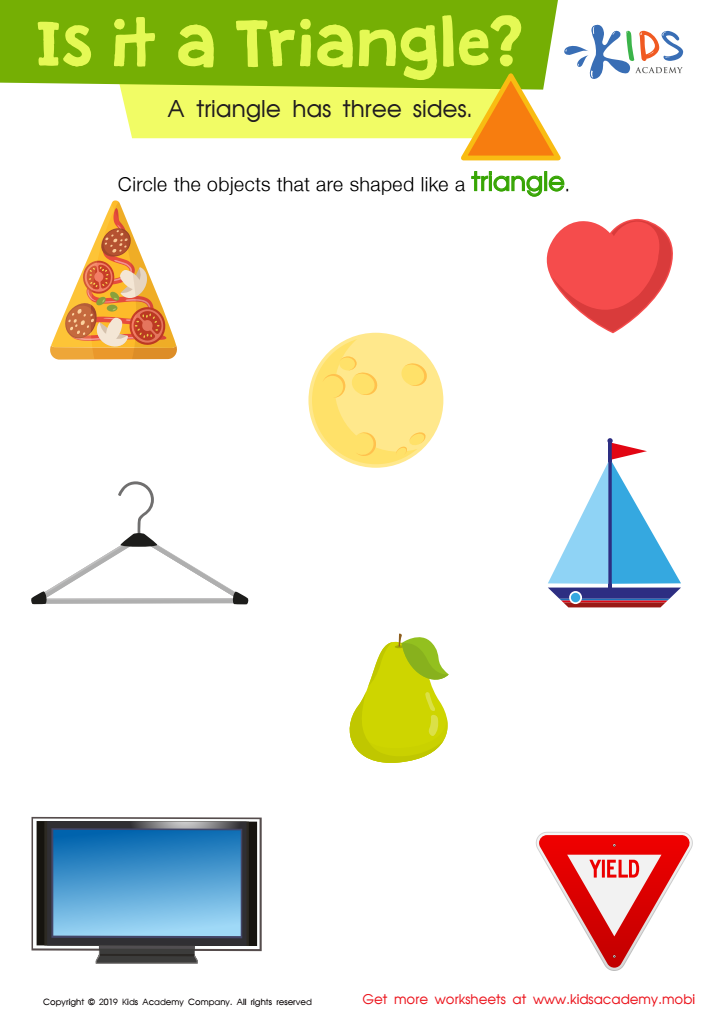
Is It a Triangle? Worksheet
 Assign to My Students








Shape identification is a fundamental aspect of Grade 3 math that transcends mere academic learning; it lays the foundation for critical cognitive skills. Understanding shapes helps children recognize and describe the world around them, enhancing their ability to categorize and compare objects. It fosters spatial awareness, enabling students to visualize and manipulate shapes in their minds, which is pivotal for future success in math, science, and art.
Moreover, shape identification supports problem-solving skills. When children can identify shapes, they begin to understand complex concepts, such as symmetry, area, and geometry, which are increasingly important in higher-grade math. This foundation is integral for future academic success in mathematics, where geometry becomes more prominent.
From a practical perspective, shape recognition aids in everyday life, guiding children in activities such as art, design, and even architecture. As they learn to identify shapes, they begin to see patterns and relationships, fostering critical thinking.
Encouraging shape identification also promotes collaboration among peers through group activities, allowing children to articulate their understanding and learn from one another. Overall, shape identification is essential not only for building math skills but also for developing rounded, analytical thinkers prepared for the complexities of the modern world.