Times table familiarity Grade 3 Math Worksheets
3 filtered results
-
From - To
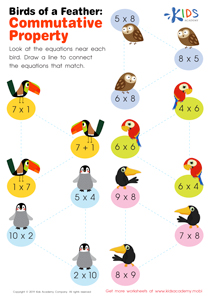
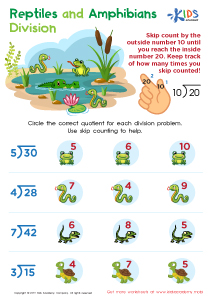
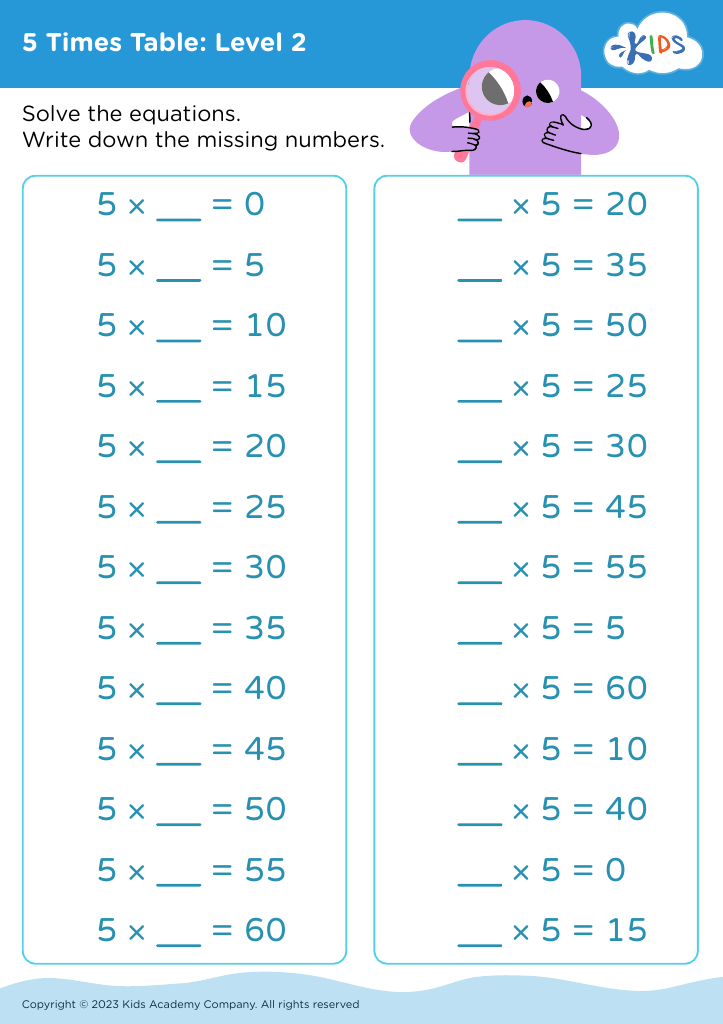
Enhance your Grade 3 math skills with our engaging Times Table Familiarity worksheets! Designed specifically for young learners, these worksheets offer a variety of fun and interactive activities that help students master multiplication tables ranging from 1 to 12. Each worksheet features colorful graphics and easy-to-follow instructions to keep students motivated and excited about learning. As children practice, they'll build confidence and increase their speed in recalling multiplication facts, laying a strong foundation for future math success. Perfect for classroom use or at-home practice, our Times Table Familiarity worksheets are a fantastic resource for reinforcing essential math skills. Start counting today!
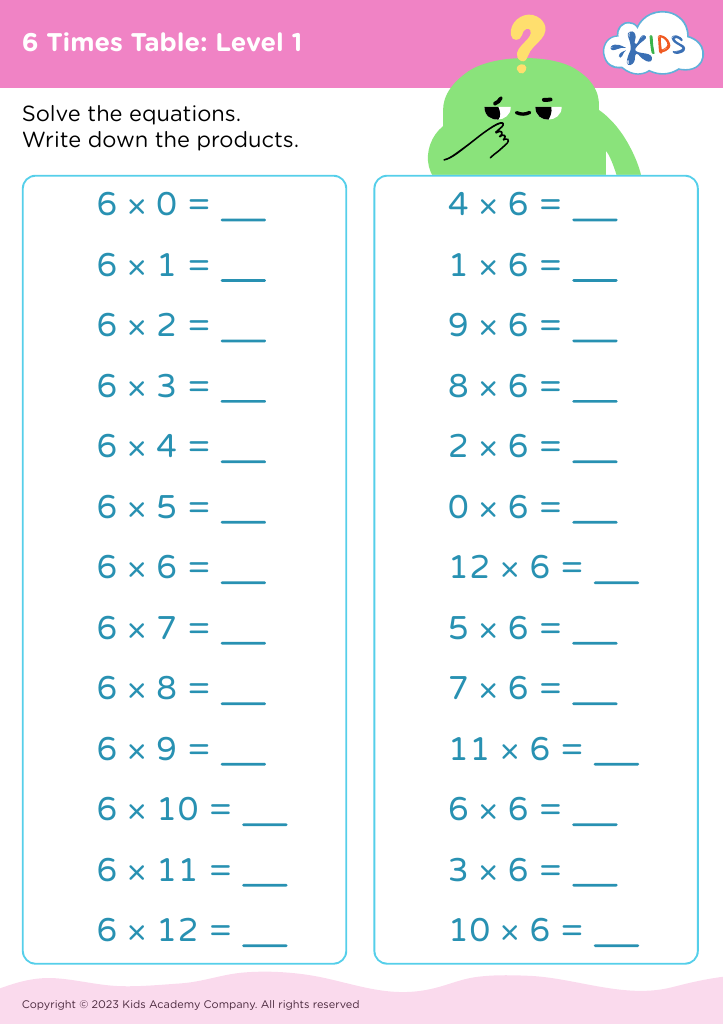
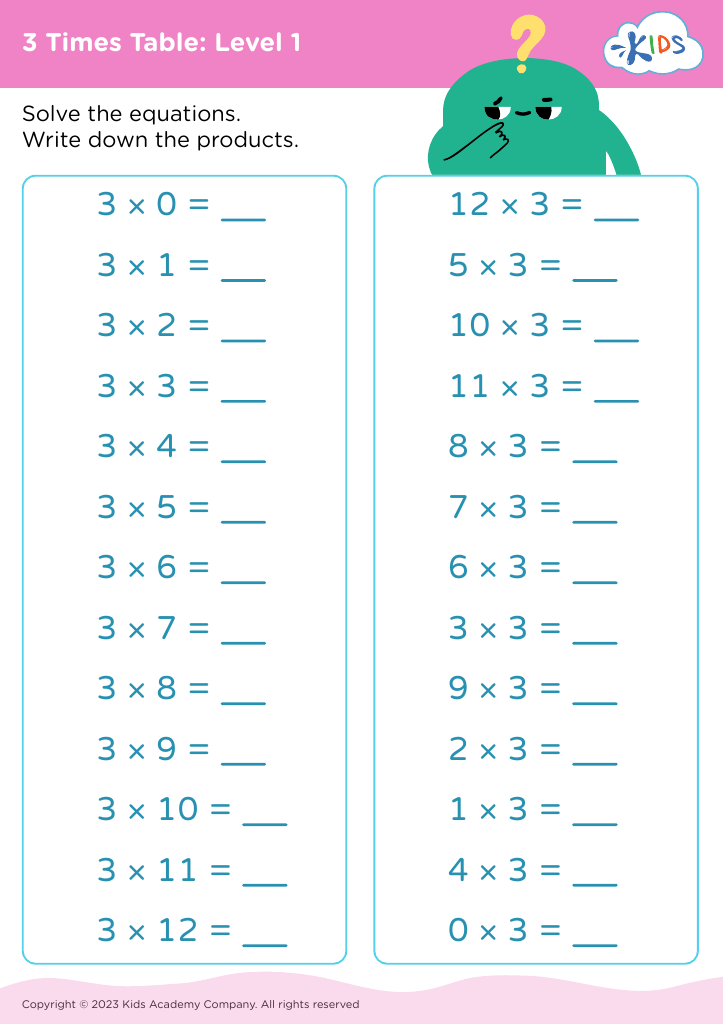





Times table familiarity in Grade 3 is crucial for several reasons. First, understanding times tables lays a strong foundation for future math skills, particularly in multiplication and division, which are pivotal throughout a child’s academic journey. When students are comfortable with their times tables, they not only boost their problem-solving speed but also enhance their overall confidence in math.
In Grade 3, students begin to encounter more complex mathematical concepts, such as fractions, area, and multiplication of larger numbers. Familiarity with times tables allows them to tackle these topics with ease, helping to prevent frustration and discouragement. Additionally, strong multiplication skills support success in subjects beyond math, such as science, where calculations and data interpretation are often required.
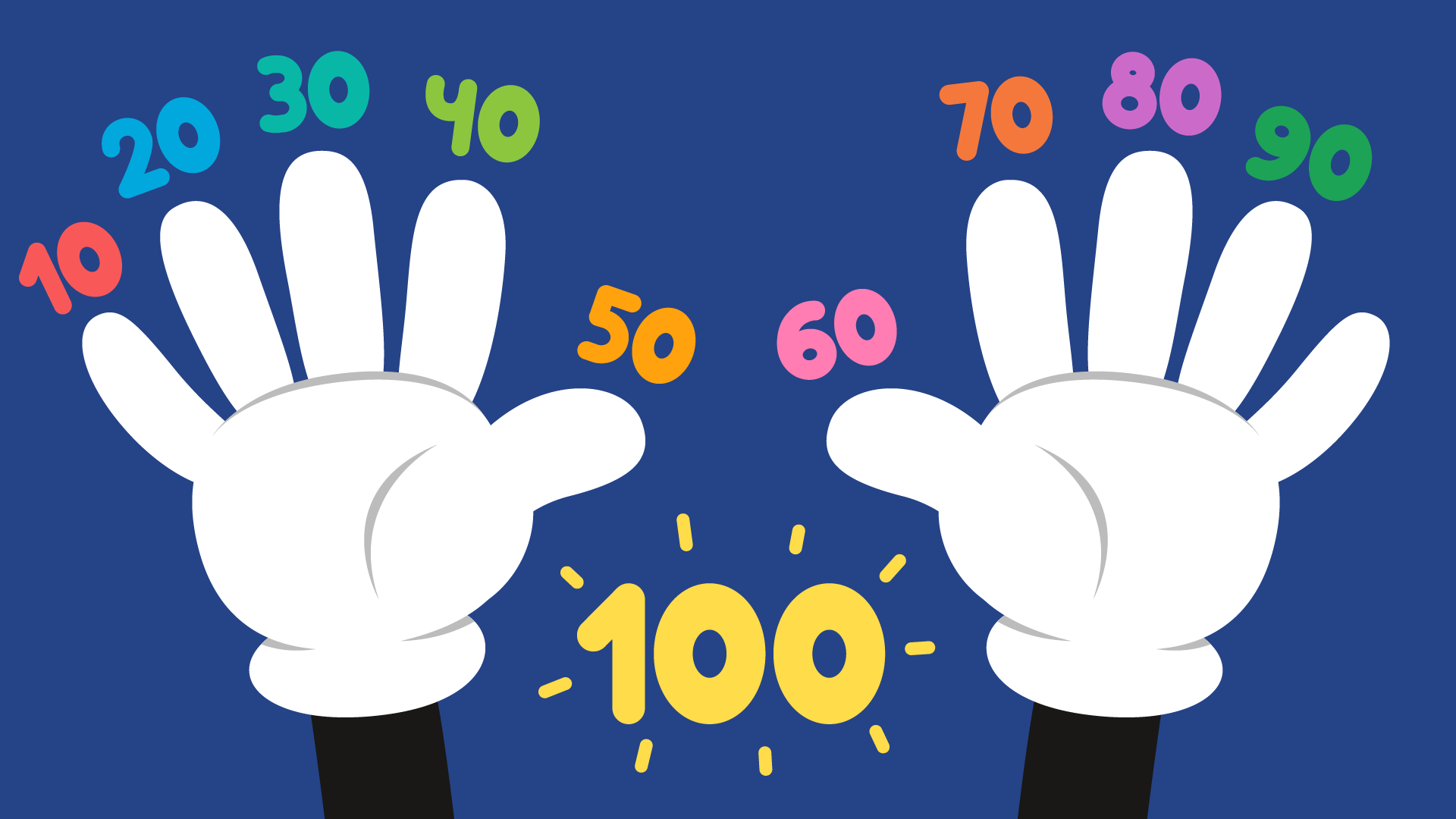
Moreover, times tables foster critical cognitive skills and memory retention, as students practice repetition and patterns. This kind of cognitive development can benefit areas of learning beyond mathematics, promoting analytical thinking.
Ultimately, parents and teachers play a key role in supporting children’s familiarity with times tables—whether through games, songs, or consistent practice. By ensuring students master this essential skill, they set them on a path to mathematical competence, appreciation for the subject, and a greater likelihood of academic success.