Understand multiplication Grade 3 Math Worksheets
3 filtered results
-
From - To
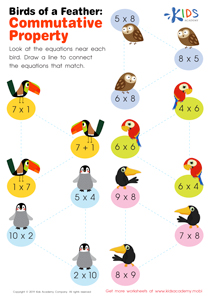
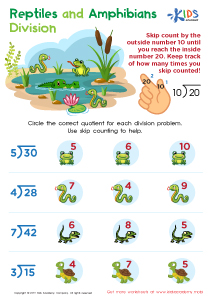
Boost your third grader's math skills with our "Understand Multiplication Grade 3 Math Worksheets." Designed to make learning multiplication engaging and fun, these worksheets help young learners grasp the core concepts of multiplying. Through practical exercises and visual aids, kids get to master multiplication tables and solve real-life problems step by step. These printable worksheets support their classroom learning, provide extra practice at home, and build confidence in their math abilities. Suitable for personalized practice, they encourage a solid mathematical foundation, setting the stage for more advanced math topics in future grades. Discover the joy of mathematics with these exciting resources!
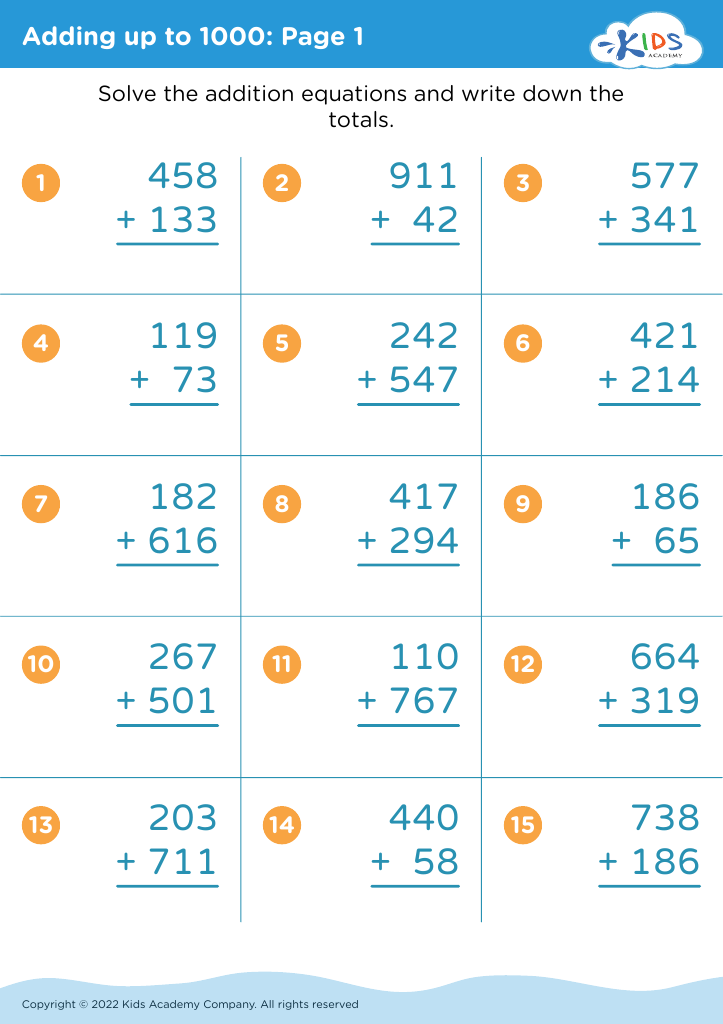







Understanding multiplication in Grade 3 is crucial as it lays the foundation for higher mathematical concepts and everyday problem-solving skills. For parents and teachers, investing in this formative stage is essential. Mastering multiplication at this age fosters numerical fluency, improving a child's ability to handle more complex arithmetic tasks such as division, fractions, and algebraic thinking in later grades. This competency is not only pivotal academically, but it also enhances critical thinking and logical reasoning, skills that are transferrable across disciplines and real-life situations.
Moreover, multiplication is often integrated into practical scenarios such as cooking, shopping, and budgeting, underscoring its relevance beyond the classroom. When children grasp this concept early, they gain confidence and a positive attitude toward math, which can influence their overall academic performance. Parents and teachers should thus prioritize multiplication to build a strong mathematical foundation, ensuring children progress smoothly through their educational journey and reduce anxiety related to math. Support from both home and school creates a cohesive learning environment, encouraging continued practice and application of multiplication, making learning both effective and enjoyable.